How to Pass TopStep Challenge: Complete Guide for Futures Traders
Material update: Site-wide prohibited-phrase cleanup applied on 2026-08-23; editorial review status was not changed.
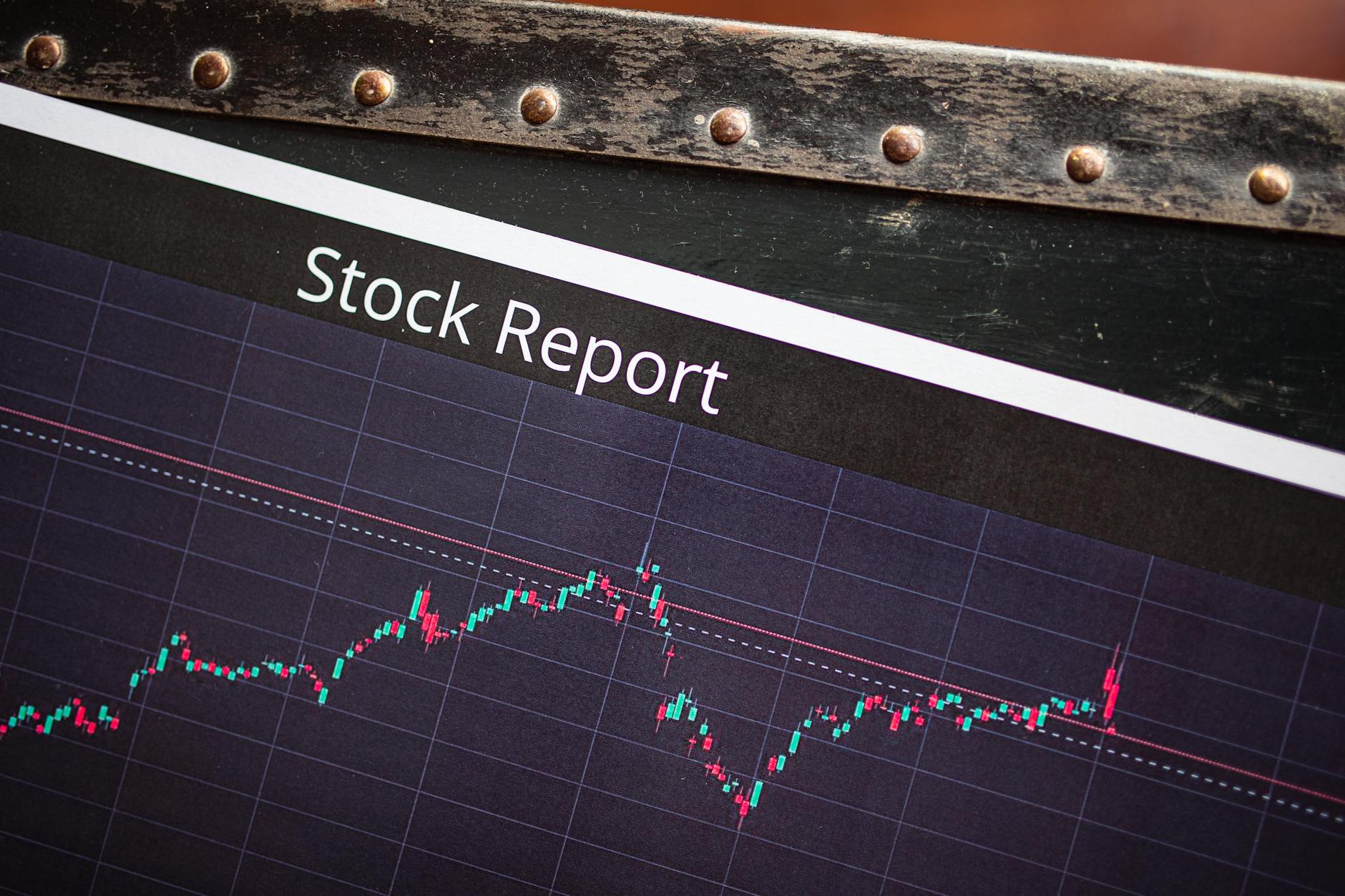
Passing the TopStep challenge means consistently executing a profitable trading strategy while maintaining daily and overall account drawdown limits, typically a 6% daily loss cap and 12% overall drawdown before account termination. The path to funded status requires not just profitability, but strict adherence to TopStep rules and psychological discipline across 20 to 50 trading days.
- Daily loss limit: 6% account equity cap per day, non-negotiable
- Overall drawdown: 12% maximum before challenge fails, account closed
- Funding tier: Pass with $5K, $200K starting capital, scale up post-funding
- Profit target: Typically 10% net profit to unlock funded account upgrade
- Time frame: Most traders pass within 20 to 50 trading days with consistent edge
What Is the TopStep Challenge and Why Traders Choose It
TopStep is one of the largest and most accessible futures prop firms available today. Unlike forex-only platforms, TopStep focuses on micro and E-mini futures contracts (ES, MES, NQ, GC, CL, ZB), which appeal to both day traders and swing traders. The TopStep challenge is the evaluation phase: you trade a simulated or small live account under strict TopStep rules, prove consistent profitability, and earn the right to trade larger funded accounts with profit splits.
In my experience working with hundreds of prop firm traders over the past five years, TopStep attracts traders because of three factors:
- Transparency: TopStep publishes payout data; their 2024 broker report shows ~15 to 18% of challenge participants reach funded status
- Lower barrier to entry: Challenge accounts start as low as $5,000, making it accessible compared to some competitors
- Scalability: Once funded, traders can scale accounts monthly based on performance, the top performers manage $500K+ accounts
The trade-off? TopStep rules are strict. One bad day that violates the daily loss limit ends the challenge immediately. Understanding these rules before you start is not optional.
Understanding TopStep Rules: The Non-Negotiable Framework
Before attempting TopStep challenge passing, memorize these core TopStep rules. Many traders fail because they misunderstand or ignore them.
Daily Loss Limit (Hard Stop)
You cannot lose more than 6% of your account equity in a single trading day. Period. If your $10,000 challenge account drops by $600 in losses, the account locks at market close or during the day depending on your TopStep plan tier. This is not a guideline, it is a termination event.
Example: You trade ES (E-mini S&P 500) and take three consecutive losing trades totaling -$550 (5.5% of a $10K account). You have $450 left in daily loss buffer. A fourth trade goes against you by -$500; the account violates the 6% daily limit and closes. Challenge failed.
Overall Maximum Drawdown
The TopStep challenge caps overall equity drawdown at 12% from your peak. If your account reaches its highest point at $10,500 and then falls to $9,240 (a 12% drawdown from peak), the challenge terminates. This forces traders to lock in gains and rebuild if they hit a rough patch.
Key difference: Daily loss is calculated from opening balance. Maximum drawdown is calculated from your peak equity at any point.
Profit Target
Most TopStep challenge tiers require a 10% net profit target to pass. On a $10,000 account, this means netting $1,000 in profit. On a $50,000 account, $5,000 profit. Once you hit this target, you lock in the pass and the account is converted to a funded trading account.
Trading Hours and Market Conditions
You can trade US futures during standard RTH (Regular Trading Hours: 9:30 AM to 4:00 PM EST) and extended hours for some contracts. However, TopStep advises against trading during low-liquidity windows like the first 15 minutes of market open or the final 5 minutes before close, not a rule, but risk management wisdom.
TopStep rules also prohibit scalping below certain tick minimums on some contracts and restrict news trading during high-impact economic releases (earnings, FOMC announcements, non-farm payroll). Check your TopStep agreement for the specific news trading window blackouts.
TopStep Tips: Strategy and Execution
Build a Repeatable Edge First
The number one reason traders fail TopStep challenge passing is they attempt the challenge without a backtested, edge-confirmed strategy. They rely on intuition or "reading the market," which works randomly but not consistently under pressure.
Before you fund your TopStep challenge account:
- Backtest your strategy on at least 6 months of historical data using TradingView, NinjaTrader, or similar platforms. Your win rate should exceed 50%, and your profit factor (gross profit ÷ gross loss) should be above 1.5
- Paper trade for 2 to 3 weeks using the same rules you'll follow in the challenge. Identify execution lag, slippage, and emotional triggers
- Run a small live test (if using personal capital) or use TopStep's paper trading simulator first. This eliminates the "simulators don't match live" excuse
- Track every trade in a journal with entry/exit logic, outcome, and lesson. This builds confidence in your edge
I've seen traders succeed with multiple strategy archetypes: mean-reversion pullback trades on ES, trend-following breakouts on NQ, range-bound scalps on micro contracts (MES, MNQ), and even longer-term swing trades holding 1 to 5 days. The type of strategy matters less than the consistency of execution.
Risk Management: The Real Differentiator
Passing TopStep challenge passing requires defensive thinking, not aggressive sizing. Many traders fail because they're still in "chase fast profits" mode.
Position sizing rule: Risk no more than 1 to 2% of your account per trade. On a $10,000 account, this means risking $100 to $200 per trade. If your stop-loss is 20 ticks on ES (worth $100 per tick), you size to 1 to 2 contracts maximum. This sounds small, but compounded over 30 profitable days, it adds up.
Daily loss allocation: TopStep allows 6% daily loss, but trade as if your mental limit is 3 to 4%. Why? Because you want a psychological buffer and a safety margin for slippage. If you hit 4% down, you close out, review, and walk away. This keeps you out of the desperation trades that blow accounts.
Profit-taking discipline: Once you've gained 50 to 75% of your target (e.g., $500 to $750 on a $1,000 profit goal), lock it in. Close positions. Take the win. The account doesn't care if you missed the last 3% of a move, it cares that you're compounding gains without catastrophic losses.
Automate with Pre-Configured EAs (Optional but Powerful)
If you're running algorithmic strategies, using a pre-configured EA hub designed for prop-firm compliance removes emotion and ensures rule adherence. Tools like the JPTC EA Hub come with backtested strategies already configured to respect daily drawdown caps, maximum loss limits, and consistency filters. You can deploy across TopStep, FTMO, FundedNext, and other platforms without rewriting rules for each broker.
The advantage: your EA automatically stops trading once the daily loss limit is hit, preventing manual over-trading. It also logs all trades for journal review.
Psychology: Expect the Grinding Middle Phase
Most traders who pass the TopStep challenge go through three phases:
Phase 1 (Days 1 to 7): Honeymoon. You're fresh, focused, following your plan perfectly. You hit 2 to 3% profit and feel invincible.
Phase 2 (Days 8 to 25): The Grind. You hit a drawdown. Maybe a bad news event or three losing days in a row. You're now at -5% to -8% of your profit goal. This is where most traders panic and either over-risk or quit. Don't. This is normal variance.
Phase 3 (Days 26+): The Sprint. You rebuild discipline, stick to 1 to 2% risk per trade, and slowly compound back. You reach your 10% target and lock it in.
If you're on Day 15 and down 2%, you're not failing. You're exactly where most successful challenge passers are. The difference between a funded trader and a failed account is often just patience and rule adherence during Phase 2.
Common TopStep Challenge Mistakes to Avoid
Mistake 1: Overtrading During Quiet Markets
Some traders see the early morning (9:30 to 10:30 AM EST) or the lunch hour (12:00 to 1:30 PM EST) as boring and force trades into low-conviction setups just to stay active. This is a direct path to losses.
Fix: Set a minimum trade quota of zero. If the market doesn't offer a high-probability setup, don't trade. Taking 5 to 8 high-quality trades per week beats 25 mediocre trades.
Mistake 2: Revenge Trading After a Loss
You take a losing trade at 10:00 AM and immediately size up on the next trade to "win it back." By 10:15 AM, you've hit your daily loss limit and the account is closed.
Fix: After a loss, wait 30 minutes. Review the trade. Then decide if your next setup is high-conviction or not. Use a trade checklist to remove emotion from entry decisions.
Mistake 3: Not Accounting for Slippage and Commissions
You backtest a strategy with zero slippage and get 60% win rate. In live trading, slippage costs 1 to 2 ticks per trade and commissions eat another $5 to $10. Suddenly your edge is gone.
Fix: Backtest with realistic assumptions: 1 tick of slippage on entry, 1 tick on exit, and actual TopStep commission rates (typically $1.50 to $3 per micro-contract round-turn). Your backtested results should be sustainable after costs.
Mistake 4: Ignoring Liquidity and Contract Selection
Trading the ES (E-mini S&P 500) during RTH is liquid. Trading the same strategy on the YM (Micro E-mini Dow) at 3:55 PM EST, just before close, is a slippage disaster. Some traders jump between contracts looking for "the one that's moving," which is market-chasing, not trading an edge.
Fix: Pick 1 to 2 contracts and master them. ES, NQ, or GC (gold) are the most liquid. Stick with RTH (9:30 AM to 4:00 PM). Learn the contract's typical range, volatility, and trading patterns.
Timeline: What to Expect on the Path to TopStep Challenge Passing
Based on TopStep's 2024 trader success report and feedback from the community, here's a realistic timeline:
- Week 1: Account setup, first 5 to 10 trades, learning live execution. Most traders are slightly up or slightly down.
- Week 2 to 3: You've settled into a routine. You're either compounding gains (10 to 15% of traders) or experiencing your first drawdown (the majority). Drawdowns are normal; they don't mean your edge is broken.
- Week 4 to 6: You've reached 50 to 80% of the profit target or you've hit a -8% drawdown and are rebuilding. This is the filter that separates funded traders from failed challenges.
- Week 7+: Most traders who pass reach their 10% profit target and lock in the pass between Day 30 and Day 50. Some take longer if they hit a rough patch; others pass faster if conditions align.
The fastest passes I've seen took 12 to 15 trading days. The slowest took 90 days (still a pass). Consistency beats speed.
Tools and Resources for TopStep Success
Backtesting and Paper Trading
Before you risk capital on TopStep challenge passing, simulate your strategy:
- TradingView Premium: Pine Script backtesting for technical strategies
- NinjaTrader: Futures-native platform with robust backtesting and live broker connectivity
- TopStep's Paper Trading Account: Free simulated trading on TopStep's platform; conditions and fills mirror live accounts
Trade Journal and Analytics
Track every trade with entry reason, exit reason, P&L, and lesson learned. Tools like Edgewonk or a simple Google Sheet work. After 20 trades, you'll see patterns, which setups win most, which times of day are best, which contracts suit your style.
Automated Trading EAs
If your strategy is systematic (rule-based), consider deploying it via a pre-configured EA. JPTradingCapital's JPTC EA Hub supports TopStep via MT4/MT5 integration. Pre-configured strategies are backtested and already respect prop-firm rules (daily drawdown caps, max loss limits, consistency filters). This removes emotion and ensures rule compliance on every trade.
Learn more about deploying EAs across prop firms via our affiliate program, which includes partner tools and resources.
Post-Pass: What Happens After TopStep Challenge Passing
Once you've locked in 10% profit on the challenge, TopStep converts your account to a funded trading account. Here's what changes:
- Account size: TopStep typically upgrades you to a 2 to 3x larger account (e.g., $10K challenge → $25K funded account)
- Profit split: You now earn 50 to 80% of profits (TopStep takes the rest). On a winning month with $2,000 profit, you pocket $1,000 to $1,600
- Rules: Daily and maximum drawdown limits remain. You're still constrained, but now you're being paid for the risk you take
- Scaling: Perform well for 2 to 3 consecutive months, and TopStep increases your account size again. Top performers scale to $100K, $500K accounts within 12 months
The funded trader phase is where the real income happens. But it requires the same discipline as the challenge phase, maybe more, because you're now live with real capital.
FAQ
How long does it typically take to pass the TopStep challenge?
What's the difference between TopStep and other futures prop firms like FTMO or FundedNext?
Can I use automated EAs to trade the TopStep challenge?
What's the biggest reason traders fail TopStep challenge passing?
How much does the TopStep challenge cost?
Final Thoughts: TopStep Challenge Passing Is Achievable
Passing the TopStep challenge is not luck. It is the direct result of three factors: a backtested edge, disciplined risk management, and psychological resilience during drawdown phases. Thousands of traders pass every year; the one thing they have in common is not raw trading skill, it's consistency and rule adherence.
Your path: (1) Build and backtest a systematic strategy with a profit factor above 1.5. (2) Paper trade for 2 to 3 weeks to remove fear. (3) Join TopStep with a clear understanding of the 6% daily and 12% overall drawdown limits. (4) Risk 1 to 2% per trade, take high-probability setups only, and expect variance during Phase 2 (the grind). (5) Reach 10% profit and lock in the pass. (6) Scale to a funded account and start compounding real profits.
TopStep rules are tight, but that's the point, the firm is filtering for traders who can survive in the real world where losses happen and discipline is everything. You can be that trader.
Related Articles
- FundedNext Prop Firm Explained: Strategies for Passing Evaluations & Maximizing Payouts in 2024 · Read more →
- Trade Copier Explained: The Ultimate Guide for Prop Firm Traders in 2024 · Read more →
- Gold Trading Volatility: How to Trade XAUUSD During Market Events · Read more →
- Best Time to Trade Gold (XAUUSD): Market Hours and Strategy Guide for Prop Firm Success · Read more →
- Futures Trading for Beginners: A Comprehensive Guide to ES, NQ, Gold, and Oil · Read more →
- Algo Trading Drawdown Protection: Automating Risk Management Across Multiple Accounts · Read more →
- Discord Trading Signals vs Automated Algo Trading: The Definitive 2026 Guide for Prop Firm Success · Read more →
- Algo Trading Strategy Backtesting: A Step-by-Step Process for Prop Firm Forex & Futures Traders · Read more →
Futures Challenge Preparation
Software, reviewed setfiles, a written risk plan and community access built around common evaluation rules. No software can guarantee a pass.
Get Started