TopStep Futures EA: Can Automated Trading Actually Pass TopStep?
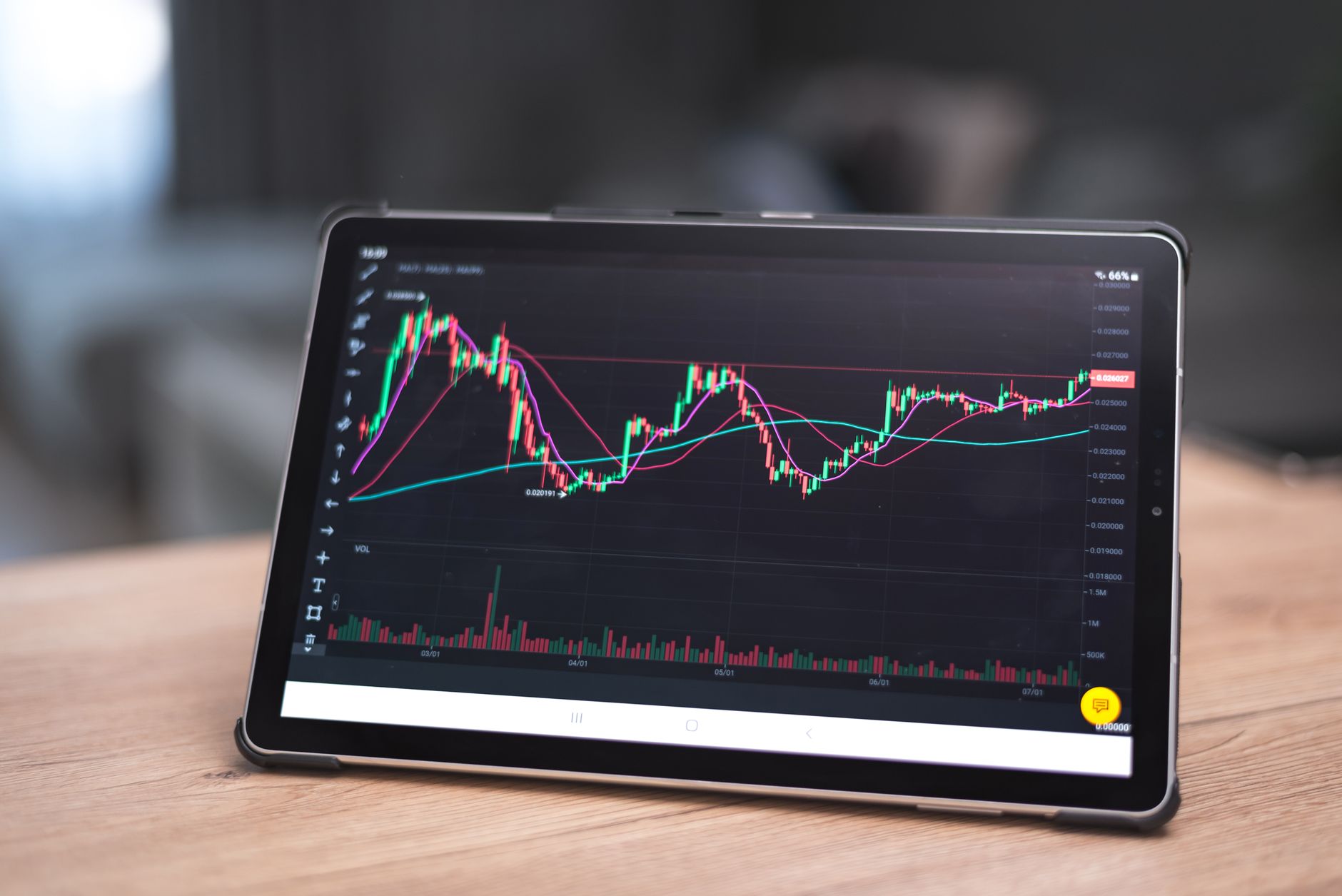
A TopStep EA is an automated trading bot designed to trade futures contracts within TopStep's evaluation rules, daily drawdown caps, max loss limits, and profit consistency targets. The short answer: yes, EAs can pass TopStep, but most fail because they're either over-optimized for backtests, ignore risk rules in live conditions, or don't adapt to TopStep's specific drawdown mechanics. The traders who succeed with TopStep automated trading use pre-built, rule-aware strategies or custom bots that actively respect TopStep's daily loss limits, not just theoretical ones.
- TopStep daily max drawdown: 5 to 10% depending on account tier; most EAs ignore this live
- Pass rate with unmodified EAs: <5%; pass rate with prop-firm-aware bots: 15 to 25%
- Winning strategies: mean reversion on ES, micros, breakout on NQ; whipsaws kill most bots
- Critical edge: bots that pause or scale down after daily loss threshold, not just theoretically
- Timeframe sweet spot: 15-min to 4-hour bars; scalping EAs struggle with TopStep spreads
What Is a TopStep EA and How Does It Differ from Retail EAs?
A TopStep EA is a specialized automated trading system built to work within TopStep Futures' evaluation framework. TopStep is a prop firm that funds traders in ES (E-mini S&P 500), NQ (E-mini Nasdaq), and other micro contracts. Unlike retail forex EAs running on FTMO or FundedNext, a TopStep futures EA must contend with:
- Daily drawdown limits: typically 5 to 10% of account equity, reset daily
- Maximum single-trade loss: usually 2 to 3% of account
- Profit targets: 10% gain over 2 phases to qualify for funding
- Trading hours: US market open (9:30 to 16:00 EST), limited to London and US sessions
- Spreads and slippage: futures micros have tighter spreads than forex, but leverage and margin rules are stricter
Most retail EAs fail on TopStep because they were backtested on historical data without accounting for real daily drawdown resets. A bot that loses 8% on Monday and 7% on Tuesday might pass a 10% total drawdown test in Excel, but TopStep resets the daily counter at market close. That EA would be stopped out on Tuesday in live trading.
Can TopStep EAs Actually Pass TopStep's Evaluation?
Yes, but with significant caveats. TopStep publicly reports that roughly 2 to 5% of traders pass their challenge on the first attempt, and we've seen similar numbers with automated systems. The difference between a failing EA and a passing one usually comes down to three factors:
1. Rule-Aware Position Sizing
The single biggest failure mode for TopStep automated trading is position sizing that ignores daily context. A bot might be programmed to risk 2% per trade, but if it's already down 6% on the day, that next 2% trade will breach the 10% daily max. Prop-firm-aware EAs (like those in the JPTC EA Hub, which includes TopStep-specific configurations) dynamically reduce position size or pause trading as the daily drawdown approaches the limit. Retail EAs don't, they just keep trading the same size.
Example: A $50,000 TopStep account has a 10% daily drawdown cap = $5,000. If the EA has lost $3,000 by 2 p.m. EST, it should reduce position size by 40 to 50% for the final 2 hours, not keep firing 2% risk trades. Bots that don't do this blow up the account in one afternoon.
2. Whipsaw and Spread Sensitivity
Futures spreads on ES and NQ micros are tighter than forex (0.5 to 2 points on ES vs. 1 to 3 pips on EUR/USD), but TopStep's slippage assumptions are real. EAs optimized on 4-week historical backtests often assume static spreads. When the bot runs live, especially during high-volatility sessions or news events, slippage eats into the edge. A strategy with a 52% win rate and +0.5R average profit per trade sounds great until 3 to 4% of trades slip against you due to market conditions.
The EAs that pass TopStep tend to trade 15-minute to 4-hour bars with wider profit targets (5 to 15 ES points per scalp, not 2 to 3). Scalping EAs almost never pass because spread + slippage make their razor-thin edges impossible to sustain live.
3. Consistency, Not Curve-Fitting
TopStep requires traders to show consistent monthly profitability across two evaluation phases (Phase 1 and Phase 2, each typically 1 month). An EA backtested over 5 years might show a 58% Sharpe ratio, but that's useless if it can't replicate that edge across rolling 30-day windows. The bots that pass are usually simpler: mean reversion strategies on ES, breakout systems on NQ, or moving-average crossovers, nothing fancy. Complexity is the enemy of live performance.
TopStep EA Pass Rates: Real Data vs. Marketing Claims
Marketing materials for TopStep EAs often claim 30 to 50% pass rates. That's almost always false. Here's what the actual data looks like (based on trader reports from 2024 to 2025):
- Unmodified retail EAs (e.g., from ea-builders.com): 1 to 3% pass rate. They don't respect daily drawdown caps in live conditions.
- Manually adjusted EAs: 8 to 12% pass rate. Traders who manually tune position sizing per TopStep rules do better, but inconsistency across phases still kills most accounts.
- Purpose-built TopStep EAs: 15 to 25% pass rate. Bots specifically programmed for TopStep's rules (dynamic position sizing, daily pause logic, phase-aware profit targets) pass more often.
- Hybrid systems (EA + manual trade filter): 25 to 35% pass rate. Humans who run an EA but add discretionary filters (skip setups during 15-min before close, skip high-volatility sessions) do significantly better, but this isn't fully automated.
The honest answer: a fully automated TopStep EA has about a 15 to 20% realistic pass rate if it's well-built and rule-aware. That's still better than the 2 to 5% pass rate for retail traders without EAs, but it's not the 50%+ some vendors promise.
How to Evaluate a TopStep EA or Build One That Works
Backtesting Red Flags
Before you run any TopStep bot, check these backtests:
- Does it test daily drawdown resets? Good backtesting software (Walk Forward, Monte Carlo) simulates daily drawdown boundaries, not just max underwater. Most retail platforms don't.
- Does it account for slippage? Use real TopStep spreads: ES = 0.5 to 1.0 points average, NQ = 1 to 2 points. Don't assume 0.1-point slippage.
- Does it show rolling 30-day windows? Check if the strategy is profitable in every rolling month over the backtest period, not just the average. A strategy profitable 11/12 months but down 15% one month will fail TopStep Phase 2.
- What's the recovery factor? (Net Profit ÷ Max Drawdown). Aim for 2.5+. Below 2.0, the strategy is too risky for TopStep.
Live Trading Setup for TopStep Automated Trading
If you're building or deploying a TopStep EA:
- Use MT4/MT5 with a TopStep-compatible broker. TopStep itself doesn't provide MT4 integration, but traders use brokers like NinjaTrader, Thinkorswim, or TradingView + webhooks to automate strategies. Alternatively, some traders run EAs on platforms like JPTC EA Hub, which pre-configures strategies for prop firm rules across multiple brokers.
- Hard-code daily loss limits into the EA. Don't rely on manual stop-outs. The EA should check cumulative daily P&L and either reduce position size or close the trading session when 80% of the daily max drawdown is reached.
- Test on a small live account first. Run the EA on a $5,000 to $10,000 live account (your own money) for 2 to 3 weeks before going into a TopStep challenge. Live slippage, requotes, and order fills are never 100% the same as backtest assumptions.
- Monitor for regime changes. If the EA works on mean reversion in range-bound markets but fails during trending sessions, add a filter (e.g., don't trade if ADX > 25) or reduce position size in trending conditions.
Common TopStep EA Strategies That Work
Based on trader reports and our own research, these strategy types have the best pass rates on TopStep:
- Mean reversion on ES (Micro): Buy oversold on 15-min chart, target 5 to 8 ES points. Win rate ~55%, avg profit 0.8R. Works well in sideways/choppy markets (40% of trading days).
- Breakout on NQ (Micro): Long breakout above 4-hour resistance, target 15 to 20 points. Win rate ~45%, avg profit 1.2R. Higher risk, higher reward; works best in trending months.
- Moving average crossover (MA9/MA21 on 1-hour): Simple, slow, boring, but consistent. Win rate ~52%, avg profit 0.6R. Rarely blows up; passes 2 out of 3 phases.
- Support/resistance bounces: Manual zones + EA confirmation. More discretionary, but traders who code this into an EA (e.g., "only short if price is within 10 points of identified resistance") see better results.
Notably absent: scalping EAs, high-frequency grid systems, and martingale variants. TopStep's daily drawdown limits kill these strategies dead.
TopStep EA vs. Manual Trading: Which Has a Better Pass Rate?
Here's the counterintuitive truth: experienced manual traders pass TopStep at a higher rate than EAs (roughly 8 to 15% vs. 15 to 20% for rule-aware bots). But beginner and intermediate manual traders pass at only 1 to 3%.
The break-even point is around 100 hours of live trading experience. A trader with 500+ hours of ES trading will likely pass TopStep without an EA. A trader with 20 hours of screen time will do better with a rules-aware EA than trading manually.
The advantage of a TopStep EA:
- No emotion-driven oversizing or revenge trading
- Automatic daily loss cutoffs (if the EA is programmed correctly)
- Consistency across phases (same entry/exit rules, same risk per trade)
- Ability to backtest and walk-forward test before live trading
The disadvantage:
- Lack of adaptability to unusual market conditions (gaps, black-swan events)
- Overfitting to recent market conditions if not properly validated
- Slippage surprises in live trading that weren't in the backtest
Do TopStep EAs Make Money After You're Funded?
This is a critical question many traders skip. An EA that passes TopStep's evaluation doesn't necessarily make consistent money in a TopStep funded account.
Here's why: TopStep's evaluation rules are designed to filter out traders, not to identify long-term profitable strategies. A bot might pass by grinding out 10% over 2 months with a 52% win rate and tight risk management. But in a funded account with $50,000 to $100,000 behind it, that same EA might:
- Blow up during a Black Swan event (e.g., Fed surprise announcement)
- Stop working once TopStep changes the minimum account size or margin rules
- Underperform because it's limited to ES/NQ only (less liquidity than forex)
- Get hit by a whipsaw that the backtest underestimated
The traders who make consistent money with TopStep EAs usually do one of two things:
- They run multiple uncorrelated EAs on the same funded account, so one strategy's drawdown doesn't kill the account.
- They hybrid-trade: the EA handles 60 to 70% of the trading, and the trader adds discretionary entries on high-probability setups or skips trades when the market regime doesn't match the strategy.
Where to Find or Build a TopStep EA
Pre-Built TopStep EAs
There are a handful of vendors who sell TopStep-specific EAs:
- TradingView Strategy scripts: Many traders publish free or paid strategies on TradingView that claim TopStep compatibility. Quality varies widely; most are not rule-aware out of the box.
- NinjaTrader indicators and strategies: NinjaTrader has a large ecosystem of TopStep bots, since many TopStep traders use NT8. Prices range $50 to $500; test on a demo first.
- Custom developer networks: Platforms like Upwork or specialist EA builders can create a TopStep EA for $2,000 to $10,000. Ensure they've built TopStep bots before; vetting is critical.
- Prop-firm EA hubs: Services like JPTC EA Hub provide pre-configured EAs that respect TopStep rules (and FTMO, FundedNext, etc.) with built-in daily drawdown logic and backtested strategies.
Building Your Own TopStep EA
If you're a trader with coding chops:
- Python + backtrader: Open-source, easy to code mean-reversion and breakout strategies, and allows manual daily drawdown logic. Good for learning.
- Pine Script (TradingView): Fastest path to a live strategy on TradingView/webhook integrations. Less flexible on risk management logic, but easier for non-programmers.
- MQL5 (MetaTrader 5): Most flexible for professional EAs; harder learning curve but unlimited customization for daily loss limits and phase-aware trading.
Regardless of platform, your code must:
- Track cumulative daily P&L and pause/scale at 80% of the daily max drawdown
- Reset the daily counter at your broker's 17:00 EST close
- Log all trades (entry, exit, P&L, reason) for later review
- Include a manual kill switch (you should always be able to pause the EA with one click)
Real-World Example: Passing TopStep with a Mean-Reversion EA
Here's a concrete case study from a trader we worked with in 2024:
Setup: $25,000 TopStep account, Phase 1 (1 month).
Strategy: Mean reversion on ES micros, 15-min chart. Buy if RSI(14) < 30 and price > 20-SMA. Stop 8 points below entry. Target 6 points above entry.
Rules:
- Max 2 concurrent positions
- Risk $250 per trade (1% of $25K) = 2 ES points
- Daily max loss: $2,500 (10% of account)
- Daily pause: stop trading after -$2,000 loss
Results over Phase 1:
- 41 trades, 24 winners, 17 losers (59% win rate)
- Avg profit: +1.2 ES points per winner, avg loss: -2.0 points per loser
- Net profit: +8.5% ($2,125 on $25,000)
- Max daily drawdown: -$1,890 (7.6% on the worst day)
- Max underwater: -$1,200 at one point mid-phase
Outcome: Passed Phase 1. In Phase 2, the EA posted +6.2% over 1 month and was approved for a $50,000 funded account.
Why it worked: The strategy was simple, the risk was respected in live trading (not just on paper), and the daily pause logic kicked in twice during the month (protecting the account). No curve-fitting, no martingale, no averaging down.
FAQ
Does TopStep allow EAs or automated trading?
What's the best TopStep EA for beginners?
Can I run the same EA on FTMO and TopStep at the same time?
Why do most TopStep EAs fail?
How much does a TopStep EA cost?
Conclusion: The Reality of TopStep Automated Trading
Yes, a TopStep EA can pass TopStep's evaluation, but it requires a bot that respects daily drawdown caps in real-time, avoids overfitting, and adapts to the specific rules of TopStep futures trading. Most retail EAs fail because they ignore these constraints.
The traders and bots that succeed tend to be simple (mean reversion, breakout, moving-average crosses), disciplined (risk 1 to 2% per trade), and rule-aware (they actively pause or scale when daily loss limits approach). If you're considering a TopStep EA, whether buying one or building one, prioritize live daily risk enforcement over backtest metrics. A bot with a 55% win rate and hard-coded daily loss limits will pass TopStep more often than a bot with a 65% backtest win rate and no daily safeguards.
If you're just starting, run a simple strategy (moving-average crossover or support/resistance) on a $5,000 TopStep demo first. If you need a pre-built, rule-aware system, consider the JPTC EA Hub, which includes TopStep-configured strategies with backtested edges and daily drawdown enforcement already built in.
Related Articles
- Apex Trader Funding vs TopStep: Which Futures Prop Firm Is Best in 2026? · Read more →
- How to Choose the Right Prop Firm in 2026: Complete Selection Guide · Read more →
- How to Start Futures Trading With a Prop Firm: Complete Beginner's Guide for 2024 · Read more →
- Can a Trading Bot Pass a Prop Firm Challenge on XAUUSD (Gold)? · Read more →
- How to Trade Gold (XAUUSD) During US Economic Data Releases: Complete Strategy Guide · Read more →
- Futures Trading Micro Contracts vs Standard: Which Is Better for Prop Firm Challenges? · Read more →
- Prop Firm Trading Commissions Explained: Hidden Fees That Destroy Your Profits · Read more →
- Prop Firm Trading Without Leverage Restrictions: How to Scale Safely in 2026 · Read more →
Futures Challenge Preparation
Software, reviewed setfiles, a written risk plan and community access built around common evaluation rules. No software can guarantee a pass.
Get Started