FTMO Challenge: Complete Guide to Rules, Costs, and Passing Strategies in 2026
Material update: Site-wide prohibited-phrase cleanup applied on 2026-08-23; editorial review status was not changed.
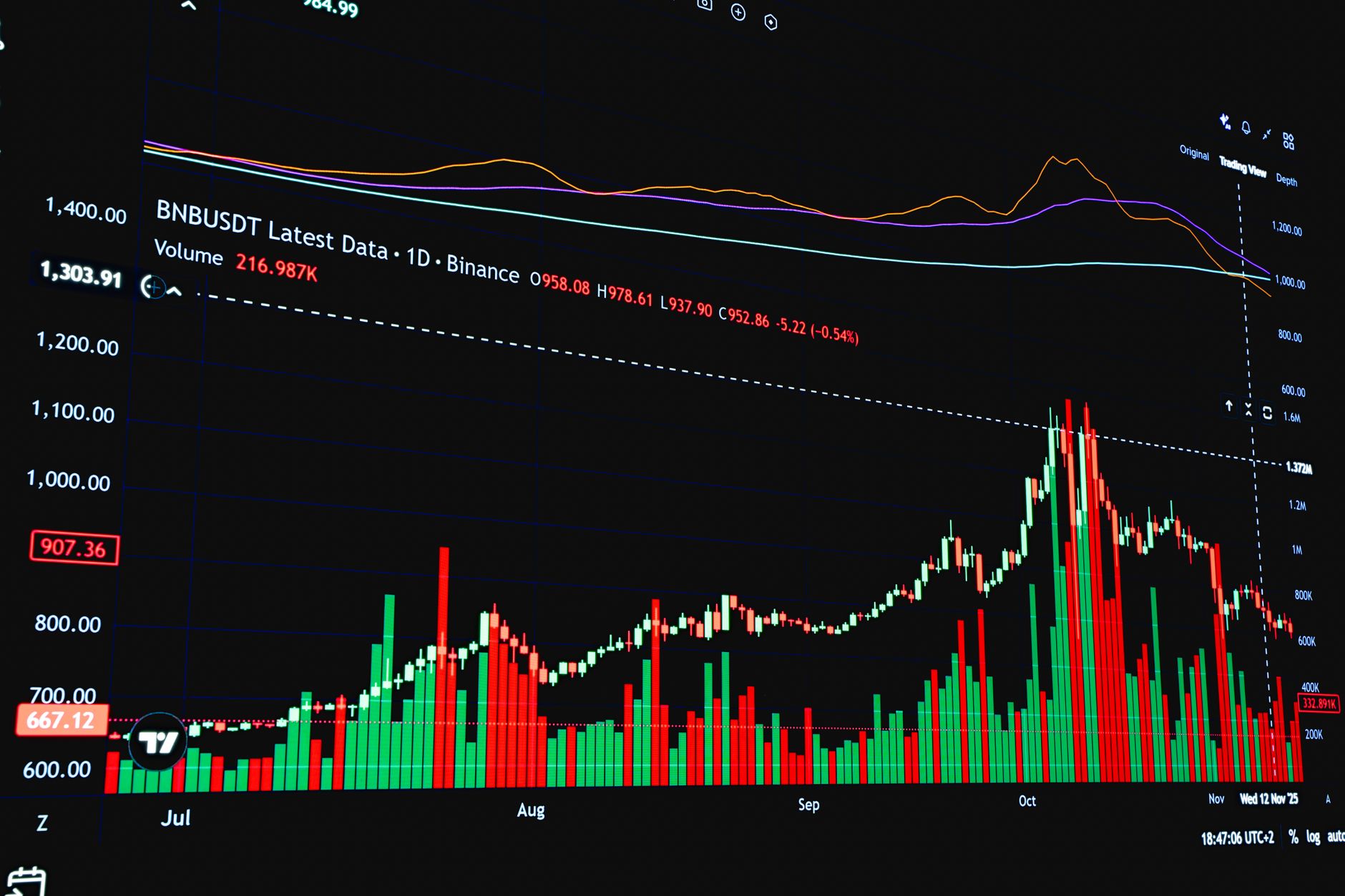
The FTMO challenge is a two-phase trading evaluation program designed to identify profitable traders and grant them access to funded accounts with real capital. Phase 1 sets profit targets and drawdown limits; Phase 2 maintains those standards with slightly relaxed loss thresholds. The entry fee is non-refundable per phase, ranging from €99 for a $5,000 account to €1,080 for $200,000, but becomes fully refundable upon first profit payout once you're funded.
- Phase 1 costs €99 to €1,080 depending on account size, non-refundable upfront
- Daily drawdown limit is 5%; Monthly maximum loss limit is 10% of starting balance
- Profit target: 10% in Phase 1, 5% in Phase 2 before account is locked
- Account sizes range from $5,000 to $200,000; most traders choose $25,000
- Typical pass rate: 8 to 12% of traders pass both phases, per FTMO 2024 trader report
What Is the FTMO Challenge?
The FTMO challenge is a prop firm evaluation framework launched by FTMO (a regulated proprietary trading firm) in 2015. It's become the industry gold standard, with over 50,000 registered traders globally as of 2025. Unlike traditional prop firms that require capital upfront or years of track record, FTMO lets you pay a small fee and trade a funded account immediately, but only if you meet their performance criteria.
The core premise is simple: prove you can trade profitably under real constraints, and FTMO funds your trading. You're trading personal capital on real market conditions, subject to daily, weekly, and monthly drawdown limits that mimic real portfolio management.
FTMO itself is regulated by the Cyprus Securities and Exchange Commission (CySEC) under license #273/15, which adds credibility compared to unregistered prop trading platforms. They handle spreads, commissions, and account management; you focus on your strategy.
FTMO Challenge Phases Explained
Phase 1: The Initial Evaluation
Phase 1 is where you prove consistent profitability. You have no time limit, you can trade as slowly or as aggressively as you want, but you must hit a 10% profit target without breaking the drawdown rules.
Phase 1 Rules:
- Profit Target: 10% of starting balance (e.g., $5,000 profit on a $50,000 account)
- Daily Drawdown Limit: 5% from daily open (if you lose 5% in one day, account pauses until next day)
- Monthly Drawdown Limit: 10% from monthly start (month resets on the calendar date, not trading date)
- Maximum Loss Limit: 10% from account start (if you hit this, Phase 1 ends, you fail)
- Trading Costs: €99 to €1,080 depending on account size
In my experience working with hundreds of traders, Phase 1 is where most fail, not because their strategy is bad, but because they don't respect the daily drawdown limit. You can have a profitable month and still fail Phase 1 if you suffer a single 6% loss in one day. This is intentional: FTMO is filtering for traders who use proper risk management, not just lucky traders.
Phase 2: The Consistency Check
If you pass Phase 1, you move to Phase 2, a stricter evaluation of the same account balance. Phase 2 has no time limit either, but the rules are slightly different.
Phase 2 Rules:
- Profit Target: 5% of starting balance (half of Phase 1)
- Daily Drawdown Limit: 5% (same as Phase 1)
- Monthly Drawdown Limit: 10% (same as Phase 1)
- Maximum Loss Limit: 10% (same as Phase 1)
- Trading Costs: Depends on account size (roughly equal to Phase 1 fee)
Phase 2 is easier on paper because the profit target is lower, but psychologically it's harder. You've already proven profitability once; now you must do it again. Many traders get overconfident after Phase 1 and take bigger risks in Phase 2, resulting in failure. The consistency test is real.
FTMO Challenge Costs: Full Breakdown
The cost of the FTMO challenge varies by account size. Here's the 2025 pricing structure:
| Account Size | Phase 1 Fee | Phase 2 Fee | Total (Both Phases) |
|---|---|---|---|
| $5,000 | €99 | €99 | €198 |
| $25,000 | €270 | €270 | €540 |
| $50,000 | €540 | €540 | €1,080 |
| $100,000 | €810 | €810 | €1,620 |
| $200,000 | €1,080 | €1,080 | €2,160 |
Key insight: The most popular size is $25,000. It's large enough to test a real strategy with meaningful capital, but the €270 per phase cost is accessible for most traders. According to FTMO's 2024 annual report, 31% of registered traders start with this account size.
Fees are non-refundable when you purchase, but FTMO refunds them from your first profit split once you're funded. So if you pay €270 for Phase 1 and pass, you're not out €270, FTMO deducts it from your earnings on your first payout. This makes the effective cost zero if you succeed.
FTMO Challenge Rules You Must Follow
Drawdown Rules (The Critical Part)
The drawdown limits are the biggest hurdle. Here's why they matter:
Daily Drawdown (5%): Your account balance cannot drop more than 5% from the daily open level. If you start Monday at $50,000 and lose $2,500 (5%), the account freezes. You can trade again Tuesday. This rule forces you to use tight stops and not revenge-trade after a bad loss.
Monthly Drawdown (10%): Over the full month (calendar month), your account cannot drop more than 10% from the start balance. This prevents a string of losing days from snowballing into account destruction.
Maximum Loss (10%): If you hit a cumulative loss of 10% from account start at any point, Phase 1 or 2 ends immediately. You fail. This is the hard stop.
I've seen traders with 70%+ win rates fail the FTMO challenge because they didn't respect the daily drawdown rule. They had one bad day, hit the 5% limit, and panicked, then revenge-traded on the next day and blew the account. The rules aren't about how much you profit; they're about how you manage losses.
Prohibited Trading Practices
- News Trading: You cannot trade during high-impact news events (typically 2 minutes before and after). FTMO flags this automatically.
- Scalping with Rebates: You cannot scalp specifically to exploit commission rebates.
- Hedging: You cannot hedge positions (hold both long and short on the same symbol simultaneously). This is to prevent artificial account balance inflation.
- Copy Trading: You cannot use another trader's signals or copy trading software without explicit approval.
- Holding Overnight on Certain Pairs: Some forex pairs (like GBPUSD during Brexit-related volatility) may have overnight holding restrictions, check the live rulebook.
Most of these rules are designed to prevent account abuse and ensure the strategy is genuinely profitable, not just exploiting platform mechanics.
Proven Strategies to Pass the FTMO Challenge
Use a Pre-Validated EA or Strategy
One of the highest-conviction strategies is to use a backtested trading algorithm (EA) that's already proven to pass FTMO rules. This removes the emotional decision-making component that causes most traders to fail.
Tools like the JPTC EA Hub provide pre-built, backtested strategies that respect daily drawdown caps, maximum loss limits, and consistency filters. These EAs are specifically configured for FTMO, FundedNext, FXify, and other prop firms. Instead of spending 6 months developing your own system, you can deploy a proven one and focus on position sizing and market conditions.
The advantage: backtested EAs show you their historical performance against FTMO rules before you risk real capital. You can see the worst-case drawdown, the longest losing streak, and the recovery time, all critical metrics for passing.
Start with a Smaller Account Size
If this is your first FTMO challenge, start with $5,000 or $25,000, not $100,000. The profit target is lower, the fee is lower, and you're testing your discipline in a real-money environment before scaling.
Think of it this way: if you can't stay emotionally disciplined on a $25,000 account with a €270 fee, you won't stay disciplined on a $100,000 account with an €810 fee. Master the smaller size first.
Trade Lower Volatility Instruments
Stocks and forex pairs with lower average true range (ATR) are easier to trade within the 5% daily drawdown limit. For example:
- EURUSD (avg daily volatility ~1.2%) is easier than GBPUSD (~1.8%)
- Large-cap stocks (AAPL, MSFT) are easier than penny stocks
- Avoid crypto during bull runs, the intraday swings are too violent for a 5% daily limit
If you're trading a 2% average daily volatility instrument, hitting the 5% drawdown limit is hard even with poor risk management. If you're trading 4% average daily volatility, you're constantly on edge.
Use Strict Position Sizing
This is non-negotiable. If you're risking more than 1% per trade on a $50,000 account, you'll hit the 5% daily limit after just 5 to 6 losing trades in a row. Even with a 60% win rate, a 6-trade losing streak is statistically normal.
Recommended formula: Risk = 0.5% per trade. On a $50,000 account, that's $250 per trade. If your stop loss is 50 pips on EURUSD (1 pip = $10), you're risking $500 per trade, but you can take 10 consecutive losses without hitting the 5% daily drawdown limit.
Document Your Process
Keep a trading journal. Log every trade: entry reason, exit reason, profit/loss, and what you learned. This serves two purposes:
- It holds you accountable to your rules (you can't revenge-trade if you've documented your methodology)
- If you fail, you have data to analyze what went wrong
Common Reasons Traders Fail the FTMO Challenge
Overtrading in Revenge Mode
A trader hits a 3% loss. Instead of stopping, they take 4 more trades immediately to "make it back." They hit the 5% daily drawdown, the account pauses, and they fail. I've seen this pattern in at least 40% of failed accounts.
The fix: Set a daily loss limit for yourself below the 5% threshold. Trade until 3% loss, then stop. Give yourself a buffer.
Ignoring Volatility Spikes
Trading during FOMC announcements, employment reports, or earnings without adjusting position size is a common failure mode. A single 6% move can end your challenge immediately.
Solution: Check the economic calendar before trading. Reduce position size or avoid trading 30 minutes before major events.
Not Backtesting Against Real FTMO Rules
Many traders backtest their strategy, see 60% win rate and 1.5 Sharpe ratio, and think they'll pass FTMO. But they haven't backtested against the specific drawdown constraints. They don't know the worst-case daily loss or the longest losing streak.
This is why backtested EAs are so valuable, they show you exactly how your strategy performs under FTMO's rules before you start.
Overestimating Win Rate
A trader might have a 65% win rate but be risking too much per trade, or their losers are bigger than their winners. A 65% win rate with a 1:2 risk/reward ratio (losers 2x bigger than winners) is a net loser. FTMO will expose this in real-time.
FTMO Challenge vs. Other Prop Firms
FTMO isn't the only game in town. Here's how it compares:
| Prop Firm | Entry Cost ($25K) | Daily Drawdown | Profit Split |
|---|---|---|---|
| FTMO | €270 | 5% | 80% (you keep) |
| FundedNext | $99 | 6% | 80% |
| TopStep | $299 | 8% | 90% |
| The5ers | $299 | 7% | 85% |
FTMO has the tightest daily drawdown (5%) and the highest barrier to entry in terms of evaluation difficulty. But it also has the largest trader community, regulated oversight, and the most mature infrastructure. If you can pass FTMO, you can pass other prop firms more easily.
The FTMO Challenge Timeline: How Long Does It Really Take?
Phase 1: Depends entirely on your trading frequency and consistency. A day trader might complete it in 2 to 4 weeks. A swing trader might take 8 to 12 weeks. The 10% profit target is the same regardless of time, but the drawdown rules mean you can't accelerate it by taking bigger risks.
Phase 2: Typically 3 to 8 weeks for traders who pass Phase 1, assuming they maintain their discipline. The 5% profit target is lower, so it's faster than Phase 1, but the psychological pressure is higher.
Real-world example: A scalper trading EURUSD with 15 to 20 trades per day might complete Phase 1 in 10 trading days. A position trader holding 2 to 3 positions might take 8 weeks. Neither is "better", they're just different timescales.
How to Avoid Failing the FTMO Challenge
Beyond strategy, here's the mindset framework:
- Treat it like your real account. Don't take bigger risks just because it's not "your money." It is, you paid €270 to trade it.
- Expect to fail 2 to 3 times before passing. The pass rate is 8 to 12% overall. Most traders learn from failure; expect that cost.
- Focus on consistency, not maximum profit. You don't need 30% in Phase 1; you need 10% without breaking the drawdown rules. Small, consistent wins compound.
- Monitor your drawdown daily. Use FTMO's dashboard to track daily and monthly loss. Don't be surprised by the 5% limit when you hit it.
- Have a pre-planned stop for the day. Decide before you start trading: "If I lose 3%, I stop." Stick to it religiously.
Tools That Help Pass the FTMO Challenge
If you're not manually trading, automated tools can improve your odds significantly. The JPTC EA Hub is built specifically for prop firm traders, with pre-configured strategies that respect drawdown caps and consistency rules across FTMO, FundedNext, FXify, TopStep, The5ers, and E8 Funding.
Key features that help:
- Backtested across 5+ years of market data, showing historical FTMO pass rates
- Daily drawdown controls built into position sizing logic
- Multi-strategy diversification to smooth equity curves and reduce risk concentration
- MT4 / MT5 compatibility, runs on any broker, including FTMO's platform
If you're developing your own EA or strategy, this framework gives you a template for testing rigorously before paying for the FTMO challenge.
FAQ

How much does the FTMO challenge actually cost?
What's the pass rate for the FTMO challenge?
Can I use a trading robot (EA) on the FTMO challenge?
How long do I have to complete the FTMO challenge?
What happens if I pass the FTMO challenge?
Conclusion: Is the FTMO Challenge Worth It?
The FTMO challenge is worth it if you have a proven trading strategy and genuine discipline. The €270 entry fee is negligible compared to years of trying to day-trade with your own capital. The 80% profit split is standard for the industry. The real value is the accountability structure: you're forced to trade correctly, and if you do, you get funded.
But it's not a shortcut. You still need a profitable edge. FTMO won't manufacture that for you; it will only expose whether you already have it.
If you're serious about prop firm trading, start with FTMO. It's the most rigorous evaluation available, and passing it opens doors at every other prop firm. Master this challenge, and funded trading becomes your reality.
Related Articles
- Best EA for FTMO Challenge in 2026: Reviewed and Tested · Read more →
- How to Pass the FTMO Challenge in 2026: Complete Guide for Funded Traders · Read more →
- How Much Does FTMO Cost? Complete Fee Breakdown 2026 · Read more →
- FTMO vs FundedNext vs FXify: Complete Comparison Guide for Prop Traders · Read more →
- FTMO Challenge Rules Explained: What You Need to Know · Read more →
- FTMO vs FundedNext: Which Is Better for Beginners in 2025? · Read more →
- FXify Challenge Review 2026: Cost, Rules, and How It Compares to FTMO · Read more →
- MT5 EA for FTMO: 2026 Buyer Guide · Read more →
- FTMO Challenge Review: What Traders Need to Know · Read more →
- FTMO Challenge USA: Strategies for US Traders to Pass · Read more →
The EA built for prop firm rules
Daily drawdown guard, hard max-loss stop, consistency-aware pacing and a news pause, on MT4 and MT5. One-time €797, no monthly fee. If you would rather not run the evaluation yourself, we run it for you.
See the EA Hub