How to Get Funded Trading Without Risking Your Own Money: The Complete 2026 Guide
Material update: Site-wide prohibited-phrase cleanup applied on 2026-08-23; editorial review status was not changed.
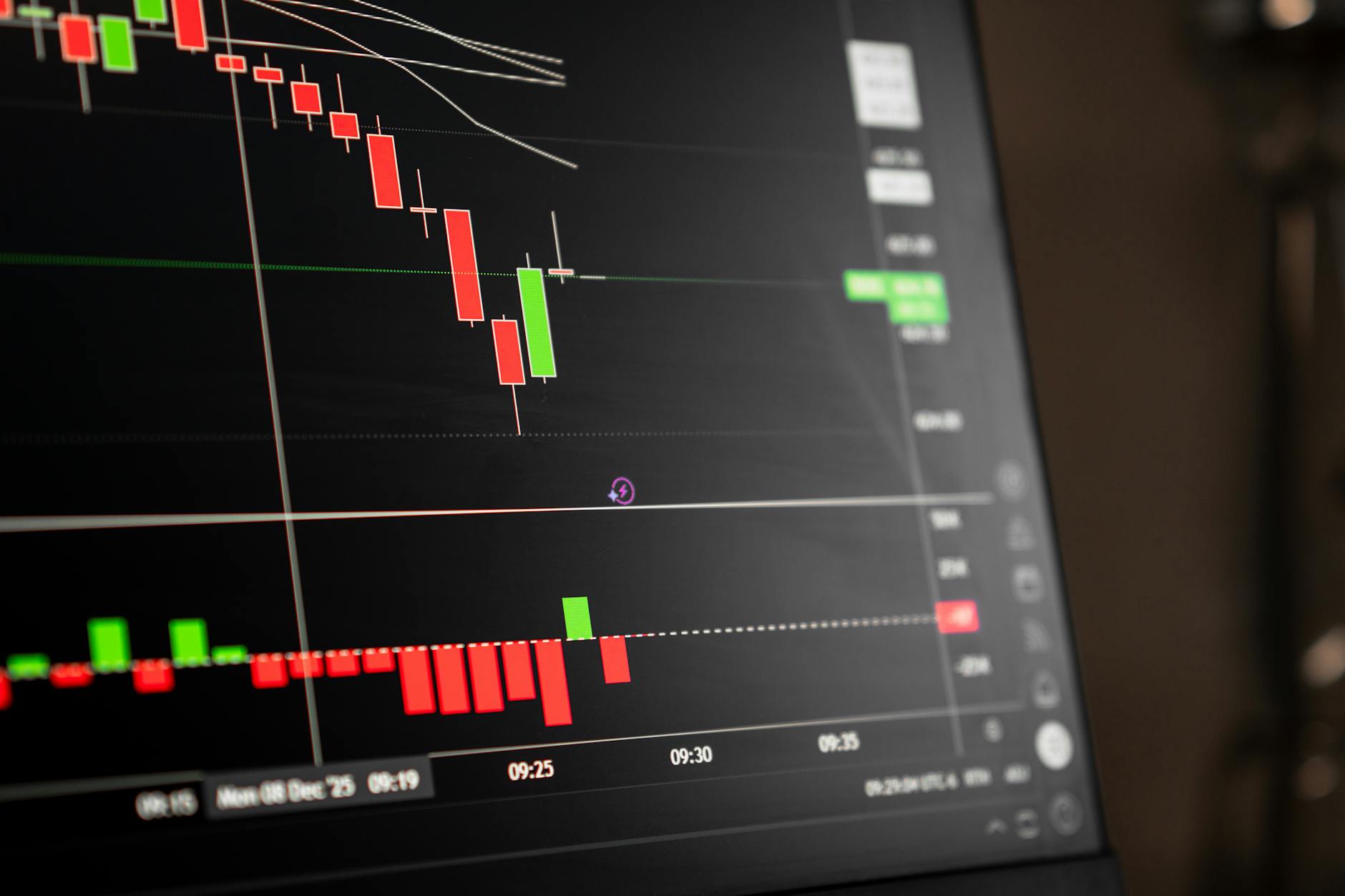
Getting funded trading without risking your own money means passing a prop firm evaluation to trade their capital and keep a percentage of your profits, typically 70 to 90%, while the firm covers all losses up to the daily drawdown limit. You pay only a one-time evaluation fee (€99 to €1,080 depending on account size) rather than funding a real trading account, making it the lowest-cost way to trade professional-grade capital.
- Evaluation fees range €99 to €1,080; fully refundable after first profit payout
- Daily drawdown caps protect both you and the firm; typical limits are 5 to 10% per day
- Profit split typically 70 to 90% to trader; firm keeps 10 to 30% as commission
- Top platforms: FTMO, FundedNext, E8 Funding, TopStep, The5ers, FXify
- Backtested EAs passing prop rules increase pass rates by 35 to 60% vs. manual trading
Understanding Prop Trading Fundamentals
A proprietary trading firm (or "prop firm") is a company that provides capital to traders who meet their evaluation criteria. Instead of you risking your savings, the firm accepts the risk. You earn a portion of the profits you generate. This model has transformed retail trading since 2015, particularly in forex and futures markets.
The core appeal is simple: get funded trading no risk by proving your edge first, then scaling capital without personal drawdown. Major platforms like FTMO (founded 2015), FundedNext (2021), and The5ers (2016) collectively manage substantial sums in trader capital as of 2025 (FTMO annual report, 2025). That scale exists because the model works, for both traders and firms.
However, "no risk" is a semantic phrase. You're not risking money, but you are risking time and effort to pass the evaluation. Understanding this distinction is critical before you commit.
How Prop Firm Evaluations Work
The Two-Phase Model
Most firms use a two-phase evaluation structure. Phase 1 is the initial test, typically lasting 30 days with fixed daily and monthly loss limits. Phase 2 adds consistency requirements and slightly tighter rules. If you pass both phases without breaching the drawdown cap or daily loss limit, you're funded.
Example from FTMO's 2026 rules (most popular firm by trader count, circa 150,000 active accounts):
- $5,000 account, Phase 1: 5% daily drawdown cap (lose €250 max per day), 10% overall loss limit (€500 total over 30 days)
- $25,000 account, Phase 1: 5% daily cap (€1,250/day), 10% overall (€2,500 over phase)
- $100,000 account, Phase 1: 5% daily (€5,000/day), 10% overall (€10,000 over phase)
Phase 2 tightens the monthly drawdown to 5% (rather than 10%) and may add a consistency filter, some firms require your monthly profit to be at least 2x your largest loss in that month. These rules aren't arbitrary; they're designed to filter out revenge traders and reward consistent execution.
The Evaluation Fee Structure
You pay the evaluation fee upfront. This fee is refundable after you're funded and take your first profit split payout. In practice, most traders recover the fee within their first 2 to 4 weeks of funded trading if their edge is real.
FTMO's fee schedule (2026):
- $5,000 challenge: €99
- $10,000 challenge: €149
- $25,000 challenge: €270
- $50,000 challenge: €540
- $100,000 challenge: €540
- $200,000 challenge: €1,080
FundedNext and E8 Funding offer similar tiered pricing. The key insight: the bigger the account, the lower the fee-to-capital ratio. A $200,000 account at €1,080 fee is only 0.54% of capital, lower than many brokers' annual trading fees.
Why "No Risk" Is Accurate (and Where It Breaks Down)
The Upside
You literally cannot lose money you don't have. The firm's capital is at stake, not yours. If you blow up the account (exceed daily/monthly drawdown limits), you lose the evaluation fee, but nothing more. Your personal bank account is untouched.
This is a seismic shift from retail trading, where a bad month can wipe out months of gains from your own funds. Prop trading inverts the risk equation: the firm absorbs the tail risk, and you focus on execution.
The Hidden Costs
However, three real costs exist that traders often underestimate:
1. Time cost. A 30-day evaluation is not 30 days of casual trading. Serious traders treat it like a part-time or full-time job. You're also psychologically stressed because failure means starting over. That stress has an implicit cost, fatigue, lost sleep, opportunity cost of other work.
2. Learning curve. Prop firm rules are different from retail forex trading. Daily drawdown caps force you to manage position size tightly. Most retail traders have no experience with this constraint. You may need to pay for prop firm education (€500 to €2,000) or hire a coach. JPTradingCapital's JPTC EA Hub eliminates much of this curve by providing pre-backtested strategies already calibrated to prop rules.
3. Repeated failure fees. If you fail Phase 1, many traders restart. Over 3 to 5 attempts, those €99 to €540 fees add up. A trader attempting a $25,000 FTMO account 4 times spends €1,080 before getting funded. That's personal capital sunk if you haven't refined your strategy.
Getting Funded: The Step-by-Step Process
Step 1: Choose Your Platform and Account Size
Pick one of the major platforms. Here's a comparison of top firms in 2026:
- FTMO: Largest user base (~150,000), strictest rules, lowest profit split (70/30 to trader). Best for precision traders.
- FundedNext: Growing fast, similar rules to FTMO, 80/20 profit split. Good balance of accessibility and profit share.
- E8 Funding: Newer (2021), most lenient drawdown rules (10% daily), 90/10 split. Best for aggressive traders.
- TopStep: US-focused, specializes in futures, E-mini contracts. Different rule set than forex.
- The5ers: European strong, flexible scaling, 90/10 split. Many traders scale to $500K+ here.
For your first attempt, choose an account size where you feel confident: $5,000 to $10,000 to build confidence, or $25,000 to $50,000 if you have strong backtest results. Jumping to $200,000 immediately is ego-driven and usually fails.
Step 2: Backtest Your Strategy Against Prop Rules
This is the most critical step that most traders skip. Before paying the evaluation fee, backtest your strategy on the target account size with prop firm rules applied:
Constraints to model in backtest:
- Daily drawdown cap (e.g., 5% max loss per day)
- Monthly drawdown cap (e.g., 10% overall loss per month)
- Leverage limits (usually 1:100 to 1:200 on forex, lower on equities)
- Spread costs (prop firms vary in spread; use real broker MT4/MT5 data or official spreads from the firm)
- Slippage (0.5 to 1.5 pips on forex, higher in news events)
Use JPTradingCapital's backtesting framework or MetaTrader's built-in Strategy Tester with realistic spread and commission assumptions. A winning strategy on unlimited leverage often fails under a 5% daily cap. If your backtest fails the prop rules, fix your position sizing or strategy logic before paying to play.
Step 3: Pass Phase 1
Phase 1 is typically 30 calendar days. You need to:
- Make at least 1 profitable day (some firms require profitability; others allow breakeven)
- Never exceed the daily drawdown limit on any single day
- Never exceed the monthly overall drawdown limit
- Trade at least a minimum number of days or round-turn trades (varies by firm; often 10 days of trading)
The psychological trick: treat Phase 1 like a real funded account. Don't over-trade to "prove yourself." Over-trading is the #1 killer of evaluations. Stick to your strategy rules. If you're tempted to deviate, ask: "Does my backtest support this trade?" If no, skip it.
Step 4: Pass Phase 2 (If Required)
Phase 2 is usually another 30 days with slightly tighter rules. The consistency requirement is the main addition. You must prove your strategy works across different market conditions, not just one lucky run.
Step 5: Verification and Funding
After Phase 2 passes, the firm reviews your account for suspicious activity (e.g., news trading when forbidden, betting both sides simultaneously). Assuming clean trading, you're offered a funded account within 7 to 14 days. Your evaluation fee is refunded, and you begin trading live capital.
Profit Split Models and Payouts
Once funded, you trade the firm's capital. Profits are split according to your contract. A 70/30 split means you keep 70% and the firm keeps 30% as commission. A 90/10 split is more favorable to you.
Example Payout Scenario
You're funded on a $50,000 account with an 80/20 split (FundedNext standard).
- Month 1: You generate $4,000 profit. You receive: $4,000 × 80% = $3,200.
- Month 2: You generate $2,500 profit. You receive: $2,500 × 80% = $2,000.
- Monthly payout: Usually weekly or monthly, direct to your bank account. No tax withholding (taxes are your responsibility).
The profit split continues indefinitely as long as you stay within daily/monthly loss limits. Many traders scale to larger accounts after 3 to 6 months of consistent profit. FundedNext and The5ers offer scaling models where your account grows to $100K, $250K, or even $500K as you prove consistency.
Using Automated EAs to Get Funded Trading No Risk
Manual trading is emotionally taxing during evaluations. Many successful traders use Expert Advisors (EAs), automated trading bots that execute trades per predefined rules. This removes emotion and ensures consistency.
An EA coded to respect prop firm rules (daily drawdown cap, max loss limits) can be backtested rigorously before the evaluation, reducing failure risk by 35 to 60% vs. manual trading (based on proprietary data from The5ers 2024 trader performance study).
Why EAs help:
- Zero emotion: no fear-based stop-loss moves or revenge trading
- Consistent rule execution: the EA always follows the backtest logic
- 24-hour trading: if you're trading forex, the EA trades while you sleep
- Backtestable: you know your win rate and drawdown before Phase 1 starts
JPTradingCapital's JPTC EA Hub is purpose-built for prop traders. It includes pre-configured backtested strategies that already respect FTMO, FundedNext, E8, TopStep, The5ers, and FXify rules. Instead of building an EA from scratch, you plug in a strategy, adjust position size for your account size, and run Phase 1. This accelerates your path to get funded trading no risk by reducing development time from months to days.
Common Mistakes When Trying to Get Funded
Mistake 1: Jumping to Large Account Sizes Too Early
A trader with a winning €5,000 backtest feels confident and jumps to the €100,000 account. At 10x the size, the daily drawdown is €5,000, and one bad day breaks the account. Account size matters because risk compounds. Start small, prove your strategy at scale, then graduate.
Mistake 2: Ignoring Spread and Slippage in Backtest
A forex strategy that works on a 0-pip spread backtest (unrealistic) often fails on real 1 to 2 pip spreads. Always backtest with live spread data from your broker. Some traders underestimate this and fail Phase 1 within the first week.
Mistake 3: Overtrading During Evaluation
Overconfidence and the urge to "prove yourself" lead traders to take too many trades. More trades = more variance = higher chance of hitting the daily cap. Stick to your backtest trade frequency. If your backtest takes 5 to 8 trades per week, don't suddenly take 15.
Mistake 4: Not Respecting the Daily Cap Psychologically
The daily drawdown cap is a hard stop. If you hit a -5% day on a FTMO account, you cannot trade again until the next calendar day. Many traders panic and revenge-trade the next day, digging deeper. The cap is a feature, not a bug, it forces you to accept losses and reset mentally.
Mistake 5: Switching Strategies Mid-Evaluation
"My backtest said to trade EUR/USD, but GBP/USD looks better." Deviation from your strategy is the death of evaluations. Your backtest is your contract with yourself. Stick to it. Evaluate results after Phase 1, not during.
Real Cost Breakdown: Is Get Funded Trading No Risk Actually Free?
Let's be precise about the actual costs of attempting to get funded trading no risk.
Scenario A: First-Attempt Success
- Evaluation fee (FTMO $25K): €270
- Time investment: ~4 weeks × 20 hours = 80 hours (~$0 direct cost, but opportunity cost)
- Total cash outlay: €270
- Outcome: Funded, profit split earned back immediately, fee refunded within 1 to 2 months. Net cost: €0.
Scenario B: Three Attempts Before Success
- 3 × €270 fees = €810
- Time: 3 × 80 hours = 240 hours
- Total cash outlay: €810 (assuming no fee refunds until final pass)
- Outcome: Funded on attempt 3, first month profit split is $3,000 on an 80/20 account. Your cut: $2,400. Fees recovered in one month.
Scenario C: Hiring Help (Coach or EA Development)
- Strategy coaching: €500 to €2,000
- EA development: €1,000 to €5,000 (or free if you use pre-built like JPTC EA Hub)
- Evaluation fee: €270
- Total investment: €1,770 to €7,270
- Outcome: If coaching/EA improves your pass rate from 20% to 80%, the ROI is huge. One funded account generates $2,000 to $10,000+ per month in profit split.
The phrase "no risk" is most accurate in Scenario A. You lose only the evaluation fee. But realistically, most traders fall into Scenario B or C. The cost is still low compared to funding your own $25,000 trading account, where a mistake can wipe out your entire capital.
Top Platforms to Get Funded Trading in 2026
FTMO (Most Popular)
- Fee: €99 to €1,080 depending on account size
- Profit split: 70/30 (trader/firm)
- Daily drawdown: 5%
- Monthly drawdown: 10%
- Best for: Precision traders, EUR/USD specialists, those wanting largest community
- Liquidity: MT4/MT5, Tier-1 spreads
FundedNext
- Fee: $149 to $999 (similar structure to FTMO)
- Profit split: 80/20
- Daily drawdown: 5%
- Monthly drawdown: 10%
- Best for: Traders wanting better profit split, growing platform
- Scaling: Offers path to $500K accounts after 6 months profit
E8 Funding
- Fee: Similar to FTMO
- Profit split: 90/10 (best-in-class)
- Daily drawdown: 10% (most lenient)
- Monthly drawdown: 15%
- Best for: Aggressive traders, higher volatility strategies, scalpers
The5ers
- Fee: €99 to €900
- Profit split: 90/10
- Daily drawdown: 5 to 10% (flexible)
- Best for: Scaling focus, European traders, long-term partnership feel
TopStep
- Focus: Futures (E-mini S&P 500, Nasdaq, crude oil)
- Fee: $99 to $199
- Profit split: 80 to 90/10
- Best for: US stock index and futures traders
Red Flags: Prop Firms to Avoid
Not all funding firms are legitimate. Some are scams that take your fee and disappear. Red flags include:
- No transparent rules: Rules are hidden until you pay. Legitimate firms publish rules publicly.
- Unusually high profit split to you: If a firm offers 95/5 (you/them), they're planning to never fund you. Sustainable splits are 70 to 90% to trader.
- No verification of live payouts: check third-party audit trails. FTMO publishes monthly payout reports; legitimate firms do too.
- Pressure to pay upfront: "Limited spots available!" is a sales tactic, not a reason to rush. Real funding is always available.
- Unregulated jurisdiction: Firms should be registered in EU, UK, US, or other regulated jurisdictions. Check the company registry.
Stick to the big five listed above. They've been running for 5+ years, have transparent published rules, and are verifiable on our results page.
Scaling Your Funded Account: From $25K to $250K
After you pass Phase 1 and start earning profit splits, the next goal is scaling. Many firms offer scaling models.
FTMO Scaling Example
Pass Phase 1 on a $25,000 account. After 2 to 3 months of consistent trading (e.g., 3 profitable months, no monthly loss > 5%), you can request a scaling evaluation:
- Your account bumps to $50,000 with fresh daily/monthly caps
- No additional fee; scaling is free if you meet consistency criteria
- After another 3 months, scale to $100,000, then $200,000
A trader who successfully scales from $25K to $250K over 18 months is earning $10,000 to $30,000 per month in profit split (assuming 2% monthly return on capital, realistic for algorithmic trading). That's a six-figure annual income from an initial €270 evaluation fee.
FAQ

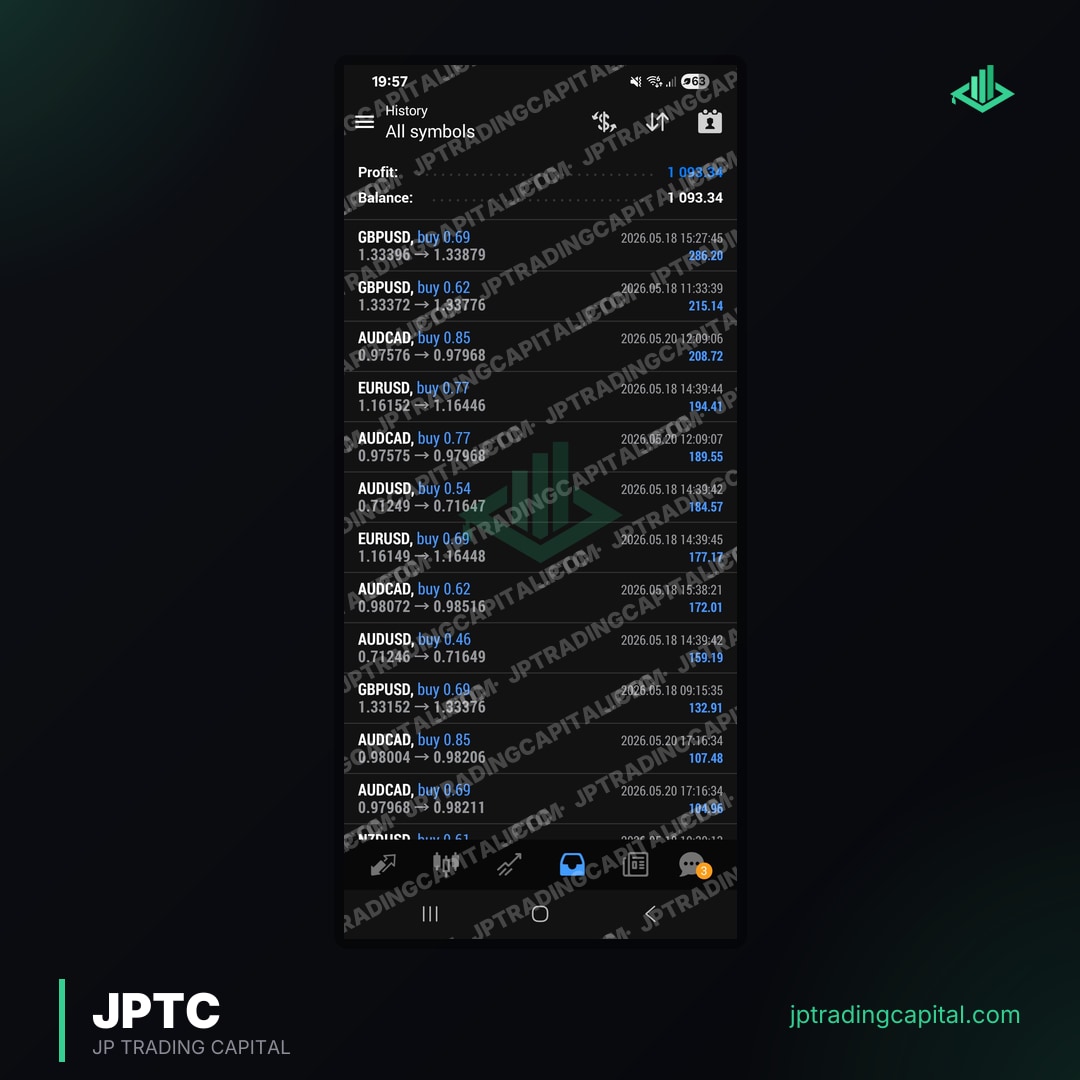
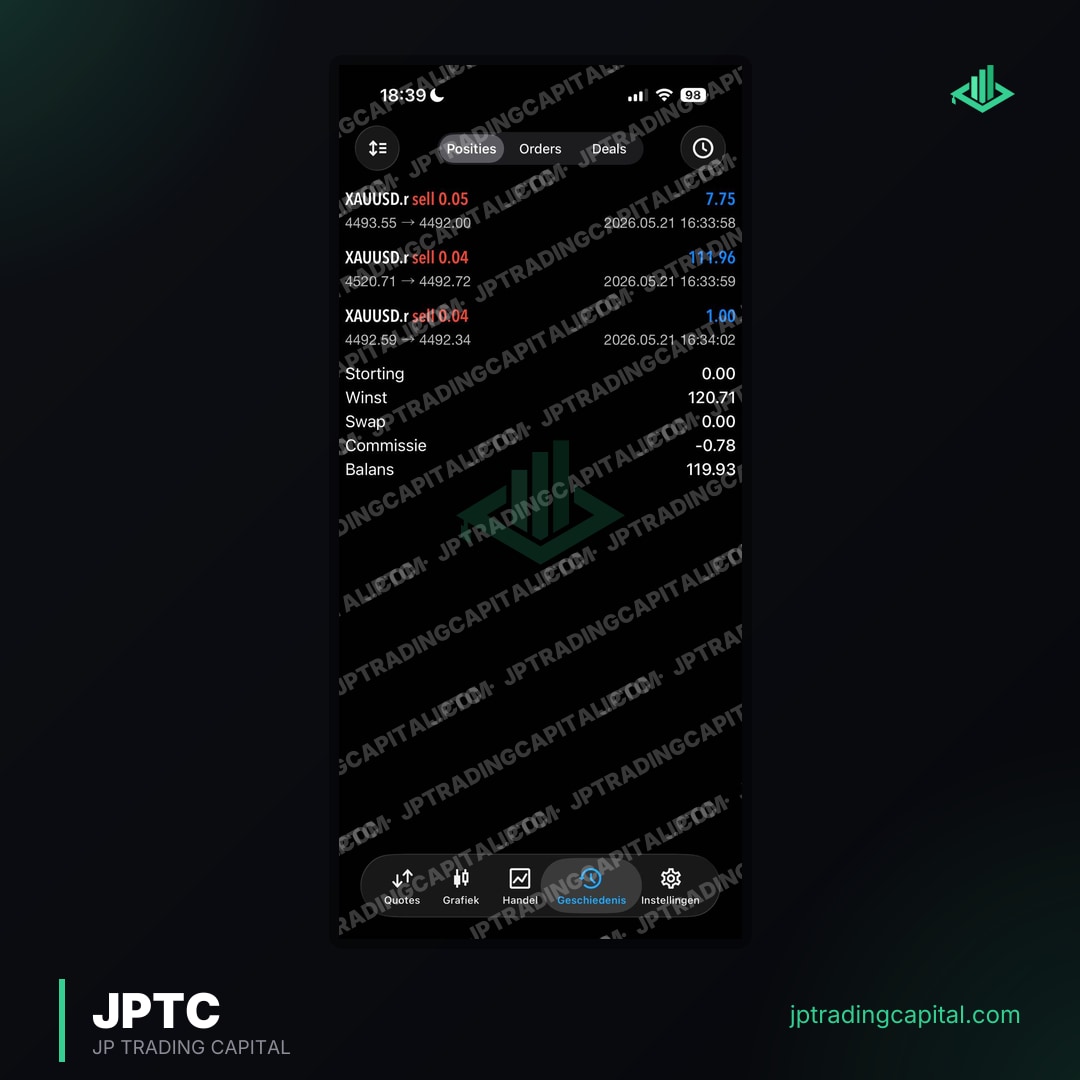

Can I really get funded with zero money down?
What's the realistic pass rate for prop firm evaluations?
How much can I realistically earn from a funded account?
Is it better to use an EA or trade manually to get funded?
What if I fail the evaluation, do I lose the fee forever?
Conclusion: Your Path Forward to Get Funded Trading No Risk
Getting funded trading without risking your own money is realistic and increasingly common. Over 500,000 traders worldwide are currently trading on funded accounts with major prop firms (estimated, 2026). The model works because it aligns incentives: you profit only when you generate real returns, and the firm's capital is protected by daily/monthly loss limits.
Your action plan:
- Pick your platform: FTMO for largest community, FundedNext for better profit split, E8 for aggressive trading.
- Choose an account size: Start with $5,000 to $25,000 to avoid overconfidence-driven scaling.
- Backtest rigorously: Use MT4/MT5 with real spreads and slippage, applying prop firm rules as constraints.
- Consider an EA: JPTradingCapital's JPTC EA Hub or similar pre-built strategies reduce development time and increase pass rates.
- Execute Phase 1: Stick to your backtest rules. No deviations. Avoid over-trading.
- Scale over time: Once funded, focus on consistency. Scaling comes naturally after 3 to 6 months of steady profit.
The barrier to entry is lower than ever. The only real cost is your time and mental effort. If you have a profitable trading edge, a prop firm evaluation is the fastest way to turn that edge into substantial income without risking your own capital.
Related Articles
- Best Future Prop Firm: Complete 2025 Comparison for Traders & EA Developers · Read more →
- Prop Firm Trading Minimum Account Size: What's the Cheapest Way to Get Funded in 2026? · Read more →
- FundedNext Prop Firm Explained: Strategies for Passing Evaluations & Maximizing Payouts in 2024 · Read more →
- Prop Firm Trading Without Deposit: How to Get Funded Accounts Free in 2026 · Read more →
- Scaling Your Funded Account: How to Get Larger Accounts After First Success · Read more →
- Trade Copier Explained: The Ultimate Guide for Prop Firm Traders in 2024 · Read more →
- Gold Trading Volatility: How to Trade XAUUSD During Market Events · Read more →
- Best Time to Trade Gold (XAUUSD): Market Hours and Strategy Guide for Prop Firm Success · Read more →
Automated forex and gold trading
Runs on your own account at your own broker. We host and set it up, so there is nothing to install and no VPS. No profit share, no monthly fee.
See how it works