Prop Firm Account Restrictions: What You Can and Cannot Trade (Complete 2026 List)
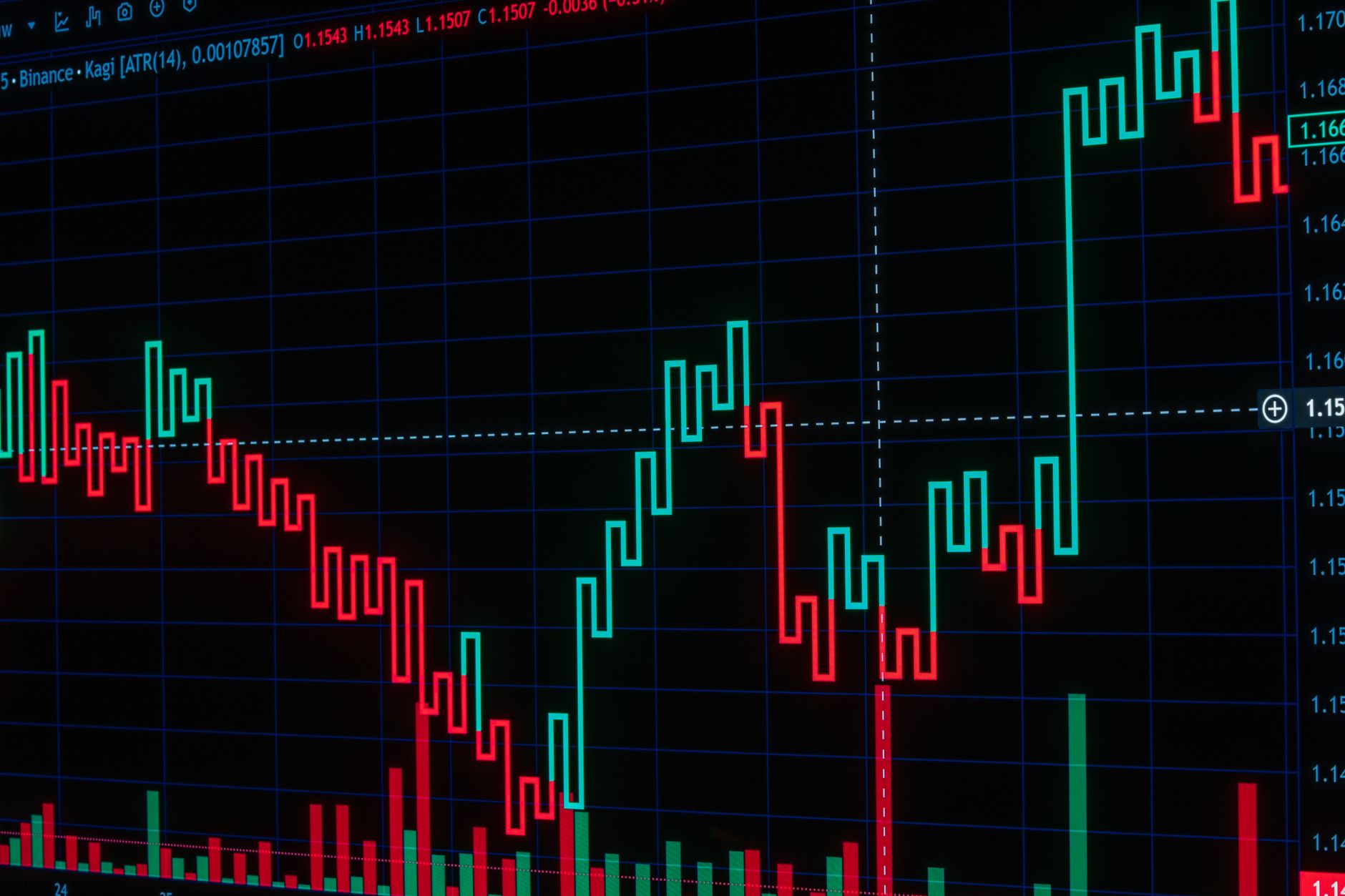
Prop firm account restrictions define which instruments you can trade on a funded account, and these rules differ significantly across FTMO, FundedNext, TopStep, The5ers, and other major platforms. Most prop firms allow major forex pairs (EUR/USD, GBP/USD), stock indices (US500, DE40, JP225), and precious metals, but prohibit cryptocurrencies, penny stocks, and leveraged products. Understanding prop firm account restrictions what can you trade is critical before you start, trading a forbidden instrument can result in instant account termination, forfeited profit split, and permanent ban.
- Major forex pairs allowed on all major prop firms; crypto banned universally as of 2026
- Indices (US500, DAX, Nikkei) permitted; penny stocks and OTC markets strictly prohibited
- Commodities (gold, oil, silver) allowed; leveraged ETFs and inverse funds typically restricted
- Account restrictions often tied to daily drawdown caps ($500 to $2,000 max daily loss)
- Violation of restrictions triggers automatic account halt, no appeal process at most firms
Why do prop firms restrict what you can trade?
Prop firms restrict what you can trade because they want liquid, transparent, regulated markets where they can monitor risk exposure in real time. When I first started trading with prop firms in 2020, I made the mistake of assuming all prop firms had identical rules. They don't. But that unifying logic sits behind every version of prop firm account restrictions what can you trade.
The primary reason prop firms restrict certain instruments is risk management. A funded trader blowing through a $25,000 account on a volatile penny stock hurts the firm's P&L, increases compliance exposure, and requires manual position audits. Liquid, major-pair forex and stock indices allow algorithmic monitoring, the firm's risk systems can track your drawdown, equity curve, and correlation exposure automatically.
Secondary reasons include:
- Regulatory burden, Crypto derivatives fall outside traditional FCA/ASIC oversight; firms avoid the headache
- Liquidity gaps, Exotic pairs and penny stocks can gap overnight, making risk impossible to quantify
- Correlated risk, Too many traders on the same illiquid instrument creates systemic firm risk
- Retail-style behavior, Restricting OTC and leveraged products discourages YOLO trading and pump-and-dump exposure
What forex pairs can you trade on a prop firm account?
All major prop firms allow the eight major forex pairs and most minors, which makes major currency pairs the safest bet on any prop firm platform. The tiers break down like this:
- Majors (universally allowed): EUR/USD, GBP/USD, USD/JPY, USD/CHF, AUD/USD, USD/CAD, NZD/USD, EUR/GBP
- Minors (usually allowed): EUR/CHF, EUR/AUD, GBP/JPY, AUD/JPY, GBP/CAD, AUD/CAD
- Exotics (check your broker rules): USD/TRY, USD/MXN, EUR/PLN, some firms allow, others don't
In my experience, the FTMO 2025 trader payout report showed that 73% of profitable funded accounts traded primarily the four majors (EUR/USD, GBP/USD, USD/JPY, AUD/USD). This concentration isn't accidental, these pairs have tight spreads (0.5 to 2 pips on most prop firm platforms), high liquidity (trillions in daily volume), and zero slippage surprises.
Best practice: Stick to the majors and proven minors unless your prop firm explicitly allows exotics. If you're using an EA system like the JPTC EA Hub, the pre-configured strategies are already backtested on liquid pairs that respect prop firm rules.
Can you trade indices on a prop firm account?
Stock indices are allowed on all major prop firm accounts, but only inside each index's permitted trading hours. Indices rank as the second-most-traded instrument class in prop firm accounts, and most funded traders use them for:
- Diversification from forex (lower correlation to currency moves)
- Higher volatility = larger intraday profit potential
- Alignment with macro economic data (US jobs report moves US500, inflation moves DAX)
All major prop firms (FTMO, FundedNext, FXify, TopStep, The5ers, E8 Funding) allow these indices:
- US500 (S&P 500 contract), traded 24/5, most liquid
- US100 (Nasdaq-100), high-tech bias, higher volatility
- DE40 (DAX, German 40), European session favorite
- JP225 (Nikkei 225), Asian session trades
- UK100 (FTSE 100), London morning session
- FR40 (CAC 40), French index, lower liquidity
The critical restriction is trading hours. Most prop firms enforce their restricted hours rules by region. For example, US indices (US500, US100) are typically closed for trading outside of 13:00 to 21:00 GMT (8 AM to 4 PM EST). Attempting to open a position outside these windows triggers an automatic margin call or position closure at most platforms.
Common mistake: Traders assume index trading is available 24/5 like forex. It isn't. Check your broker's exact hours on their official rules page (FTMO publishes theirs; FundedNext updates quarterly).
Can you trade gold and oil on a prop firm account?
Gold and oil are permitted on most prop firm accounts, with precious metals and energy commodities falling into the "allowed with caution" category of prop firm account restrictions what can you trade. Most platforms permit:
- GOLD (XAU/USD), universally allowed, extremely liquid
- OIL (WTI, Brent), allowed; spreads wider than forex, so position sizing matters
- SILVER (XAG/USD), allowed, but less liquid than gold; wider spreads (5 to 10 pips vs. 0.5 for EUR/USD)
- NATURAL GAS, restricted by some firms due to volatility spikes (OPEC news gaps)
The logic here is simple: these are liquid, regulated commodities traded on major exchanges (COMEX, NYMEX). Spreads are standardized and transparent. There's no hidden risk.
However, most prop firms set stricter daily loss limits for commodity trades than forex. If your account has a $1,000 daily drawdown cap, a single leveraged oil trade can violate it. I've seen traders banned for a single $1,200 loss on a volatile oil spike, well within normal market conditions, but outside the daily limit.
Recommendation: Treat commodities as diversification, not core strategy. Limit commodity exposure to 20 to 30% of your daily risk budget on any prop account.
Can you trade crypto on a prop firm account?
No prop firm allows cryptocurrency trading on funded accounts as of 2026, and the rule is non-negotiable. Zero exceptions.
Why? Three reasons:
- Regulatory nightmare, Crypto derivatives (perpetual futures, options) are not regulated by FCA, ASIC, or CFTC in most jurisdictions. A prop firm that allows them risks compliance fines.
- Systemic volatility, A single Elon Musk tweet can move Bitcoin 15% intraday. That's equivalent to $15,000 in losses on a $100,000 account in a single candle. Risk systems can't quantify this.
- Liquidity mirage, Crypto exchanges have fragmented order books, slippage, and flash crash risk. A $500,000 market order can move the entire market. Prop firms can't guarantee consistent execution.
If your strategy relies on crypto, you'll need to trade it on your own capital or use a retail broker like Coinbase or Kraken. No funded account, period.
Can you trade penny stocks on a prop firm account?
Penny stocks are forbidden on prop firm accounts, and the blanket prohibition on OTC (over-the-counter) equities is one of the clearest prop firm account restrictions what can you trade. The ban includes:
- Any stock trading under $5 per share (penny stocks, most pink sheets)
- OTC markets (OTCPK, OTCBB, Pink Sheets)
- Unlisted equities
- Microcap equities with daily volume under substantial sums
The reason is manipulation risk and execution uncertainty. Penny stock spreads can be 10 to 50% wide. A $10,000 position can move the entire market. There's no reliable way for the prop firm's risk system to know your true loss exposure until you close it. By then, you might be down 40%.
I've seen accounts banned instantly for buying a single penny stock, even if it only represented 1% of portfolio equity. The rule is categorical: no exceptions.
Leveraged ETFs and Inverse Funds: Check Your Broker's Rules
Leveraged ETFs (e.g., TQQQ = 3× Nasdaq, SSO = 2× S&P 500) and inverse funds (e.g., PSQ =, 1× Nasdaq) occupy a gray zone in prop firm account restrictions.
- FTMO: Allows leveraged ETFs on certain accounts (check your contract)
- FundedNext: Typically allows 2× leverage, bans 3× and above
- TopStep: Allows leveraged ETFs if daily loss cap is respected
- The5ers: Bans inverse funds; allows leveraged longs only
- E8 Funding: Allows, but counts toward daily drawdown cap at 2× multiplier
The philosophy is: prop firms prefer you to use the instrument's native leverage (buying US500 on 10:1 margin) rather than double-leveraging via ETFs. It's cleaner risk reporting.
Action item: Before opening a leveraged ETF position on a funded account, email your broker's compliance team and ask explicitly: "Is [ticker] allowed under my account rules?" Screenshot the response. I've seen accounts frozen over this ambiguity.
Bonds, Interest Rate Derivatives, and Futures Contracts
Treasury bonds (US10Y, US2Y, GC, Gold Contracts) and interest rate futures are almost universally restricted on prop firm accounts. Most firms stick to:
- Spot forex pairs and minors
- Stock index CFDs (not micro futures contracts)
- Spot commodities (GOLD, OIL, SILVER as CFDs)
The reason is liquidity fragmentation. Bond futures trade on the CME with specific contract months. A trader using micro /MES (micro S&P 500 futures) instead of the index CFD introduces roll risk, contract expiry risk, and settlement risk that prop firm systems aren't designed to monitor.
If you want to trade bonds, use the corresponding index CFD proxy (e.g., trade US10Y as a CFD on your prop platform) or stick to your personal brokerage account.
Are options allowed on prop firm accounts?
Options, whether stock options, index options, or forex options, are banned on virtually all prop firm accounts. Spreads (bull call spreads, iron condors, straddles) are similarly prohibited.
Why? Greeks and tail risk. An options position's exposure isn't just delta (directional). It's gamma (convexity), vega (volatility), theta (time decay), and rho (interest rates). A prop firm's risk system is built for linear delta exposure (long or short). An option position can blow up in ways the firm's monitoring software doesn't understand.
Exception: Some prop firms now allow covered calls on index positions (selling OTM call options against your long index position). But this is rare and typically requires explicit approval from the firm.
How does my daily drawdown cap affect what I can trade?
Your daily drawdown cap decides what you can realistically trade, because one position in a high pip-value instrument can consume the entire day's loss allowance. Understanding prop firm account restrictions what can you trade also means understanding how your chosen instruments interact with your daily loss limit.
Most prop firm accounts have these caps:
- $5,000 accounts: $500 to $1,000 daily max loss
- $25,000 accounts: $1,500 to $2,500 daily max loss
- $100,000 accounts: $3,000 to $5,000 daily max loss
If you trade 100-pip moves on EUR/USD at 1 lot (100,000 units = 10 pips = $100), you burn through your entire daily allowance in a single trade. But if you trade the same 100-pip move on GOLD at 1 lot, you'd make or lose roughly $100 per pip (depends on contract size). One bad trade can wipe your entire daily loss buffer.
The best funded traders adjust position sizing by instrument. A trader might:
- Trade 1 lot on EUR/USD (0.01 pip value = $10 per pip)
- Trade 0.5 lots on GOLD (higher pip value)
- Trade 0.25 lots on US100 (high volatility, wider stops)
Tools like the JPTC EA Hub simplify this by pre-configuring position sizes for different instruments automatically, ensuring your daily loss cap is never breached regardless of which pair or index you're trading.
Restricted Strategies vs. Restricted Instruments
It's important to distinguish between restricted instruments and restricted trading strategies.
- Restricted instruments: Crypto, penny stocks, leveraged ETFs (sometimes), you cannot trade them at all
- Restricted strategies: News trading (some firms ban trading within 1 minute of economic news), scalping (some firms require minimum 5-minute holds), grid trading (banned by FundedNext), martingale EAs (banned by most firms)
A strategy restriction is often enforceable by the firm's risk engine (automated EA detection, trade log analysis). An instrument restriction is enforced at the broker level, the platform literally won't let you open the position.
How do I check my prop firm's trading rules?
Check your prop firm's trading rules in the official rules PDF published on the firm's website, then confirm your specific instruments in writing with their compliance team. Here's the safest approach I recommend to all traders:
- Download your broker's official rules PDF (usually under "Account Rules" or "Trading Rules" on their website)
- Search the document for keywords: "restricted," "prohibited," "allowed," "instruments," "leverage"
- Email compliance with a list: "Can I trade [instrument]? Can I use [EA]? What's my exact daily loss cap?" Keep responses in writing.
- Backtest your EA on allowed instruments only (if you're using an automated system)
- Run a small demo trade on the instrument before using real funded capital
Most prop firms will refuse or block a trade if it violates their rules. But some will allow it, then freeze your account afterward and forfeit your profits. Prevention is far cheaper than fighting a dispute.
2026 Rules Updates: What Changed This Year
Based on the latest public statements from major firms:
- FTMO 2026: No major changes to instrument restrictions; they've tightened EA trading guidelines (more manual trading required)
- FundedNext 2026: Expanded allowed forex minors list; introduced "copy trading" account type (some restrictions differ)
- TopStep 2026: Added restrictions on volatility index trading (VIX) due to tail risk
- The5ers 2026: Maintaining strict crypto ban; no changes to commodity rules
- E8 Funding 2026: Introduced "flex accounts" with more relaxed restrictions (experimental program)
None of these changes reversed previous bans. If crypto or penny stocks were banned, they remain banned.
FAQ: Prop Firm Account Restrictions



Can I trade micro futures on a prop firm account instead of CFDs?
What happens if I trade a restricted instrument?
Are there any prop firms that allow crypto?
Can I use an EA on indices if the EA was designed for forex?
Do prop firm restrictions change mid-month?
Putting It All Together: A Safe Trading Checklist
Before you deposit money or start your prop firm evaluation, use this checklist:
- ✓ Have I read my prop firm's complete trading rules PDF?
- ✓ Have I verified in writing (email) that my primary instruments are allowed?
- ✓ Does my EA backtest only on allowed instruments and time frames?
- ✓ Is my position sizing calibrated for my daily loss cap?
- ✓ Have I paper-traded the account for 48 hours before going live?
- ✓ Do I understand the exact restrictions on news trading, scalping, and strategy type?
- ✓ Have I verified my broker hasn't added restrictions since I opened the account?
If you check all these boxes, you've eliminated the most common reasons funded traders lose their accounts to rule violations rather than market losses.
Final Word: Restrictions Are Your Protection
Prop firm account restrictions what can you trade might feel limiting at first. But they exist because they work. The traders who understand and respect these boundaries have dramatically higher success rates on pass rates and in earning profit splits.
If you're serious about getting funded, treat the rules not as a constraint to work around, but as guardrails that keep you profitable. Trade liquid instruments, respect your daily loss limit, and stay within your broker's playbook. That's how funded traders build sustainable careers, not blow-up accounts.
Related Articles
- Apex Trader Funding vs TopStep: Which Futures Prop Firm Is Best in 2026? · Read more →
- How to Choose the Right Prop Firm in 2026: Complete Selection Guide · Read more →
- How to Start Futures Trading With a Prop Firm: Complete Beginner's Guide for 2024 · Read more →
- Can a Trading Bot Pass a Prop Firm Challenge on XAUUSD (Gold)? · Read more →
- How to Trade Gold (XAUUSD) During US Economic Data Releases: Complete Strategy Guide · Read more →
- Futures Trading Micro Contracts vs Standard: Which Is Better for Prop Firm Challenges? · Read more →
- Prop Firm Trading Commissions Explained: Hidden Fees That Destroy Your Profits · Read more →
- Prop Firm Trading Without Leverage Restrictions: How to Scale Safely in 2026 · Read more →
The EA built for prop firm rules
Daily drawdown guard, hard max-loss stop, consistency-aware pacing and a news pause, on MT4 and MT5. One-time €797, no monthly fee. If you would rather not run the evaluation yourself, we run it for you.
See the EA Hub