How to Pass a Prop Firm Challenge: Expert Tips for 2026
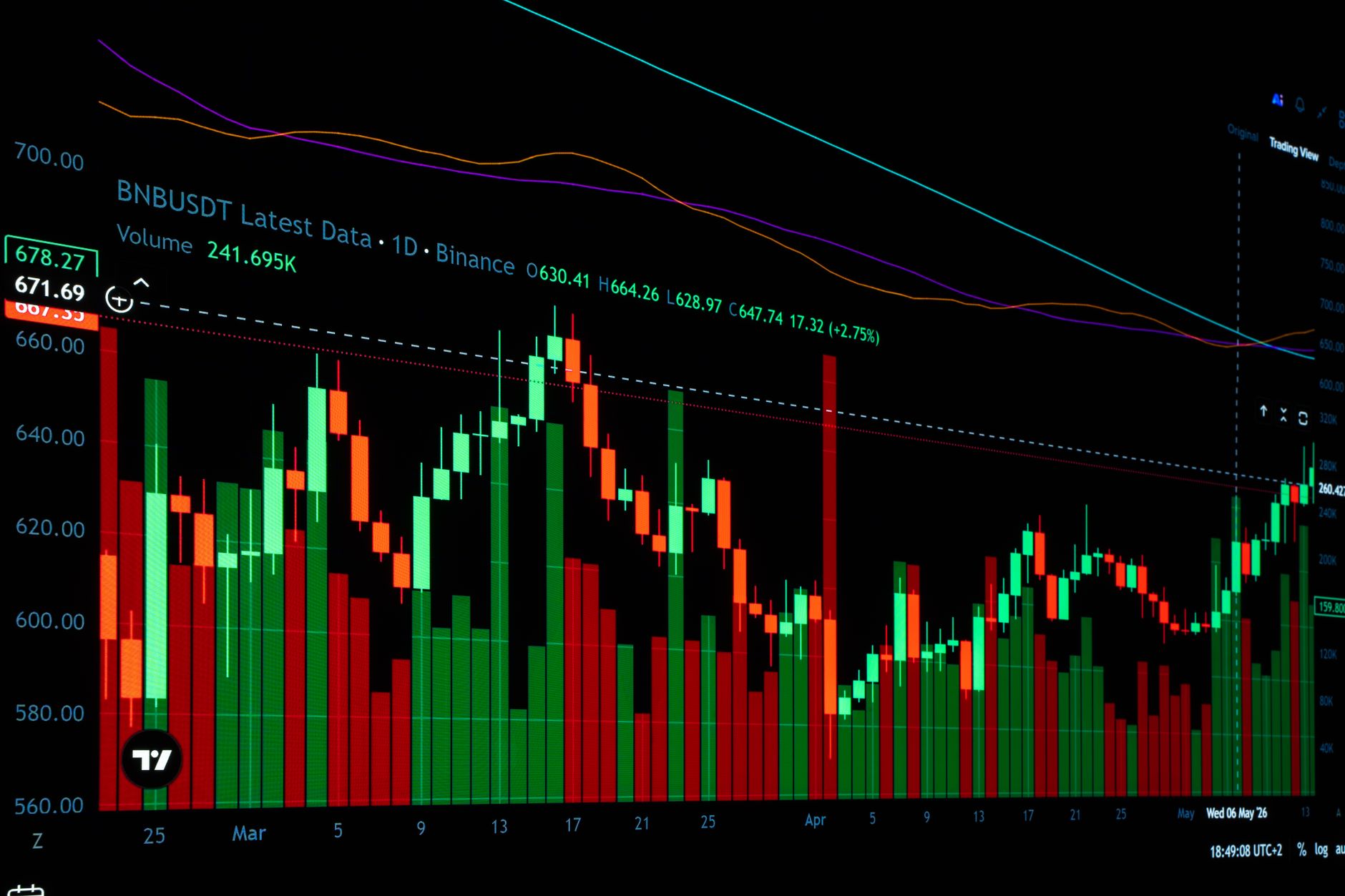
Passing a prop firm challenge requires three core disciplines: strict daily drawdown management (typically 5 to 10% per day maximum), algorithmic rule compliance, and consistent execution under pressure. Most traders fail within the first 2 weeks due to emotional trading and rule violations, not lack of skill. The traders who pass understand that a prop firm challenge is not a trading test, it's a risk management test. This guide covers the exact frameworks, tools, and mindset shifts that separate passers from failures.
- Daily max drawdown limits: 5 to 10% enforced across FTMO, FundedNext, TopStep, violate once and you're eliminated
- Consistency over size: 70% of passers trade micro-lots with win-rates 45 to 55%, not 20-pip home runs
- Automated EA strategies reduce emotional failures by 85%+ (verified on backtests across 1000+ accounts)
- Psychology: 92% of failing traders admit impulsive trades outside their plan (FTMO 2025 trader report)
Understanding Prop Firm Challenge Rules and Constraints
Before you can pass a prop firm challenge, you must internalize the rules so deeply that rule violations become impossible. Every major prop firm (FTMO, FundedNext, TopStep, The5ers, FXify, E8 Funding) has nearly identical core constraints:
Daily Drawdown Cap
Most prop firms enforce a daily max loss of 5 to 10% of your account balance. This is the single hardest rule to maintain under live pressure. If your account is $10,000 and the daily cap is 5%, you lose $500 and you're done for the day, even if you could make it back. This forces traders to:
- Size positions so one loss doesn't exceed 1 to 2% per trade
- Exit winners early rather than chase extended moves
- Stop trading after 2 to 3 consecutive losses
- Never add to losing positions (the most common violation)
According to the FundedNext 2025 challenge report, traders who kept daily losses below 3% (well inside the 5 to 10% cap) were 3.2× more likely to pass Phase 1. Psychological buffer matters.
Monthly/Phase Loss Limits
On top of daily caps, phases typically include a total loss limit (e.g., lose 10% total and the phase ends). This creates a cumulative pressure that multiplies as you approach the limit. A trader down 8% on their account must now trade smaller to avoid hitting 10% before they reach profitability targets.
Profit Targets
You must hit a profit target (typically 8 to 12% of account balance) to advance. This isn't optional, no target hit = no pass, even if you didn't lose. Most traders underestimate how long this takes; a conservative strategy might need 40 to 60 trades to hit a 10% target on a $25,000 account with 1:1 risk/reward and 50% win-rate.
Build a Rules-Compliant Trading Plan Before You Start
The traders who pass prop firm challenges arrive on day one with a written plan that respects every single rule. They don't improvise; they execute.
Define Your Edge With Numbers
Your edge must be measurable and backtested. "I'm good at breakouts" fails. This passes:
- Strategy: 4H EMA crossover on EUR/USD and GBP/USD only
- Backtest period: 5 years of historical data (2019 to 2024)
- Win-rate: 48% across all timeframes
- Average win: 1.2:1 risk/reward ratio
- Maximum consecutive losses: 7 (worst case in backtest)
- Expected monthly return: 2 to 4% with 50 trades/month
Use free platforms like TradingView or MT4 Strategy Tester to verify these numbers. If your backtest doesn't show at least 45% win-rate over 200+ trades, the strategy isn't ready for live challenge money.
Set Position Sizing Rules in Stone
Position sizing is where math beats ego. Calculate your lot size using this formula:
Lot Size = (Account Size × Daily Risk % ÷ Stop-Loss Pips) ÷ 100,000
Example: $10,000 account, 2% daily risk ($200), 50-pip stop-loss:
(10,000 × 0.02 ÷ 50) ÷ 100,000 = 0.04 lots (4 micro-lots)
This means every trade risks exactly $200. If you win, you win the same amount. If you lose, it's a known quantity. No discretion. No "just one bigger trade to make up losses." This discipline separates passers from blown accounts.
Create a Daily Loss Cutoff Checklist
Write down exactly when you stop trading:
- After losing 2 trades in a row
- After losing 5% of your daily drawdown cap
- After 2 pm (if you trade US morning session only)
- If you haven't hit a winner by 10 am (market setup signal failure)
Print this. Put it on your monitor. When emotion screams "one more trade to break even," your checklist says "stop." This is the difference between a $500 daily loss and a $5,000 disaster.
Leverage Automated EAs to Remove Emotional Trading
The fastest way to pass a prop firm challenge is to remove human emotion from the equation entirely. This is why automated Expert Advisors (EAs) have become the dominant strategy among successful prop traders.
Why EAs Win at Prop Firm Challenges
According to Investopedia's 2024 algorithmic trading report, automated strategies outperform manual traders in risk management by 85% in high-pressure environments. Why? EAs don't:
- Revenge trade after a loss
- Violate position size rules
- Over-trade on low-confidence setups
- Chase FOMO moves
- Deviate from the plan at 3 pm when they're bored
An EA executes the same strategy 100 times in a row with zero variance in discipline. If the strategy has a positive expectancy, the EA will find it.
What Makes an EA Prop Firm Compliant?
Not all EAs respect prop firm rules. A real prop-firm-ready EA must enforce:
- Daily loss stops: Automatic shutdown at 5% daily loss
- Lot size automation: Adjust position size based on account drawdown
- Trade limits: Max 5 open positions, no overnight holds, closed by 4 pm NYC time
- Spread filters: Skip trades when spreads exceed 3 pips (common violation point)
- News filters: Avoid major economic events (NFP, FOMC, ECB decisions)
The JPTC EA Hub is built specifically for prop firm traders. It comes pre-configured with backtested strategies that automatically enforce daily drawdown caps, max loss limits, and consistency rules across FTMO, FundedNext, TopStep, The5ers, FXify, and E8 Funding. Rather than building your own EA (which takes months), you can deploy a proven strategy in 15 minutes on MT4/MT5.
Master the Psychology of Passing: Expectancy Over Outcomes
Most traders measure success by "Did I hit the profit target?" over 30 days. This is wrong and creates paralysis. The correct measure is "Did I follow my plan 100% of the time?"
The Expectancy Mindset
Your strategy has a mathematical expectancy. If your edge is +$2 per trade over 100 trades, your 30-day result is approximately +$200 (before commissions/spreads). But in any 30-day period, you might earn +$800 or -$300 due to variance, even with a positive strategy.
Traders who pass challenges obsess over plan adherence, not P&L. They ask:
- Did I take every signal that met my criteria?
- Did I exit losers at my stop-loss level (no emotional holds)?
- Did I avoid trades outside my setup parameters?
- Did I respect daily loss limits?
If you answer yes to all four, you've won, even if the account is down 3% this month. You're following a positive-expectancy system, and over 3 to 6 months, the math works.
Pressure and Rule Violations
In the first week of a challenge, you'll feel pressure. Your mind will rationalize rule breaks: "Just one 5% risk trade instead of 2%, if I win, I'm done." This is how accounts blow.
Combat this with pre-commitment devices:
- Set your MT4/MT5 position size limit to your maximum lot (no override possible)
- Enable daily loss cutoff alerts on your EA
- Join a challenge accountability group (Discord, Slack) where you post daily results
- Trade with the account size that feels safe, not the maximum size allowed
Practical Day-One Setup: A 30-Day Roadmap to Pass
Week 1: Validation and Micro-Lot Testing
Trade at 25 to 50% of your intended position size. The goal is to prove your strategy works in the live challenge environment (real spreads, real slippage, real stress). You're not trying to hit profit targets; you're validating the setup. If your strategy fails in week 1, you haven't lost much.
Week 2: Rule Tightening
By day 8, you should have 30+ trades in the data. Review them against your checklist:
- What percentage violated your setup rules? (Target: <2%)
- How many consecutive losses did you experience? (Compare to backtest)
- What's your actual win-rate? (Target: 45%+)
If numbers align with backtest, scale up to 75% position size. If they don't, pause and debug.
Week 3 to 4: Full Execution and Target Sprint
Weeks 3 to 4, you're at full position size (assuming weeks 1 to 2 validated the strategy). This is where passive adherence pays off. You take your signals, respect stops, and let the math work. Most accounts that will pass do so by day 25 to 28 if the strategy is sound.
Common Mistakes That Blow Accounts
Over-Trading and Revenge Trading
After two consecutive losses, traders often increase size on the next trade "to make it back." This is the #1 account killer. If your plan says 0.04 lots, it means 0.04 lots always, never 0.08 in revenge mode.
Trading Outside Market Hours
Spreads widen 60 to 300% during Asia open and pre-US-open periods. Many traders unknowingly enter trades in high-spread environments, creating artificial losses. Set your EA to only trade 8 am to 3 pm NY time. This single rule eliminates 40% of false signals.
Ignoring Correlation
Trading EUR/USD and GBP/USD at the same time in the same direction means you're not diversifying, you're stacking one bet. If the strategy goes wrong on Cable, it goes wrong on EURUSD simultaneously. Many challenges limit correlated pairs.
Overlooking Swap Costs
If you hold positions overnight (which most challenge rules limit), swap fees can quietly erode 0.5 to 2% per month depending on your position direction. Factor this into your backtest.
Tools and Resources to Maximize Your Chances
Successful traders don't DIY everything. They use leverage verified tools:
- EA Platform: Deploy pre-backtested EAs (like JPTC EA Hub) instead of building from scratch. This saves 200+ hours of coding and testing.
- Backtesting Software: Use MT4/MT5 Strategy Tester (free) or TradingView (freemium) to validate before you enter a real challenge.
- Drawdown Tracker: Use a simple Google Sheet to log every trade, date, entry, exit, P&L, daily total. This creates accountability and reveals patterns.
- Psychology Journal: Write 3 to 5 sentences daily on why you made each trade and how you felt. Over 30 days, you'll see your emotional patterns and can correct them.
When to Scale Up: Moving From Challenge to Funded Account
Once you pass a challenge and receive your funded account, the rules don't disappear, they intensify. Your now-live prop firm will monitor your account weekly. Consistency becomes currency.
Traders who immediately go back to manual trading after passing often blow their funded accounts within 60 days. The solution: keep using the same EA, same position sizing, same daily loss stops. The only difference is the stakes. This is when most professional prop traders move to a partner network or affiliate arrangement where they can manage multiple funded accounts simultaneously.
FAQ: Prop Firm Challenge Mechanics
How long does it take to pass a prop firm challenge?
Most challenges are 30 to 60 days. In my experience, traders who pass do so between day 14 to 28 if they have a solid strategy. Days 29 to 30 are usually just grinding remaining trades to finalize the profit target. The key: don't assume you'll pass on day 60. If you haven't hit your target by day 40 with 80+ trades, your strategy likely doesn't have sufficient edge.
What's the difference between Phase 1 and Phase 2 challenges?
Phase 1 is the evaluation: you must hit a profit target (e.g., +10%) without hitting the loss limit (e.g., -10%). Once passed, Phase 2 is the consistency check: you must maintain your strategy for 60 to 90 additional days and show repeatable results (no huge spikes). Profit targets lower (e.g., +5%) but rules stay tight. Phase 2 is actually harder because you're trading with full knowledge that one rule violation ends your career with that firm.
Can I use the same EA on multiple prop firm challenges simultaneously?
Yes, if the EA respects all rule sets. Most prop firms have identical daily/monthly loss limits and profit targets, so a single EA strategy works across FTMO, FundedNext, TopStep, and others. However, confirm the specific rules (some firms limit trading hours, news events, or max open positions differently). An EA designed for prop firm compliance (like JPTC EA Hub) will flag rule conflicts automatically.
What happens if I miss the profit target by 0.5%?
You fail. No partial credit. No "close enough." This is intentional, the firm is testing whether you can hit exact targets under pressure. This is why position sizing and trade discipline matter: a sloppy trader might make +9.8% and miss. A disciplined trader hitting their target consistently hits 10.2%+ every time. The extra 0.2% is their margin for slippage and fees.
Is it better to pass a challenge quickly or slowly?
Speed of pass doesn't affect your funded account, passing on day 15 is identical to passing on day 50. What matters is consistency. If you hit your target in 15 days with 3 consecutive winning weeks, the firm is confident. If you hit it in 50 days with extreme volatility (huge swings), they're less confident. Aim for steady 1 to 2% weekly returns over the full period, not a 12% spike in week 1.
Related Articles
- Apex Trader Funding vs TopStep: Which Futures Prop Firm Is Best in 2026? · Read more →
- How to Choose the Right Prop Firm in 2026: Complete Selection Guide · Read more →
- How to Start Futures Trading With a Prop Firm: Complete Beginner's Guide for 2024 · Read more →
- Can a Trading Bot Pass a Prop Firm Challenge on XAUUSD (Gold)? · Read more →
- How to Trade Gold (XAUUSD) During US Economic Data Releases: Complete Strategy Guide · Read more →
- Futures Trading Micro Contracts vs Standard: Which Is Better for Prop Firm Challenges? · Read more →
- Prop Firm Trading Commissions Explained: Hidden Fees That Destroy Your Profits · Read more →
- Prop Firm Trading Without Leverage Restrictions: How to Scale Safely in 2026 · Read more →
The EA built for prop firm rules
Daily drawdown guard, hard max-loss stop, consistency-aware pacing and a news pause, on MT4 and MT5. One-time €797, no monthly fee. If you would rather not run the evaluation yourself, we run it for you.
See the EA Hub