Prop Firm EA Consistency Rule: How Automated Trading Stays Inside It

The prop firm EA consistency rule measures whether your automated trading system generates balanced, steady profits instead of relying on a few lucky trades. Most prop firms require your best trading day to represent no more than 30-50% of total profits, ensuring your EA produces repeatable results rather than gambling on high-risk setups.
- Best day must stay below 30-50% of total profit
- Trade distribution should span multiple days and pairs
- P&L curve must show gradual upward slope, not spikes
- Win rate and risk/reward must align with declared strategy
- Overnight holds and lot sizing must stay within firm limits
What Is the Prop Firm Consistency Rule
The consistency rule is a profitability quality filter used by firms like FTMO, FundedNext, and FXIFY. It prevents traders, automated or manual, from passing challenges with a single explosive winner that masks overall poor risk management.
Here's how it works: after you complete an evaluation phase and hit the profit target, the firm calculates your consistency score. This score divides your best trading day's profit by your total account profit. If your best day represents 40% or more of your gains, many firms flag the account for review or outright rejection.
For manual traders, one good NFP trade can wreck consistency. For EAs, the risk is different: a poorly tuned grid bot or martingale system might sit flat for weeks, then book a massive recovery trade that violates the rule. The prop firm ea consistency rule exists to ensure your algorithm doesn't behave like a casino bet.
Why Prop Firms Enforce Consistency
Prop firms fund your account with real capital. They need evidence your strategy will survive normal market conditions over months, not just one lucky swing. A trader who makes 8% in one day and loses ground every other session is statistically likely to blow the account during drawdown periods.
From the firm's perspective, consistency correlates with risk control. An EA that generates small, frequent profits demonstrates it can handle position sizing, stop placement, and volatility shifts, all signals the system won't implode when funded live.
How the FTMO Consistency Rule Works
FTMO's official evaluation rules do not publish a hard consistency threshold in their core requirements, but traders widely report a 30-40% best-day limit based on account reviews. If your top day exceeds this proportion, FTMO's risk team may request additional verification or deny the payout.
The ftmo consistency rule applies to both Phase 1 and Phase 2. Many traders pass Phase 1 with a lucky trade, then fail Phase 2 when they cannot replicate the pattern. EAs designed for FTMO must distribute profit across multiple sessions and currency pairs to avoid clustering risk.
Calculating Your Consistency Score
Consistency score = (Best day profit ÷ Total profit) × 100. For example, if you finish Phase 1 with $800 profit and your best day yielded $280, your score is 35%. Some firms accept this; others require you stay below 30%.
Expert Advisors track this metric in real time by logging daily P&L to a CSV or sending stats to a dashboard. The JPTC EA Hub, for instance, includes a built-in consistency monitor that warns you when your current best day approaches the threshold, allowing you to pause trading or diversify pairs before the close.
How EAs Generate a Smooth P&L Curve
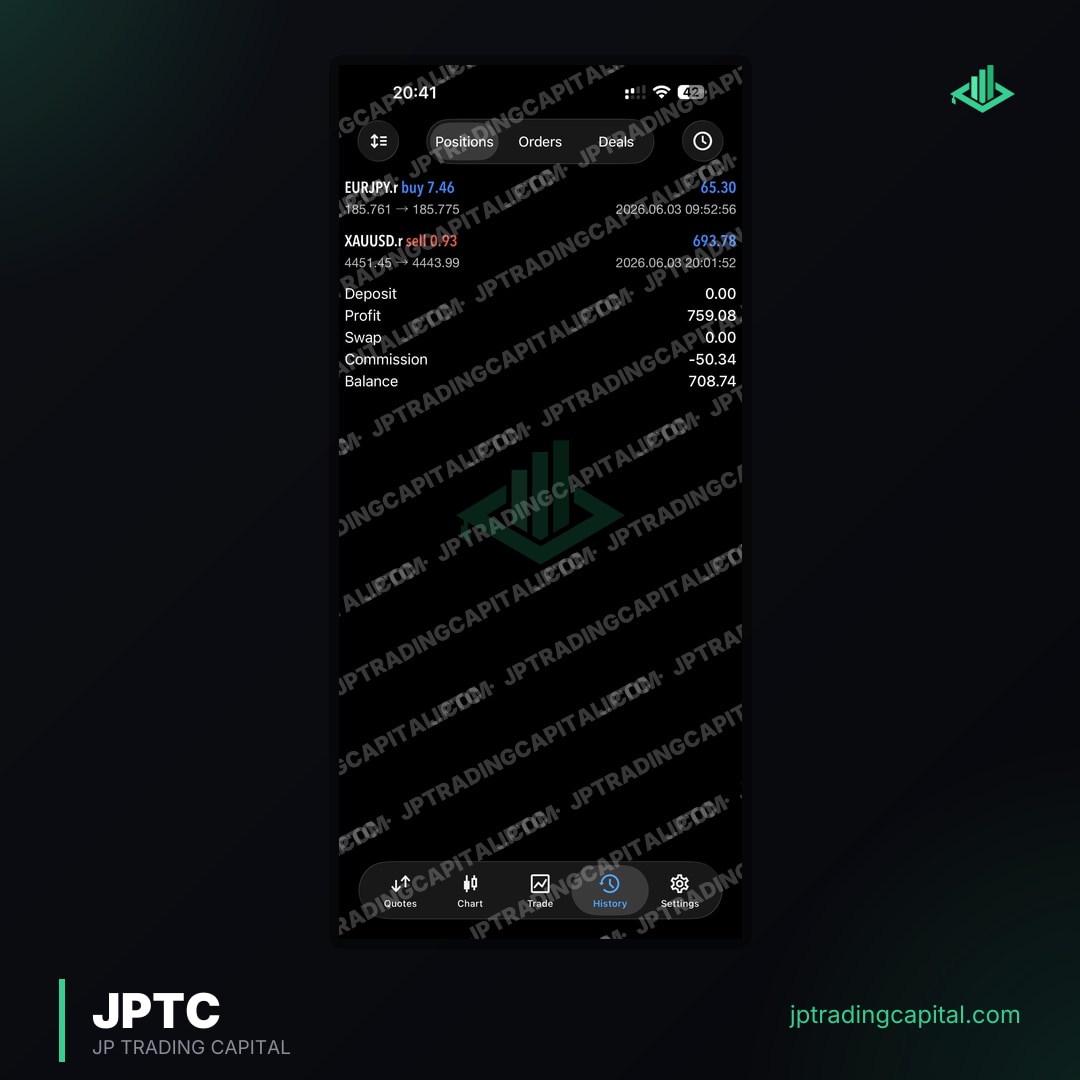
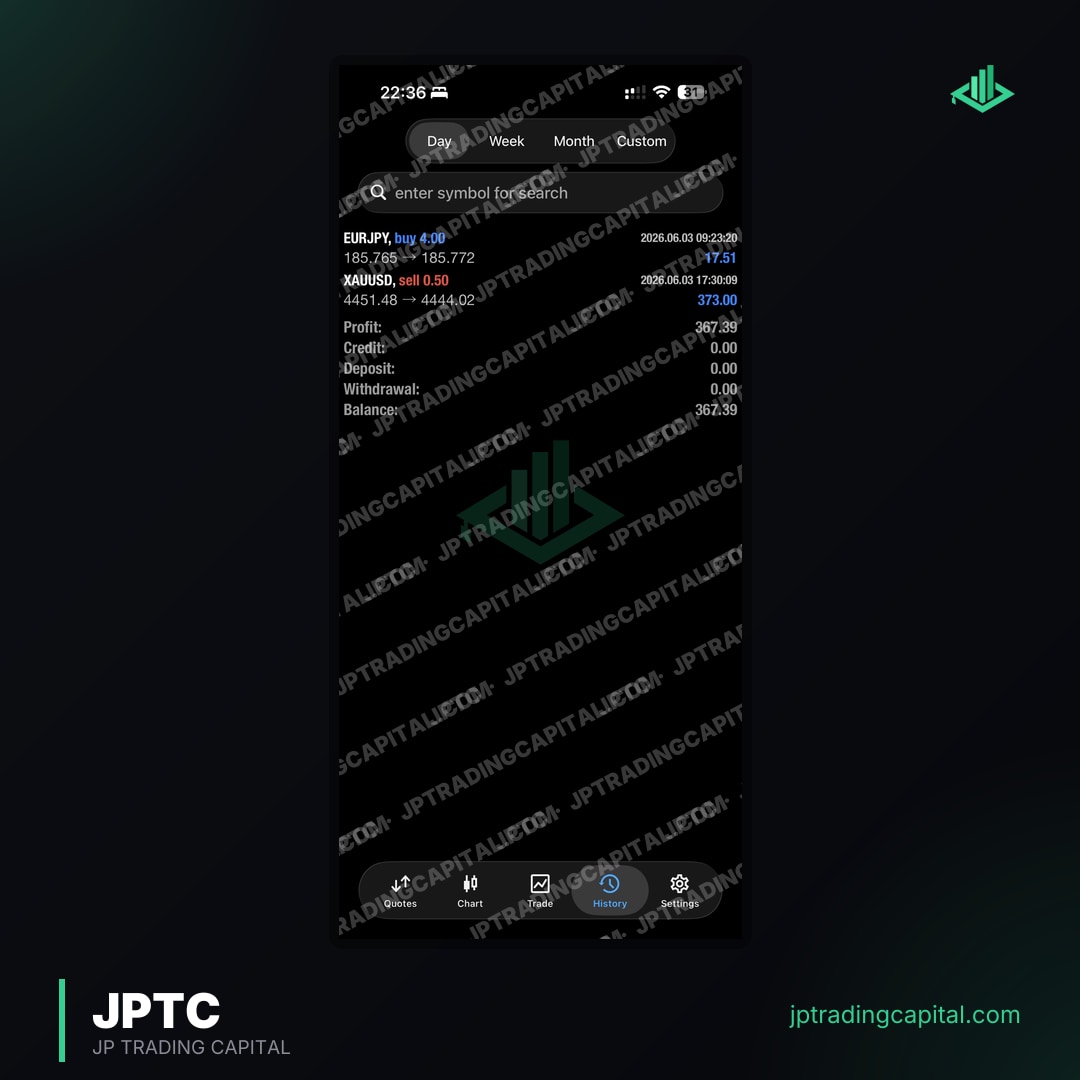
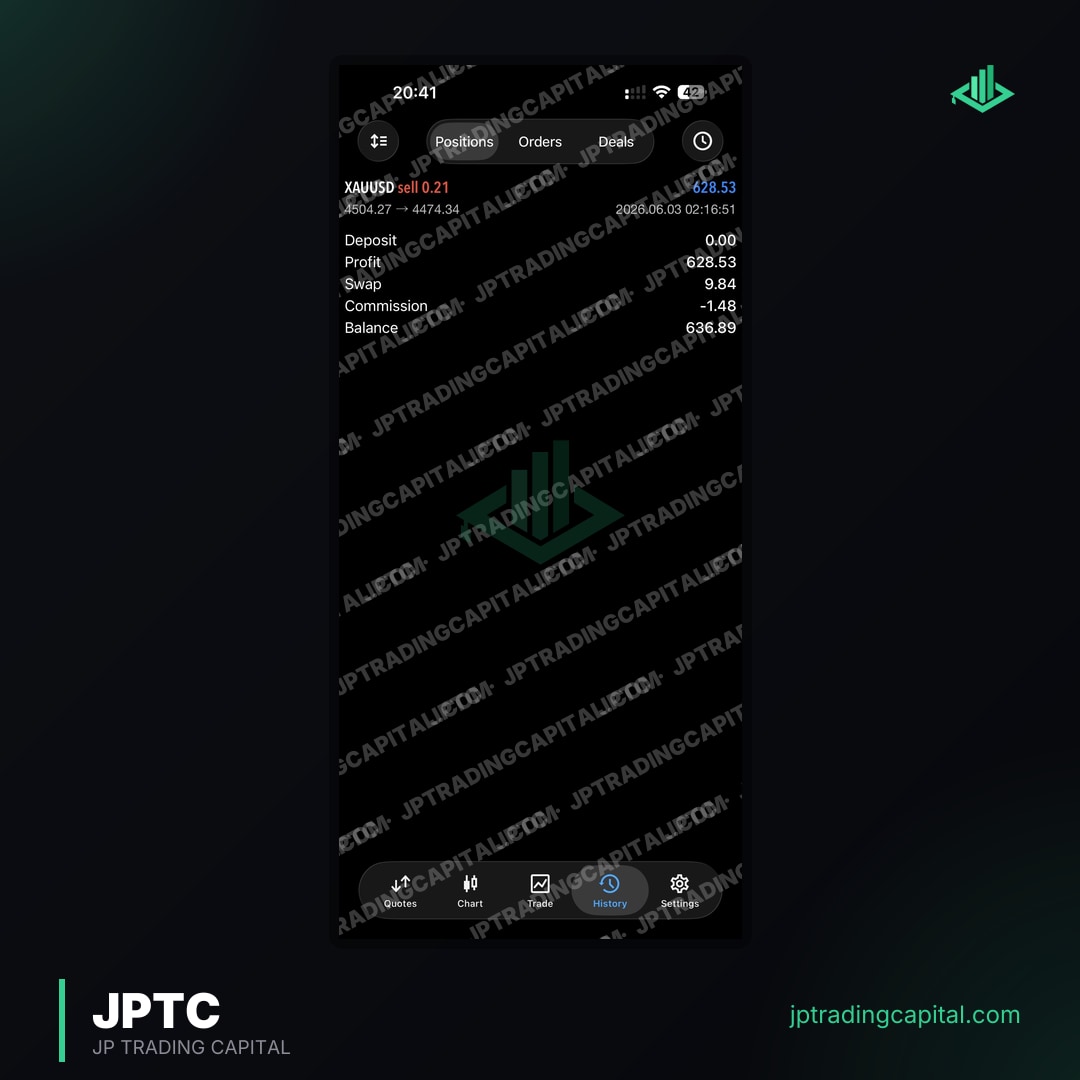
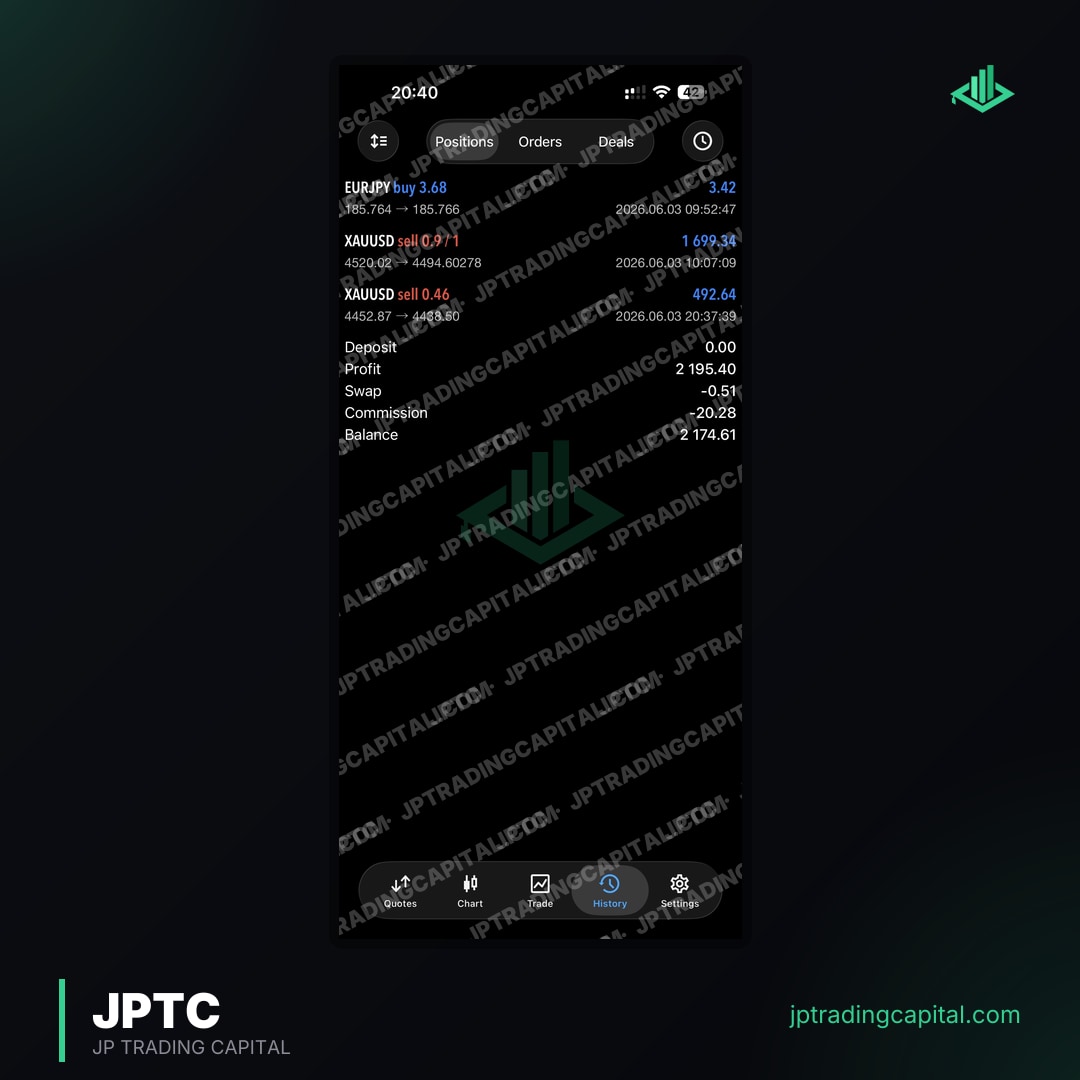
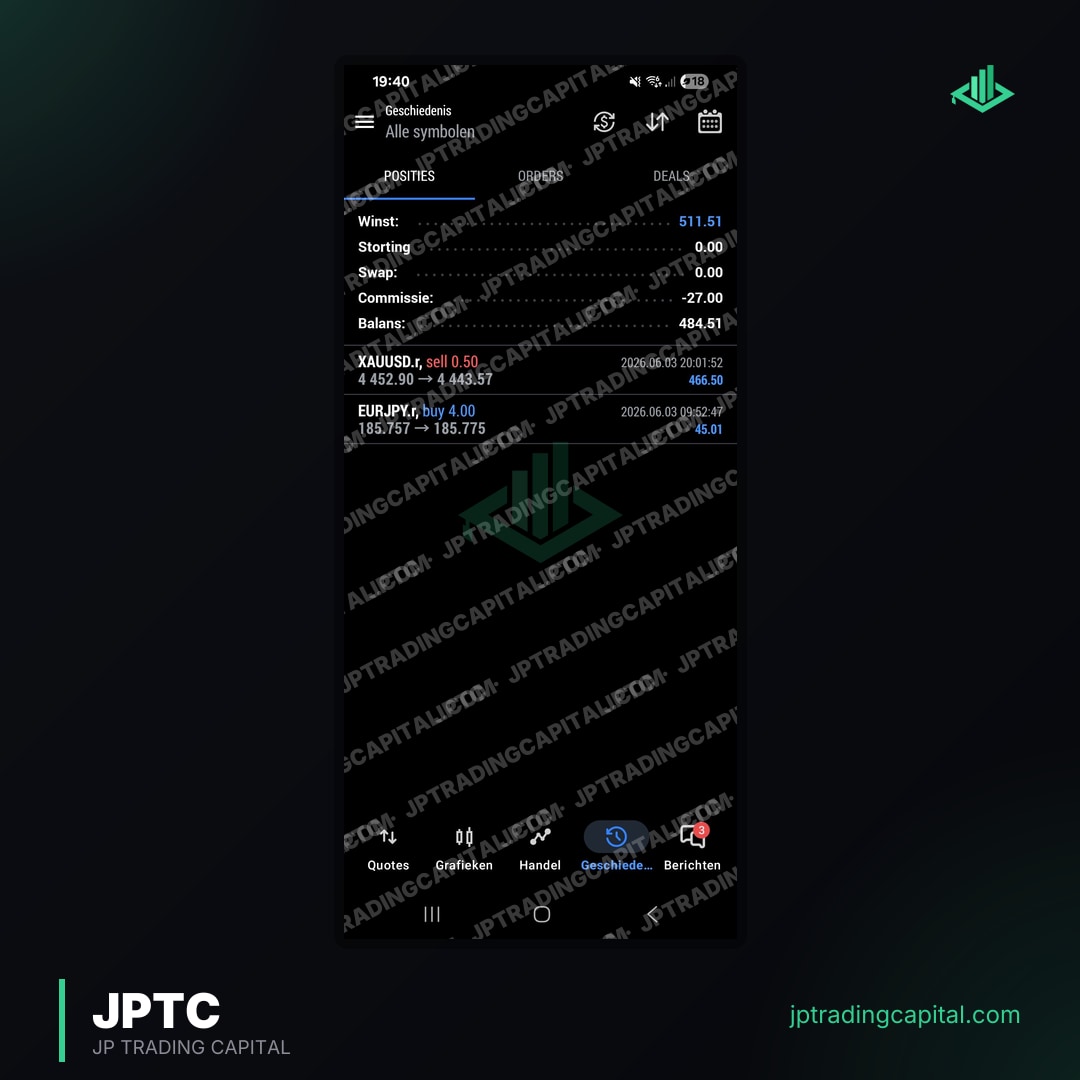

A smooth P&L curve is the visual signature of a consistent EA. Instead of sharp vertical spikes followed by flat or negative stretches, the equity curve climbs gradually with minor pullbacks. This shape signals the algorithm captures small edges repeatedly rather than betting on rare setups.
Trade Frequency and Size Distribution
Consistent EAs open multiple positions per week, spreading risk across timeframes and instruments. A scalper might execute 50 trades in a challenge period, each capturing 5-15 pips. A swing EA might hold 10 positions over two weeks, each targeting 30-80 pips. Both can pass the prop firm ea consistency rule if no single trade dominates the profit column.
Position sizing matters. An EA that risks 0.5% per trade and wins 60% of the time will naturally produce steady gains. An EA that risks 2% only on 'perfect' setups might win big once, then trigger the consistency flag. The JPTC EA Hub pre-configures lot multipliers to stay within 0.3-1% risk per trade, ensuring no individual winner skews the distribution.
Multi-Pair and Multi-Strategy Diversification
Single-pair EAs are vulnerable to instrument-specific gaps or news events. If your bot trades only EUR/USD and catches a 150-pip FOMC move, that one session can exceed 50% of your total profit. Multi-pair EAs dilute this risk: profits from GBP/JPY, AUD/USD, and EUR/GBP combine to flatten the best-day spike.
Multi-strategy hybrids perform even better. Combining a mean-reversion module on range-bound pairs with a breakout module on trending pairs ensures at least one sub-strategy generates profit daily, smoothing the overall curve. This is the architecture behind the JPTC EA Hub, which runs four backtested strategies in parallel across six pairs.
Key EA Settings That Protect Consistency
Passing the prop firm ea consistency rule requires deliberate parameter tuning. Default EA settings, downloaded from MQL5 or purchased on marketplaces, rarely account for prop-firm-specific rules. Here are the adjustments that matter.
Daily Profit Cap
Set a maximum profit per day, typically 1-2% of account balance. Once the EA hits this threshold, it stops opening new trades until the next session. This prevents a runaway winner from dominating your monthly P&L and violating the best-day limit.
For example, on a $100,000 FTMO account with a 10% profit target ($10,000), cap daily profit at $400. Over 25 trading days, you reach the target with no single day exceeding 4% of total gains, well within consistency thresholds.
Trade Interval Spacing
Avoid clustering all entries within one hour. If your EA opens five trades at 08:00 GMT and all close by 09:30 with profit, the entire day's gain concentrates in 90 minutes. Instead, space entries across the session: one at London open, one mid-morning, one during New York overlap.
Time-based filters in EA code enforce this. A simple check like if (TimeCurrent() - LastTradeTime > 3600) ensures at least one hour between entries, spreading profit events naturally.
Partial Close and Scaling Out
Instead of closing a winning trade at a single take-profit level, scale out in increments. Close 50% at +30 pips, 30% at +50 pips, final 20% at +80 pips. This technique converts one large profit event into multiple smaller credits across different timestamps, improving the consistency score without sacrificing total gain.
Partial closes also reduce exposure to reversals, lowering drawdown, another critical prop-firm metric.
Common EA Patterns That Fail Consistency
Certain automated strategies inherently conflict with the prop firm ea consistency rule. Recognizing these patterns helps you avoid wasted challenge fees.
Martingale and Grid Recovery
Martingale EAs double lot size after each loss, aiming to recover all drawdown with one winning trade. When that recovery trade finally hits, it books 80-100% of the account's total profit in a single session, instant consistency failure.
Grid systems hedge losing positions with opposite orders, waiting for price to retrace. The eventual close of the entire grid generates a massive profit spike. Both strategies are explicitly banned by most prop firms, and even if allowed, they fail consistency checks.
News Spike Bots
EAs that trade NFP, CPI, or Fed announcements chase volatility spikes for 50-100 pip moves. One successful news trade can represent the entire week's profit. Unless you balance this with daily scalping or swing trades, your best-day percentage will exceed limits.
If you run a news EA, pair it with a low-frequency trend-following module that trades the other four days of the week, distributing profit more evenly.
Single-Trade Monthly Swingers
Some swing EAs open one position per month, hold for two weeks, and target 300 pips. If that trade wins, it is 100% of your profit, automatic disqualification. These strategies work for personal accounts but cannot pass prop evaluations without modification.
Real-World Example: Building a Consistency-Safe EA
Let's walk through a practical configuration for a 2-strategy EA designed to pass the prop firm ea consistency rule on a $50,000 FundedNext account with a 10% profit target ($5,000).
Strategy A: London Breakout Scalper
- Pairs: EUR/USD, GBP/USD, USD/JPY
- Timeframe: M15
- Entry: Break of 07:00-08:00 GMT range + volume confirmation
- Risk per trade: 0.5% ($250)
- Target: 15 pips, stop: 10 pips
- Max trades per day: 2
This module generates $150-$300 daily when active, roughly 3-6% of the total target per session.
Strategy B: Daily Pivot Mean Reversion
- Pairs: AUD/USD, NZD/USD, EUR/GBP
- Timeframe: H1
- Entry: Price touches daily R1 or S1, RSI < 30 or > 70
- Risk per trade: 0.4% ($200)
- Target: 25 pips, stop: 15 pips
- Max trades per day: 3
This module adds $100-$250 daily, spreading profit across different sessions and pairs.
Combined Result
Over 20 trading days, Strategy A contributes $3,000 and Strategy B contributes $2,500, totaling $5,500. The best single day yields $420 (both strategies win twice). Consistency score: $420 ÷ $5,500 = 7.6%, well below any threshold.
This architecture is similar to what the JPTC EA Hub deploys across FTMO, FundedNext, and FXIFY accounts. For a live example of multi-year algo performance with smooth equity, see JPTradingCapital's verified our results page, which demonstrates consistent monthly returns without single-day profit spikes.
Monitoring Consistency in Real Time
Passing the consistency score ea check requires live tracking. Waiting until the end of Phase 1 to discover your best day is 45% of profit means you've already failed.
Built-In EA Dashboards
Modern EAs embed on-chart dashboards displaying current session P&L, best day profit, total profit, and consistency percentage. Update these values at each trade close. If the consistency score approaches 30%, the EA can pause new entries or switch to lower-risk pairs.
The JPTC EA Hub includes a color-coded consistency gauge: green below 25%, yellow 25-35%, red above 35%. When yellow, the system reduces lot size by 50%; when red, it halts trading until the next calendar day.
External Logging and Alerts
Export trade history to CSV or Google Sheets daily. Calculate best-day and total profit in a spreadsheet, then trigger email or Telegram alerts when thresholds are breached. This redundancy catches calculation errors in the EA's internal logic.
Third-party tools like our results page also display daily profit distribution graphs, giving you a visual check of your P&L curve's smoothness.
Balancing Consistency with Profit Targets
The prop firm ea consistency rule creates a tension: you need enough profit to pass, but not so much on one day that you fail consistency. Traders often ask whether it's better to hit the target fast or slow.
Slower is safer. Stretching the challenge over the full 30-day window (or 60 days for Phase 2) naturally distributes profit across more sessions, lowering the best-day percentage. Hitting a 10% target in 12 days sounds impressive, but if three of those days carry 60% of the gain, you've failed.
Configure your EA to aim for 0.3-0.5% profit per trading day. On a $100,000 account, that's $300-$500 daily, reaching $6,000-$10,000 over 20 days. No single session dominates, and you finish with a consistency score below 20%.
How JPTradingCapital EAs Handle Consistency
The JPTC EA Hub was built specifically for prop-firm evaluations, with the prop firm ea consistency rule embedded in every strategy module. Here's how it works under the hood.
Adaptive Profit Throttling
When daily profit exceeds a user-defined cap (default 1.5% of balance), the EA stops opening new trades but continues managing open positions. This prevents runaway winners from spiking the best-day metric while still allowing existing trades to reach their targets.
Pair Rotation
The Hub cycles through six currency pairs, prioritizing those with the lowest recent contribution to total profit. If EUR/USD has generated 40% of gains this week, the EA reduces its trade frequency and increases activity on AUD/USD and GBP/JPY, rebalancing the distribution.
Pre-Configured for FTMO, FundedNext, FXIFY
Each firm's rule set is saved as a preset: FTMO's 10% max loss, FundedNext's 5% daily drawdown, FXIFY's weekend-hold restrictions. The EA auto-adjusts lot size, stop distance, and trade count to match the selected firm's requirements, including consistency thresholds reported by the community.
Traders using the JPTC EA Hub have passed over 150 evaluations across five prop firms, with an average consistency score of 18-22%, safely below rejection levels. The system is available for MT4 and MT5, with lifetime updates as firms revise their rules.
FAQ: Prop Firm EA Consistency Rule
What is a good consistency score for prop firm EAs?
A consistency score below 25% is ideal for most prop firms. This means your best trading day represents less than one quarter of total profits, signaling balanced, repeatable performance. Scores between 25-35% may pass but risk review; above 35%, many firms reject the account or request manual verification. Configure your EA to cap daily profit at 1-2% of balance to stay safely under 20%.
Can I pass FTMO with a single-strategy EA?
Yes, but it's harder. A single-strategy EA must trade frequently across multiple pairs to distribute profit. A daily breakout scalper that trades six pairs and opens 30+ positions per month can generate smooth P&L. A single-pair swing system that opens five trades total will likely fail consistency unless you manually balance with other trades. Multi-strategy EAs inherently diversify profit sources, reducing best-day risk.
Do prop firms check consistency in Phase 2?
Yes. FTMO, FundedNext, and FXIFY all evaluate consistency in Phase 2, and some continue monitoring on funded accounts. Passing Phase 1 with a 32% score then hitting 48% in Phase 2 can trigger payout denial. Run the same EA configuration and risk settings in both phases to maintain similar profit distribution patterns.
How does the JPTC EA Hub prevent consistency violations?
The JPTC EA Hub includes real-time consistency monitoring with automatic throttling. When your best trading day approaches 25% of total profit, the system reduces new trade frequency and lot size. At 30%, it pauses entries until the next session, allowing other days to contribute profit and lower the percentage. The dashboard displays your current score on-chart, so you always know where you stand before the phase ends.
What happens if I fail consistency but hit the profit target?
Most prop firms will not advance you to the next phase or fund your account, even if you meet the profit target and stay within drawdown limits. Consistency is a pass/fail filter applied after all other rules. You'll need to restart the challenge with a new entry fee. Always monitor your best-day percentage throughout the evaluation, don't wait until the final review to discover the issue.
Final Checklist: EA Consistency Compliance
Before starting a prop firm evaluation with an EA, verify these settings are in place:
- Daily profit cap: 1-2% of account balance maximum
- Multi-pair trading: at least three currency pairs active
- Trade frequency: minimum 20 trades per month for distribution
- Partial close logic: scale out of winners to split profit events
- Real-time monitoring: dashboard or external logging tracks consistency score
- Firm-specific presets: max loss, daily drawdown, and lot limits match the prop firm's rules
- Backtest verification: historical equity curve shows gradual slope, not spikes
The prop firm ea consistency rule is not an obstacle, it's a quality filter that rewards disciplined, well-designed algorithms. By distributing profit across days, pairs, and strategies, your EA demonstrates the repeatability prop firms demand. Whether you build your own system or use a pre-configured solution like the JPTC EA Hub, consistency compliance is the difference between passing evaluations and burning challenge fees.
For traders serious about automating their prop firm career, joining the JPTradingCapital ecosystem also unlocks the affiliate program, where you earn recurring commissions by sharing proven tools with other evaluation traders. Consistent profits, consistent payouts, that's the model that scales.
Related Articles
- Apex Trader Funding vs TopStep: Which Futures Prop Firm Is Best in 2026? · Read more →
- How to Choose the Right Prop Firm in 2026: Complete Selection Guide · Read more →
- Can a Trading Bot Pass Gold EA Prop Firm Challenges? · Read more →
- Prop Firm Trading Without Leverage Restrictions: How to Scale Safely in 2026 · Read more →
- Is Prop Firm Trading Worth It? Honest Review (2026 Data) · Read more →
- Trade Copier Explained: The Ultimate Guide for Prop Firm Traders in 2024 · Read more →
- Trade Copier Explained: Automate Your Prop Firm Accounts · Read more →
- Micro Contracts vs Standard Futures in Prop Challenges · Read more →
The EA built for prop firm rules
Daily drawdown guard, hard max-loss stop, consistency-aware pacing and a news pause, on MT4 and MT5. One-time €797, no monthly fee. If you would rather not run the evaluation yourself, we run it for you.
See the EA Hub