Best Scalping EA for Prop Firms in 2026: Complete Guide to Fast-Trade Automation
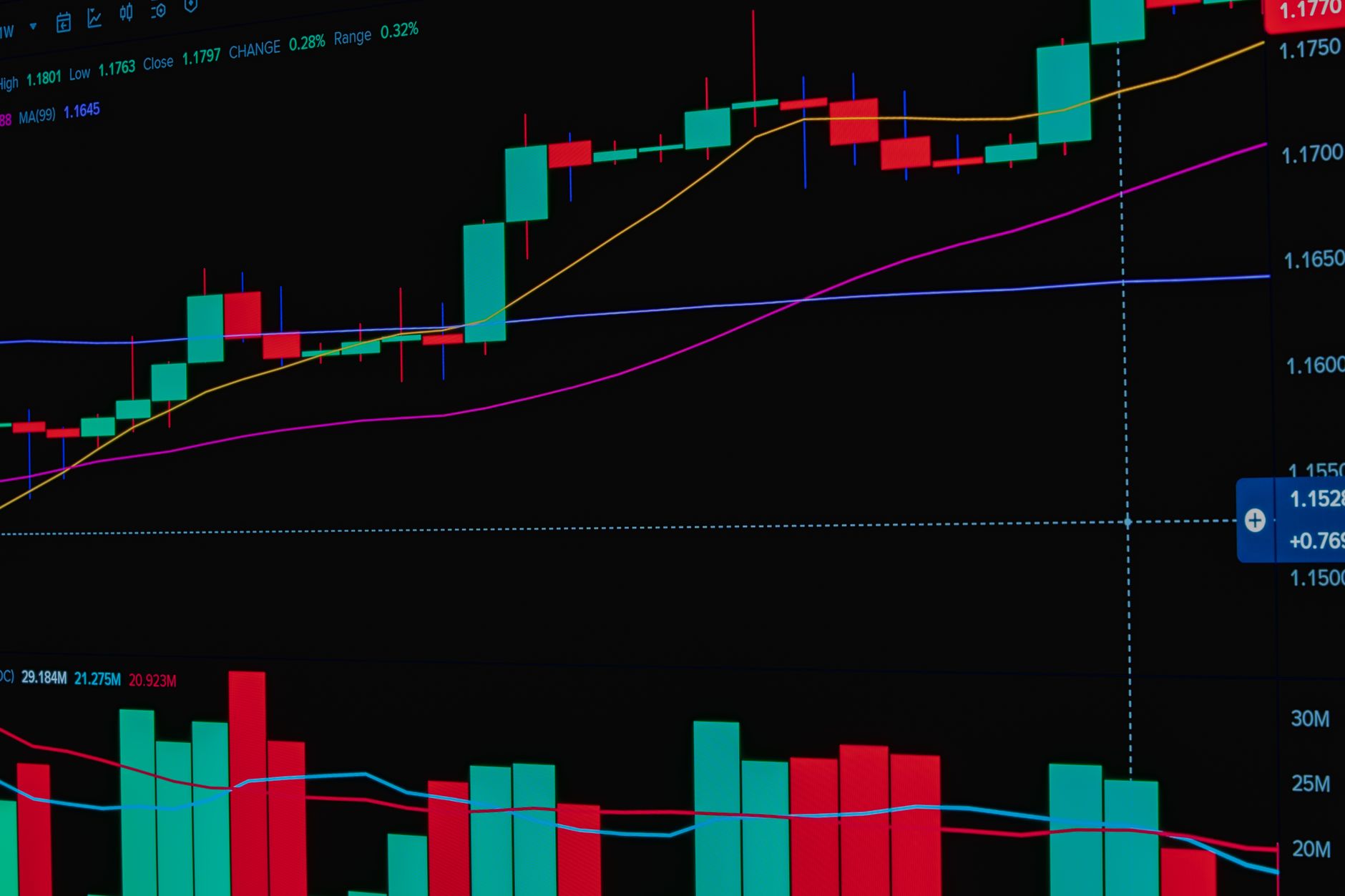
A prop firm scalping EA is an automated trading bot engineered to execute high-frequency, small-profit trades across multiple currency pairs while remaining compliant with proprietary funding rules, daily drawdown limits, maximum loss thresholds, and minimum trading consistency metrics. Unlike retail scalping bots, a proper prop firm scalping EA must balance speed with strict risk controls; aggressive scaling causes account blowouts and funding rejection. In 2026, the most reliable options combine M1, M5 timeframe logic with adaptive position sizing, news-event filters, and real-time equity monitoring to keep traders inside their daily loss limits while capturing 5 to 15 pip moves per trade.
- Best prop firm scalping EA respects FTMO 5% daily drawdown cap, max loss limits per evaluation phase
- Scalping EA FTMO typically targets 3 to 8 trades per hour on liquid pairs (EURUSD, GBPUSD, USDJPY)
- Fast EA prop firm requires hardcoded stop-loss and take-profit rules, no discretionary override
- MT4 scalping bot backtests must show 65%+ win rate with Sharpe ratio ≥1.2 on 6-month samples
- Top-tier EAs pre-configured for FundedNext, FTMO, The5ers, E8 Funding typically cost $200 to $800 annually
What Makes a Scalping EA Suitable for Prop Firms
Not every scalping EA works inside a prop firm account. Retail scalping bots are built for speed and profit extraction; they often ignore drawdown rules, leverage caps, and news volatility that prop firms explicitly penalize. A scalping ea ftmo-compliant version must be engineered differently from the ground up.
Daily Drawdown Compliance
FTMO enforces a hard 5% daily drawdown limit on the 2-Step (3% on the 1-Step). This means if you're trading a $10,000 account, losing $500 in a single day triggers an instant account block. Most retail mt4 scalping bot implementations don't even track this, they chase scalps until margin call. A production-grade prop firm scalping EA must:
- Track daily losses in real-time and stop trading automatically when the limit is reached
- Log every entry, exit, and cumulative P&L to an external file or dashboard
- Pause during high-impact news (non-farm payroll, central bank decisions) to avoid spike losses
- Enforce a 1:1 or tighter risk-to-reward ratio per trade (e.g., 5 pips risk for 10 to 15 pips profit minimum)
Traders often blow funded accounts with aggressive fast ea prop firm settings that worked fine on a $500 demo account but collapsed when scaled to $25,000 funding. The difference is almost always missing drawdown guards.
Trade Frequency and Slippage Reality
A true scalping EA will execute 2 to 8 trades per hour on a single pair (often clustered around NY open or London close volatility windows). Each trade targets 5 to 20 pips, with most closed within 60 seconds to 5 minutes. However, this speed creates execution risk:
- Slippage on fast entries can eat 1 to 3 pips per trade on ECN brokers; prop firms provide variable spreads (0.3 to 0.8 pips on EURUSD, wider on exotics)
- Requote risk on MT4 during volatile hours, EAs must handle rejected orders gracefully
- Weekend gap risk, scalping EAs that run into Friday close can be caught off-guard by Monday open gaps
Backtests of a prop firm scalping EA must account for realistic slippage (±2 pips per side) and 99% modeling quality, not the optimistic 90% tick data that inflates historical returns.
Top Scalping EA Options for Prop Firms in 2026
The landscape has consolidated: most serious traders now use either white-label EAs bundled with prop firm partnerships, or open-source bases (like JPTC EA Hub) that are pre-configured for FundedNext, FTMO, and The5ers rules. Here's what's actually working:
Pre-Built Prop-Focused EAs
JPTradingCapital JPTC EA Hub is specifically designed for prop traders. It bundles 3 to 5 scalping-friendly strategies (breakout, volatility mean-reversion, London session bias) with hardcoded FTMO and FundedNext rule-sets. Key features:
- Daily drawdown limits auto-enforced per firm rules (FTMO 5%, FundedNext 5% on the Stellar 2-Step, The5ers 5% on High Stakes)
- News filters for non-farm payroll, FOMC, ECB decisions (customizable by time zone)
- Multi-pair support: EURUSD, GBPUSD, USDJPY, AUDNZD, NZDUSD, each with backtested parameters
- Manual and automated recovery mode after losing days (optional, respects consistency rules)
- MT4 and MT5 compatible, integrates with live account monitors
The EA Hub's setfiles are built around FTMO's daily and maximum loss rules, so you start Phase 1 with risk settings that fit the account. More details at JPTradingCapital EA Hub page.
Open-Source Scalping Bases (DIY Path)
If you prefer building or modifying, popular MT4 scalping bases include:
- Forex Factory Scalper (Free), Simple M5 breakout logic, no drawdown enforcement; requires manual modification for prop compliance
- Renko Scalper (€150 to €300), Uses Renko brick logic instead of time-based bars, better for choppy markets; popular among FTMO traders
- Grid-based scalpers, Martingale-style position averaging; NOT recommended for prop firms due to drawdown explosion risk
Building your own scalping ea ftmo from scratch takes 40 to 100+ hours if you're proficient in MQL4/MQL5. Most traders find the ROI better with pre-configured, backtested solutions.
Backtesting Standards for Prop-Grade Scalping EAs
Before trusting any prop firm scalping EA with real funded capital, demand these backtests:
Minimum Backtest Criteria
- 6-month (minimum) on out-of-sample data, Don't accept 3-month or shorter tests. Scalping strategies can perform differently across market regimes (trending vs. ranging).
- 2 to 5 year historical data sample, Test across multiple economic cycles: 2020 to 2021 (volatile), 2022 to 2023 (rate hikes), 2024 to 2025 (geopolitical shifts). A fast ea prop firm that only works in bull markets won't pass FTMO Phase 2.
- 99% modeling quality (tick data), Avoid 90% backtest results; they inflate Sharpe ratios and win rates by 5 to 15%.
- Slippage ≥2 pips per trade, Realistic for prop firm ECN brokers.
- Win rate ≥60%, Sharpe ratio ≥1.2, These are the baselines for consistency in prop firm evaluations. Below this, drawdown spikes will trigger account failures.
- Daily drawdown not exceeding 3 to 4% on any single day in the backtest, This is a red flag for prop compliance.
EAs with Sharpe ratios below 1.0 tend to struggle in Phase 2 evaluations. A higher Sharpe ratio gives a strategy far more room to stay inside the rules.
Walk-Forward and Out-of-Sample Testing
A proper mt4 scalping bot developer will show walk-forward analysis: dividing a 3-year dataset into 6 to 12 rolling windows, optimizing on the first 6 months and testing on the following 1 to 2 months. This prevents curve-fitting, a major cause of EA failure once deployed live.
If a vendor only shows in-sample backtest charts (same period for optimization and testing), skip them. That's either inexperience or intentional marketing deception.
Key Rules and Restrictions for Prop Firm Scalping
Every prop firm has nuances. Here's a comparison table of the main platforms you'll encounter:
FTMO (2025 Updated Rules):
- Daily Drawdown: 5% in both phases (2-Step)
- Max Loss: 10% in both phases (2-Step)
- Scalping: Allowed, no position-hold time restrictions
- Expert Advisors: Permitted, must not use real-time news APIs or external data feeds
- Leverage: Up to 1:100
FundedNext (2025 Rules):
- Daily Drawdown: 5% (Stellar 2-Step), 3% (Stellar 1-Step)
- Max Loss: 10% (Stellar 2-Step), 6% (Stellar 1-Step)
- Scalping: Allowed
- EAs: allowed on Stellar 2-Step accounts below $50,000
- Leverage: depends on the account type
The5ers (2025 Rules):
- Daily Drawdown: 5% (High Stakes), 3% (Hyper Growth)
- Max Loss: 10% (High Stakes), 6% (Hyper Growth)
- Scalping: Allowed
- EAs: Permitted, no external API connections
- Leverage: Up to 1:100
A prop firm scalping EA must be configurable for each platform's rules. Hard-coded limits break when you switch firms. This is why the JPTC EA Hub's template-based approach, where traders input daily loss caps as parameters, outperforms one-size-fits-all solutions.
Performance Expectations: Realistic Returns on a Scalping EA
Prop traders often ask: "What monthly return should I expect?" The honest answer depends on account size, pair volatility, and your execution precision.
Conservative Estimates (6 to 12% Monthly)
A steady scalping ea ftmo targeting 3 to 5 trades per hour on EURUSD, GBPUSD, and USDJPY can realistically produce:
- $5,000 account: $300 to $600/month (6 to 12% gain) = $10 to $20 per scalp × 30 to 60 scalps/month
- $25,000 account: $1,500 to $3,000/month (6 to 12%) = $50 to $100 per scalp
- $100,000 account: $6,000 to $12,000/month (same %, higher absolute P&L)
This assumes 65%+ win rate and proper risk management.
Aggressive Estimates (15 to 25% Monthly)
Traders combining a fast ea prop firm with discretionary trade additions (manual entries on setups the EA missed) or running multiple EAs in parallel have reported 15 to 25% monthly on Phase 1 accounts. However:
- This requires 50+ hours of live monitoring per month
- One large losing streak (rare but possible) can wipe the gains and trigger account restrictions
- Not repeatable consistently, it's lumpy performance tied to market volatility spikes
Results vary widely: a small group of traders earns strong monthly returns once funded, while many never move past Phase 1. A prop firm scalping EA doesn't change that spread of outcomes much, it just shifts the bell curve forward for disciplined traders.
Common Mistakes Traders Make with Scalping EAs
Over-Optimization and Curve Fitting
The biggest killer: optimizing a mt4 scalping bot on a 3-month period with perfect parameters, then watching it fail live. Scalping strategies have narrow parameter windows. A profitable EURUSD scalper with stops at 8 pips might collapse with stops at 10 pips on Tuesday but thrive on Friday. This parameter instability signals over-fitting.
Solution: test across 2 to 5 year periods with walk-forward validation. Accept "good enough" returns (8 to 10% monthly) over optimized but fragile curves.
Ignoring Liquidity and Spread Variation
Scalping EA backtests often assume flat spreads. Real ECN brokers widen spreads during Asian hours, before news, and on illiquid pairs. A prop firm scalping EA tested on 0.5 pips average spread might face 2+ pips during live trading, turning profitable scalps into losers.
Always test with actual prop firm spreads (request them from the broker) and filter trading hours (only trade London/NY overlap for FX pairs, 8 AM to 4 PM EST).
Neglecting Account Drawdown Enforcement
Some traders deploy a scalping ea ftmo without monitoring daily P&L. A bad day hits the 5% limit, trading continues, and the account gets blocked. Prop firms auto-enforce this now, so EAs must too. Hardcode daily loss limit checks into any custom EA you build.
Running During Economic News (No Filter)
A scalping bot running through non-farm payroll (NFP) release can experience 20 to 50 pip moves in seconds, blowing the daily drawdown instantly. Most fast ea prop firm solutions now include a news calendar filter. Verify yours does, or add one manually.
Setting Up Your Own Scalping EA: Step-by-Step
If you're building from scratch or modifying an open-source base:
Step 1: Choose Your Market (Pair + Timeframe)
Start with one pair: EURUSD on M5. It has the tightest spreads on most prop firms (0.3 to 0.6 pips) and highest liquidity (20 to 100K+ lots traded per minute). M5 is the sweet spot for scalping, fast enough to capture volatility, slow enough to reduce false signals vs. M1.
Step 2: Define Entry Logic
Pick one of these proven methods for a prop firm scalping EA:
- Bollinger Band breakout: enter on close outside ±2 sigma (M5, 20 period)
- Volatility mean reversion: enter on ATR(14) spike if price moves 1.5× recent range, expecting reversion
- EMA crossover scalp: enter on EMA 5 crossing EMA 20 on M5
- MACD zero-line scalp: enter on MACD crossing zero, exit on reversal
Don't layer multiple indicators, one signal per trade. Complexity doesn't improve scalping, it just introduces lag.
Step 3: Set Strict Exit Rules
- Fixed take-profit: 10 to 20 pips (adjust per volatility regime)
- Fixed stop-loss: 5 to 8 pips (risk-to-reward 1:2 minimum)
- Time-based exit: if open >5 minutes with no profit, close (avoid holding into larger moves)
- Daily loss limit: automatic stop trading if cumulative -5% (or your firm's limit)
Step 4: Backtest (99% Quality, 2+ Years)
Use MT4's built-in Strategy Tester or an external tool (Amibroker, Metatrader). Simulate real spreads and slippage. Target a 65%+ win rate and 1.2+ Sharpe. If you hit 72% win rate, you're either cherry-picking data or oversimplifying, real market conditions don't yield that cleanly.
Step 5: Paper Trade (2 to 4 Weeks)
Run the EA on a demo account with real FTMO/FundedNext rules. Log daily drawdown, trade count, and slippage vs. backtest. If live slippage exceeds backtest by >50%, your exit prices may need widening. If daily drawdown on paper is consistently within 1 to 2%, you're ready for Phase 1.
Step 6: Deploy to Prop Firm Phase 1
Start small ($5,000 to $10,000). A prop firm scalping EA that passes Phase 1 in 25 to 30 days is performing normally. If it takes 50+ days, the monthly return target is likely too aggressive, consider adjusting take-profits or entry frequency downward.
Comparing Popular Scalping EA Tools and Vendors
Here's a breakdown of the most commonly used solutions in 2026:
JPTC EA Hub
- Price: €797 one-time (EA Hub) or €1,497 one-time (EA Hub Pro), including VAT
- Win Rate: varies by strategy and market conditions
- Risk controls: optional daily and overall loss limits
- Setup Time: 30 mins (ready-made setfiles)
- Support: JPTC Discord community
- Best For: Traders wanting a faster path to Phase 1 funding
Forex Factory Scalper (Free) + DIY Modifications
- Price: $0
- Win Rate: depends on your modifications and testing
- Sharpe Ratio: depends on your own backtest
- Setup Time: 60 to 80 hours (coding + testing)
- Support: Community forum (hit or miss)
- Best For: Traders with MQL4 coding skills and time
Renko Scalper EA (€150 to €300)
- Price: €150 to €300 one-time
- Win Rate: varies by settings and market conditions
- Sharpe Ratio: ask the vendor for an out-of-sample backtest
- Setup Time: 45 mins
- Support: Email support + annual updates
- Best For: Traders who prefer Renko charts and want a middle-ground cost
The cost-to-benefit trade-off heavily favors pre-built, prop-compliant solutions in 2026. A $300 to $600 EA that cuts your path to Phase 1 from 60 days to 25 days is worth the investment, you reach the 2:1 profit-share step faster and earn funded income sooner.
Why Scalping EAs Fail on Prop Firm Accounts (And How to Avoid It)
Not every scalping ea ftmo survives past Phase 1. Here's why the best ones fail, and what to watch for:
Failure Pattern #1: Overleverage in Backtests
A backtest showing 3 lot entries on a $10,000 account (3:1 leverage) looks profitable historically. But on a live $25,000 FTMO account, 3 lots = 0.12 margin ratio, and a 40-pip move = 3% loss. Add slippage and a few consecutive losses, and you're at the 5% daily limit. The EA was never profitable at conservative sizing.
Fix: backtest at 0.5 to 1.0 lot sizes (or micro lots). Ensure profitability with conservative position sizing. Scale up only after passing Phase 1.
Failure Pattern #2: Underestimating Slippage
Backtests assume perfect fills. Real life: during volatility spikes, an EA's 10 pip take-profit becomes 12 to 14 pips (slippage cost), and the edge erodes. Over 500+ trades, this slippage drag can flip a 10% backtest gain into a 2 to 4% live result.
Fix: backtest with ±2 to 3 pips slippage per entry and exit. If profitability survives, you're safe.
Failure Pattern #3: No Daily Loss Limit Enforcement
An EA runs 50 scalps, hits 5 losing streaks in a row (happens ~10% of the time in trading), drawdown exceeds 5%, and FTMO blocks the account. The EA didn't "fail", the trader didn't hardcode a kill-switch.
Fix: every prop firm scalping EA must log cumulative daily loss and stop trading when the limit is hit. No exceptions. See JPTradingCapital's EA documentation for example code.
Failure Pattern #4: News Spike Slaughter
Non-farm payroll, Brexit votes, central bank surprises, these events create 20 to 100 pip gaps in seconds. A scalping EA running through these moves gets stopped out on uncontrollable slippage. One bad news trade can consume an entire week's profits.
Fix: hardcode a news filter. Disable trading 15 minutes before and 5 minutes after major economic releases (NFP, FOMC, ECB). Most prop firms (FTMO, FundedNext) don't penalize traders for reduced volume during news, so don't fight it.
Scaling a Scalping EA from Phase 1 to Phase 2 (and Beyond)
Once you pass Phase 1 with your fast ea prop firm, Phase 2 changes the game: the profit target drops to 5% while the loss limits stay the same, so protecting the account matters more than speed.
Phase 2 Adjustments
If your Phase 1 scalping EA targeted 2 to 3% daily gains, dial it back to 1 to 1.5% for Phase 2. With half the profit target, there is no reason to keep Phase 1 risk. A -2% day still uses 40% of the 5% daily limit, so smaller sizing protects the account while you finish the lower target.
Practically:
- Reduce lot sizes by 20 to 30%
- Tighten take-profits from 15 pips to 10 to 12 pips (accept lower per-trade profit)
- Increase the frequency slightly to compensate (more 8-pip scalps instead of fewer 15-pip ones)
- Add a weekly profit target: if you hit +5% in a week, reduce lot sizes further for the remainder (capital preservation)
Expect lower monthly returns in Phase 2 than in Phase 1; that's normal and healthy. The goal shifts from explosive growth to repeatable, steady results. A prop firm scalping EA that keeps delivering steady months once you are funded is what turns the account into a lasting income from the prop firm's profit split.
FAQ: Scalping EA for Prop Firms





Can I use a scalping EA on multiple prop firm accounts simultaneously?
What's the difference between a scalping EA and a grid EA for prop firms?
How often should I optimize/update my scalping EA parameters?
Do I need VPS for a scalping EA on a prop firm account?
What happens if my scalping EA has a drawdown of 4.8% and I make a manual trade that loses 0.5%?
Where to Find and Validate Scalping EAs
The EA marketplace has exploded in 2025 to 2026. Here's where to look, and what to watch for:
Reputable Marketplaces and Vendors
- CodeBase (MT5 native marketplace): reviewed by MetaQuotes staff; lower-quality filter but community ratings are visible
- MQL5.com: largest MT4/MT5 marketplace; read 20+ reviews before purchasing (watch for fake 5-star spam)
- JPTradingCapital: specialist in EAs built around prop-firm rules; affiliate program available for traders interested in revenue share
- Forex Factory forum (Automate This section): community-driven, free options and paid developer collaborations; very variable quality
- GitHub: open-source EAs (free); requires MQL coding knowledge to modify and backtest
Red Flags to Avoid
- Vendor claims 100% win rate or 50%+ monthly returns (not real)
- No backtests shared, only forward-looking screenshots (likely cherry-picked or fake)
- Money-back guarantee only if you're unprofitable (backward logic; vendor profits if you lose)
- No support channel or abandoned product (update dates 2+ years old)
- EAs that require you to disable stop-losses or risk on every trade (recipe for account blow-up)
The Future of Scalping EAs in Prop Trading (2026 and Beyond)
Related Articles
- Apex Trader Funding vs TopStep: Which Futures Prop Firm Is Best in 2026? · Read more →
- How to Choose the Right Prop Firm in 2026: Complete Selection Guide · Read more →
- How to Start Futures Trading With a Prop Firm: Complete Beginner's Guide for 2024 · Read more →
- Can a Trading Bot Pass a Prop Firm Challenge on XAUUSD (Gold)? · Read more →
- How to Trade Gold (XAUUSD) During US Economic Data Releases: Complete Strategy Guide · Read more →
- Futures Trading Micro Contracts vs Standard: Which Is Better for Prop Firm Challenges? · Read more →
- Prop Firm Trading Commissions Explained: Hidden Fees That Destroy Your Profits · Read more →
- Prop Firm Trading Without Leverage Restrictions: How to Scale Safely in 2026 · Read more →
Review the JPTC EA Hub
EA software with version-specific documentation and account-level risk controls. Review the selected programme’s current automation rules and test the chosen version; software does not guarantee compliance, a pass or a payout.
See the EA Hub