Trading Strategy Software for Real Accounts and Prop Firms
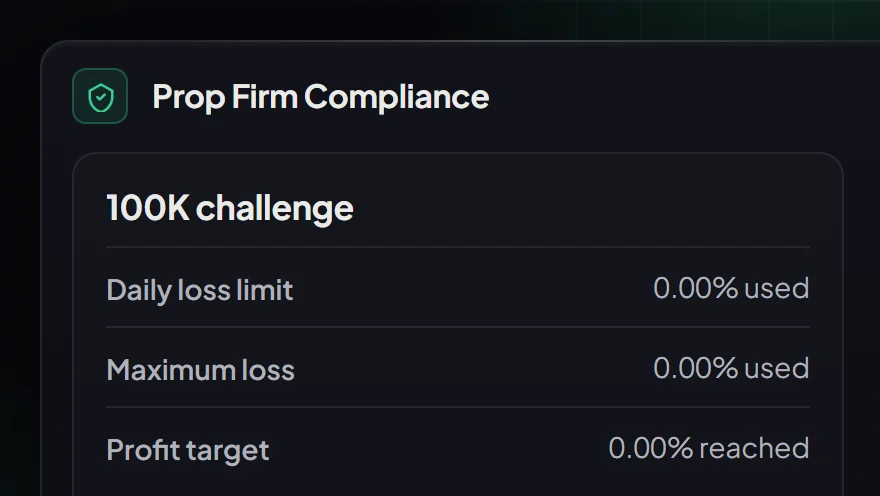
Selecting trading strategy software comes down to a fundamental architectural choice: running configurable algorithms on your own terminal or deploying server-hosted automation directly to your broker. Traders managing capital on a real account or working through prop-firm evaluations need automated risk controls that enforce hard stop-outs before equity limits are breached. Trading strategy software replaces manual order execution with pre-programmed rules, but execution speed, terminal uptime, and strict rule compatibility determine whether an algorithm protects your balance or triggers an avoidable drawdown breach.
What Professional Trading Strategy Software Actually Does
Trading strategy software translates quantitative market models into automated order execution. According to financial market references like Investopedia, algorithmic systems automate position sizing, entry triggers, stop-loss placement, and take-profit targets based on predefined technical or mathematical criteria.
Beyond basic order routing, institutional-grade strategy software focuses heavily on risk mitigation. In practical trading, the software monitors several key operational parameters simultaneously:
- Equity and Balance Protection: Continuously tracking floating drawdowns to cut open trades if account-level thresholds are threatened.
- Dynamic Position Sizing: Calculating lot sizes based on exact tick values and current account equity rather than arbitrary fixed lot amounts.
- Slippage and Spread Filters: Pausing trade execution during rollover or high-impact news releases when liquidity thins and bid-ask spreads widen dramatically.
- Execution State Tracking: Maintaining order state records so that terminal restarts or brief connection interruptions do not duplicate or orphan open market orders.
Terminal-Based Expert Advisors vs Hosted Algorithmic Trading
When choosing trading strategy software, the primary structural decision is where the software resides and executes orders.
Terminal-based execution relies on Expert Advisors (EAs) running inside platforms such as MetaTrader 5 or MetaTrader 4. In this setup, the trader purchases a software licence and installs the EA files directly onto their own desktop terminal or a private Virtual Private Server (VPS). This model gives the user complete transparency over parameter inputs, allowing them to adjust setfiles, change lot sizes, configure trading hours, and monitor local logs directly. However, it requires active terminal maintenance: if your local computer shuts down, your internet connection drops, or your VPS restarts unexpectedly, the software stops monitoring the market.
Hosted algorithmic trading operates on an entirely different model. With hosted execution, the proprietary algorithms run continuously on dedicated enterprise server infrastructure managed by the provider. The trades are executed directly on the customer's own broker account via secure API or institutional bridge connections. The client installs nothing on their computer, configures no complex parameter files, and does not need to pay for or manage a third-party VPS. At JPTradingCapital, our Live Algo is hosted entirely on our infrastructure on the customer's own broker account. It is built specifically for traders running private capital on personal broker accounts and is not offered for prop-firm evaluation challenges.
Prop-Firm Evaluations and Strict Rule Architecture
Traders evaluating trading strategy software for prop-firm challenges face a unique set of constraints that do not apply to standard broker accounts. Prop firms operate under rigid loss limits, and a single algorithmic error can terminate an evaluation immediately.
Understanding rule variations between evaluation models is critical. For example, under the standard two-step FTMO trading objectives, accounts are subject to a 5% maximum daily loss limit and a 10% static maximum overall loss limit based on initial account balance. Conversely, one-step evaluation models across the industry frequently implement trailing drawdown mechanisms that calculate loss limits from the highest unrealized equity peak at the end of each trading day.
Trading strategy software built for challenge environments must incorporate conservative safety buffers rather than trading directly up to the published limits. If a prop firm imposes a 5% daily drawdown cap, a professional EA setfile should be configured to cease all trading and close all open positions at 3.5% or 4.0%. Relying on the firm's equity monitor to halt trading is a recipe for failure, because market slippage and spread widening during volatile events can push an account past the breach threshold before standard stop orders can fill.
It is equally important to understand that historical backtests do not guarantee compliance with current prop-firm rules. Prop firms regularly update their terms of service regarding maximum open lot limits, prohibited execution styles (such as latency arbitrage or news straddling), and weekend holding rules. A strategy that produced strong simulated returns across past historical tick data may violate current platform rules or suffer execution degradation under live conditions. For traders who prefer structured, managed oversight for substantial evaluations, our prop-firm challenge passing service provides dedicated challenge preparation on eligible 100K+ accounts, operating strictly within program guidelines.
Operational Failure Modes: Why Automation Still Demands Supervision
A widespread misconception among retail traders is that trading strategy software eliminates all trading errors and removes emotional risk entirely. While an algorithm does not experience fear or greed, automation simply repeats implemented instructions with absolute consistency. When market structure changes or infrastructure fails, that mechanical consistency can create compounding losses if left unattended.
Professional traders account for several operational risks when deploying software:
- Control Requests Are Not Guaranteed Fills: When an algorithm issues a market order or stop-loss request, the broker must match and fill that order. During flash crashes or major macroeconomic announcements, order fills can slip significantly past your intended stop price.
- Spread Expansion at Rollover: Between 21:55 and 22:05 UTC, institutional liquidity thins out across global forex markets. Bid-ask spreads on pairs like EURUSD or XAUUSD can widen fivefold to tenfold, prematurely triggering stops on tight algorithmic scalpers.
- Broker Server Latency: Execution delays between the client terminal and the broker trade server can cause slippage that turns a theoretical winning model into a losing strategy.
Software reduces manual fatigue and enforces mechanical discipline, but it does not remove market risk or eliminate the need for routine operational oversight.
Verifying Performance Records: Broker Statements vs Marketing Claims
Before purchasing any trading strategy software or algorithmic licence, examine how the developer proves performance. The online trading software market is flooded with marketing simulations, selective backtest screenshots, and unverified return claims.
Genuine verification requires dated proof from legitimate financial intermediaries:
- Official Broker Statements: Broker-generated account statements demonstrate real trade execution, detailing precise entry prices, exit prices, commissions, swaps, and realized balance curves across varying market conditions.
- Prop-Firm Funded Certificates: Verifiable payout certificates and funded account approvals confirm that an automated strategy operated successfully within strict risk limits.
At JPTradingCapital, we publish monthly performance records directly from our broker account at /results. These company-published monthly figures provide transparent documentation of our system operations, though traders should recognize that company-published records are not independently audited or verified by a third-party regulator.
How to Choose the Right Strategy Software for Your Trading Model
Selecting the right trading software depends on your available capital, account type, and technical preferences. Use the following framework to decide your path:
- Traders Managing Personal Broker Accounts: If you are trading personal capital and prefer hands-off execution without running software or managing a VPS, server-hosted automation is the natural choice. Alternatively, if you prefer semi-automated execution or trade validation, our forex and gold signals deliver explicit entry, stop loss, and target levels with supported automatic copying to your broker account under agreed risk parameters, with eligible VIP access covered through a partner broker.
- Traders Running MT4 or MT5 on Prop Challenges: If you prefer full direct control over your trading terminal, setfiles, and risk limits, licensing an Expert Advisor is optimal. Ensure the software provides adjustable daily stop-outs and configurable lot sizes designed for prop challenge rules.
- Traders Seeking Dedicated Challenge Preparation: If you are tackling large evaluation accounts and want full challenge preparation support, explore structured challenge passing services that align with your firm's specific evaluation criteria.
If you are looking to run tested, configurable algorithmic models directly on your own MetaTrader terminal, See the JPTC EA Hub →.
Frequently Asked Questions About Trading Strategy Software
Can trading strategy software guarantee compliance with prop-firm loss limits?
No software can guarantee compliance with prop-firm rules. While an Expert Advisor can be programmed to close open positions at a specified equity drawdown level, market execution involves variables like slippage, spread expansion, and broker execution delays. A control request sent to the broker is not a guaranteed fill at the exact requested price. Traders must always set conservative internal loss buffers below the firm's hard caps.
What is the difference between an EA Hub licence and hosted algo trading?
The JPTC EA Hub provides an MT4 or MT5 expert advisor licence that you install, configure, and run on your own computer or private VPS terminal with custom setfiles. In contrast, the JPTC Live Algo is hosted entirely on our enterprise server infrastructure and connects directly to your personal broker account, requiring zero software installation and no VPS. The hosted Live Algo is designed for personal broker accounts and is not offered for prop-firm challenges.
Do I need a Virtual Private Server to run trading strategy software?
If you run terminal-based software like an Expert Advisor on MetaTrader, a VPS is strongly recommended to maintain uninterrupted internet connectivity and continuous terminal uptime 24 hours a day. If you choose our hosted Live Algo, you do not need a VPS or any local software setup because the algorithmic engine runs on our dedicated infrastructure.
Can I automatically copy forex and gold calls to my account?
Yes. In addition to manual execution using provided entry, stop loss, and target levels, our forex and gold signals include supported automatic copying directly to your broker account under agreed risk parameters and permissions. Eligible VIP signal access can be covered through an approved partner broker account.
Related Articles
- Accessing Instant Forex Funding: Your Options · Read more →
- Forex Signals: Choosing for Prop Firm or Own Account · Read more →
- Algo Capital: Your Path to Automated Trading Success · Read more →
- Prop Evaluation Rule Sheet: Check EA Permission · Read more →
- Signal Providers and Followers: Evidence and Copying Risk · Read more →
- Best EA New York: Prop Firm Trading Solutions · Read more →
- FTMO Challenge Pass Rates: What the Evidence Shows · Read more →
- Best Trading Signals Providers in 2026: Automated or Manual? · Read more →
Review the JPTC EA Hub
EA software with version-specific documentation and account-level risk controls. Review the selected programme’s current automation rules and test the chosen version; software does not guarantee compliance, a pass or a payout.
See the EA Hub