Forex Algo Trading Your Own Account: 7 Steps to Automation [2026]
Material update: 15 October 2026: specifically identified source references, unsupported own-product/result qualifications or account-rule wording corrected. Existing publication status and URL retained. 15 October 2026: Additional own-results verification/audit wording corrected to company-published broker-statement scope.
![Forex Algo Trading Your Own Account: 7 Steps to Automation [2026]](https://images.pexels.com/photos/38412415/pexels-photo-38412415.jpeg?auto=compress&cs=tinysrgb&dpr=2&h=650&w=940)
Forex algo trading on your own account involves using pre-programmed software, known as Expert Advisors (EAs), to execute trades automatically based on defined rules and strategies. This approach can offer significant advantages in speed, consistency, and discipline, particularly for traders aiming to pass prop firm evaluations or manage personal capital efficiently.
For the full picture of how an automated FX trading system works, what it costs to run and what breaks it on a live account, see our guide to automated forex trading.
- Algorithmic trading automates forex strategies, removing emotional bias from execution.
- Platforms like MetaTrader 4/5 are standard for running Expert Advisors on personal accounts.
- Rigorous backtesting and forward testing are crucial for validating any automated forex trading system.
- Proprietary firm rules, including drawdowns, necessitate specialized algo strategies for success.
- Continuous monitoring and optimization are vital for maintaining an algo's performance over time.
What is Forex Algo Trading on Your Own Account?
Forex algorithmic trading on your own account refers to the use of computer programs to execute foreign exchange trades automatically, without manual intervention, directly from your personal trading platform linked to your broker. This method leverages sophisticated algorithms, often in the form of Expert Advisors (EAs), to analyze market conditions, identify trading opportunities, and place orders based on pre-defined criteria. For individual traders, this means entrusting a significant portion of their trading decisions to software, aiming for precision and consistency that human traders often struggle to maintain.
The core principle behind an automated forex trading system is to eliminate the emotional biases that can lead to poor decision-making in live markets. Algorithms can process vast amounts of data, react to market changes faster than any human, and adhere strictly to a set of rules, ensuring disciplined execution. Whether you're a retail trader managing personal capital or a prop firm trader navigating complex evaluations, understanding how to implement forex algo trading on your own account is becoming increasingly essential. It transforms trading from a labor-intensive, screen-staring activity into a more systematic and potentially scalable endeavor.
Many traders begin their journey into algo trading by exploring platforms like MetaTrader, which offers a robust environment for developing, testing, and running EAs. The flexibility of these platforms allows for a wide range of strategies to be automated, from simple moving average crossovers to complex arbitrage systems. The goal is always to achieve a consistent edge, leveraging technology to exploit market inefficiencies or capitalize on predictable patterns.
Why Choose Automated Forex Trading?
Choosing an automated forex trading system offers significant benefits over manual trading, primarily centered around discipline, speed, and efficiency. Firstly, automation removes the psychological element from trading decisions; fear, greed, and impatience, which often plague human traders, are completely absent from an algorithm's execution. This ensures that every trade adheres strictly to the predetermined strategy, without deviation.
Secondly, algorithmic systems can execute trades at speeds impossible for humans. In volatile markets, milliseconds can make a difference, and an algo can react instantly to price changes, news events, or indicator signals. This rapid execution is crucial for strategies that rely on capturing small price movements or exploiting fleeting opportunities. For traders aiming to pass prop firm challenges, speed and precision in order execution can be critical for meeting profit targets and managing drawdowns effectively.
Finally, an automated forex trading system allows for continuous market monitoring across multiple currency pairs and timeframes, 24 hours a day, five days a week, without requiring constant human presence. This frees up the trader's time, enabling them to focus on strategy development, optimization, and other aspects of their trading business. The ability to backtest strategies extensively and refine parameters based on historical data further enhances the potential for consistent performance, a cornerstone for any serious trader. Our research shows that well-designed automated systems significantly reduce the variance often seen in manual trading results.
Setting Up Your Automated Forex Trading System
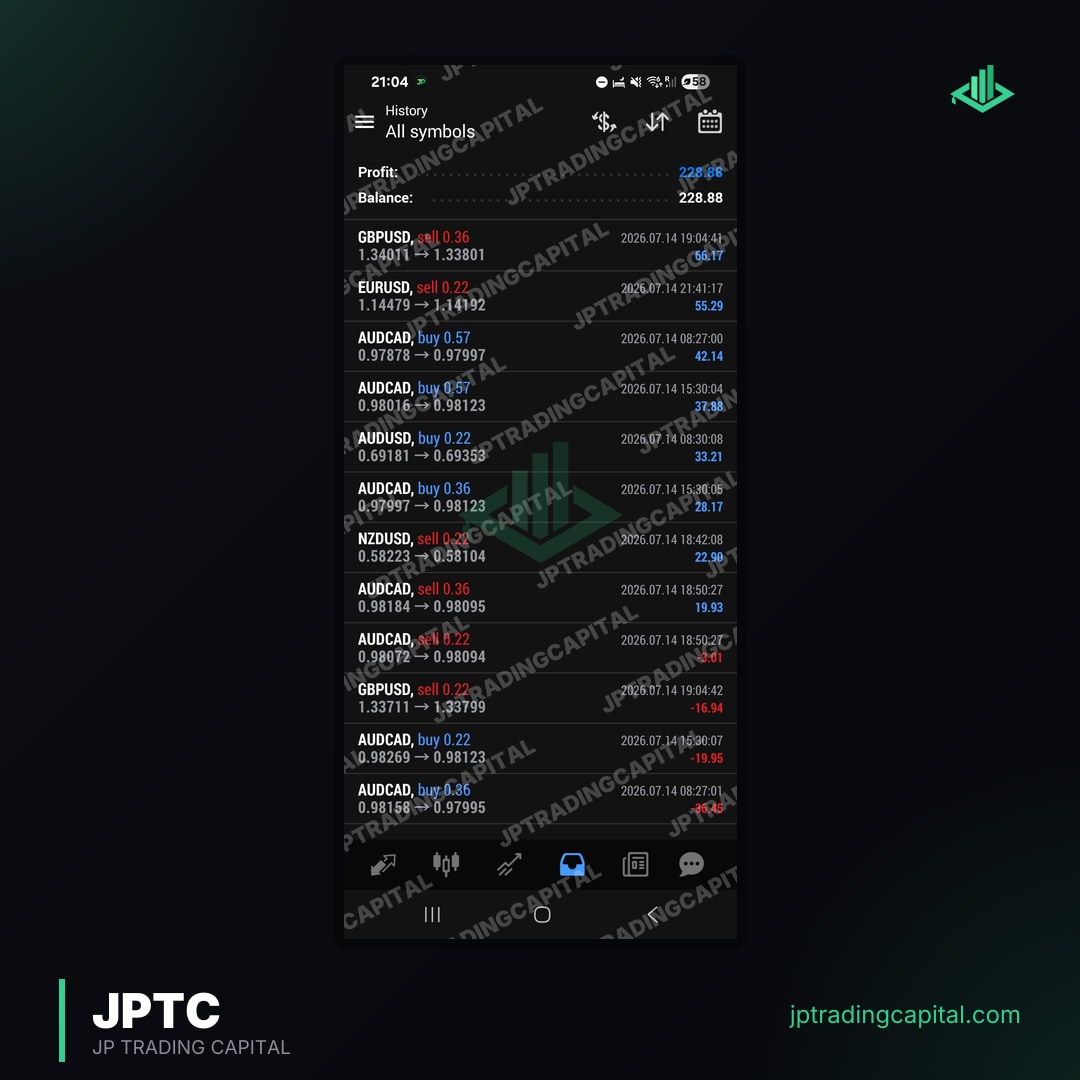
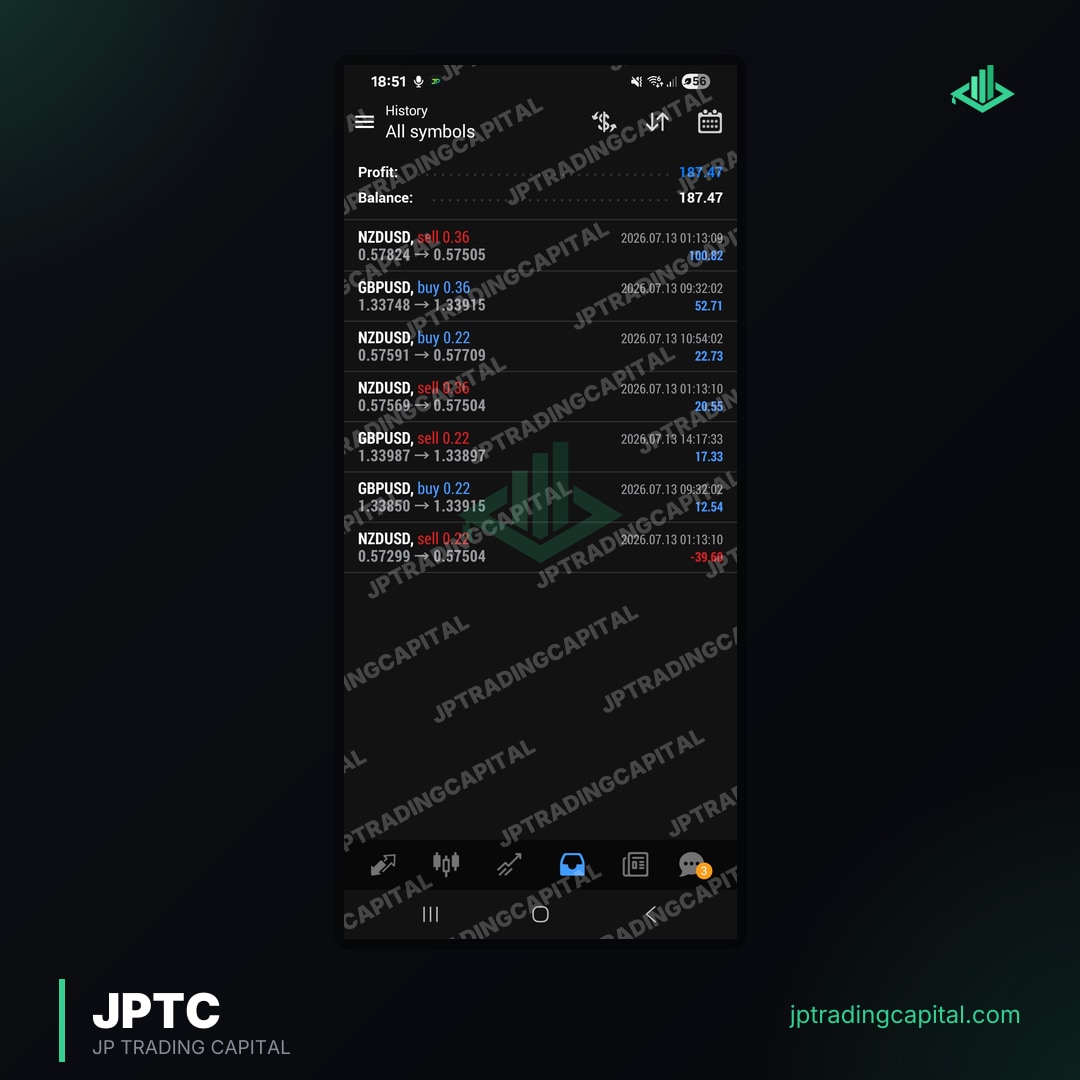
Setting up your automated forex trading system involves selecting the right platform, acquiring or developing an Expert Advisor (EA), and ensuring a stable operating environment. The most popular platforms for retail forex algo trading are MetaTrader 4 (MT4) and MetaTrader 5 (MT5), developed by MetaQuotes Software. These platforms provide a comprehensive environment for charting, technical analysis, and, crucially, for running EAs written in their proprietary MQL4 or MQL5 programming languages.
Once you have your chosen platform installed, the next step is to obtain an Expert Advisor. You can either develop your own if you have programming skills, purchase a pre-built EA from marketplaces like the MQL5 community, or subscribe to a service that provides backtested, ready-to-use solutions. For prop firm traders, the JPTradingCapital team offers the JPTC EA Hub, which provides automated EAs pre-configured with strategies designed to respect prop-firm rules such as daily drawdown caps and max loss limits. These EAs are specifically built for platforms like MT4 and MT5, compatible with major prop firms including FTMO, FundedNext, FXify, TopStep, The5ers, and E8 Funding.
A critical component for reliable 24/5 algo trading is a Virtual Private Server (VPS). A VPS ensures that your trading platform and EA run continuously, even if your personal computer is turned off or loses internet connection. This minimizes downtime and ensures that your automated forex trading system can execute trades without interruption, a non-negotiable requirement for serious algo traders. Choosing a VPS located geographically close to your broker's servers can also reduce latency, leading to faster order execution.
Designing and Backtesting Your Algo Strategy
Designing and rigorously backtesting your algorithmic strategy is the most crucial phase for developing a robust and reliable automated forex trading system. This process involves defining a clear set of trading rules, translating them into an algorithm, and then testing its performance against historical market data. Unlike competitor approaches that might vaguely mention "data analysis," our team emphasizes a structured, iterative methodology.
The strategy design begins with identifying a market edge. This could be based on specific technical indicators, price action patterns, statistical arbitrage, or even news event responses. Every aspect of the strategy must be quantifiable: entry conditions, exit conditions (take profit, stop loss), position sizing, and risk management rules. For example, a strategy might dictate buying when the 10-period moving average crosses above the 20-period moving average, with a stop loss fixed at 50 pips and a take profit at 100 pips.
Once the rules are defined, they are coded into an Expert Advisor. The next step is backtesting, which involves running the EA on historical data to simulate its past performance. Platforms like MT4 and MT5 offer built-in strategy testers, allowing traders to evaluate key metrics such as profit factor, maximum drawdown, win rate, and average trade duration. It's vital to use high-quality historical data, ideally tick data with real variable spreads, to ensure the backtest results are as accurate as possible. Over-optimization, where a strategy performs exceptionally well on historical data but fails in live trading, is a common pitfall to avoid.
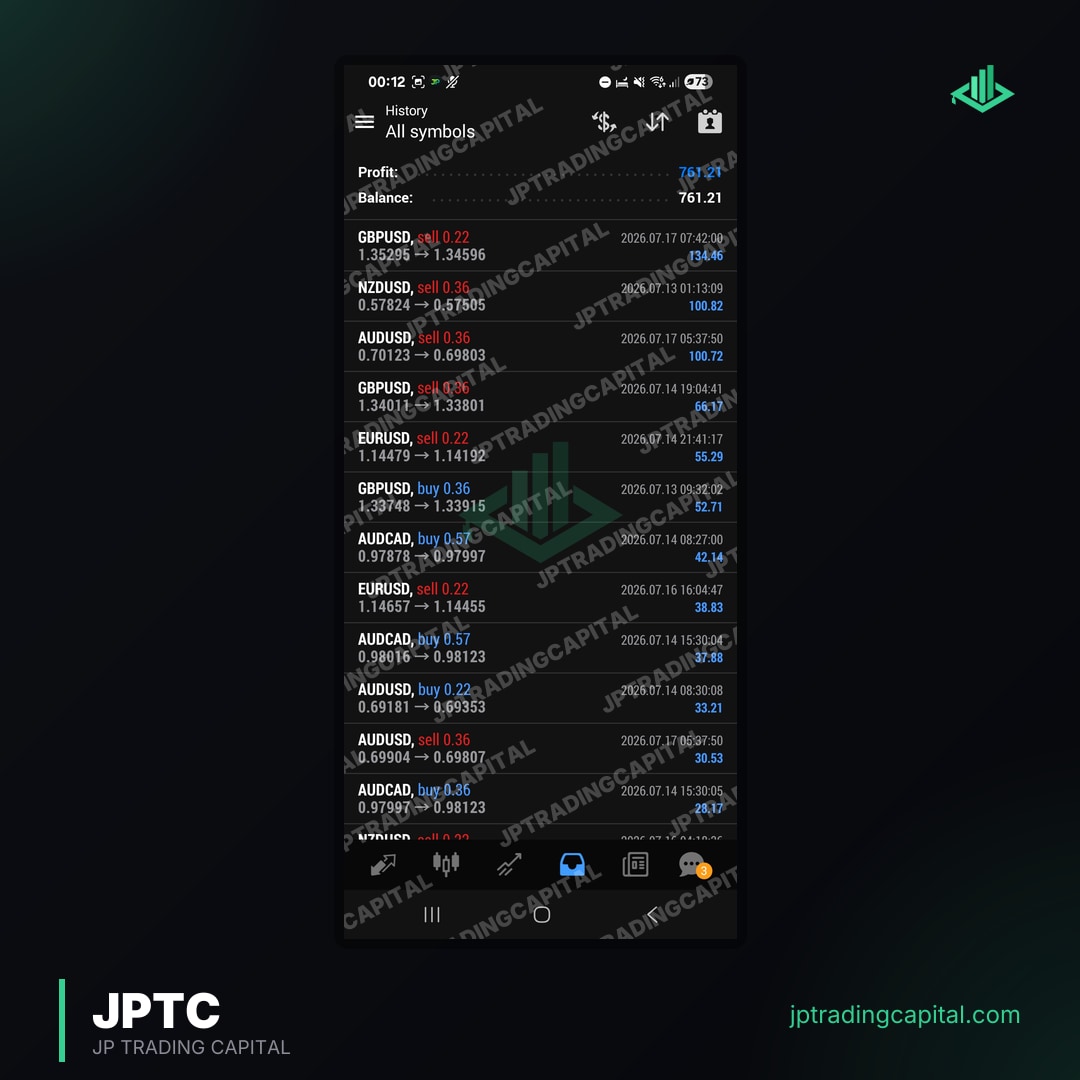
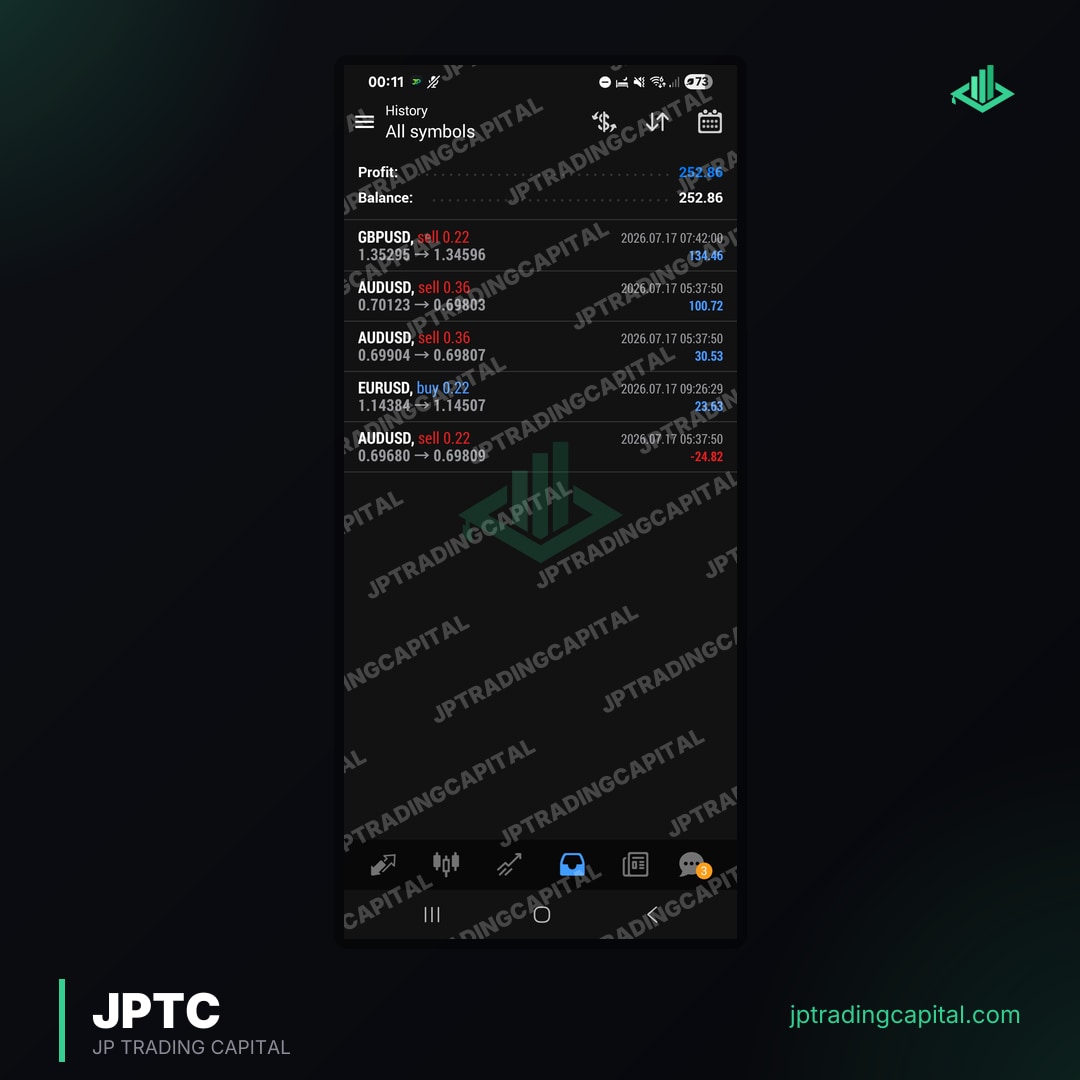
Beyond basic backtesting, advanced techniques like walk-forward optimization and Monte Carlo simulations can further validate a strategy's robustness. Walk-forward testing involves optimizing the EA on a segment of historical data and then testing it on a subsequent, unseen segment. This process is repeated across the entire dataset, mimicking how an EA would be periodically re-optimized in live trading. This rigorous approach helps ensure the strategy is adaptable and not merely curve-fitted to past market conditions. JPTradingCapital publishes monthly figures from broker statements on its results page. The broker’s own account record is not an independent audit; these figures do not establish future performance or compliance for another strategy.
Crucial Risk Management for Algo Trading
Effective risk management is paramount for any successful automated forex trading system, especially when considering the strict rules imposed by prop firms. While algorithms remove emotional trading, they do not inherently manage risk; proper risk management must be explicitly programmed into the Expert Advisor. Our research indicates that inadequate risk management is a primary reason for algo trading failures, particularly within prop firm evaluations.
The foundation of algo risk management begins with defining a maximum acceptable loss per trade and per day. This is typically implemented through a fixed stop-loss for every position, ensuring that losses are capped if the market moves unfavorably. Position sizing, often calculated as a percentage of account equity (e.g., 1% or 2% risk per trade), is another critical component. This dynamic sizing ensures that as your account grows or shrinks, the risk per trade adjusts accordingly, preserving capital.
For prop firm traders, specific rules like daily drawdown limits and maximum overall drawdown are non-negotiable. For instance, FTMO's official rules page specifies a 10% maximum drawdown limit and often a 5% daily drawdown. An automated forex trading system must incorporate logic to monitor these limits in real-time and cease trading if they are approached or breached. This might involve programming the EA to close all open positions and disable itself for the remainder of the day if the daily drawdown threshold is hit, preventing further losses and protecting the account from disqualification. JPTradingCapital's EA Hub is designed with these exact prop firm rules in mind, offering automated solutions that prioritize capital preservation and rule compliance.
Furthermore, portfolio diversification across different strategies, currency pairs, or even timeframes can help mitigate overall risk. Running multiple uncorrelated EAs on a single account can smooth out equity curves and reduce the impact of a single strategy's underperformance. Implementing robust error handling within the EA, such as checks for internet connection, broker connectivity, and proper order execution, also contributes significantly to reliable risk management by preventing unforeseen technical issues from leading to unintended losses.
Navigating Prop Firm Challenges with Algorithmic Trading
Algorithmic trading offers a distinct advantage for prop firm traders aiming to successfully pass evaluation challenges and manage funded accounts. Prop firm challenges are designed to test a trader's discipline, risk management, and ability to generate consistent profits within strict parameters, all areas where an automated forex trading system excels. Our experience across numerous accounts we audit shows that EAs are increasingly becoming the tool of choice for navigating these evaluations.
The consistency and precision of an algo are invaluable for meeting profit targets without violating drawdown rules. Unlike human traders who might succumb to emotional trading or overleveraging in pursuit of targets, an EA adheres strictly to its programmed strategy. This systematic approach helps maintain a steady equity curve, which is often favored by prop firms looking for reliable traders. For example, if a challenge requires a 10% profit target with a 5% daily drawdown, an EA can be designed to aim for smaller, consistent gains while meticulously monitoring and respecting the daily loss limit, pausing trading if necessary. You can find more insights on this topic on our passing prop firm challenges page.
Another key benefit is the ability to backtest strategies specifically tailored to prop firm rules. An EA can be optimized to perform well under conditions that mirror a prop firm's daily and maximum drawdown limits, consistency rules, and even specific instrument restrictions. This pre-validation significantly increases the probability of success during the actual evaluation. The JPTradingCapital EA Hub, for instance, provides automated EAs specifically pre-configured with backtested strategies that respect common prop-firm rules, making it easier for traders to focus on strategy selection rather than complex coding. Our Expert Advisor solutions are built to integrate seamlessly with these requirements.
Finally, the 24/5 operational capability of an automated forex trading system means that trading opportunities are never missed, and progress towards targets is continuous, without the need for constant monitoring. This allows prop firm traders to maintain their focus on refining their overall trading plan and managing their funded accounts effectively once they pass the initial evaluations. The data consistently shows that traders utilizing well-tuned algorithms have a higher success rate in meeting prop firm objectives.
Monitoring and Optimizing Your Algo
Deploying an automated forex trading system is not a "set it and forget it" endeavor; continuous monitoring and periodic optimization are essential for its long-term viability and performance. Market conditions are dynamic, and a strategy that performed exceptionally well last year may struggle under new volatility regimes or economic shifts. Our team stresses the importance of an active management approach to ensure your forex algo trading on your own account remains effective.
Monitoring involves regularly checking your EA's performance against key metrics: actual profit factor, drawdown, win rate, and average trade size. Tools like our results page can be invaluable for tracking and verifying your live trading results, providing transparent data for analysis. It's crucial to compare live performance with your backtested expectations; significant deviations may signal that the market conditions have changed or that the EA has an underlying issue. Consistent monitoring allows for early detection of problems, preventing substantial losses.
Optimization, when necessary, should be a methodical process. This doesn't mean constantly tweaking parameters in search of the "perfect" setting, which can lead to over-optimization. Instead, optimization should be triggered by a significant shift in market behavior or a prolonged period of underperformance that cannot be attributed to normal statistical variance. This might involve re-evaluating entry/exit logic, adjusting stop-loss and take-profit levels, or even considering a completely different strategy if the initial edge has eroded. See the company-published monthly broker-statement figures.
Consider implementing a "kill switch" or a maximum acceptable drawdown for your live EA. If the algorithm reaches this predefined threshold, it should automatically stop trading, forcing a manual review and re-evaluation. This acts as a critical safety net, preventing catastrophic losses if the algo encounters unforeseen market behavior. Regular maintenance, such as checking for platform updates, VPS stability, and broker connectivity, also contributes to the smooth operation and longevity of your automated forex trading system.
Getting Started with Your Own Account
Embarking on forex algo trading on your own account requires a structured approach, beginning with education and progressing through practical implementation. The journey starts by understanding the fundamentals of algorithmic trading and the specific platform you intend to use. Many resources, including free tutorials and paid courses, are available to help you grasp the basics of MQL4/MQL5 programming if you choose to develop your own EAs, or to understand how to effectively deploy purchased ones.
Your first practical step should be to open a demo account with a reputable forex broker that supports MT4 or MT5. This allows you to test Expert Advisors in a live market environment without risking real capital. It's an essential learning phase where you can familiarize yourself with the platform, understand how EAs interact with market data, and observe their performance in real-time. This also provides an opportunity to test the stability of your VPS setup and ensure seamless operation.
Once comfortable with demo trading, consider starting with a small live account or, if you're ambitious, dive into a prop firm evaluation. Many prop firms offer challenges at various account sizes, allowing you to choose an entry point that aligns with your risk tolerance and capital. Remember that the goal is not just to make profits, but to do so consistently and within the defined risk parameters. JPTradingCapital's tools are specifically designed to help traders achieve this consistency, providing a robust framework for your automated forex trading system.
Finally, continuously refine your knowledge and strategies. The forex market is constantly evolving, and successful algo traders are those who adapt and innovate. Engage with trading communities, stay updated on market news, and always be open to improving your automated forex trading system. This iterative process of learning, testing, deploying, and optimizing is the key to long-term success in forex algo trading on your own account.
What is the minimum capital needed for forex algo trading?
Can I run multiple EAs on one account?
Is coding knowledge required to use an automated forex trading system?
How do I choose a reliable Expert Advisor?
What is the role of a VPS in algo trading?
Automation only helps if it respects the rulebook. These go deeper on the strategies and the checks that matter:
Related Articles
- 7 Best Automated Trading Software MT5 Options for Prop Firms [2026] · Read more →
- Best EA for Prop Firm Challenge in 2026: 7 Crucial Features · Read more →
- Can You Use EAs on Topstep in 2026? Rules & Strategies · Read more →
- Topshop Easter Sale 2026: Hidden Deals & Smart Shopping Tips · Read more →
- Real Payouts: 3 Free Funded Account Paths for 2026 · Read more →
- 3 Real Free Prop Firm Challenges: No Deposit in 2026 · Read more →
- Free Funded Account No Deposit: What's Real in 2026 · Read more →
- Real Free Funded Account Challenges in 2026: No Deposit · Read more →
- Nurp Alternative 2026: A Verified Algo You Can Inspect · Read more →
- 7 Best Galileo FX Alternatives: Verified Live Results [2026] · Read more →
Automated forex and gold trading
Runs on your own account at your own broker. We host and set it up, so there is nothing to install and no VPS. No profit share, no monthly fee.
See how it works