Gold Scalping Signals: Spread Math, Session Timing, and the Latency Problem
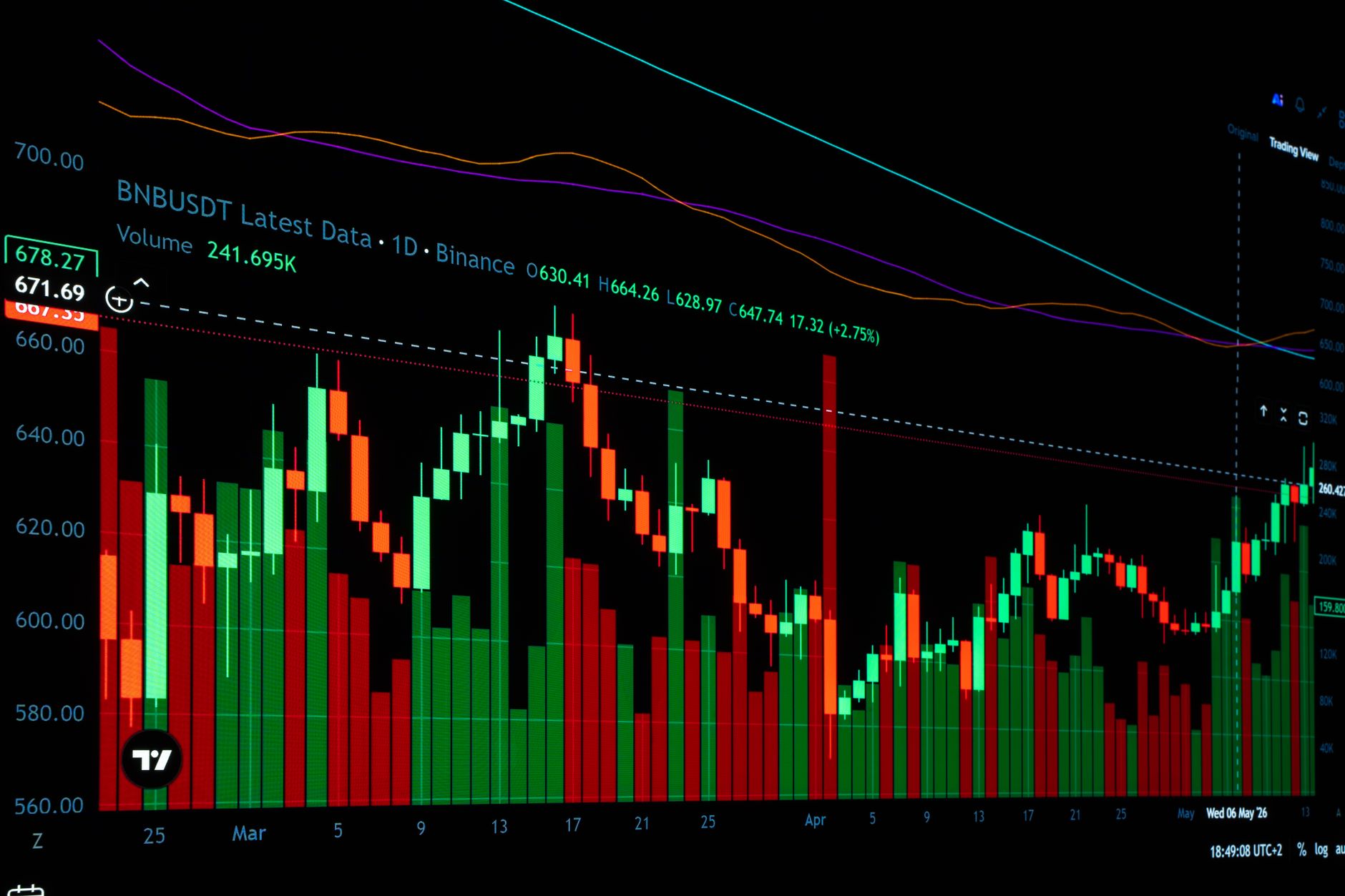
Gold scalping signals are short-duration trade alerts on XAUUSD that target moves of roughly 20 to 60 pips, with stop losses in the 20 to 50 pip range and holding times measured in minutes rather than days. Because the profit target is small, three things decide whether a scalping signal is usable at all: how fast it reaches you, how wide the spread is at the moment you execute, and whether it lands inside a liquid session such as the London open or the London and New York overlap. A scalp call that is perfect on the chart but three minutes old in your inbox is not a signal, it is a history lesson.
- On XAUUSD, one pip is a $0.10 move in price. A 30 pip scalp stop is $3.00 of movement, and one standard lot pays or costs $10 per pip.
- A typical gold spread of 15 to 35 cents equals 1.5 to 3.5 pips, which is 5 to 13 percent of a normal scalp stop before the trade even starts.
- Delivery speed is the real product. Gold can travel 30 to 50 pips in under a minute during the London open and the New York overlap, so a late alert changes the trade completely.
- The tradable windows are narrow: roughly the first 90 minutes of London and the 13:00 to 16:00 GMT overlap. Outside them, spreads widen and follow-through dies.
- Prop firm daily loss caps of 4 to 5 percent sit uncomfortably close to a normal scalping losing streak, which is why scalping signals are the riskiest way to attack an evaluation account.
What makes a scalping signal different from any other gold signal
On the surface, a scalping signal looks like every other alert: an instrument, a direction, an entry, a stop loss, and one or more take profit levels. The difference is scale and tolerance. A swing signal on gold might carry a 250 pip stop and stay open for a week. A scalp carries a 20 to 50 pip stop, targets 20 to 60 pips, and is usually finished within minutes to a few hours. Every number in the message is ten times more sensitive as a result.
Consider entry precision. If a swing trade has a 300 pip stop and you enter 10 pips worse than the posted level, your effective risk grows by about 3 percent. On a scalp with a 30 pip stop, the same 10 pip miss inflates your risk by 33 percent and simultaneously cuts your reward, so a planned 1:1 trade quietly becomes roughly 0.5:1. Nothing about the market changed. Only your fill did.
Shelf life is the second difference. A swing setup built on a daily level often remains valid for hours, sometimes days. A scalp setup at the London open can be invalidated in two to five minutes, because the exact micro structure it was built on, a sweep of a session high, a retest of a broken level, gets consumed by the next burst of orders. This is why the mechanics of reading levels, which we cover in detail in our guide to reading XAUUSD signals, matter twice as much when the timeframe shrinks.
The third difference is frequency. A swing service might post one or two gold ideas per week. A scalping approach can produce several per day during active sessions. That frequency multiplies everything: spread costs, slippage, execution errors, and emotional fatigue all compound trade after trade.
The spread math: why 15 to 35 cents eats scalps alive
Most brokers quote gold to two decimal places, and the practical convention is that one pip equals a $0.10 move. So a quote of 3,350.00 bid and 3,350.25 ask means a 25 cent spread, which is 2.5 pips. On one standard lot (100 ounces), each pip is worth $10, so that spread costs $25 per lot the instant you enter.
Standard gold spreads on retail accounts run 15 to 35 cents in liquid hours, so 1.5 to 3.5 pips. Around major news releases and the daily rollover, they can spike to 60 to 100 cents or more for a few minutes. Now put that against scalp geometry:
Say a signal calls for a long at 3,350.00 with a stop at 3,347.00 (30 pips) and a target at 3,353.00 (30 pips), a clean 1:1 trade. With a 2.5 pip spread, you actually buy at 3,350.25. Your true risk to the stop is 32.5 pips and your true reward to the target is 27.5 pips. The break-even win rate for a 1:1 system is 50 percent. For your after-spread version of the same system it is about 54.2 percent. The spread just demanded four extra percentage points of accuracy, and it will demand them again on every trade.
Run that across volume. A scalper taking 20 trades a week at 0.33 lots (the correct size for $100 risk on a 30 pip stop, more on that below) pays roughly 2.5 pips times $3.30 per pip, about $8.25 per trade, or $165 per week in spread alone on a $10,000 account. That is 1.65 percent of the account per week paid to the market maker before a single pip of edge is realized.
Two practical consequences follow. First, always compare account types: a raw-spread account showing 8 cents of spread plus a $7 per lot round-turn commission costs about 1.5 pips all-in, often half the cost of a no-commission account quoting 25 to 30 cents. Second, a scalping signal is only as good as the spread at your broker at that moment. The same call can be profitable on a 1.5 pip all-in cost and a coin flip at 3.5 pips.
Session timing: when gold scalping signals actually work
Gold liquidity follows London and New York, and scalps live or die on liquidity because tight spreads and fast follow-through only exist when volume is present.
The two windows that matter
London open, roughly 08:00 to 09:30 London time. The first 90 minutes of the London session bring the day's first real volume. Spreads compress, the Asian range gets tested or broken, and the initial directional impulse of the European day forms. Many of the cleanest gold scalps are simply continuation or rejection plays around the Asian session high and low during this window.
The London and New York overlap, about 13:00 to 16:00 GMT. This is the deepest liquidity of the entire day for XAUUSD. COMEX is fully active, US data lands at 8:30 am New York time, and both European and American desks are trading. Spreads are at their tightest and moves have the most follow-through. If a scalping provider is honest about when their calls cluster, most should land in these two windows.
The windows to avoid
The daily rollover around 5 pm New York time is the worst moment of the day: liquidity providers withdraw, and spreads on gold routinely widen by a factor of three to ten for several minutes. The Asian session is tradeable but slow, with wider spreads and a tendency to range, which suits mean-reversion systems more than breakout scalps. Late New York afternoon is drift. A scalping signal posted at 9 pm GMT deserves more suspicion than one posted at 13:35 GMT.
Also respect the calendar inside the good windows. US CPI, Non-Farm Payrolls, and FOMC statements can move gold 100 to 300 pips in seconds with spreads blowing out at the same time. A 30 pip scalp stop is meaningless inside that kind of move; slippage alone can multiply the intended loss several times over.
Why most gold scalping signal services fail on latency
Here is the chain of events between a scalp idea and your fill: the trader takes the trade, someone writes the message, the message gets posted, the platform pushes the notification, your phone displays it, you open the app, read the levels, switch to your broker, and place the order. Every link adds seconds, and several commonly add minutes.
The failure modes are predictable. Some services trade first and post later, sometimes only after the position has already moved in their favor, which makes the feed look brilliant and arrive dead. Some post screenshots instead of text, which cannot be skimmed in two seconds and often lack exact levels. Aggregator channels repost calls from other channels with a built-in delay. And some providers batch their messages, sending "signals for the London session" in one morning digest, which is useless for anything with a 30 pip stop.
During the London open, gold can cover 30 to 50 pips in under a minute. If the total latency of the chain above is three minutes, the market has often traveled a full stop distance before you can act. The signal was not wrong; it just did not survive the trip to your phone. This is why a push-first scalping feed matters: for scalps, the transport layer is part of the strategy.
For contrast, the way JPTC handles this on the JPTC signals channel is simple: every trade the desk takes is posted the moment it is taken, as text with the exact entry, stop loss, and take profit levels, followed by updates when the position moves to break even, is partially closed, or is closed. You see the trade at the same moment it exists, not after it has already been proven right.
Take the last ten scalp calls from any provider. For each one, note the message timestamp, then find the one-minute candle where the posted entry price actually traded. If the entry price printed more than a minute before the message went out, the provider is posting after the fact. Do the same with your own phone: note when the message was sent and when your notification arrived. Total chain latency above 60 to 90 seconds makes most 20 to 40 pip scalps unreliable to copy.
How to judge whether a scalp call arrived in time to act
Even with a fast provider, you still need a rule for the moment the alert lands, because sometimes the market has already moved. The practical filter is the one-third rule: compare the current price to the posted entry, and if price has moved more than one third of the stop distance beyond the entry in the trade's direction, skip the trade or wait for a retest of the entry level.
Worked example. The signal says: buy gold at 3,350.00, stop 3,347.00, target 3,354.00. The stop distance is 30 pips, so one third is 10 pips. When your notification arrives, price is 3,351.20, which is 12 pips beyond entry. Entering here means your effective stop is 42 pips and your effective reward to target is 28 pips. The posted 1.33:1 trade has become a 0.67:1 trade at your fill. That is not the trade the provider took, so do not take it. If price is 3,350.60, only 6 pips through, the geometry is still close to the original and the trade is acceptable, ideally at slightly reduced size.
Three habits make this workable in real time. First, always recalculate reward-to-risk from your achievable fill, never from the posted entry; the posted levels are anchors, not promises of your execution. Second, prefer limit orders at the posted level when you arrive late; either the market comes back and gives you the original trade, or it does not and you lose nothing. Chasing with market orders is how latecomers convert small edges into steady losses. Third, keep a simple latency log for your first 20 signals from any provider: post time, notification time, your fill price versus posted entry. After 20 rows you will know whether that feed is copyable at your speed. The broader discipline of executing someone else's plan correctly is its own skill, which we break down in how to follow forex signals.
Scalping versus swing signals: the risk math side by side
The same 1 percent risk rule produces radically different trades at the two timescales, and the differences explain almost everything about why scalps punish sloppiness.
| Metric | Gold scalp signal | Gold swing signal |
|---|---|---|
| Typical stop distance | 20 to 50 pips ($2 to $5) | 150 to 400 pips ($15 to $40) |
| Typical target | 20 to 60 pips | 300 to 900 pips |
| Holding time | Minutes to a few hours | Two to ten days |
| Spread cost as share of stop (25 cent spread) | 5 to 13 percent | Under 2 percent |
| Entry precision required | Within 5 to 10 pips | Within 30 to 50 pips |
| Position size at 1% risk on $10,000 | 0.33 lots (30 pip stop) | 0.03 lots (300 pip stop) |
| Sensitivity to delivery latency | Extreme, minutes kill the trade | Low, an hour rarely matters |
| Overnight swap cost | Usually none, closed intraday | Accrues nightly, tripled midweek |
Look at the position size row. Risking the same $100 on a $10,000 account, the scalp trades 0.33 lots against the swing's 0.03 lots, eleven times the size. That means every pip of slippage costs eleven times more in dollars: a 5 pip slip is $16.50 on the scalp and $1.50 on the swing. Platform errors and requotes scale the same way, at exactly the timescale where you have the least time to think.
Neither style is inherently better. Swing signals trade spread costs for swap costs and patience; scalps trade swap for spread and speed. But they are different sports, and a signal feed built for one should be judged by that one's rules.
Prop firm daily loss rules make gold scalping signals genuinely dangerous
Most prop firm evaluations enforce two hard limits: a maximum daily loss, commonly 4 to 5 percent, and a maximum overall drawdown, commonly 8 to 10 percent. The daily figure is usually calculated on equity, not balance, so floating losses count against it in real time. Breach either number once and the evaluation fee is gone.
Now overlay scalping frequency on that structure. On a $100,000 evaluation with a 5 percent daily cap, you have $5,000 of daily room. Risking 1 percent per trade, five consecutive losers in one day ends the account. And losing streaks are not bad luck, they are arithmetic: at a 50 percent win rate, the chance of at least one run of five straight losses somewhere inside 100 trades is above 95 percent. Even at a 60 percent win rate it remains more likely than not. A swing trader taking two trades a week can absorb that streak across a month of resets. A gold scalper taking five trades a day can absorb it before lunch.
Gold adds two amplifiers. First, scalp opportunities cluster around the 8:30 am New York data window, and many firms prohibit opening or closing trades within a few minutes of high-impact news; a scalp filled 90 seconds before CPI can void a passed evaluation even if it wins. Second, news-window slippage on gold is severe, and a 30 pip intended stop that fills 40 pips late turns a planned $1,000 loss into $2,300 without warning, which can punch through a daily limit in one trade.
If you still want to use scalping signals on an evaluation, the math forces three rules: cut risk to 0.25 to 0.5 percent per trade, impose a personal daily stop at half the firm's limit (stop trading at 2 to 2.5 percent down), and skip every signal within 15 minutes of red-folder US news. This converts a five-loss catastrophe into a survivable bad day, at the cost of slower progress toward the profit target. On evaluation accounts, slow is the only speed that finishes.
Using gold scalping signals without wrecking your account
Pulling the threads together, a workable process for trading scalp alerts on XAUUSD looks like this:
- Fix risk per trade first. 0.5 to 1 percent of the account, converted to lots from the posted stop distance. On $10,000 at 1 percent with a 30 pip stop, that is $100 divided by $10 per pip per lot times 30 pips, so 0.33 lots. Recompute for every signal; the stop distance changes every time.
- Apply the one-third staleness rule before every entry, and prefer limit orders at the posted level when late.
- Trade the two liquid windows only. London open and the 13:00 to 16:00 GMT overlap. Skip rollover, skip the Asian drift, skip everything within 15 minutes of major US releases.
- Know your all-in cost. Measure your broker's real gold spread during those windows, add commission, and reject the whole approach if your all-in cost exceeds about 10 percent of the typical stop on the feed you follow.
- Log everything for the first month: post time, arrival time, fill versus posted entry, spread paid, result. Twenty to thirty rows will tell you whether the feed plus your broker plus your reaction speed form a system worth continuing.
On the provider side, insist on the boring, verifiable properties: text messages with exact levels, posted at the moment of entry, with follow-up management updates, and some form of independent verification. JPTC publishes free forex and gold signals in the public JPTC Signals channel on Telegram (t.me/JPTCSignals): every trade the desk takes is posted as it is taken, with entry, stop loss, and take profit levels, plus updates when a position moves to break even, is partially closed, or closed. The strategy behind those calls runs on a published results, so the trades can be checked against a third-party record instead of screenshots.
One thing worth stating plainly: there is no subscription and no monthly fee. Partner brokers pay JPTC a rebate on trading volume, which is why the channel costs readers nothing. You place every trade on your own account, at your own broker, and JPTC never touches your money. If the economics of that model interest you, we explain it fully in trading signals with no monthly fee.
Finally, the sentence that belongs in every honest article about scalping gold: trading involves a significant risk of loss and past performance is not indicative of future results. Scalping concentrates that risk into minutes, which is exactly why the mechanics above matter more here than anywhere else.
Frequently asked questions
How many pips do gold scalping signals usually target?
What is a pip on XAUUSD and what is it worth?
What is the best time of day to trade gold scalping signals?
How fast do I need to act on a gold scalp signal?
Are gold scalping signals safe for prop firm evaluation accounts?
Are the JPTC gold signals really free, and what is the catch?
Forex & Gold Signals, No Monthly Fee
Every trade we take, posted the moment we take it: entry, stop loss and targets. A partner broker covers the cost, so there is no subscription. You place every trade on your own account.
Join the signals channel