How Long a Prop Firm Evaluation Takes, and What Resets Each Day

A prop firm evaluation period outlines specific trading rules and performance targets traders must meet within a set timeframe, typically 30 to 60 days, to qualify for a funded account. These rules primarily focus on profit targets, maximum daily and overall drawdowns, and consistency metrics, ensuring traders demonstrate disciplined and profitable strategies before managing firm capital.
- Prop firm evaluations require adherence to strict profit targets, often 8-10% in Phase 1.
- Daily drawdown limits typically restrict losses to 5% of the initial balance.
- Overall maximum drawdown usually caps losses at 10-12% of the initial balance.
- Consistency rules prevent 'gambling' by requiring regular, measured performance.
- Traders often have 30-60 calendar days to complete each evaluation phase.
Understanding the Prop Firm Evaluation Period: The Gateway to Funding
For many aspiring traders, proprietary trading firms (prop firms) offer an enticing pathway to trading with significant capital without risking their own. However, this opportunity comes with a rigorous gatekeeping process: the evaluation period. This initial phase is designed to assess a trader's skill, discipline, and risk management capabilities under simulated market conditions, adhering to a strict set of prop firm evaluation period rules explained by each firm. Understanding what happens during your first 30-60 days is paramount to success.
The evaluation typically consists of two phases, each with its own set of objectives and limitations. The goal is not just to make a profit, but to do so consistently and responsibly, proving you can manage risk effectively. Many traders find this period challenging, not solely due to market volatility, but because of the psychological pressure and the need to strictly adhere to predefined parameters.
Phase 1: Proving Profitability and Discipline
Your first 30 days, or sometimes up to 60 calendar days, in Phase 1 are about demonstrating your ability to generate profits while respecting fundamental risk management principles. This is where the core prop firm evaluation period rules explained truly come into play. Key metrics typically include:
- Profit Target: Usually 8-10% of the initial account balance. For a $100,000 account, this means making $8,000-$10,000.
- Maximum Daily Drawdown: This is arguably the most critical rule. It typically limits your losses to 5% of your initial balance in any single trading day. If your account balance drops below this threshold at any point during the day, your evaluation is failed. For a $100,000 account, a $5,000 daily loss would mean failure.
- Maximum Overall Drawdown: This limit, usually 10-12% of the initial balance, tracks your total losses from the starting balance. If your account drops below this cumulative threshold, regardless of the daily drawdown, you fail. For a $100,000 account, a $10,000-$12,000 total loss would lead to failure.
- Minimum Trading Days: Firms often require a minimum number of trading days (e.g., 5-10 days) to prevent 'lucky' passes and ensure consistent activity.
During this phase, traders must focus on high-probability setups and disciplined execution. Over-leveraging or chasing trades to hit the profit target quickly often leads to violating drawdown limits. Our research shows that a conservative approach, aiming for smaller, consistent gains, is far more effective than aggressive strategies.
Phase 2: Demonstrating Consistency and Risk Management
If you successfully pass Phase 1, you move to Phase 2. This phase is similar in structure but often has a lower profit target (e.g., 5% instead of 8-10%) and an extended time limit (e.g., 60 days). The core prop firm evaluation period rules explained regarding drawdown remain stringent. Phase 2's primary purpose is to confirm that your success in Phase 1 wasn't a fluke and that you can maintain consistent profitability under slightly less pressure.
Consistency rules become even more pronounced here. Some firms might look at the size of your winning trades relative to your losing trades, or the distribution of your profit across trading days. For instance, making 80% of your profit in one large trade and then struggling for the rest of the month might be flagged as inconsistent. The goal is to prove you have a repeatable trading edge.
Navigating Key Prop Firm Evaluation Period Rules Explained
Successfully navigating the evaluation hinges on a deep understanding and strict adherence to the rules. Let's delve into some of the most critical aspects.
Mastering Daily and Maximum Drawdown Limits
Drawdown limits are the most common reason traders fail prop firm evaluations. The daily drawdown resets each day, typically at server midnight, and is calculated based on your starting balance for that day (or sometimes the initial account balance). The maximum overall drawdown, however, is cumulative and tracks your account's lowest point relative to the initial balance.
Practical Advice:
- Know Your Limits: Always calculate your exact daily and overall drawdown limits before placing any trades. For a $100,000 account with a 5% daily drawdown, your account cannot drop below $95,000 at any point during the day. If your floating equity hits $94,999, you're out.
- Set Stop Losses: Every trade should have a defined stop loss. Never 'hope' a trade will turn around.
- Risk Per Trade: Limit your risk per trade to a very small percentage, often 0.5% to 1% of your account balance. This ensures that even a string of losses won't breach your daily drawdown.
- Monitor Floating P/L: Be acutely aware of your floating profit/loss. Some firms calculate drawdown based on floating equity, not just closed trades.
Adhering to Consistency Rules
Consistency rules are designed to identify traders who rely on luck or 'gambling' rather than a systematic approach. While the specifics vary between firms, the spirit of these rules is universal: prove you can generate steady, repeatable returns.
Common Consistency Rule Interpretations:
- No Single Trade Dominance: Some firms might stipulate that no single trade or day should account for more than a certain percentage (e.g., 30-40%) of your total profit target. This prevents a trader from getting lucky on one trade and then just sitting on it.
- Regular Trading Activity: This ties into the minimum trading days rule. You can't just place a few trades and disappear.
- Trade Size Consistency: While not always explicitly stated, wildly fluctuating trade sizes can indicate a lack of a defined strategy.
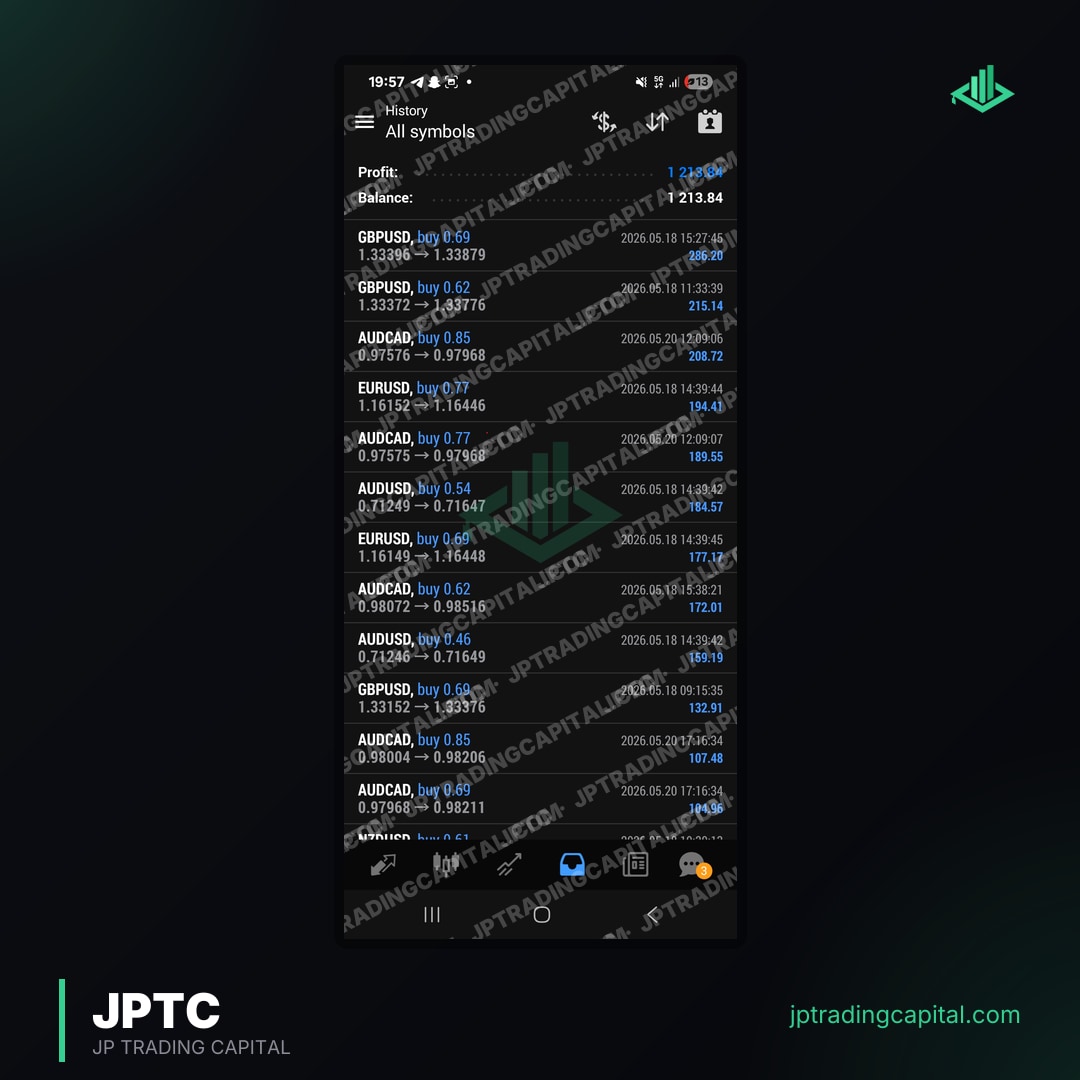
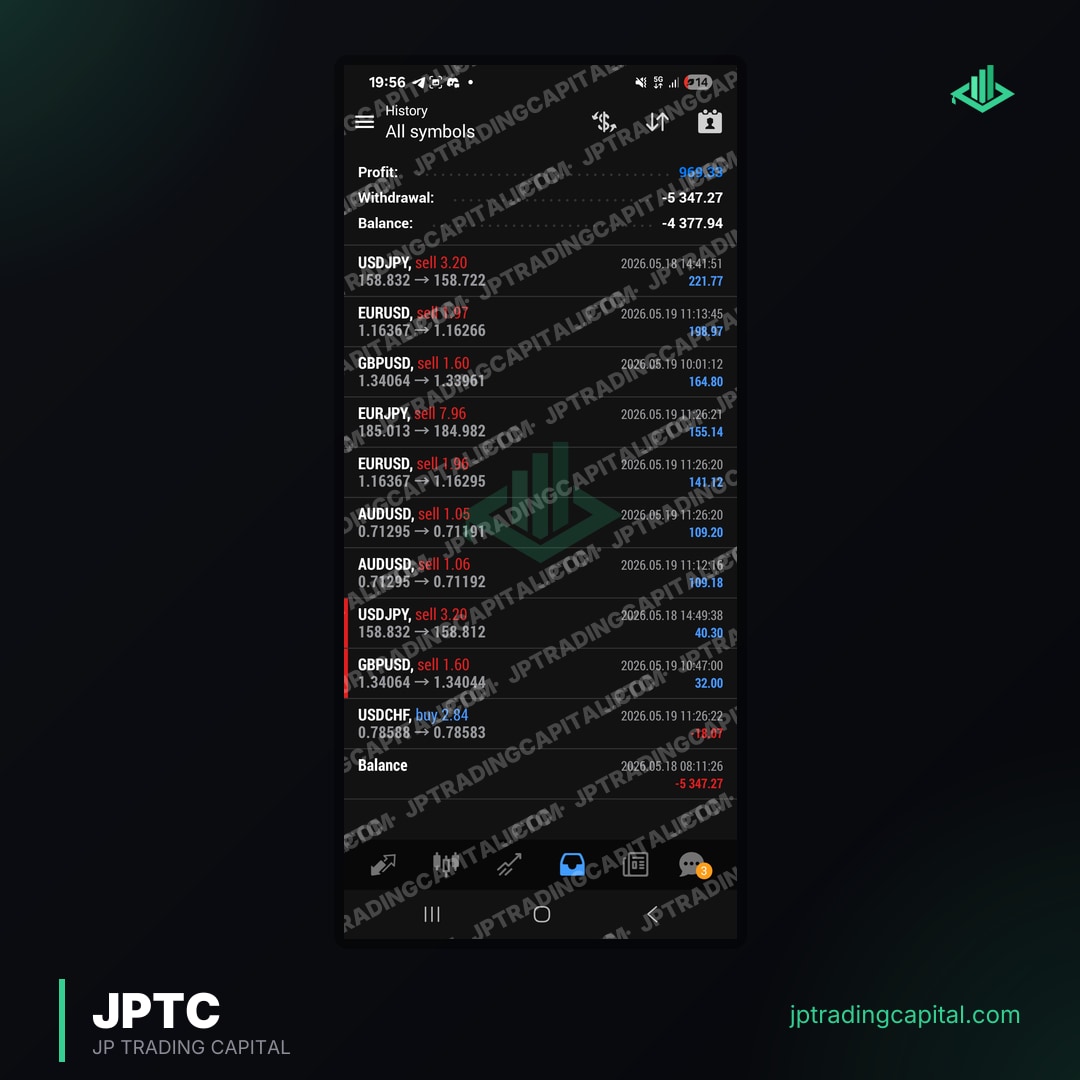
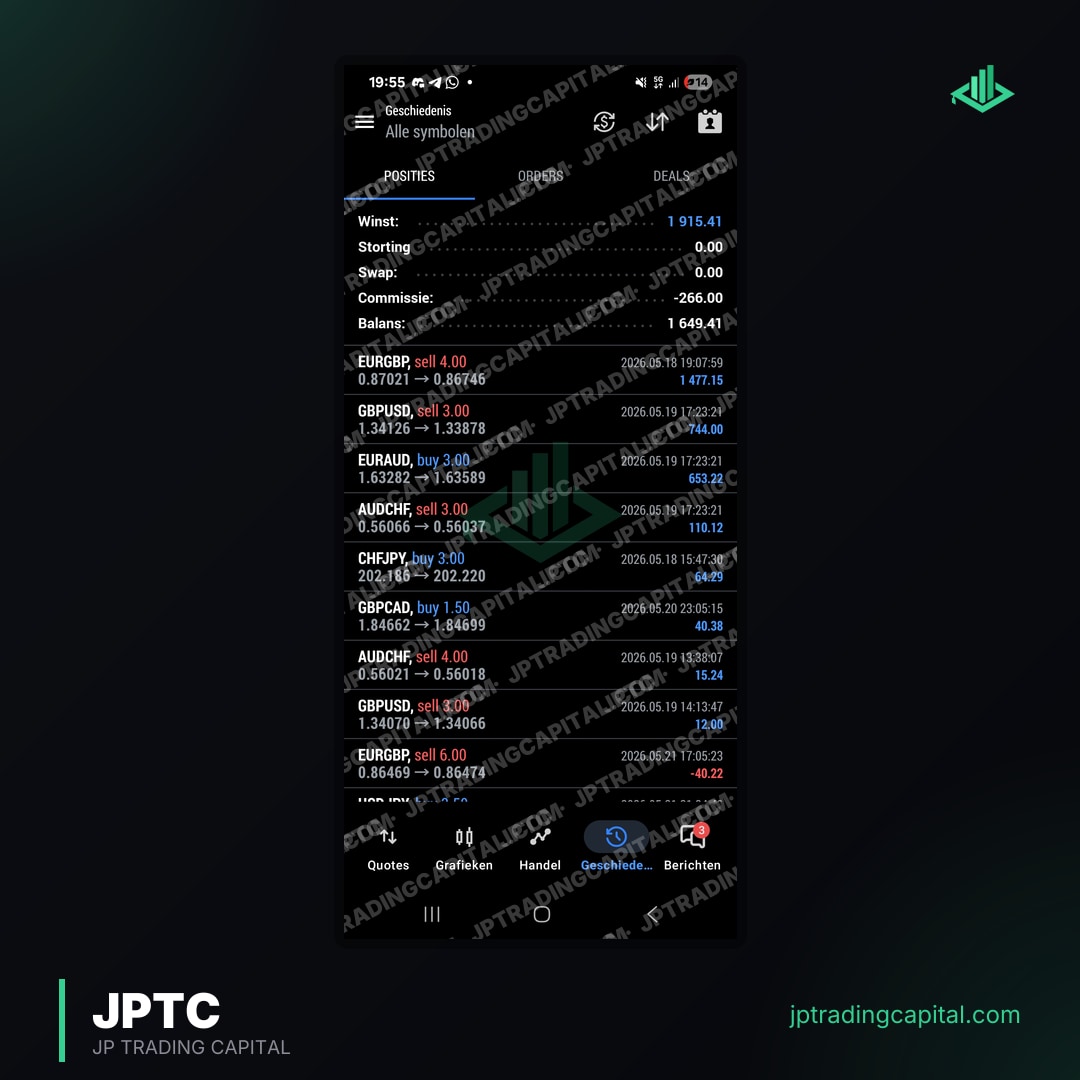
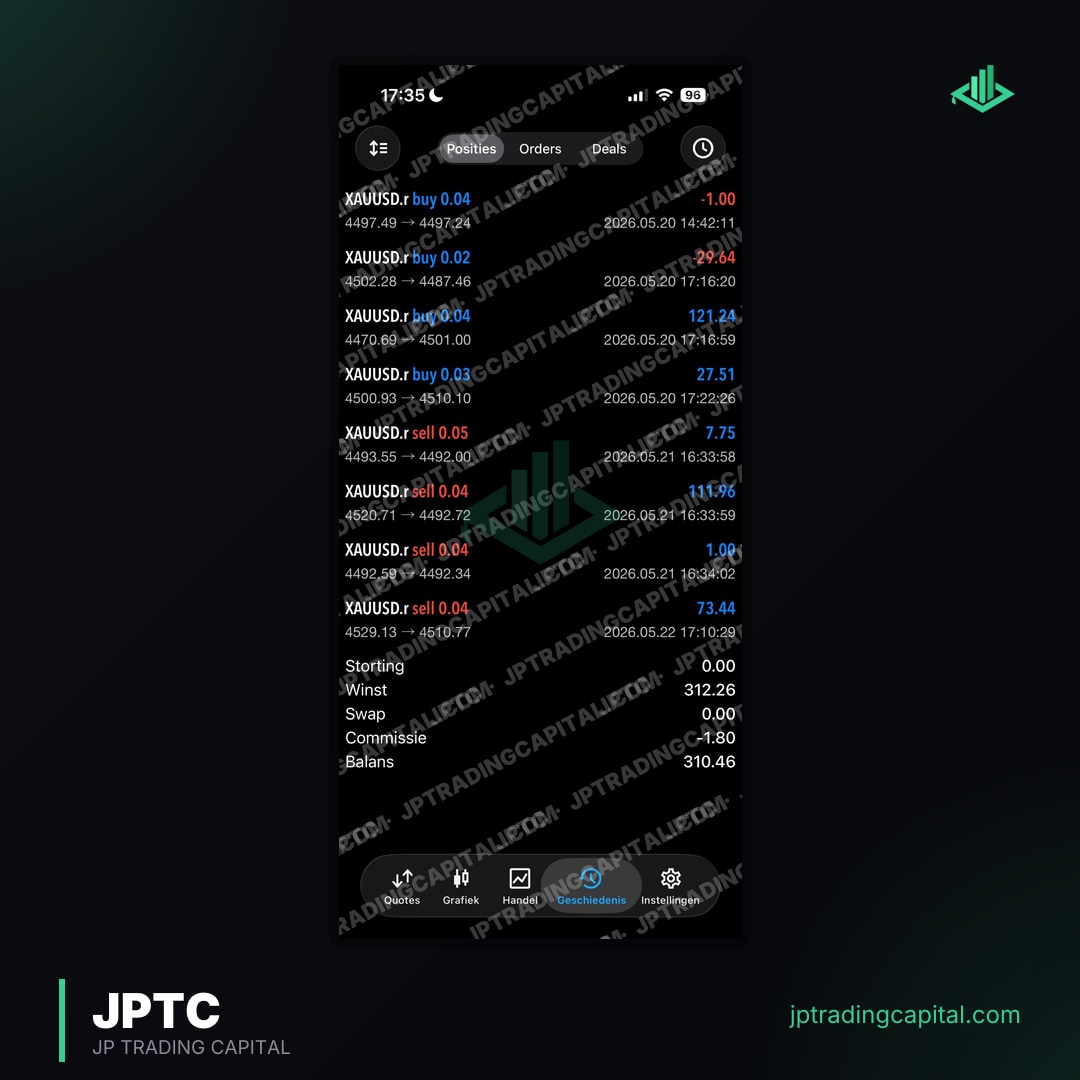
To demonstrate consistency, focus on a well-defined trading plan. Stick to your chosen strategy, take trades that meet your criteria, and manage risk uniformly across all positions. For an example of what a 2-year live algo track record looks like, see JPTradingCapital's published results, which showcases consistent performance over time.
Time Limits: The Clock is Ticking
Most evaluations have a time limit, typically 30 or 60 calendar days per phase. While some firms offer unlimited time or extensions, many do not. This adds a layer of pressure to reach the profit target without violating drawdown limits.
Strategy for Time Limits:
- Pace Yourself: Don't rush. Trying to hit a 10% profit target in the first week often leads to aggressive trading and subsequent failure. Aim for smaller, consistent gains (e.g., 0.5-1% per day).
- Leverage Downtime: If market conditions aren't favorable, don't force trades. Use the time to analyze, backtest, or refine your strategy.
- Consider Automated Solutions: For traders who struggle with emotional trading under time pressure, automated trading solutions can be invaluable. JPTradingCapital's JPTC EA Hub, for instance, is designed with pre-configured, backtested strategies that inherently respect prop-firm rules like daily drawdown caps and consistency, making it a powerful tool for navigating time-bound evaluations.
The Psychology of the First 30-60 Days


The mental game during a prop firm evaluation is often as challenging as the trading itself. The pressure to perform, combined with the strict rules, can lead to emotional decisions.
- Fear of Losing: The constant threat of hitting a drawdown limit can paralyze traders or lead to premature trade exits.
- Greed: The desire to hit the profit target quickly can lead to over-leveraging or taking low-probability trades.
- Frustration: A string of losses or missing a good setup can lead to revenge trading, which almost always results in failure.
Coping Mechanisms:
- Treat it Like a Real Account: Approach the evaluation as if it were your own funded account. This fosters discipline and responsible trading.
- Develop a Routine: Stick to a consistent pre-market and post-market routine.
- Take Breaks: Step away from the screen after a significant win or loss to clear your head.
- Journal Your Trades: Documenting your trades, including your emotional state, can help identify patterns and improve discipline.
Tools and Strategies for Evaluation Success
Success in a prop firm evaluation often comes down to having a robust strategy and the right tools. Whether you're a manual discretionary trader or an algorithmic enthusiast, there are resources to help.
Manual Trading Strategies
For manual traders, a well-defined strategy is non-negotiable. This includes:
- Clear Entry/Exit Criteria: Know exactly why you're entering and exiting a trade.
- Risk-Reward Ratios: Aim for trades with a favorable risk-reward, e.g., 1:2 or higher.
- Specific Markets: Focus on 1-3 currency pairs or instruments you understand well.
- Session Trading: Trade during specific market sessions (e.g., London or New York) where your strategy performs best.
Leveraging Automated Trading (EAs)
Automated Expert Advisors (EAs) can be a game-changer for prop firm evaluations, especially in ensuring strict adherence to the prop firm evaluation period rules explained by the firm. The JPTC EA Hub is specifically built for this purpose.
Benefits of EAs in Evaluations:
- Emotional Detachment: EAs execute trades based on predefined logic, removing human emotions like fear and greed.
- Consistent Execution: They adhere strictly to risk parameters, stop losses, and take profits, ensuring daily and maximum drawdown limits are respected.
- 24/5 Trading: EAs can operate around the clock, capturing opportunities you might miss while sleeping or away from the screen.
- Backtested Strategies: Reliable EAs come with backtested strategies, offering statistical probabilities of success. JPTradingCapital's EA Hub, for example, features automated EAs pre-configured with strategies that have been rigorously backtested to respect prop-firm rules (daily drawdown caps, max loss limits, consistency). This significantly increases the chances of passing.
When considering an EA, ensure it's compatible with your chosen prop firm's platform (MT4/MT5) and that its underlying strategy aligns with the firm's rules. The JPTC EA Hub is designed to work seamlessly across major prop firms like FTMO, FundedNext, FXify, TopStep, The5ers, and E8 Funding, providing a versatile solution for traders.
For EA developers researching strategy patterns, the transparent and rule-bound environment of prop firm evaluations offers a unique testing ground for robustness and adaptability. The strict drawdown limits, in particular, force EAs to incorporate superior risk management.
Common Pitfalls to Avoid in Your First 30-60 Days
While the rules seem straightforward, many traders stumble due to common mistakes:
- Overtrading: Taking too many trades, especially low-quality setups, increases exposure to risk and commissions.
- Revenge Trading: After a loss, trying to immediately make it back by increasing risk or taking impulsive trades.
- Ignoring News Events: High-impact news can cause significant volatility, potentially leading to rapid drawdown breaches.
- Lack of a Trading Plan: Entering the evaluation without a clear, written trading plan is a recipe for disaster.
- Inadequate Risk Management: Not setting proper stop losses, or setting them too wide, is a fast track to failure.
- Not Understanding the Specific Rules: Each prop firm has nuances in their prop firm evaluation period rules explained on their website. Always read the fine print.
By being aware of these pitfalls, traders can proactively implement strategies to avoid them, increasing their chances of successfully navigating the evaluation period.
Final Thoughts on Mastering the Evaluation
The prop firm evaluation period, particularly your first 30-60 days, is a critical test of your trading abilities. It's not just about making money; it's about demonstrating consistent profitability, disciplined risk management, and emotional control under pressure. By thoroughly understanding the prop firm evaluation period rules explained by your chosen firm, developing a robust trading plan, and potentially leveraging advanced tools like the JPTC EA Hub, you can significantly improve your chances of passing and becoming a funded trader.
Remember, the journey to becoming a funded trader is a marathon, not a sprint. Patience, persistence, and a commitment to continuous learning are your greatest assets. Focus on protecting your capital first, and profits will follow.
What is the main goal of a prop firm evaluation period?
What are the most common reasons traders fail prop firm evaluations?
How do prop firms enforce consistency rules?
Can I use an Expert Advisor (EA) during a prop firm evaluation?
What happens if I don't hit the profit target within the time limit?
Related Articles
- Apex Trader Funding vs TopStep: Which Futures Prop Firm Is Best in 2026? · Read more →
- How to Choose the Right Prop Firm in 2026: Complete Selection Guide · Read more →
- Can a Trading Bot Pass Gold EA Prop Firm Challenges? · Read more →
- Prop Firm Trading Without Leverage Restrictions: How to Scale Safely in 2026 · Read more →
- Is Prop Firm Trading Worth It? Honest Review (2025 Data) · Read more →
- Trade Copier Explained: The Ultimate Guide for Prop Firm Traders in 2024 · Read more →
- Trade Copier Explained: Automate Your Prop Firm Accounts · Read more →
- Live Trading Room vs Discord: Prop Firm Trader's Choice · Read more →
The EA built for prop firm rules
Daily drawdown guard, hard max-loss stop, consistency-aware pacing and a news pause, on MT4 and MT5. One-time €797, no monthly fee. If you would rather not run the evaluation yourself, we run it for you.
See the EA Hub