Prop Firm Verification: KYC, Sanctions and IP Checks
Material update: 15 October 2026: Additional own-results verification/audit wording corrected to company-published broker-statement scope.

Prop firm verification is the identity and eligibility review that happens before you sign a funded-account contract or receive your first payout. It usually covers four things: who you are, where you live, whether you are on a sanctions list or in an excluded country, and whether you are the only person using the account. The details below come from the firms' own help pages, checked on 17 October 2026.
What prop firm verification actually checks
"Background check" sounds like a credit or criminal record search, but the checks published by the larger firms are narrower and more practical:
- Identity: a government ID and, at some firms, a live selfie matched to that ID.
- Address: a recent document that ties your name to a residential address.
- Eligibility: age, country of residence and, at some firms, nationality, plus screening against international sanctions lists.
- Account use: rules on who may access the account, from where, and on which devices.
FTMO, for example, excludes persons under 18, individuals listed on international sanctions lists and people with a criminal record related to financial crime or terrorism (who can join FTMO). How each firm screens for that is not published in detail, so the sensible approach is to make sure the facts you declare are complete and consistent.
When KYC happens: examples from three firms
Most firms let you buy and trade an evaluation first and verify you later:
- FTMO calls its process FTMO Identity. It becomes available once all applicable trading objectives of the evaluation are met; for the Instant Account it happens when you request your first reward. A valid existing FTMO Identity is reused (FTMO Identity FAQ). After passing, FTMO also asks you to accept the FTMO Account Terms & Conditions, and says the review typically takes 1 to 4 business days depending on the product and phase (after passing).
- FundedNext asks for KYC after the challenge phases (Stellar 1-Step, 2-Step and Lite) and before the first reward request on Instant accounts. Review typically takes 48 hours, and on the Stellar 2-Step an account can be deactivated if KYC is not completed within 30 days of passing (FundedNext KYC overview, Stellar 2-Step rules).
- Topstep says it conducts identity verification on all traders and may ask you to re-verify at any time (Topstep prohibited conduct).
Plan for this step before you pass, not after. Our post-pass activation checklist covers the contract and account set-up that follow.
Documents to prepare
Document rules differ more than most traders expect. Two checked examples:
| Item | FTMO | FundedNext |
|---|---|---|
| Photo ID | Government ID showing nationality, typically passport or ID card | National ID, passport or permanent residence permit |
| Not accepted | Driving licences, residence permits and other documents that do not show nationality | Expired documents; driving licence only accepted for traders from the US, Australia, New Zealand and Canada |
| Proof of address | Name, surname, address and issue date, no older than 6 months (for example bank statement, lease agreement, utility bill) | Only if requested: utility bill or bank statement issued within the last 3 months |
| Other | Non-Latin IDs (for example Arabic, Farsi, Hindi, Urdu): international passport with Latin transcription | Real-time selfie; 3 submission attempts (5 for Iraq and Nigeria) |
Sources: FTMO's FTMO Identity requirements and FundedNext's KYC steps. Note the differences: a lease agreement can work at FTMO, while FundedNext names only utility bills and bank statements; FTMO allows a 6-month-old address document, FundedNext 3 months.
Sanctions, country and age restrictions
Every firm publishes its own excluded-country list, and the lists are not the same. FTMO excludes nationals and residents of Iran, Syria, Myanmar and North Korea (with a narrow exception for some nationals who document EEA residency and a bank account at a traditional bank) and lists further countries where it does not provide its CFD product. FundedNext names 20 countries whose residents and citizens cannot access its platform (FundedNext restricted countries). Topstep bases eligibility on both citizenship and permanent residency and says OFAC sanctions and partner restrictions apply (Topstep eligibility).
The legal background is general. OFAC states that all U.S. persons must comply with OFAC sanctions (OFAC FAQ 11), and the European Commission states that EU sanctions obligations bind EU nationals and people located or doing business in the EU (EU sanctions overview). If your situation is unusual, such as dual nationality or a recent move, ask the firm in writing before you buy, and get legal advice where needed. This article cannot assess an individual case.
IP address, VPN and device rules
Network rules are where the published policies differ most:
- FTMO says trading while travelling and using a VPN or VPS are generally allowed, except that you should not log in to MetaTrader or cTrader from the United States or set your geolocation there (FTMO travel and VPN FAQ).
- FundedNext permits VPNs but not with IP addresses from restricted countries, does not permit VPS use on accounts of $50,000 and above, and prohibits sharing a VPS connection (FundedNext VPN and VPS). Using a device that belongs to or is shared with another trader, including family members, is prohibited (device policy).
- Topstep does not permit VPNs, proxies, TOR or other location-masking services.
The common thread: your connection should match the person and country you declared. FundedNext states that any attempt to conceal true residency or nationality, including by VPN or proxy, results in immediate termination. If you travel or move, tell the firm rather than relying on a workaround.
Common reasons verification stalls or fails
- Name mismatch between the registration, the ID and the payment method. Register with your legal name from the start.
- Wrong document type, such as a driving licence at a firm that requires nationality on the ID.
- Outdated address proof: a 4-month-old utility bill can pass at one firm and fail at another.
- Unreadable uploads: cropped corners, glare or an expired document.
- Shared access: another person trading or managing the account breaks the personal-use rules of FTMO, FundedNext and Topstep. See letting someone else trade your challenge.
- Eligibility: residence or nationality in a country on the firm's list.
A pre-verification checklist and where JPTC fits
- Before buying, read the firm's eligibility page for your country of residence and nationality.
- Check that your ID type is accepted and valid for the coming months.
- Get a fresh address document that fits the strictest window you might face (3 months covers both examples above).
- Use one personal device and your normal connection; read the VPN and VPS rules before using either.
- Keep copies of what you submitted and of the firm's emails, in case you need to answer questions about your account or a payout.
Software does not change any of this, because verification is about the person. If you run the JPTC EA Hub (MT4/MT5 software and setfiles for your own terminal or your own VPS), check the firm's EA and VPS rules for your account size. The hosted JPTC Algo runs on JPTC infrastructure for your own broker account and is not offered for prop-firm evaluations. Company-published monthly figures from the broker statement are on the results page.
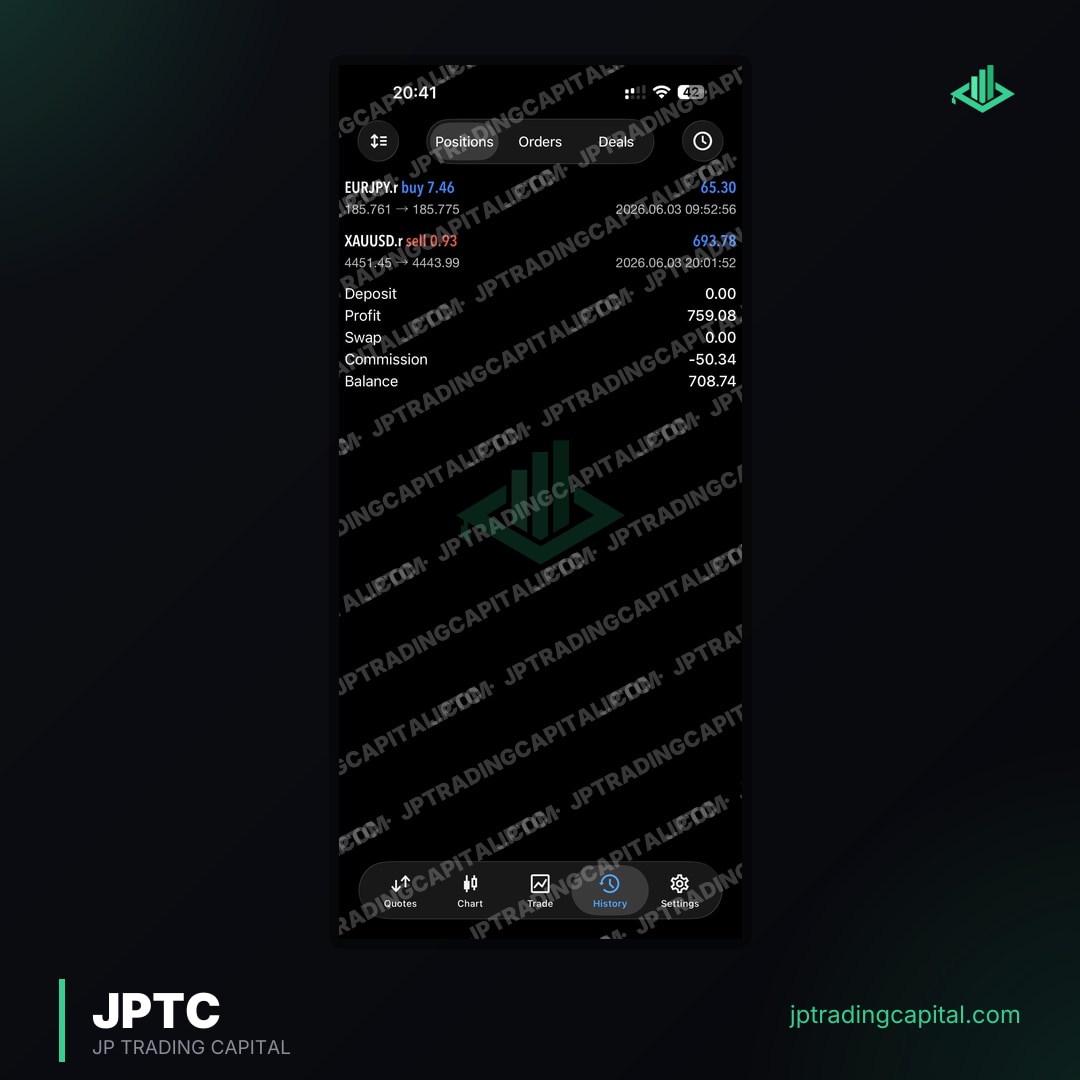
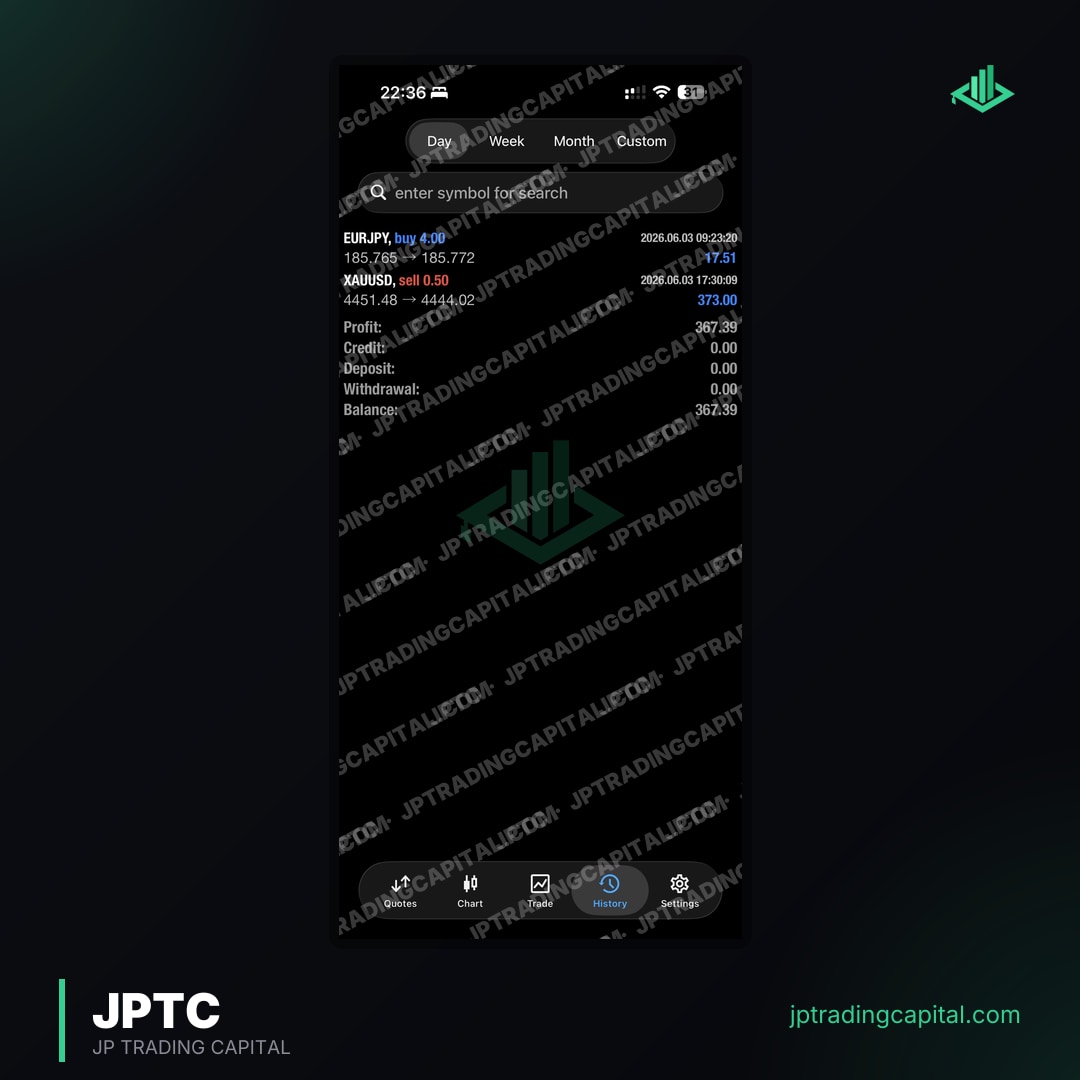
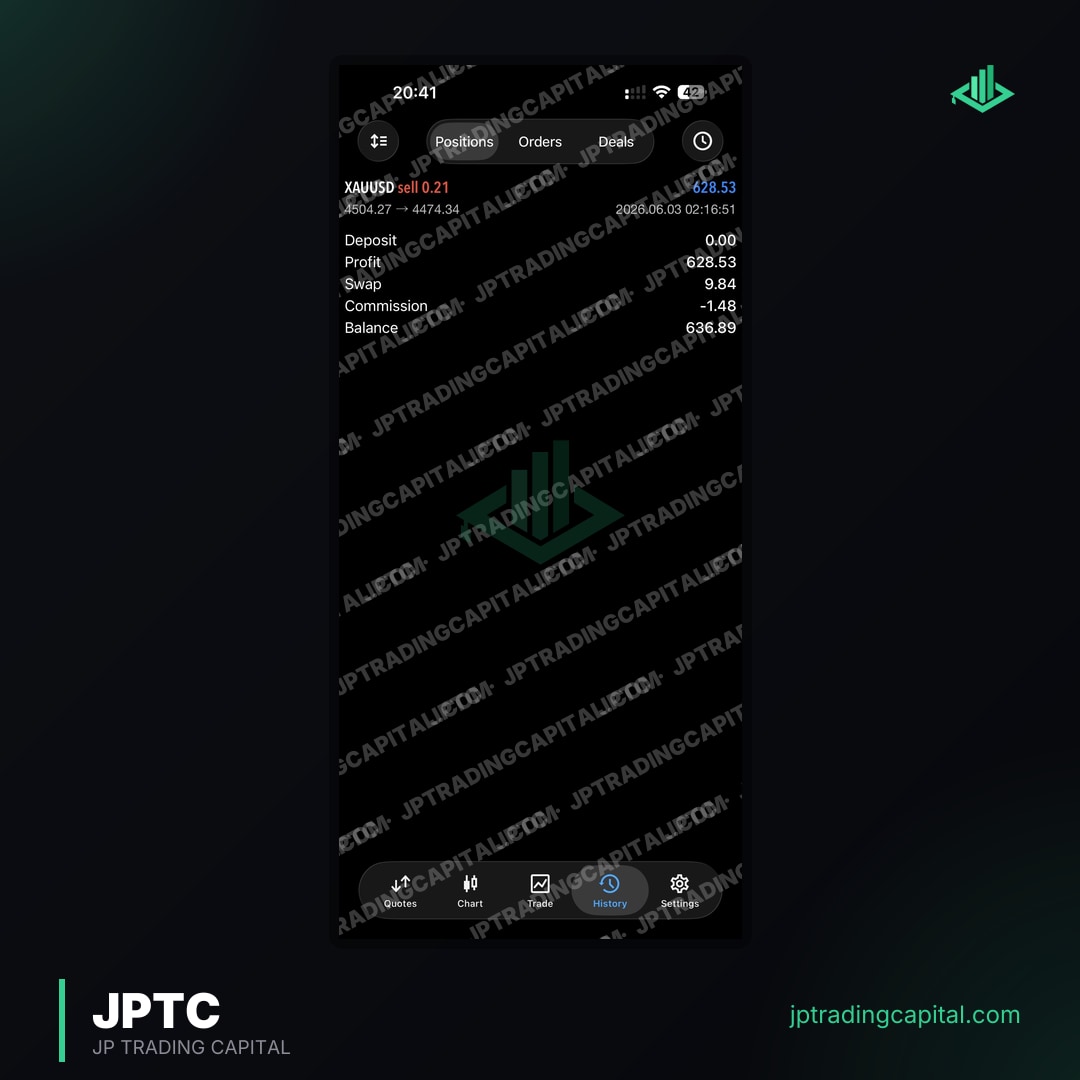
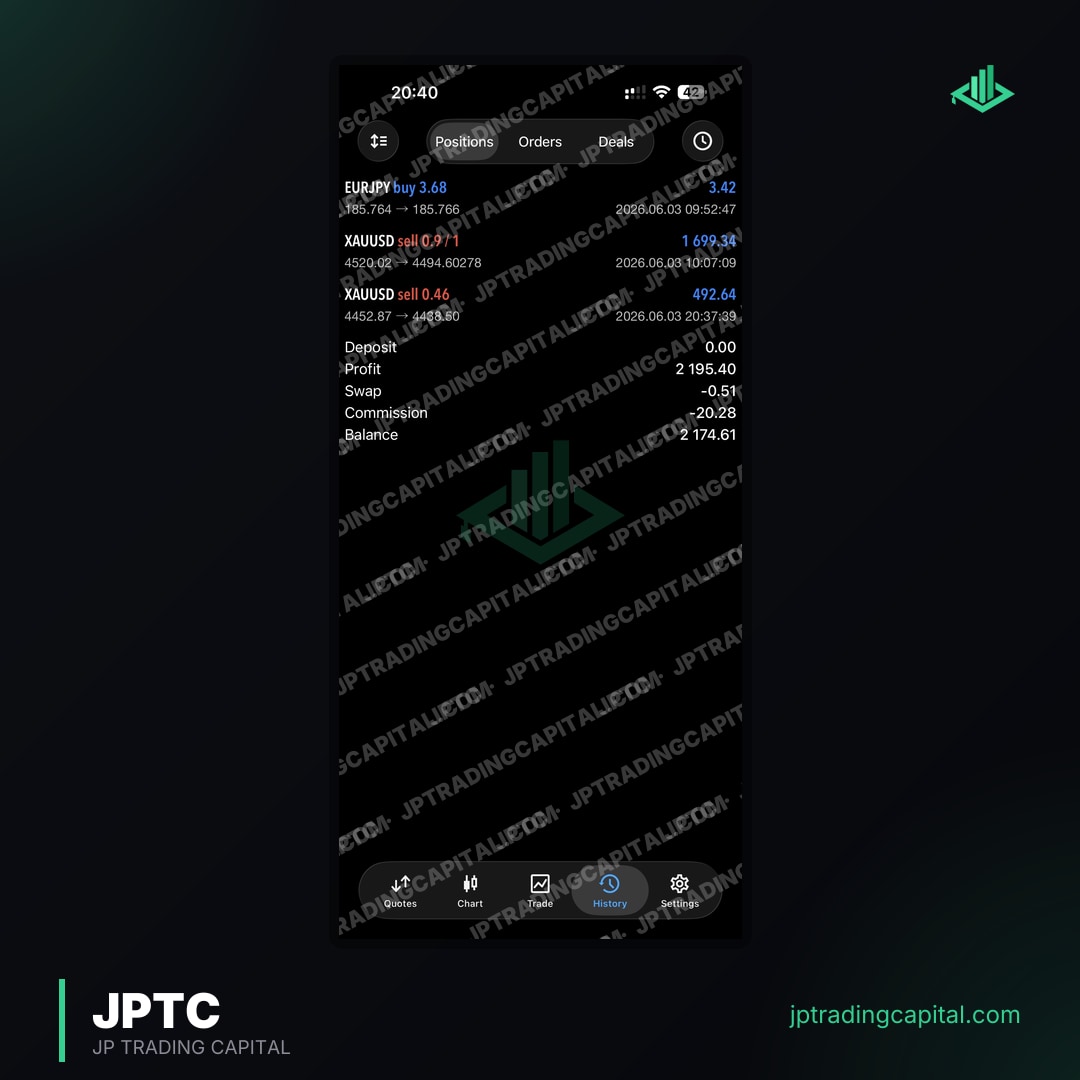
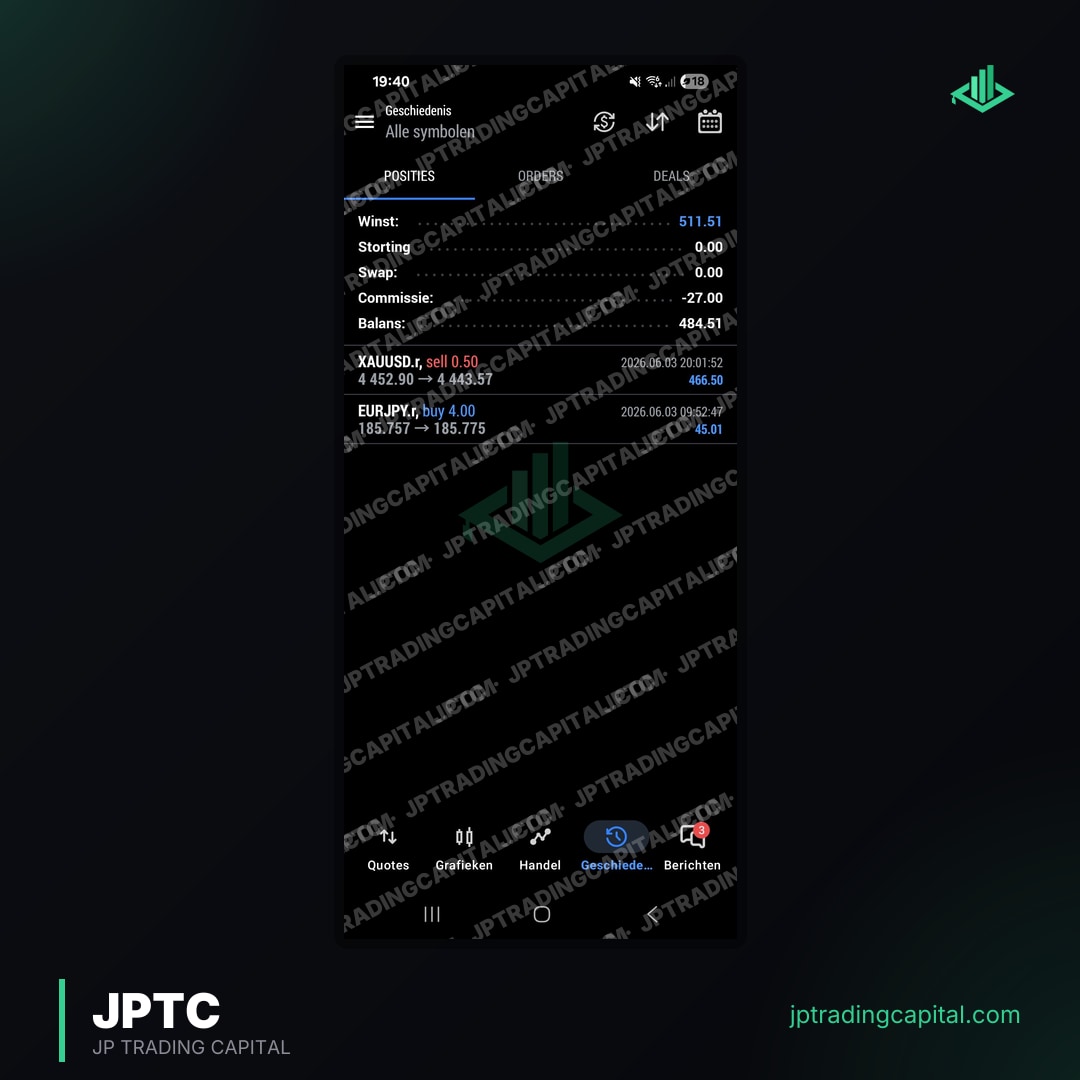
Company-published account screenshots. Individual examples, not typical results or challenge outcomes. See /results for the monthly figures.

When do prop firms ask for KYC?
Is a driving licence accepted?
How old can my proof of address be?
Can I use a VPN on a prop firm account?
What happens if my documents are rejected?
Related articles
Review the JPTC EA Hub
EA software with version-specific documentation and account-level risk controls. Review the selected programme’s current automation rules and test the chosen version; software does not guarantee compliance, a pass or a payout.
See the EA Hub