Algo Trading Explained: Automated Strategies for Prop Firms
Material update: 15 October 2026: Additional own-results verification/audit wording corrected to company-published broker-statement scope.

Algo trading, or algorithmic trading, involves using computer programs to execute trades automatically based on predefined rules and market conditions. These automated systems analyze market data, identify trading opportunities, and place orders faster than human traders, removing emotional decision-making and ensuring consistent strategy execution around the clock.
- Automated systems execute trades based on pre-set algorithms.
- Eliminates human emotion and biases from trading decisions.
- Enables rapid analysis and execution of complex strategies.
- Offers 24/7 market monitoring and opportunity identification.
- Crucial for managing risk and consistency in prop firm challenges.
What is Algo Trading and Why Does It Matter for Traders?
The world of trading has undergone a significant transformation with the advent of algorithmic trading, commonly referred to as algo trading. At its core, algo trading utilizes sophisticated computer programs and predefined sets of rules to make trading decisions and execute orders in financial markets. This automation removes the need for manual intervention for every single trade, leading to unparalleled speed, efficiency, and consistency.
For retail traders, prop firm participants, and even seasoned EA developers, understanding how algo trading works is no longer a luxury but a necessity. The financial markets are increasingly dominated by automated systems, and leveraging this technology can provide a significant edge. Our research indicates that traders who successfully integrate automated strategies often achieve greater discipline and adherence to their trading plans, which are critical factors for long-term success.
The Core Concept: Rules-Based Execution
At the heart of every algorithmic trading system is a set of rules. These rules dictate when to buy, when to sell, what size to trade, and how to manage risk. For instance, a simple rule might be: 'Buy 100 shares of XYZ stock if its 50-day moving average crosses above its 200-day moving average, and sell if the 50-day moving average crosses below the 200-day moving average.' More complex algorithms can incorporate hundreds of variables, including macroeconomic data, sentiment analysis, and intermarket relationships.
The beauty of this rules-based approach is its objectivity. Once the rules are set, the system executes them without hesitation, fear, or greed, emotions that often sabotage human traders. This makes algo trading a powerful tool for maintaining discipline, especially in volatile market conditions.
Benefits Beyond Speed: Precision and Discipline
While speed is a significant advantage of algo trading, it’s far from the only one. Here are some key benefits:
- Elimination of Emotional Bias: Human emotions like fear and greed can lead to impulsive and irrational trading decisions. An automated trading system adheres strictly to its programmed rules, ensuring logical and consistent execution.
- Increased Trading Speed and Efficiency: Algorithms can analyze vast amounts of data and execute trades in milliseconds, far surpassing human capabilities. This is crucial for capitalizing on fleeting market opportunities.
- Backtesting Capabilities: Before deploying an algo, traders can backtest their strategies against historical data to evaluate their viability and profitability. This allows for refinement and optimization without risking real capital.
- Diversification: Automated systems can simultaneously monitor and trade multiple markets and instruments, diversifying a portfolio and spreading risk more effectively than a human trader could manually.
- Reduced Transaction Costs: Algos can be programmed to execute trades at optimal prices, potentially reducing slippage and improving overall transaction efficiency.
- 24/7 Operation: Unlike human traders, an automated trading system can operate around the clock, allowing traders to capture opportunities in different time zones or during off-market hours if the broker allows.
How Algorithmic Trading Systems Work Under the Hood
To truly understand how algo trading works, it's essential to look at the components that make up an automated trading system and the specific roles of tools like Expert Advisors (EAs) and forex robots.
Components of an Automated Trading System
An effective automated trading system comprises several critical elements:
- Strategy: This is the core logic, the set of rules defining entry, exit, and risk management. It could be a simple moving average crossover or a complex multi-indicator system.
- Data Feed: Real-time and historical market data (price, volume, order book) are fed into the system for analysis. The quality and speed of this data are paramount.
- Analysis Engine: This component processes the incoming data according to the strategy's rules. It identifies potential trade signals and calculates optimal entry/exit points.
- Execution Module: Once a signal is generated, this module sends the trade order to the broker. It handles order types (market, limit, stop), position sizing, and order management.
- Risk Management: This is arguably the most crucial component. It includes rules for stop-loss levels, take-profit targets, maximum daily drawdown, maximum total loss, and position sizing to protect capital.
- Monitoring and Reporting: The system continuously monitors open positions, market conditions, and its own performance, providing reports and alerts to the trader.
The Role of Expert Advisors (EAs) and Forex Robots
In the retail trading world, particularly within platforms like MetaTrader 4 (MT4) and MetaTrader 5 (MT5), the terms 'Expert Advisor' (EA) and 'forex robot' are commonly used to describe automated trading systems. While often used interchangeably, both refer to programs that automate trading decisions.
- Expert Advisors (EAs): These are programs written in MetaQuotes Language (MQL4 for MT4, MQL5 for MT5) that run on the MetaTrader platform. EAs can perform a wide range of functions, from generating trade signals to fully automating trade execution and managing positions. They are highly customizable and can be programmed to implement virtually any trading strategy. The MQL5 community offers a vast library of public and commercial EAs, alongside resources for developers.
- Forex Robots: This term is often used specifically for EAs designed to trade the foreign exchange (forex) market. They operate 24 hours a day, executing trades based on their programmed logic, often focusing on currency pairs.
Both EAs and forex robots exemplify how algo trading works by taking human-defined strategies and executing them with machine precision and tireless dedication. They are invaluable tools for traders looking to automate their approach and achieve consistency.
Building and Testing Your Algo Trading Strategies


Successful algo trading isn't just about having an EA; it's about having a robust, well-tested strategy. The process typically involves strategy development, rigorous backtesting, and forward testing.
Strategy Development: From Idea to Algorithm
Every automated strategy begins as a concept or a manual trading approach. The first step is to translate this concept into a precise, unambiguous set of rules that a computer can understand. This involves:
- Defining Entry Conditions: What specific indicators, price patterns, or market events trigger a buy or sell signal?
- Defining Exit Conditions: When should a position be closed? This includes profit targets, stop-loss levels, and time-based exits.
- Position Sizing: How much capital should be allocated to each trade? This is crucial for risk management.
- Risk Management Parameters: What are the maximum acceptable loss per trade, daily drawdown limits, and overall account exposure?
Once these rules are clearly defined, they are coded into an EA using a programming language like MQL4/MQL5. For those without programming skills, platforms like the JPTC EA Hub offer pre-configured, tested strategies, removing this barrier to entry. Our JPTC EA Hub is specifically designed to provide automated strategies that adhere to strict prop-firm rules, simplifying the process for traders aiming to pass evaluations.
The Importance of Backtesting and Optimization
Backtesting is the process of testing a trading strategy against historical market data to see how it would have performed in the past. This is a critical step in validating any algorithmic strategy. A good backtest provides insights into:
- Profitability: How much profit (or loss) the strategy generated.
- Drawdown: The largest peak-to-trough decline in capital.
- Win Rate: The percentage of winning trades.
- Profit Factor: The ratio of gross profits to gross losses.
Optimization involves adjusting the parameters of a strategy to find the settings that yielded the best historical performance. However, it's vital to avoid 'over-optimization' or 'curve fitting,' where a strategy performs exceptionally well on historical data but fails in live trading because it's too specific to past market noise.
Forward Testing and Demo Accounts
After successful backtesting, the next step is forward testing. This involves running the automated strategy on a demo account or a small live account with real-time market data but without risking significant capital. Forward testing helps to:
- Validate Backtest Results: Real-time market conditions can differ from historical data, and forward testing helps confirm the strategy's robustness.
- Identify Technical Issues: It can reveal bugs in the code or connectivity problems that weren't apparent during backtesting.
- Assess Broker Execution: It allows traders to evaluate the broker's execution speed, slippage, and spread in a live environment.
Only after a strategy has proven its consistency and profitability in forward testing should it be deployed on a live trading account with meaningful capital.
Algo Trading for Prop Firm Success: Navigating Challenges
Proprietary trading firms (prop firms) offer funded accounts to traders who can demonstrate consistent profitability and strict risk management. Algo trading, especially with well-designed Expert Advisors, presents a powerful tool for navigating the often-stringent rules of prop firm evaluations.
Meeting Prop Firm Rules with Automated Precision
Prop firms like FTMO, FundedNext, FXify, and TopStep have strict rules regarding daily drawdown, maximum loss limits, and consistency targets. Failing to adhere to these rules typically results in immediate disqualification. This is where an automated trading system truly shines:
- Daily Drawdown Caps: An EA can be programmed to automatically cease trading for the day or close all positions if the daily drawdown limit is approached or breached. For example, FTMO's official rules page specifies a 5% maximum daily loss. An EA can ensure this limit is never exceeded.
- Maximum Loss Limits: Similar to daily drawdown, the overall maximum loss allowed by a prop firm can be hardcoded into the EA's risk management module, preventing the account from breaching this critical threshold.
- Consistency Rules: Some prop firms require a certain level of consistency in trading, avoiding erratic profit spikes followed by deep drawdowns. A well-designed algorithmic trading strategy inherently promotes consistency by executing trades based on predefined rules, reducing variability in performance.
The JPTradingCapital team understands these challenges intimately. Our JPTC EA Hub is developed with these specific prop firm rules in mind, offering automated strategies pre-configured to respect daily drawdown caps, max loss limits, and consistency requirements across various firms, including E8 Funding and The5ers.
The Edge of Automated Risk Management
Effective risk management is the cornerstone of successful trading, and automated systems excel in this area. An expert advisor can:
- Dynamic Position Sizing: Adjust trade sizes based on account equity, ensuring that a fixed percentage of capital is risked per trade.
- Automated Stop-Loss and Take-Profit: Instantly place stop-loss orders to limit potential losses and take-profit orders to secure gains, often at optimal levels determined by the algorithm.
- Trailing Stops: Automatically adjust stop-loss levels as a trade moves into profit, protecting gains while allowing for further upside.
- Equity Protection: Implement emergency stop functions that close all trades if the account equity falls below a certain threshold.
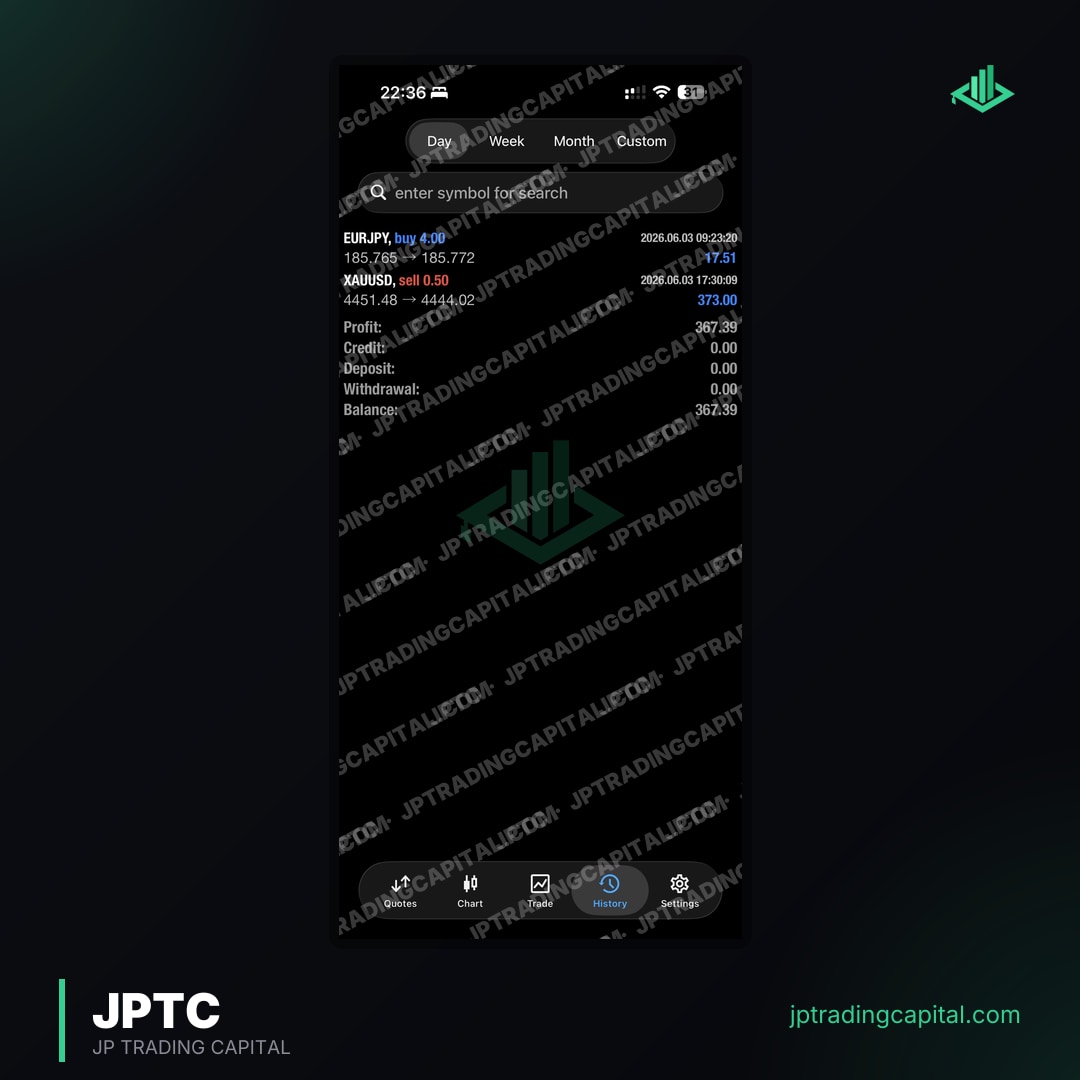
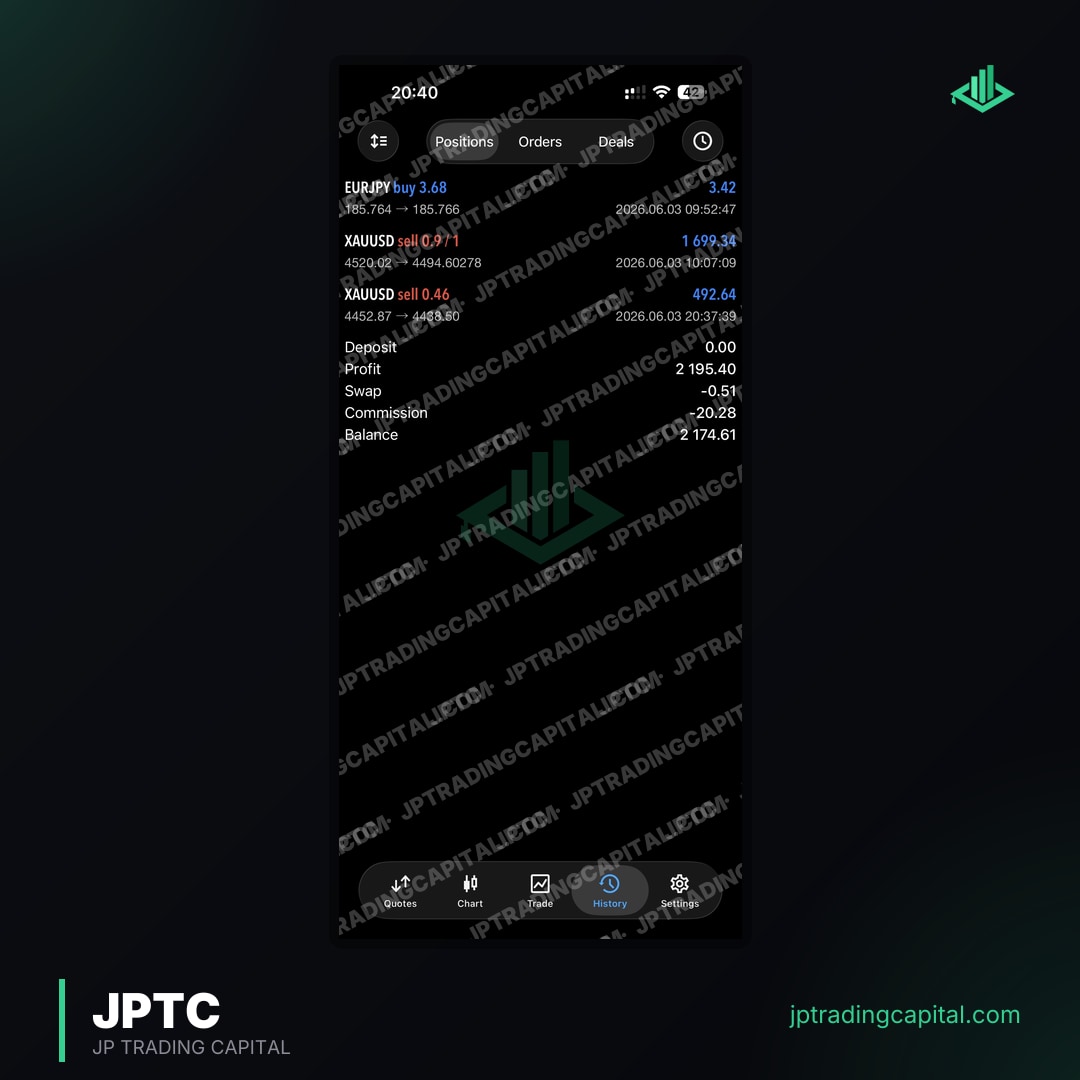
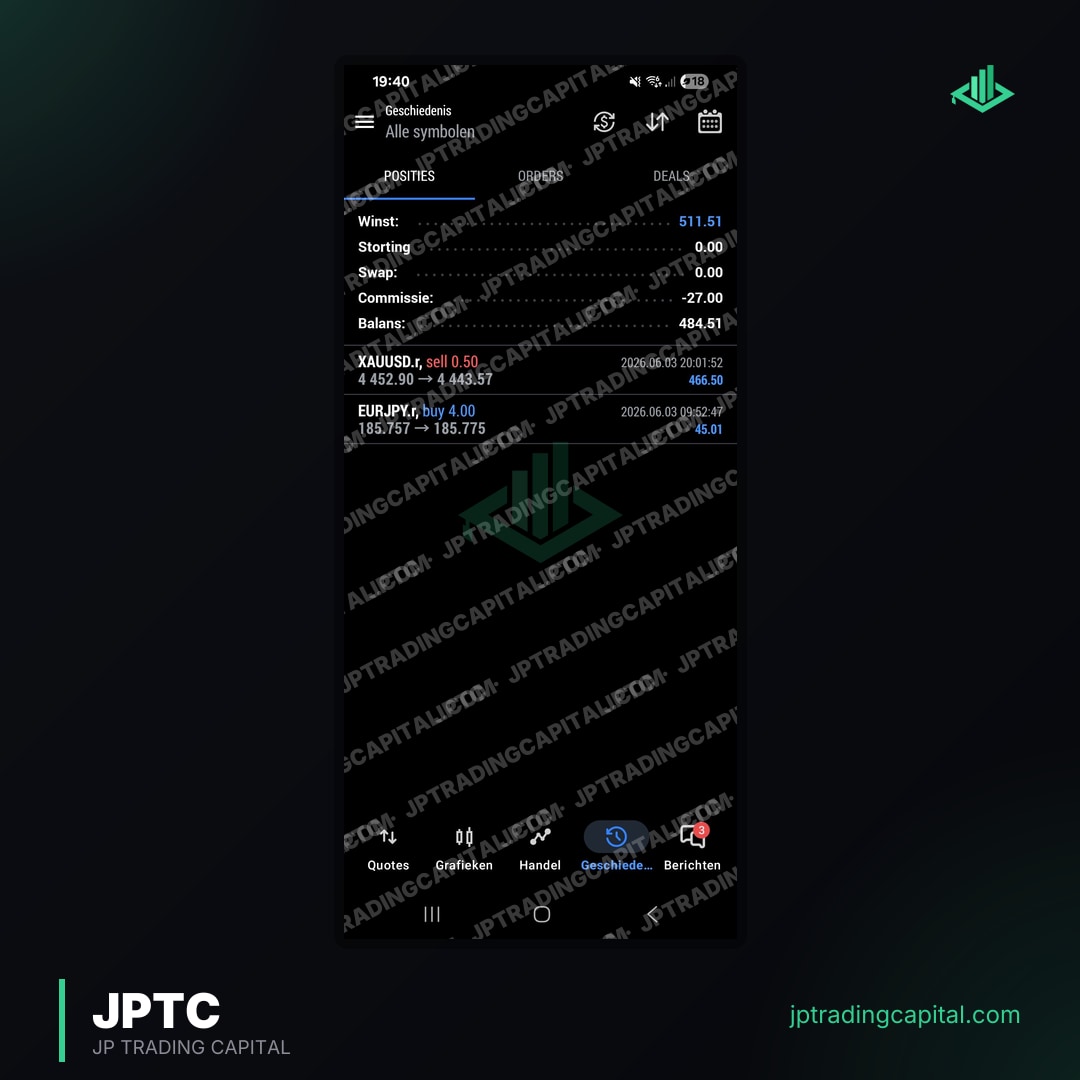
JPTradingCapital publishes monthly figures from broker statements on its results page. The broker’s own account record is not an independent audit; these figures do not establish future performance or compliance for another strategy.
Common Algo Trading Strategies Explained
There are numerous strategies that can be automated using algorithmic trading. Here, we delve into some of the most prevalent types, each with its unique approach to market analysis and execution.
Trend-Following Strategies
Trend-following is one of the oldest and most widely adopted trading strategies. The core idea is simple: identify the direction of the prevailing market trend and trade in that direction. Automated systems are excellent at identifying trends using indicators like moving averages, MACD, and ADX. An algo trading explained through a trend-following lens might buy when an uptrend is confirmed and sell when a downtrend is established, holding positions until the trend reverses or shows signs of exhaustion.
Example: A simple trend-following forex robot might enter a long position on EUR/USD when the 50-period Exponential Moving Average (EMA) crosses above the 200-period EMA on the 4-hour chart, and simultaneously, the Relative Strength Index (RSI) is above 50. It would exit when the EMAs cross back or the RSI dips below 50, or if a predefined stop-loss is hit.
Mean Reversion Strategies
Mean reversion strategies are based on the premise that prices and returns eventually revert to their long-term average. When a security's price deviates significantly from its historical average, a mean reversion algorithm will bet that it will move back towards that average. Indicators like Bollinger Bands, Keltner Channels, or oscillators like RSI and Stochastic are often employed to identify overbought or oversold conditions.
Example: A mean reversion expert advisor could be programmed to sell a currency pair if its price moves two standard deviations above its 20-period simple moving average (upper Bollinger Band) and buy if it moves two standard deviations below (lower Bollinger Band), anticipating a return to the mean.
Arbitrage and High-Frequency Trading
While less common for retail and prop firm traders due to the infrastructure requirements, arbitrage and high-frequency trading (HFT) are prominent examples of advanced algo trading. Arbitrage involves exploiting small price differences for the same asset across different markets or brokers. HFT involves executing a massive number of orders at extremely high speeds to profit from tiny price discrepancies.
These strategies require ultra-low latency connections, specialized hardware, and direct market access, putting them largely out of reach for individual traders. However, they demonstrate the peak capabilities of automated trading systems in terms of speed and efficiency.
Custom Indicators and Price Action Bots
Many traders develop or utilize custom indicators that combine multiple standard indicators or apply unique mathematical formulas to identify specific market conditions. These custom indicators can be fully integrated into an Expert Advisor. Price action bots, on the other hand, focus purely on raw price movements, candlestick patterns, and support/resistance levels, without relying on traditional indicators.
Example: A price action bot might automatically place a buy limit order at a major support level after observing a bullish engulfing candlestick pattern on the 1-hour chart, with a tight stop-loss below the support and a take-profit at the next resistance level.
Getting Started with Algo Trading: Practical Steps
Embarking on your algo trading journey requires careful planning and execution. Here’s a practical guide to help you get started, whether you're a seasoned trader or just beginning to explore automation.
Choosing the Right Platform
For most retail and prop firm traders, MetaTrader 4 (MT4) and MetaTrader 5 (MT5) are the industry-standard platforms for running Expert Advisors. Both platforms offer robust charting tools, a wide range of indicators, and the MQL programming environment for developing and deploying EAs. While MetaTrader 4 platform remains incredibly popular, MT5 offers additional features like more timeframes, more indicators, and a wider range of financial instruments.
When choosing a broker, ensure they support your preferred MetaTrader version and offer favorable trading conditions (tight spreads, low commissions, reliable execution) that align with your algo strategy.
Sourcing or Developing Your Expert Advisor
There are several paths to acquiring an Expert Advisor:
- Develop Your Own: If you have programming skills (MQL4/MQL5), you can code your own EA based on your unique strategy. This offers maximum customization and control.
- Hire a Developer: Many freelance MQL programmers can be hired to code your strategy into an EA.
- Purchase or Rent an EA: The MQL5 marketplace and various third-party vendors offer a plethora of EAs for sale or rent. Exercise extreme caution and thoroughly vet any EA before deployment, looking for verified track records and transparent performance data.
- Utilize a Pre-Configured Solution: For prop firm traders, solutions like the JPTC EA Hub provide pre-configured Expert Advisors designed with proven, backtested strategies that respect prop firm rules. This eliminates the need for coding or extensive research into individual EAs, allowing traders to focus on strategy management and performance.
Monitoring and Maintenance
Deploying an Expert Advisor is not a 'set it and forget it' endeavor. Continuous monitoring and periodic maintenance are crucial:
- Performance Monitoring: Regularly review the EA's performance metrics (profitability, drawdown, win rate) to ensure it's operating as expected. Tools like our results page can help verify real-time performance.
- Market Condition Changes: Strategies that work well in trending markets might struggle in ranging markets, and vice-versa. Be prepared to adapt or pause your EA if market conditions shift significantly.
- Technical Checks: Ensure your trading platform and internet connection are stable. VPS (Virtual Private Server) solutions are highly recommended for running EAs 24/7 without interruption.
- Updates and Optimization: Periodically review your strategy's parameters and consider minor optimizations based on recent market data. Avoid frequent, drastic changes unless absolutely necessary.
By following these steps, you can effectively integrate algo trading into your trading arsenal, enhancing your discipline, efficiency, and potential for success, particularly within the demanding environment of prop firm challenges. For those interested in exploring partnership opportunities or learning more about our automated trading tools, we invite you to visit our affiliate program page.
What is the main advantage of algo trading?
Can retail traders use algo trading?
How does algo trading help with prop firm challenges?
Is programming knowledge required to use an Expert Advisor?
What are the risks associated with algo trading?
Automation only helps if it respects the rulebook. These go deeper on the strategies and the checks that matter:
Related Articles
- Trade Copier Latency: How Delay Ruins Prop Accounts · Read more →
- Prop Firm Verification & Compliance Explained · Read more →
- Prop Firm Slippage: How Execution Speed Kills Profits · Read more →
- Prop Firm Psychology: Live vs. Demo Trading · Read more →
- Prop Firm Crypto Trading: Allowed Platforms in 2026? · Read more →
- Prop Firm Account Recovery: Rebuild After Drawdown Limits · Read more →
- Prop Firm Discipline: Master Losing Streaks · Read more →
- Easiest Prop Firm Challenges: Your Guide to Passing · Read more →
- Forex Trading Bot: Your Automated Profit Partner · Read more →
- Forex Trading Bots: Automate Your Strategy · Read more →
Review the JPTC EA Hub
EA software with version-specific documentation and account-level risk controls. Review the selected programme’s current automation rules and test the chosen version; software does not guarantee compliance, a pass or a payout.
See the EA Hub