EnglishNederlandsPortuguesEspanolDeutschFrancais

Easiest Prop Firm Challenges: Your Guide to Passing

By 12 min read trading Published:
Easiest Prop Firm Challenges: Your Guide to Passing

The 'easiest' prop firm challenges often feature lower profit targets, more generous drawdown limits, and flexible or non-existent time restrictions, allowing traders more room to maneuver. Firms like FundedNext and FXIFY are frequently cited for their more accessible evaluation parameters, focusing on sustainable trading rather than aggressive short-term gains.

Unpacking 'Easiest': What Defines a Simpler Prop Firm Challenge?

When traders ask 'which prop firms have the easiest challenges to pass,' they're often looking for a balance of achievable goals and forgiving rules. However, 'easiest' is subjective and depends heavily on a trader's personal style, experience, and risk tolerance. For some, an easy challenge means a low profit target, while for others, it's the absence of time limits or strict consistency rules. The JPTradingCapital team understands that success in funded trading isn't just about finding a firm; it's about aligning the firm's rules with a robust trading strategy.

Proprietary trading firms (prop firms) provide capital to skilled traders who can prove their profitability and risk management capabilities through a rigorous evaluation process. These challenges are designed to filter out inconsistent or overly aggressive traders. Therefore, an 'easier' challenge typically means one that offers:

Understanding these parameters is crucial before committing to any evaluation. Our research indicates that many traders underestimate the impact of daily and maximum drawdown rules, which are often the primary cause of challenge failures.

Top Prop Firms with More Accessible Challenges

Live JPTC Algo equity curve — real broker, public-share MyFxBook
Open full MyFxBook portfolio →

While no prop firm challenge is a walk in the park, some are structured in a way that provides a more forgiving path to funding. We've analyzed several popular firms to highlight those that frequently appear on lists for being more accessible.

FundedNext: Balancing Ambition with Attainability

FundedNext stands out for its variety of challenge models, some of which are designed with greater flexibility. Their 'Stellar' or 'Evaluation' models, for example, often come with no time limits and reasonable profit targets. For instance, the FundedNext website details various challenge types, including those with a 15% overall drawdown and a 5% daily drawdown, coupled with profit targets around 8% for Phase 1 and 5% for Phase 2. This structure can be particularly appealing for traders who prefer a slower, more methodical approach without the pressure of a ticking clock.

The absence of a time limit significantly reduces psychological pressure, allowing traders to wait for high-probability setups rather than forcing trades. This aligns well with automated strategies, where an EA can patiently execute trades only when optimal conditions are met.

FXIFY: Flexibility for Diverse Trading Styles

FXIFY has gained attention for its competitive pricing and often more lenient rules compared to some industry giants. While specific rules can vary, FXIFY frequently offers challenges with generous maximum drawdown limits and sometimes lower profit targets. Their platform allows for a variety of trading styles, including news trading and holding trades over weekends, which can be restrictive with other firms. The FXIFY rules typically emphasize overall risk management rather than overly strict consistency constraints, making it a viable option for those seeking a less rigid evaluation.

The5ers: Lower Profit Targets, Longer Journeys

The5ers offers a unique 'Bootcamp' program and instant funding options, but their standard 'High-Stakes' challenge also presents a compelling case for accessibility. While it has a relatively high entry fee, the profit targets are often lower than many competitors (e.g., 6-8% in Phase 1). Crucially, The5ers often allows for longer trading periods, providing ample time to reach targets without undue stress. This firm prioritizes long-term, consistent profitability, which can be an advantage for traders employing strategies focused on smaller, more frequent gains.

Key Factors to Evaluate for an Easier Prop Firm Challenge

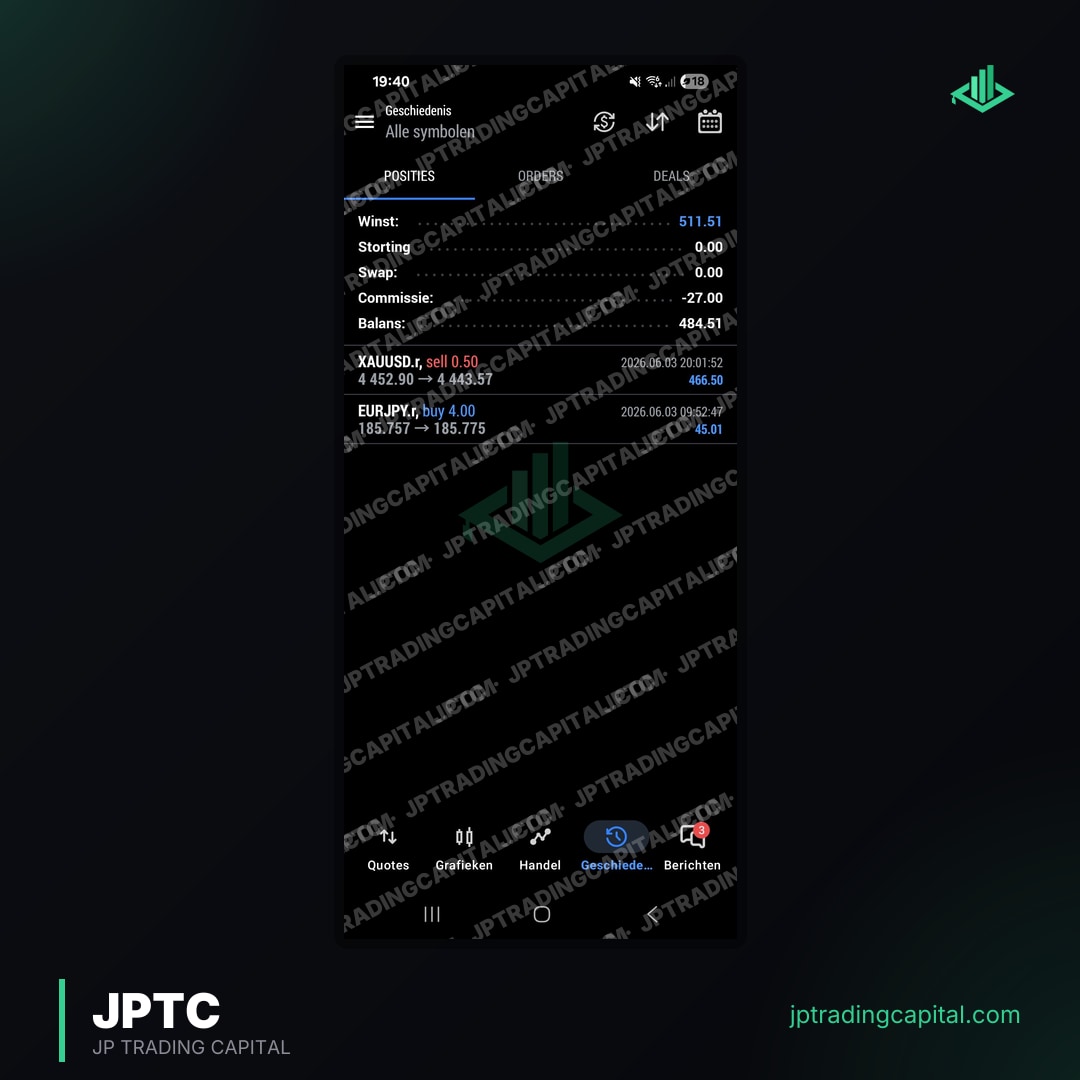
Recent live trades — JPTC Algo
Auto-posted to Instagram. Real account, no demo.
JPTC Algo live trade screenshotJPTC Algo live trade screenshotJPTC Algo live trade screenshotJPTC Algo live trade screenshotJPTC Algo live trade screenshotJPTC Algo live trade screenshot
@jptradingcapital on Instagram →

To truly identify which prop firms have the easiest challenges to pass, a detailed comparison of specific rules is essential. The JPTradingCapital team encourages traders to look beyond just the profit target.

Profit Target Percentage

This is the most obvious metric. A 5-8% profit target is generally considered easier than a 10% target for each phase. However, a lower profit target might be offset by tighter drawdown rules, so consider the overall picture.

Maximum Drawdown and Daily Loss Limits

These are perhaps the most critical rules to scrutinize. A higher maximum drawdown (e.g., 10-12% of initial balance) provides a larger buffer than a tighter 5-8% limit. Similarly, a daily drawdown of 5% is more forgiving than 3%. Critically, understand if the drawdown is based on the initial balance or a trailing/floating equity. Firms that base drawdown on the initial balance (or a fixed amount) are generally easier, as your buffer doesn't shrink as your account grows.

Our automated EA, part of the JPTC EA Hub, is specifically designed to respect these crucial limits, incorporating advanced risk management that adheres to daily drawdown caps and max loss limits across firms like FTMO, FundedNext, FXify, TopStep, The5ers, and E8 Funding.

Time Limits (or Lack Thereof)

The presence or absence of a time limit profoundly impacts the difficulty. Challenges with no time limit, or very generous ones (e.g., 60-90 days), significantly reduce pressure and allow traders to wait for ideal market conditions. This is a huge advantage, particularly for newer traders or those refining their strategies.

Consistency Rules

Some prop firms implement 'consistency rules' that require your trading activity to be somewhat evenly distributed. For example, no single trade or day should account for an excessively high percentage of your total profit. While designed to prevent 'gambling,' these rules can be challenging for traders who catch a few large, profitable moves. Firms with fewer or more lenient consistency rules can offer an easier path.

Tradable Instruments

The range of tradable instruments (Forex, indices, commodities, crypto) can impact your ability to find opportunities. More options can be 'easier' if you have strategies for diverse markets, but it can also lead to overtrading if not managed well.

Leverage Offered

Higher leverage (e.g., 1:100 or 1:200) can make it easier to reach profit targets with smaller capital, but it also amplifies risk. Responsible use of leverage is key, especially within the confines of drawdown limits.

Cost of the Challenge

While not a rule, the upfront fee for the challenge can influence perceived 'ease.' A lower fee means less financial risk if you fail. Many firms, like FTMO, refund the challenge fee with your first profit split, but it's still an initial outlay to consider. You can find details on FTMO's pricing structure here.

Strategies for Passing Even the 'Easiest' Challenges

Even the most accessible prop firm challenges require a disciplined approach. Here's how to maximize your chances:

Master Risk Management

This is non-negotiable. Understanding and strictly adhering to daily and maximum drawdown limits is paramount. Never risk more than a small percentage of your account per trade (e.g., 0.5% to 1%). This foundational principle is what allows traders to survive inevitable losing streaks and continue working towards their profit target. For an example of robust risk management in action, see JPTradingCapital's public MyFxBook, which showcases a multi-year live track record of an algorithmic strategy designed with these principles.

Develop and Backtest a Robust Strategy

Don't enter a challenge without a thoroughly tested strategy. Backtesting on historical data helps you understand your strategy's win rate, average risk-to-reward ratio, and maximum drawdown. The MetaTrader 5 platform offers excellent tools for this. A well-defined strategy, whether manual or automated, is your roadmap to success.

Leverage Automation with the JPTC EA Hub

For many traders, especially those looking for consistency, automated trading is a game-changer. The JPTC EA Hub provides an automated EA pre-configured with backtested strategies specifically designed to respect prop-firm rules. This means the EA automatically manages daily drawdown caps, max loss limits, and consistency requirements, minimizing emotional trading errors and ensuring adherence to the rules. It works seamlessly on MT4 / MT5 across top prop firms, making it a powerful tool for those aiming to pass evaluations consistently.

Maintain Discipline and Emotional Control

Trading psychology plays a massive role. Fear, greed, and impatience can quickly derail even the best strategies. Stick to your trading plan, avoid revenge trading, and don't overtrade. If you're struggling with discipline, an automated solution like the JPTC EA Hub can provide the consistency often lacking in human trading.

How JPTradingCapital's EA Hub Simplifies Prop Firm Challenges

At JPTradingCapital, we've built tools to directly address the common pitfalls of prop firm evaluations. Our flagship JPTC EA Hub is an automated Expert Advisor specifically engineered to simplify the process of passing challenges and managing funded accounts. It's not about finding which prop firms have the easiest challenges to pass and hoping for the best; it's about systematically increasing your odds of success.

The JPTC EA Hub offers several key advantages:

By automating the execution of a well-defined, rule-compliant strategy, the JPTC EA Hub allows traders to focus on strategy development and risk management, significantly easing the burden of manual trading during high-stakes evaluations.

Beyond the Challenge: What Happens After You Pass?

Passing the evaluation is a significant achievement, but it's just the beginning. Once funded, the goal shifts to consistent profitability and scaling your account. Prop firms offer profit splits (often 70-90% to the trader) and scaling plans that allow you to manage larger capital over time, provided you maintain profitability and adhere to the rules.

Ongoing risk management remains crucial. The same principles that helped you pass the challenge will guide your success as a funded trader. Many firms also offer affiliate programs for traders who wish to refer others, creating additional income streams.

The JPTradingCapital team emphasizes that while finding which prop firms have the easiest challenges to pass is a good starting point, sustained success comes from consistent application of a robust trading strategy, disciplined risk management, and leveraging the right tools.

What is the main difference between 'easiest' and 'best' prop firm challenges?
'Easiest' typically refers to challenges with lower profit targets, higher drawdown limits, and flexible timeframes. 'Best' is subjective and considers factors like profit splits, scaling opportunities, customer support, and the firm's reputation, in addition to challenge difficulty.
Do 'no time limit' challenges truly make it easier?
Yes, for many traders, the absence of a time limit significantly reduces psychological pressure, allowing for more patient and disciplined trading. This can lead to better decision-making and a higher chance of passing.
Are prop firms with lower profit targets always easier to pass?
Not necessarily. While a lower profit target (e.g., 6% vs. 10%) seems easier, it must be weighed against other rules like very tight drawdown limits or strict consistency requirements. A holistic view of all rules is essential.
Can an EA really help pass prop firm challenges?
Yes, a well-designed Expert Advisor (EA) like the JPTC EA Hub can significantly increase the chances of passing. EAs eliminate emotional trading, ensure strict adherence to risk management rules (daily drawdown, max loss), and provide consistent execution of a backtested strategy, which are all crucial for success.
What is the most common reason traders fail prop firm challenges?
The most common reasons for failure are poor risk management, specifically violating daily or maximum drawdown limits, and emotional trading that leads to overtrading or revenge trading. Lack of a consistent, backtested strategy is also a major factor.
The JPTradingCapital Team — JPTradingCapital builds automated trading software for prop-firm traders. Trading prop firms since 2020. Multi-year verified live MyFxBook track record.

Futures Challenge Prep

Software + validated setfiles + written risk plan + Discord community to help you pass your futures evaluation on your own account.

Get Started

Related Articles

trading
Algo Trading Explained: Automated Strategies for Prop Firms
10 min read
trading
Trade Copier Latency: How Delay Ruins Prop Accounts
9 min read
trading
Prop Firm Verification & Compliance Explained
8 min read
Pass your prop firm — JPTC Algo
See Results →
Risk Disclaimer

Trading forex and CFDs involves significant risk and is not suitable for all investors. Past performance does not guarantee future results. You should not invest money you cannot afford to lose. The content on this page is for informational purposes only and does not constitute financial advice. JPTradingCapital does not accept liability for any loss or damage arising from reliance on the information provided. Always conduct your own research before making trading decisions.