Free Gold Signals: How to Vet XAUUSD Calls Before You Risk a Dollar
Material update: Site-wide prohibited-phrase cleanup applied on 2026-08-23; editorial review status was not changed.
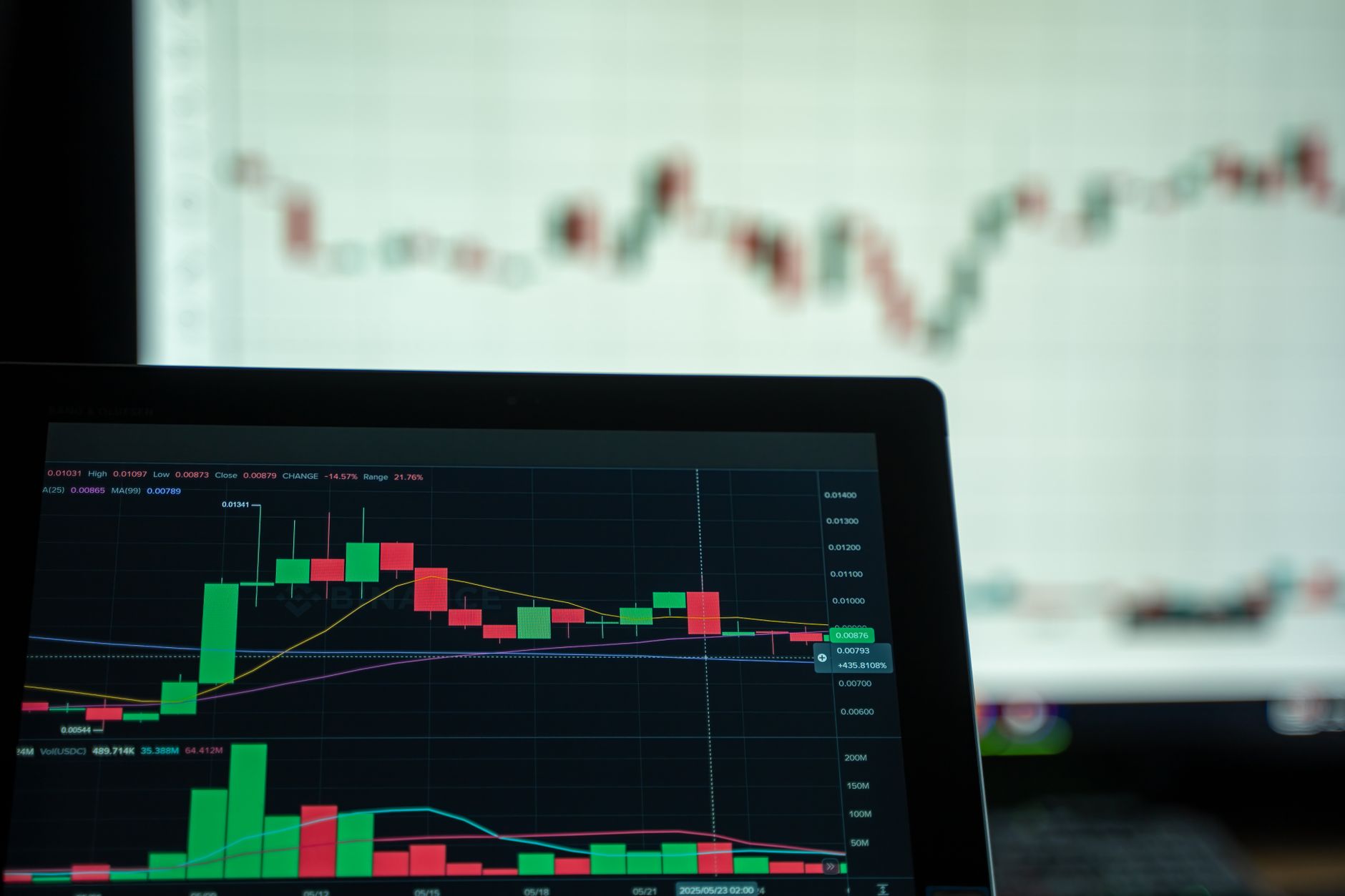
Free gold signals are trade alerts for XAUUSD, published at no charge, that tell you where to enter, where to place your stop loss, and where to take profit. Almost every free channel is funded one of three ways: an upsell to a paid VIP tier, a broker referral deal that pays the channel per lot you trade, or a disclosed rebate arrangement. This guide explains how to read a gold call properly, what "free" really costs when the funding is hidden, and how to test any XAUUSD channel for two weeks before a single dollar of your money is at risk.
Related: no-deposit funded account routes, and how to tell a real offer from a lead magnet.
- Gold's volatility makes fake track records cheap to manufacture: with a daily range that often spans $25 to $45 an ounce, a channel can screenshot a winning call almost every day by posting enough entries and deleting the rest.
- A real XAUUSD call states an entry zone, a stop distance in dollars per ounce, and the logic for position size. "BUY GOLD NOW" with a rocket emoji is marketing, not a signal.
- The biggest hidden cost of most free gold channels is not the signal, it is the marked-up spread at the broker the channel pushes you toward, which can quietly cost more per month than a paid subscription.
- Paper-test every channel for at least two weeks and 15 calls, logging the live market price at the moment each alert lands, before you trade it with personal capital.
- On prop firm accounts, gold's swings collide with daily loss limits. Cut your usual risk per trade roughly in half and never hold a tight-stop gold trade into a red-folder news release.
Why gold attracts more signal scams than any forex pair
Search volume for gold signals rivals every major currency pair combined, and the sellers know it. But the deeper reason low-quality channels cluster around XAUUSD is mechanical, not just commercial: gold's volatility makes a fake track record easier to build than on any major pair.
Run the numbers. One standard lot of XAUUSD is 100 troy ounces, so a $1.00 move in the gold price is worth $100 per lot. On an ordinary day gold travels $25 to $45 from high to low, often in several distinct swings. A channel that posts four or five intraday calls with modest 50-cent to $2 targets will see at least one of them hit almost every session purely by chance. Screenshot the winner, hype it with "+200 PIPS ON GOLD," stay silent on the rest, and the channel looks clairvoyant to anyone who joined this week.
Compare that with EURUSD, where a typical day covers 60 to 90 pips. There is simply less raw movement to cherry-pick from, so manufactured brilliance takes more effort. Gold also gravitates to round numbers, which means a channel can post "strong support at 3,300" and look prescient whenever price does what it statistically tends to do near big figures.
The final accelerant is economics. Broker referral programs pay introducers per lot traded, and gold traders churn lots faster than currency traders because the moves are bigger and the dopamine hits harder. A free channel that funnels 500 members into a partner broker and keeps them overtrading gold can out-earn a paid signal service several times over. That revenue model, when hidden, shapes every incentive in the channel: more calls, bigger lots, faster trades, and no reason at all to care whether you win.
What free gold signals actually cost you
Nothing that moves $100 per lot per dollar is ever handed out free without a funding source. The question is only whether the funding is visible. Three costs show up again and again in unvetted channels.
The broker funnel and the marked-up spread
The classic structure: the channel is "free" but the VIP tier, or sometimes the free feed itself, requires you to open an account at one specific broker through the channel's link. That broker pays the channel for every lot you trade, and it recovers the cost from you through the spread. On a competitive account, XAUUSD spread runs roughly $0.15 to $0.35 an ounce. At the offshore brokers these funnels favor, $0.50 to $0.90 is common.
An extra $0.30 of spread is $30 per standard lot per round trip. Trade twenty signals a month at 0.5 lots each and the mark-up alone costs about $300 a month, more than most paid signal subscriptions, extracted invisibly and forever. You never see an invoice, so it never feels like a cost.
Delayed posts, after the move
Gold breakouts front-load their movement: $2 to $4 of the move often happens in the first few minutes. A call composed, screenshotted, and posted four minutes after the desk supposedly entered puts you in $3 worse than the stated entry. On a call with a $6 stop and a $9 target, entering $3 late means you now risk $9 to make $6, which flips a 1.5-to-1 trade into one that loses money at anything under a 60% strike rate. The signal can be genuinely good and still lose you money because you are trading its shadow. Timestamps are therefore evidence: a channel that posts entries the moment they happen has nothing to hide, and one that posts "we entered earlier at 3,341" after price reached 3,349 is publishing history, not signals.
The VIP teaser cycle
The free feed exists to sell the paid one. Wins get pinned and recycled, losses get edited or deleted, and every second post reminds you the "real" entries live in VIP. Rebate funding, by contrast, can be legitimate when it is disclosed plainly, which is how JPTC runs its free forex and gold signals. The difference is not the existence of a revenue source, every free channel has one, but whether you are told what it is and remain free to trade at any broker you like.
Why the same mistake costs more on gold than on EURUSD
Traders arriving from currency pairs consistently under-size gold's mechanics. The table below shows why habits imported from EURUSD get punished on XAUUSD.
| Mechanic | EURUSD | XAUUSD (gold) |
|---|---|---|
| Typical daily range | 60 to 90 pips | $25 to $45 an ounce |
| Value of a move, 1.0 lot | $10 per pip | $100 per $1.00, so $10 per 10 cents |
| Competitive spread | 0.1 to 0.8 pips | $0.15 to $0.35 an ounce |
| Marked-up funnel-broker spread | 1.5 to 2.5 pips | $0.50 to $0.90 an ounce |
| Sensible intraday stop | 15 to 30 pips | $4 to $10 an ounce |
| Slippage on major news | Usually 1 to 3 pips | Frequently $0.50 to $2.00, sometimes far more |
Read the stop row twice. A trader who risks 1% with a 20 pip stop on EURUSD and then applies "20 pips" thinking to gold, where many channels call a 20 pip stop $2.00, is running a stop that normal noise clips several times a day. Sizing and stop placement must be rebuilt from scratch for the metal.
The anatomy of a real XAUUSD call
A gold signal you can actually execute has three properties that junk calls never have. When you evaluate a channel, grade every post against these before you look at a single outcome.
An entry zone, not a single tick
Gold moves too fast for a one-price entry to be honest. By the time an alert reaches your phone, price has moved 30 to 80 cents in ordinary conditions. A professional call gives a zone, for example "buy 3,336 to 3,339, invalid above 3,342," which tells you whether the trade is still live when you see it. Single-price entries serve a different master: they make hindsight screenshots cleaner, because the channel can later claim the perfect fill.
A stop distance stated in dollars per ounce
"SL 30 pips" is close to meaningless on gold because pip conventions differ across brokers: some count $0.10 as a pip, some count $0.01, some quote cents. A real call removes the ambiguity: "SL 3,331, which is $6.50 below the zone top." Once the stop distance is explicit in dollars, position sizing becomes arithmetic instead of guesswork, and you can immediately judge whether the stop is wide enough to survive normal rotation, since anything under about $3 on an intraday gold trade is usually noise bait.
Room for the spread
Your broker's XAUUSD spread widens at news, at the daily rollover, and through the Asian session. A stop placed $0.40 beyond an obvious level can be hit by spread widening alone, with price never actually trading there. Targets have the mirror problem: a TP1 just $2 away hands 15 to 20% of the move back to a $0.35 spread. Good gold calls place stops beyond structure plus a spread buffer and set first targets at $3 or more. The dedicated guide to XAUUSD signals breaks down each field of a well-formed gold call with worked examples.
Risking 1% on a $10,000 account is $100. If the call's stop is $5.00 an ounce, each 1.0 lot risks $5.00 times $100, which is $500. So your size is $100 divided by $500, which is 0.20 lots. Smaller account? A 0.01 lot position is 1 ounce, so a $1.00 move is $1. Do this division before every gold trade, because the stop distance changes on every call and yesterday's lot size is never automatically safe today.
Gold's session clock: when signals can work and when they cannot
XAUUSD does not behave like one market across the day. It behaves like three, and a signal that makes sense at 2:00 p.m. London time is often a trap at 3:00 a.m. Judge every channel partly on whether its calls respect this clock.
Asian session (roughly 11:00 p.m. to 7:00 a.m. London). Liquidity is thin, spreads at many brokers widen by 30 to 100%, and the range frequently stays under $8. Physical demand from Asia can drift the price, but follow-through is weak and breakouts routinely fade. A channel firing "breakout" calls at 3:00 a.m. London is either trading noise or generating lot volume for a rebate. Treat Asia calls with double suspicion.
London (from about 8:00 a.m. London). Real liquidity arrives and the first genuine directional attempt of the day usually happens in the first two hours. The 10:30 a.m. London auction adds a burst of institutional flow. This is the earliest window where an intraday gold signal has honest odds of clean follow-through.
New York and the overlap. The heaviest volume of the day sits in the London and New York overlap, roughly 1:30 p.m. to 4:30 p.m. London. US data such as CPI and NFP lands at 8:30 a.m. New York time, Fed rate decisions land at 2:00 p.m. New York, and any of them regularly moves gold $10 to $30 within minutes. The 3:00 p.m. London auction adds another liquidity event. Signals during this window can travel far, but only if they were placed before the move, not posted during it.
Late New York and rollover. After about 5:00 p.m. New York, liquidity dies and most brokers widen spreads sharply through the daily maintenance break. Never hold a tight-stop gold trade into rollover, and be wary of any channel that opens fresh positions there.
How to paper-test a free gold channel for two weeks
Never trade a new channel with money first. Two weeks of disciplined logging tells you more than two months of scrolling its history, because history on Telegram is editable and your log is not. Here is the protocol.
1. Set the sample. Minimum two weeks and 15 calls, whichever takes longer. Fewer than that and variance will fool you in either direction.
2. Log each call the moment it lands. Record six fields: the timestamp the alert was posted, the live XAUUSD price at your broker at that exact moment, the stated entry or zone, the spread you see right then, the stop and targets as posted, and later, the outcome. The second field is the killer: it captures the gap between the channel's stated entry and what you could actually get.
3. Score two outcomes per call. Outcome A: the trade as posted, from the stated entry. Outcome B: the trade from your realistic fill, entered only if price touched the zone after the alert arrived, with your spread subtracted from every result. Channels live on Outcome A. You will live on Outcome B, and the difference between the two is the channel's honesty gap measured in dollars.
4. Count the edits and deletions. Telegram marks edited messages. Note every edit to an entry or stop after the fact and every call that silently disappears. One deletion is a red flag. A pattern is a verdict, and no win rate can rescue it.
5. Decide on process, not on two weeks of P&L. Fifteen trades is far too few to prove an edge, but plenty to expose a broken process. Walk away if the median posting lag costs more than about $1.50 of entry quality, if more than a fifth of the calls were unfillable at the stated zone, if stops averaged under $3, or if anything was edited after the outcome was known. If the process survives, start live with the smallest size your account allows and keep logging. The guide on how to follow trading signals covers the execution habits that come after the vetting stage.
Gold signals on prop firm accounts: handle with care
Funded accounts and XAUUSD volatility interact badly if you size the way signal channels imply. Most prop firms enforce a daily loss limit around 4 to 5% and a total drawdown limit of 8 to 10%, and many count floating losses intraday, not just closed ones.
Concrete case: a $100,000 funded account with a 5% daily limit gives you $5,000 of room. Risk 1% per call, take three losers in one heavy London to New York session, and you have burned $3,000 with the day barely half done. Now a fourth position floats $2,200 against you during a data spike, taking intraday equity $5,200 below the day's start, and even if the trade later recovers to break even, an equity-based limit has already ended the account. Nothing about that sequence is unusual on gold: three or four consecutive stop-outs inside one session is a normal Tuesday on a $35-range day.
Slippage compounds the problem. Through a CPI print, a stop intended to lose $1,000 can fill $0.40 to $2.00 worse, turning planned risk into $1,100 to $1,400 of real loss against a hard limit that does not care what you planned. Practical rules for trading gold calls on funded capital: risk 0.5% per trade instead of 1%, treat multiple simultaneous gold positions as one position because they are one instrument, skip any call posted within 15 minutes before red-folder US news, confirm whether your firm's daily limit is balance-based or equity-based before your first trade, and check the firm's rules on holding through weekends, since gold can reopen with a multi-dollar gap.
Rebate-funded free signals: the JPTC worked example
Everything above describes how free gold signals go wrong. It is worth showing what the model looks like when the funding is put on the table instead of hidden under it.
JPTradingCapital runs a free public Telegram channel, JPTC Signals, covering forex pairs and gold. Every trade the desk takes is posted the moment it is taken: entry, stop loss, and take profit levels, followed by updates when a position moves to break even, is partially closed, or closed. Real-time posting is the point, because as this article has argued, a gold call's value decays within minutes, and a feed that posts after the fact is publishing memories.
There is no subscription and no monthly fee, and the funding is disclosed rather than disguised: partner brokers pay JPTC a rebate, which is why the feed costs the reader nothing. You place every trade on your own account, at your own size, and keep full control. JPTC never touches your money. The strategy behind the calls runs on a public results page, which exists so that anyone can apply the verification standard this guide recommends to JPTC itself, using third-party data rather than screenshots. The reasoning behind insisting on that standard for any provider is covered in the guide to verified forex signals.
Apply the full two-week protocol to the JPTC signals channel exactly as you would to any other: log the timestamps, compare stated entries with live prices, check for edits, and score results at your own broker's spread. A provider confident in its process should invite that scrutiny, and any provider that discourages it has answered your question already.
Trading involves a significant risk of loss and past performance is not indicative of future results. Trade only with money you can afford to lose, on position sizes you have calculated yourself.
Frequently asked questions
Are free gold signals ever actually free?
What is a pip on XAUUSD?
How many gold signals per day is realistic?
Should I take gold signals during the Asian session?
Can I use free gold signals on a prop firm account?
How do I verify a gold signal provider before trusting it?
Forex & Gold Signals, No Monthly Fee
Entry, stop loss and targets on every trade we take. It costs you nothing: open an account through one of our partner brokers and they cover it for you. You place every trade on your own account.
Join the signals channel