MT4 vs MT5 for Prop Firm Trading: Which Platform to Choose?

For prop firm traders navigating challenging evaluations and striving for consistent profitability, the choice of trading platform is paramount. MetaTrader 4 (MT4) has long been the industry standard, but MetaTrader 5 (MT5) has steadily gained traction, offering a suite of advanced features. This comprehensive guide dissects the critical differences in the MT4 vs MT5 debate, helping you determine which platform best suits your prop firm trading strategy and algorithmic needs.
- MT5 offers advanced features like more timeframes, additional order types, and a powerful multi-threaded strategy tester.
- MT4 remains widely supported by prop firms and brokers, benefiting from a larger historical EA and indicator library.
- For multi-asset trading and robust backtesting of complex EAs, MT5 generally provides a superior environment.
- The JPTC EA Hub supports both MT4 and MT5, allowing flexibility regardless of your platform choice.
- Consider your prop firm's specific platform support and your existing EA compatibility when making your final decision.
MT4 vs MT5: A Technical Deep Dive into Core Differences
The core of the MT4 vs MT5 discussion lies in their underlying architecture and feature sets. While both are powerful trading terminals developed by MetaQuotes Software, MT5 was designed as a multi-asset platform with significant upgrades over its predecessor. Understanding these technical distinctions is crucial for prop firm traders, especially those relying on Expert Advisors (EAs) and sophisticated analysis.
Programming Language: MQL4 vs MQL5
One of the most significant differences is the programming language used for EAs and custom indicators. MT4 utilizes MQL4, while MT5 uses MQL5. MQL5 is a more modern, object-oriented language, offering greater flexibility, improved performance, and more advanced debugging capabilities. This translates into several advantages for EA developers:
- Performance: MQL5 generally allows for more efficient code execution, which can be critical for high-frequency strategies or EAs requiring complex calculations.
- Functionality: MQL5 includes more built-in functions and classes, simplifying the development of intricate trading systems. It also supports event handling, allowing for more dynamic EA behavior.
- Backtesting: As we'll discuss, the MQL5 environment is integral to MT5's superior strategy tester.
For traders already invested in a library of MQL4 EAs, migrating to MQL5 can require significant recoding. However, new EA development, particularly for complex strategies, often benefits from the MQL5 framework. The MQL5 community is a vast resource for developers looking to leverage these capabilities.
Available Instruments: Forex vs. Multi-Asset
MT4 was primarily designed as a forex platform. While many brokers have extended its capabilities to include CFDs on indices and commodities, its core design remains focused on currency pairs. MT5, on the other hand, was built from the ground up as a true multi-asset platform. It natively supports:
- Forex
- Stocks (equities)
- Commodities
- Indices
- Futures
- Options
This multi-asset capability is a major MT5 advantage for prop firm traders looking to diversify their portfolios beyond traditional forex, or for those whose prop firms offer a broader range of instruments. Many prop firms, such as TopStep, focus on futures trading, where MT5 is the natural choice.
Timeframes and Charting Capabilities
MT4 offers 9 standard timeframes (M1, M5, M15, M30, H1, H4, D1, W1, MN). MT5 significantly expands this to 21 timeframes, including additional minute (M2, M3, M10, M20) and hourly (H2, H3, H6, H8, H12) options. This allows for more granular analysis and strategy development, which can be particularly beneficial for traders building EAs that rely on specific intraday patterns.
Order Types and Execution Models
MT4 primarily uses a 'hedging' system, allowing traders to open multiple positions in opposite directions for the same instrument. MT5, by default, uses a 'netting' system, where only one position can be open per instrument at a time; new orders in the same direction increase the volume, while opposite orders reduce it or close it. However, MT5 also supports hedging accounts if the broker enables it.
Beyond this, MT5 introduces additional pending order types:
- Buy Stop Limit: Combines a Buy Stop and a Buy Limit order.
- Sell Stop Limit: Combines a Sell Stop and a Sell Limit order.
These extra order types provide more flexibility for executing complex strategies, especially for EAs designed to manage entries and exits under specific market conditions. This precision can be crucial when adhering to strict prop firm drawdown rules.
Strategy Tester: A Game Changer for EA Development
For EA developers and traders relying on automated systems, the strategy tester is arguably where MT5 truly shines. The MT5 strategy tester is significantly more advanced than its MT4 counterpart:
- Multi-threaded: It can run tests on multiple currency pairs and timeframes simultaneously, drastically reducing backtesting time.
- Real Ticks: MT5 offers backtesting using real tick data, providing a more accurate simulation of market conditions than MT4's less granular methods.
- Visual Backtesting: Both platforms offer visual backtesting, but MT5's is more robust, allowing for better debugging and optimization.
- Optimization: MT5 provides more sophisticated optimization methods, including genetic algorithms, to fine-tune EA parameters efficiently.
This enhanced strategy tester is a major MT5 advantage for anyone developing or optimizing EAs for prop firm challenges. The ability to quickly and accurately test strategies across various market conditions is invaluable for building robust systems that respect daily drawdown caps and maximum loss limits.
Market Depth and Economic Calendar
MT5 includes a native 'Market Depth' (Level II pricing) feature, showing bids and asks at different price levels. This provides valuable insight into liquidity and potential support/resistance areas, which can inform discretionary and algorithmic trading decisions. MT4 lacks this native feature, though some brokers offer it via plugins.
Furthermore, MT5 integrates an economic calendar directly into the platform, allowing traders to track upcoming news events that can impact market volatility, a critical consideration for risk management in prop firm trading.
MT4 for Prop Firm Trading: Enduring Appeal and Widespread Support
Despite MT5's technological advancements, MT4 maintains an enduring appeal, particularly within the retail forex trading community and, by extension, many prop firms. Its widespread adoption stems from several factors:
Ubiquity and Legacy Ecosystem
MT4 has been the dominant forex platform for over a decade. This means:
- Vast EA and Indicator Library: There's an enormous existing library of EAs, indicators, and scripts developed for MQL4. Many legacy strategies and tools are exclusively available for MT4.
- Community Support: A massive online community exists for MT4, offering extensive resources, tutorials, and troubleshooting advice.
- Broker and Prop Firm Support: A significant number of brokers and prop firms, including giants like FTMO and FundedNext, continue to offer MT4 as a primary trading platform. This widespread support means less friction for traders accustomed to MT4.
Simplicity and Familiarity
For many traders, MT4's simpler interface and familiar workflow are preferred. The learning curve for MT4 is generally considered less steep than for MT5, making it a good entry point for newer traders or those who prioritize ease of use over advanced features. Its straightforward design focuses on efficient order execution and basic charting, which is often all that's needed for many manual or simpler automated strategies.
MT5 for Prop Firm Trading: The Modern Edge and Algorithmic Powerhouse



For prop firm traders looking for a competitive edge, especially those heavily involved in algorithmic trading and rigorous strategy development, MT5 presents a compelling case. The MT5 advantages directly translate into capabilities that can aid in passing evaluations and managing funded accounts.
Enhanced Backtesting for Robust EAs
As discussed, MT5's superior strategy tester is invaluable. Prop firms impose strict rules like daily drawdown limits, maximum loss limits, and consistency requirements. Developing an EA that consistently adheres to these rules requires extensive and accurate backtesting. MT5's multi-threaded, tick-data capable tester allows traders to:
- Stress Test: Simulate EA performance across diverse historical market conditions with greater fidelity.
- Optimize Parameters: Efficiently find the optimal parameters that minimize drawdown and maximize profit factor, crucial for prop firm evaluations.
- Validate Strategy Logic: Ensure the EA's logic holds up under various scenarios, reducing the risk of unexpected behavior during live trading.
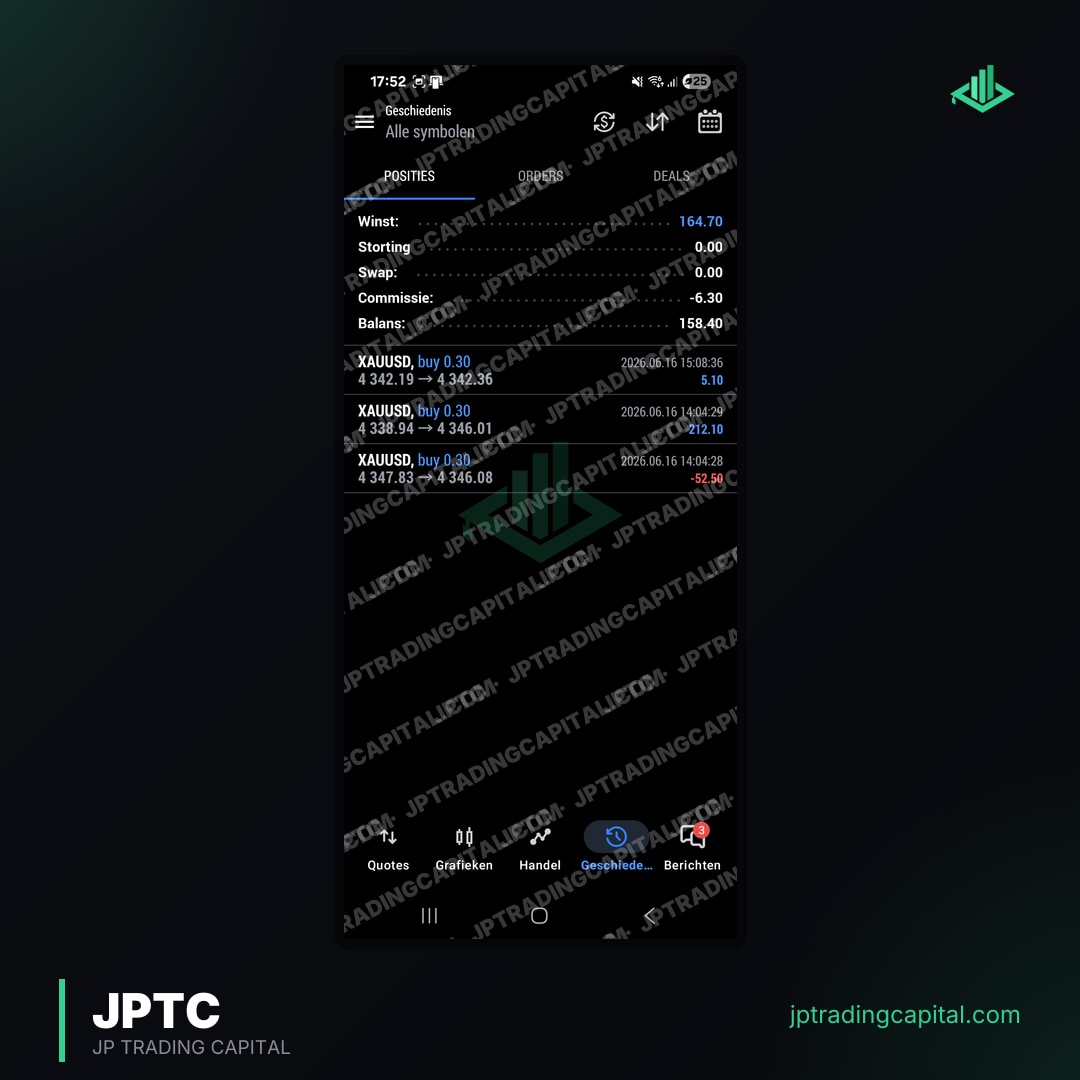
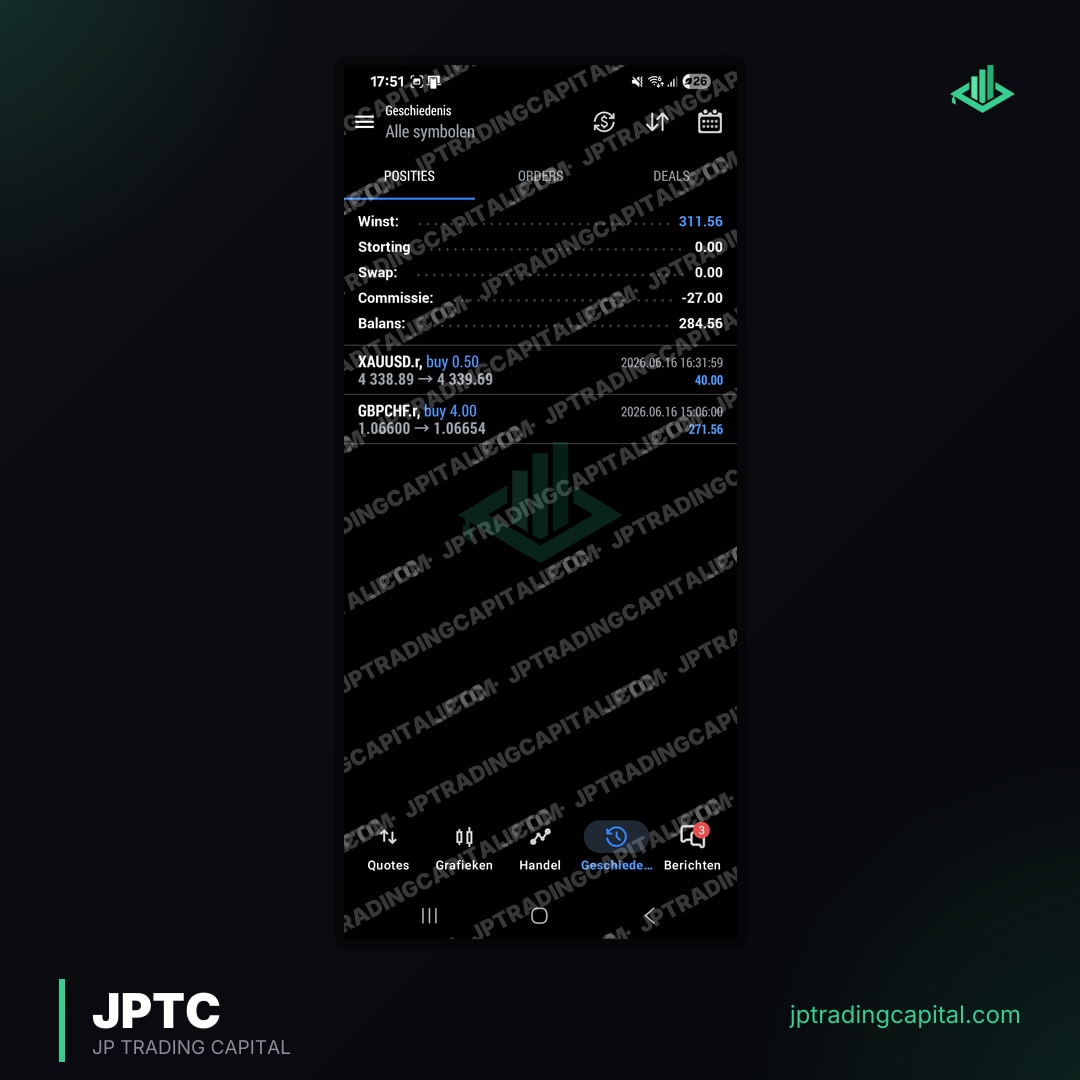
JPTradingCapital's JPTC EA Hub is designed to respect prop-firm rules, and our development process heavily leverages advanced backtesting capabilities on both MT4 and MT5 to ensure robustness. For an example of what a 2-year live algo track record looks like, see JPTradingCapital's published results, which demonstrates the power of well-tested automated systems.
Multi-Asset Trading for Diversification
If your prop firm offers trading in instruments beyond forex, MT5's native multi-asset support becomes a significant advantage. The ability to trade stocks, futures, or commodities from a single platform simplifies portfolio management and allows for diversification strategies that can help mitigate risk and improve consistency, both key factors in prop firm success.
Faster Execution and Greater Stability
MT5 is generally considered more resource-efficient and stable than MT4, especially under heavy load or when running multiple complex EAs. Its 64-bit architecture and optimized code base contribute to faster execution speeds, which can be critical for scalping strategies or reacting quickly to market movements, thereby reducing slippage.
Navigating Prop Firm Rules with MT4/MT5
Prop firm challenges are defined by strict rules. Your choice in the MT4 vs MT5 debate can subtly impact your ability to comply with these rules.
Drawdown and Loss Limits
- MT5's Advanced Analytics: The detailed reporting in MT5's strategy tester and live trading history can provide more granular insights into drawdown behavior, helping traders refine their risk management.
- MQL5's Flexibility: EAs developed in MQL5 can be programmed with more sophisticated risk management modules, allowing for dynamic position sizing, trailing stops, and partial closes that react precisely to market conditions and prop firm limits.
Consistency Rules
Some prop firms implement consistency rules, requiring traders to avoid wildly fluctuating profit days. While platform choice doesn't directly enforce consistency, MT5's enhanced backtesting can help develop EAs that smooth out equity curves and aim for more consistent daily gains. The ability to test different position sizing and risk models more effectively contributes to this.
Platform Compatibility with Prop Firms
Before committing to either MT4 or MT5, always verify which platforms your chosen prop firm supports. While many support both, some might specialize. For example, firms like FXIFY and E8 Funding typically offer both, but it's essential to confirm the specific server type (hedging vs. netting) and available instruments on each.
MT4 vs MT5 in the Context of EA Development and Usage
For traders who rely on Expert Advisors, the platform choice has profound implications.
Porting EAs Between Platforms
It's important to understand that EAs are generally not directly transferable between MT4 and MT5. An EA written in MQL4 will not run on MT5, and vice-versa, without significant code rewriting. This is a crucial factor for traders with a substantial existing library of MT4 EAs. If you're starting fresh with EAs, developing on MQL5 might be more future-proof.
The JPTC EA Hub: Bridging the Gap
At JPTradingCapital, we understand this challenge. Our JPTC EA Hub is specifically designed to work seamlessly across both MT4 and MT5. This means that regardless of your preferred platform or the specific requirements of your prop firm (FTMO, FundedNext, FXify, TopStep, The5ers, E8 Funding), our automated EAs can be deployed to help you navigate evaluations and manage funded accounts while respecting critical rules like daily drawdown caps and maximum loss limits.
cTrader vs MT5: A Brief Comparison for the Discerning Trader
While the primary focus is on MT4 vs MT5, it's worth briefly touching on cTrader, another popular forex platform often considered an alternative to MetaTrader. cTrader is known for its modern interface, advanced order types, and excellent market depth display. For prop firm traders, cTrader offers:
- Superior Market Depth: Generally provides more comprehensive Level II pricing than MT5.
- Advanced Charting: Offers highly customizable charts and indicators.
- Algorithmic Trading (cBots): Uses C# for its algorithmic trading environment, which is familiar to many professional developers.
- Direct Market Access (DMA): Often associated with ECN brokers, offering tighter spreads and faster execution.
However, cTrader's adoption by prop firms is less widespread than MetaTrader platforms. While some firms are starting to offer it, the vast majority still default to MT4 or MT5. If your prop firm supports cTrader and you value its modern interface and advanced features, it's a strong contender. However, for sheer compatibility and EA ecosystem, MetaTrader still holds the lead.
Making Your Choice: Practical Considerations for Prop Firm Traders
When deciding between MT4 and MT5 for your prop firm journey, consider these practical aspects:
1. Prop Firm and Broker Support
This is the most critical factor. Always check which platforms your target prop firm supports. If they only offer MT4, your decision is made. If they offer both, you have the flexibility to choose based on other criteria.
2. Your Existing EA/Indicator Library
If you have a significant investment in MT4-specific EAs or indicators, migrating to MT5 might incur development costs or mean abandoning your existing tools. If you're building a new library, starting with MQL5 on MT5 could offer long-term advantages.
3. Trading Style and Instruments
If you primarily trade forex manually or with simpler EAs, MT4 might suffice. If you're looking to trade multiple asset classes, employ complex algorithmic strategies, or require highly accurate backtesting, MT5 is the clear winner.
4. Learning Curve
If you're new to trading platforms, MT4 might present a slightly gentler learning curve. However, the benefits of MT5, especially for advanced users, often outweigh the initial effort to learn its expanded features.
5. Future-Proofing Your Trading
MT5 represents the future of MetaQuotes' development. While MT4 receives maintenance updates, new features and significant advancements are concentrated on MT5. Choosing MT5 positions you for future innovation in trading technology.
Conclusion: The Verdict for Prop Firm Traders in the MT4 vs MT5 Debate
In the ongoing MT4 vs MT5 debate for prop firm traders, there isn't a single, universally "best" answer. Both platforms are robust and capable of supporting profitable trading strategies. However, for traders focused on advanced algorithmic strategies, comprehensive backtesting, multi-asset diversification, and leveraging the latest technological advancements, MT5 emerges as the more powerful and future-proof choice.
MT4, with its widespread adoption and vast existing EA ecosystem, remains a perfectly viable option, especially if your prop firm or existing tools dictate its use. The key is to align your platform choice with your trading style, your prop firm's offerings, and your long-term strategic goals. Ultimately, a well-developed and rigorously tested strategy, like those found in the JPTC EA Hub, will always be more critical than the platform itself, but the right platform can certainly enhance your edge.
Is MT4 or MT5 better for prop firm trading?
Do all prop firms support both MT4 and MT5?
Can I use my MT4 Expert Advisor (EA) on MT5?
What are the main advantages of MT5 over MT4?
Is cTrader a viable alternative to MT4 or MT5 for prop firm traders?
Related Articles
- Apex Trader Funding vs TopStep: Which Futures Prop Firm Is Best in 2026? · Read more →
- How to Choose the Right Prop Firm in 2026: Complete Selection Guide · Read more →
- Discord Trading Communities: Why Serious Traders Use Them · Read more →
- Can a Trading Bot Pass Gold EA Prop Firm Challenges? · Read more →
- Prop Firm Trading Without Leverage Restrictions: How to Scale Safely in 2026 · Read more →
- Is Prop Firm Trading Worth It? Honest Review (2026 Data) · Read more →
- Trade Copier Explained: The Ultimate Guide for Prop Firm Traders in 2024 · Read more →
- Trade Copier Explained: Automate Your Prop Firm Accounts · Read more →
- Build Passive Income with Forex Trading Automation · Read more →
- Algo Failure: What Happens When Your Trading Algorithm Fails? · Read more →
Forex & Gold Signals, No Monthly Fee
Entry, stop loss and targets on every trade we take. It costs you nothing: open an account through one of our partner brokers and they cover it for you. You place every trade on your own account.
Join the signals channel