Understanding Profit Splits in Funded Trading: A Comprehensive Guide for Prop Firm Traders

A profit split funded account refers to the percentage division of trading profits between a funded trader and the proprietary trading firm providing the capital. Typically, these splits range from 70/30 to 90/10 in favor of the trader, allowing individuals to trade substantial capital without personal risk, while the firm shares in the upside.
- Profit splits commonly range from 70% to 90% for the trader.
- Payouts are usually bi-weekly or monthly, with minimum thresholds.
- Performance tiers often increase a trader’s profit share over time.
- Understanding drawdown limits is critical, as they impact eligibility for payouts.
- Automated trading tools, like EAs, can help maintain consistency for higher splits.
What Exactly is a Profit Split in Funded Trading?
For many aspiring professional traders, the dream of accessing significant capital without putting their own funds at extreme risk is realized through proprietary trading firms. At the heart of this model lies the profit split funded account, a fundamental agreement that dictates how earnings are shared between the trader and the firm. Essentially, it’s a percentage allocation of any profits generated from trading the firm’s capital.
Proprietary firms operate on a model where they provide traders with capital after they pass an evaluation phase, or sometimes through direct funding programs. In return for this capital and the infrastructure (platforms, sometimes even educational resources), the firm takes a percentage of the profits. This symbiotic relationship allows traders to scale their operations far beyond what their personal capital would permit, while firms leverage skilled traders to generate returns on their pooled capital.
For example, if you're trading a $100,000 funded account with an 80/20 profit split (80% to the trader, 20% to the firm), and you generate a $5,000 profit in a payout period, you would receive $4,000, and the firm would retain $1,000. This structure aligns interests: the more profitable and consistent you are, the more both you and the firm earn. In my experience, this model is a win-win, provided the trader fully understands the terms and conditions.
Navigating the Landscape of Prop Firm Profit Splits: What to Expect
When you start researching prop firms, you'll quickly notice that profit splits aren't uniform. They vary significantly, influenced by a multitude of factors. Understanding these nuances is crucial for selecting a firm that aligns with your trading style and financial goals.
Typical Profit Split Ratios Across the Industry
The most common profit split ratios you'll encounter generally fall within the 70/30 to 90/10 range, with the larger percentage always going to the trader. Some firms, especially those with more lenient rules or smaller initial capital, might start at 70/30. Others, often considered more established or offering higher capital accounts, frequently begin at 80/20. The most attractive splits, often 90/10, are typically reserved for top-tier performance programs or after a trader has demonstrated consistent profitability and scaled up their account significantly.
It's also common for firms to offer scaling plans where your profit share increases as you consistently hit profit targets without violating drawdown rules. For instance, you might start at 75/25, and after achieving a certain profit milestone, your split could automatically upgrade to 80/20, then 85/15, and so on. This incentivizes long-term, consistent performance.
Factors Influencing Your Profit Share
Beyond the advertised initial split, several elements can impact your actual prop firm profit split:
- Account Size: Sometimes, larger funded accounts come with slightly better initial profit splits, as the firm is entrusting more capital to the trader.
- Performance and Consistency: As mentioned, your ability to consistently generate profits and adhere to risk management rules is often rewarded with better splits through scaling plans. Firms want reliable traders.
- Program Type: Evaluation programs typically lead to funded accounts with standard splits. Direct funding or more advanced, exclusive programs might offer different terms.
- Duration with the Firm: Loyalty and a proven track record over several months or years can sometimes lead to bespoke, more favorable profit-sharing agreements.
- Number of Payouts: Some firms might offer a higher initial split that then adjusts after a few payouts, or vice-versa. Always check the long-term implications.
The Payout Process: How Funded Traders Receive Their Earnings
Earning profits is one thing; actually receiving them is another. The payout process, including schedules and minimum thresholds, is a critical component of any profit split funded account agreement.
Payout Schedules and Minimum Thresholds
Most prop firms offer regular payout schedules, commonly bi-weekly or monthly. Some even provide weekly options, which can be very appealing for traders looking for more frequent access to their earnings. However, these payouts are almost always subject to minimum withdrawal thresholds. For example, a firm might require a minimum of $100 or $500 in withdrawable profits before initiating a payout.
It's important to note that these thresholds are often calculated after the firm's share and any potential fees. You also need to ensure your account is in good standing, meaning you haven't violated any daily or maximum drawdown limits since your last payout, or during the current payout period. Maintaining a healthy equity curve and respecting all rules is paramount to ensuring smooth and consistent payouts.
Understanding Clawbacks and Performance Fees
The term 'clawback' might sound intimidating, but in the context of prop firm trading, it's generally quite specific. Most reputable prop firms do not 'claw back' profits that have already been paid out to you, even if you subsequently incur losses or violate rules. Once the money is in your bank account, it's yours. However, any losses incurred in your trading account will naturally reduce the capital available for future trading and, consequently, future profit splits. Firms protect themselves through their drawdown rules, which prevent excessive losses on their capital.
Some firms might have specific performance fees or charges beyond the profit split itself, though this is less common with the popular evaluation-based models. Always scrutinize the agreement for any mention of additional deductions from your gross profits before the split is applied.
The Role of Trading Consistency in Maximizing Payouts
Consistency isn't just a buzzword; it's the bedrock of successful funded trading and the key to maximizing your funded trading payout. Firms prioritize traders who can consistently generate modest returns over long periods, rather than those who hit huge wins occasionally but also suffer massive losses. Consistent performance ensures a steady stream of revenue for both the trader and the firm.
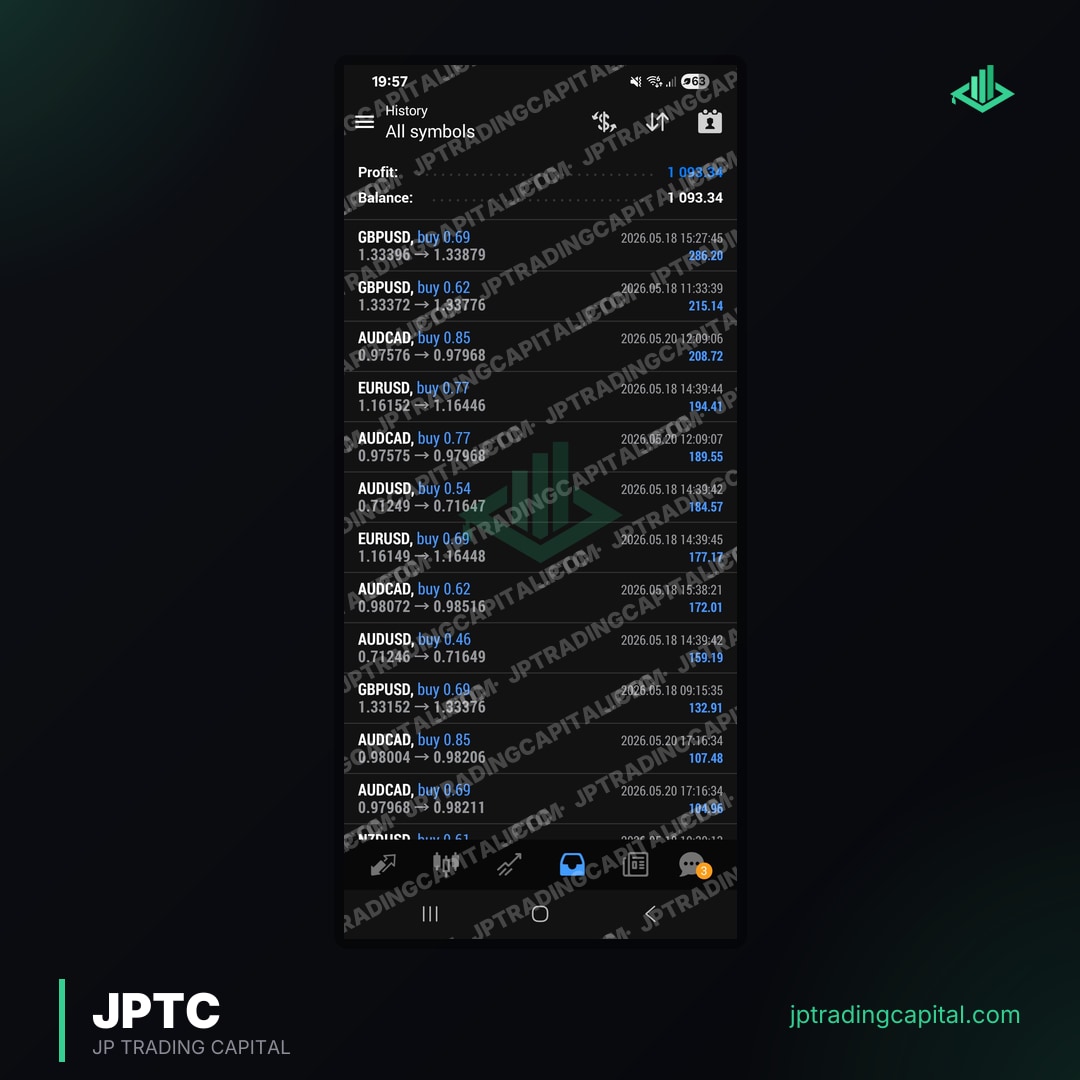
To achieve this, effective risk management and a disciplined approach are essential. This is where tools like the JPTC EA Hub become invaluable. Our automated EAs are pre-configured with backtested strategies designed to respect prop-firm rules, including daily drawdown caps and maximum loss limits. By automating your strategy with built-in risk management, you significantly increase your chances of maintaining the consistency required for regular and substantial payouts. As Pedro Penin, I've seen firsthand how automation can transform a trader's consistency, leading to more frequent and larger profit distributions.
Beyond the Ratio: Hidden Details in Profit Split Agreements
While the percentage ratio is the most visible aspect of a profit split, other critical details within the firm's terms and conditions can profoundly impact your overall experience and actual earnings. Overlooking these can lead to unpleasant surprises.
Drawdown Calculations and Their Impact on Payouts
Every prop firm has stringent drawdown rules, typically encompassing both a daily drawdown limit and an overall maximum loss limit. Understanding how these are calculated is paramount. A daily drawdown might be based on your starting balance for the day or your equity high point. An overall drawdown might be fixed from the initial account balance or trailing based on your highest equity. Violating these rules, even momentarily, can lead to account termination, meaning no further profit splits from that account.
Crucially, some firms might reset your profit target or delay payouts if your account comes too close to a drawdown limit, even if you don't breach it. This is their way of managing risk. Always clarify the exact calculation method and how it affects your eligibility for future payouts. I've seen traders get caught out by misinterpreting these rules, so read them carefully!
Addressing Inactivity Fees and Other Charges
While less common with modern prop firms, some older models or specific programs might include inactivity fees if you don't place trades for an extended period. More typically, you might encounter withdrawal fees charged by payment processors, or a small administrative fee from the prop firm itself for processing your payout. These are usually minor but can add up, especially for smaller withdrawals. Always check the fee schedule associated with payouts.
The Importance of Reading the Fine Print
This cannot be stressed enough. The full terms and conditions, often buried in the firm's FAQ or legal sections, contain all the critical details that go beyond the headline profit split. Look for clauses related to:
- Minimum trading days: Some firms require a minimum number of trading days before the first payout, even if you hit your profit target quickly.
- News trading restrictions: Certain firms prohibit trading during high-impact news events, which can affect your strategy and payout eligibility.
- Lot size limits: Restrictions on maximum lot sizes can impact your ability to scale profits and, therefore, your profit share.
- Consistency rules: Some firms have rules designed to prevent 'gambling', for example, requiring that no single trade or day accounts for an excessively large portion of your total profit. Violating these can impact your profit split funded account eligibility.
As Pedro Penin, I always advise traders to treat these documents as legally binding contracts. Understanding every nuance before you commit is critical for long-term success.
Strategies for Maximizing Your Profit Split in a Funded Account
Simply having a good profit split isn't enough; you need a strategic approach to actually maximize your earnings. This involves careful planning, robust risk management, and leveraging the right tools.
Choosing the Right Prop Firm and Account Size
Your first step in maximizing your profit split is selecting a firm whose rules, trading conditions, and profit split structure align with your personal trading style and risk tolerance. Don't just chase the highest profit split; consider the difficulty of the evaluation, the leniency of the drawdown rules, and the overall support offered. For instance, a firm with an 80/20 split but very achievable rules might be more profitable for you than a 90/10 firm with extremely tight drawdowns.
Furthermore, start with an account size you can realistically manage. While a $200,000 account offers greater profit potential, the absolute drawdown limits are also larger, requiring more capital to manage mentally and strategically. Often, starting with a $25,000 or $50,000 account to prove consistency and then scaling up is a more sustainable approach.
Developing a Robust Trading Plan with Risk Management
This is non-negotiable. A clear, well-defined trading plan that includes entry and exit criteria, position sizing, and strict risk per trade is essential. Focus on consistent, smaller wins rather than trying to hit home runs. This approach directly supports the consistency rules many prop firms impose, making you a more reliable trader for them and ensuring regular payouts for yourself.
Effective risk management means knowing your daily and maximum loss limits and respecting them absolutely. Never risk more than a small percentage of your account on any single trade, typically 0.5% to 1%. This discipline is critical to staying within the firm's rules and preserving your capital for future profitable opportunities.
Leveraging Technology: EAs and Automated Trading
For many prop firm traders, especially those aiming for consistent results across multiple accounts or seeking to remove emotional bias, automated trading systems (Expert Advisors or EAs) are a game-changer. The JPTC EA Hub is specifically designed for this purpose. Our EAs come pre-configured with backtested strategies that inherently respect prop-firm rules such as daily drawdown caps, max loss limits, and consistency requirements.
Using an EA can help you maintain the discipline necessary for a steady equity curve, which is crucial for both passing evaluations and securing regular, increasing profit split funded account payouts. The EA executes trades based on predefined logic, eliminating emotional decisions and ensuring that risk parameters are always adhered to. This significantly boosts your chances of achieving and maintaining a high maximizing profit share.
Scaling Up: How Performance Tiers Can Boost Your Share
As discussed, many prop firms reward consistent performance with scaling plans. These plans typically involve increasing your funded capital and, crucially, improving your profit split ratio. Actively aiming for these performance tiers should be part of your long-term strategy. By consistently hitting profit targets and adhering to all rules, you can progressively move from, say, an 80/20 split to an 85/15 or even 90/10. This compounding effect on your profit share can lead to substantial increases in your overall earnings over time without necessarily increasing your trading risk or effort proportionally.
The Long-Term Vision: Building a Career with Funded Trading
Funded trading isn't just about short-term gains; it's a pathway to a sustainable trading career. Understanding how to manage your profits and explore additional income streams is vital for long-term success.
Reinvesting Profits vs. Taking Payouts
Once you start receiving payouts from your profit split funded account, you face a strategic decision: should you withdraw all your profits, or reinvest some? Reinvesting profits can mean several things:
- Using profits to purchase another evaluation account, diversifying your funded portfolio.
- Saving profits to build a personal trading capital buffer.
- Investing in trading education, tools, or technology (like advanced EAs).
While it's tempting to take all your earnings, strategically reinvesting a portion can accelerate your growth as a trader, allowing you to access larger capital or diversify your strategies. This prudent financial management is a hallmark of successful professional traders.
Exploring Affiliate Opportunities
Beyond direct trading profits, many firms, including JPTradingCapital, offer affiliate programs. If you're a successful funded trader, you're in a prime position to refer others to the prop firm or to tools that help them succeed. For example, if you're successfully using the JPTC EA Hub, you could become an affiliate for JPTradingCapital and earn commissions by referring other traders to our products. This creates an additional, passive income stream that complements your active trading profits. You can learn more about how to partner with us on our affiliate page.
Frequently Asked Questions About Profit Splits in Funded Trading



What is a typical profit split in a funded account?
Most prop firms offer profit splits ranging from 70/30 to 90/10, with the larger percentage going to the trader. Some firms may start at a lower split and increase it based on your consistent performance through scaling plans.
How often do funded traders get paid?
Payout schedules vary by firm but are commonly bi-weekly or monthly. Some firms offer weekly payouts. Payouts are usually subject to minimum withdrawal thresholds and require the trader to be in good standing, adhering to all trading rules.
Can my profit split change over time?
Yes, many prop firms implement scaling plans that reward consistent, profitable trading by increasing your funded capital and often improving your profit split ratio (e.g., from 80/20 to 85/15) as you reach specific performance milestones.
Are there any fees deducted from my profit split?
While the profit split is the primary deduction, some firms might have minor administrative fees for processing payouts or charges from payment processors. Reputable firms generally do not 'claw back' previously paid profits, but always check the fine print for any additional deductions or conditions.
What happens if I violate a rule after making a profit?
If you violate a prop firm's rules (e.g., daily or maximum drawdown) after making a profit but before a payout, your account will typically be terminated, and you will forfeit any unrealized profits. Profits already paid out to you are generally safe and not subject to clawback, but future earnings from that account would cease.
Understanding the intricacies of the profit split funded account model is fundamental to building a successful career in proprietary trading. It's not just about the percentage; it's about the rules, the payout frequency, the consistency requirements, and how these all interact to impact your bottom line. By approaching funded trading with a strategic mindset, leveraging powerful tools like the JPTC EA Hub for consistency, and meticulously understanding your firm's terms, you can significantly enhance your earning potential and achieve your trading goals.
Related Articles
- Best Future Prop Firm: Complete 2025 Comparison for Traders & EA Developers · Read more →
- Prop Firm Trading Minimum Account Size: What's the Cheapest Way to Get Funded in 2026? · Read more →
- Prop Firm Trading Without Deposit: How to Get Funded Accounts Free in 2026 · Read more →
- Scaling Your Funded Account: How to Get Larger Accounts After First Success · Read more →
- How Account Management Works for Funded Futures Accounts: A Comprehensive Guide for Prop Traders · Read more →
- Mastering Gold Trading: A Volatility Strategy for the London and New York Session Overlap in XAUUSD · Read more →
- Unlocking Gold Trading Profits: How the Dollar Index Correlation Shapes XAUUSD Patterns for Prop Firm Success · Read more →
- Choosing the Best Prop Trading Firm: A Comprehensive Guide for 2024-2025 · Read more →
The EA built for prop firm rules
Daily drawdown guard, hard max-loss stop, consistency-aware pacing and a news pause, on MT4 and MT5. One-time €797, no monthly fee. If you would rather not run the evaluation yourself, we run it for you.
See the EA Hub