Mastering Swing Trading with Prop Firms: 2026 Rules & Strategies
A swing trading prop firm is a proprietary trading firm that permits traders to hold positions for several days to weeks, capitalizing on medium-term price swings, a less common but highly sought-after allowance given the typical focus on intraday strategies. While many prop firms emphasize rapid trading and strict daily limits, a select few cater to the longer holding periods inherent in swing trading, requiring careful review of their specific rules for overnight and weekend positions.
- Many prop firms restrict trade duration, making true swing trading challenging.
- Look for firms explicitly allowing overnight and weekend position holding.
- Strict drawdown rules and consistency metrics are critical for swing traders.
- Automated EAs can help manage swing trades within prop firm parameters.
- Understanding the difference between equity and balance drawdown is vital.
What Defines a Swing Trading Prop Firm?
A swing trading prop firm distinguishes itself by allowing traders to maintain open positions across multiple trading sessions, including overnight and often over weekends, a flexibility not typically found in firms geared towards day trading or scalping. This allowance is crucial because swing trading strategies inherently involve holding trades for extended periods, from a few days to several weeks, aiming to capture larger market movements rather than short-term fluctuations. The challenge lies in finding firms whose operational rules align with this longer-term approach, as many prop firms impose strict daily drawdown limits, maximum trade duration rules, or prohibit holding trades over specific periods to manage their own risk exposure.
For a prop firm to be truly considered 'swing trading friendly,' it must explicitly permit:
- Overnight Holding: The ability to keep trades open past the daily market close.
- Weekend Holding: The flexibility to hold positions from Friday's close until Monday's open, navigating potential weekend gaps.
- Appropriate Drawdown Rules: Drawdown calculations that accommodate the larger price swings inherent in swing trading, often favoring relative drawdown or allowing for larger overall maximum loss limits compared to daily limits.
- Flexible Consistency Rules: Evaluation criteria that don't penalize fewer, larger trades in favor of a high volume of small trades.
Identifying Prop Firms That Support Swing Trading
Identifying prop firms that genuinely support swing trading requires a meticulous review of their terms and conditions, as general marketing often doesn't detail these critical allowances. Our research indicates that while some firms implicitly allow longer holding periods, others explicitly state their policies on overnight and weekend trades, which is the clearest indicator. For example, firms like FundedNext and FXIFY are often cited in trading communities for their more flexible rules, but always verify the latest terms directly.
When evaluating a potential swing trading prop firm, look for these specific characteristics:
- Explicit Policy on Holding Periods: The most important factor is whether the firm's rules explicitly state that overnight and weekend holding is permitted. Ambiguity here is a red flag.
- Drawdown Calculation Method: Understand if the drawdown is based on balance or equity, and whether it's absolute or relative. Relative drawdown, which trails the highest equity peak, can be more challenging for swing traders who might endure deeper unrealized drawdowns before a trade turns profitable.
- Daily vs. Maximum Drawdown: Swing traders need sufficient room for price fluctuations. A firm with a generous maximum drawdown (e.g., 10-12%) but a very tight daily drawdown (e.g., 5%) might still be challenging, as one significant swing against your position could prematurely end your evaluation or funded account.
- Consistency Rules: Some firms impose consistency rules that require a certain number of trades per week or limit the percentage of profit that can come from a single trade. These can be restrictive for swing traders who typically take fewer, higher-conviction trades.
- News Trading Restrictions: While not directly related to swing trading duration, some firms restrict trading during major news events. Swing traders often position themselves ahead of such events, so understanding these limitations is crucial.
- Swap Fees and Commission Structures: For positions held for days or weeks, swap fees can accumulate significantly. Look for firms that offer competitive swap rates or even swap-free accounts, particularly for those trading exotic pairs or holding positions long-term.
Always consult the official rules page of any prop firm you consider, such as FTMO's general rules, to ensure their policies align with your swing trading methodology.
Key Rules Every Swing Trader Must Master

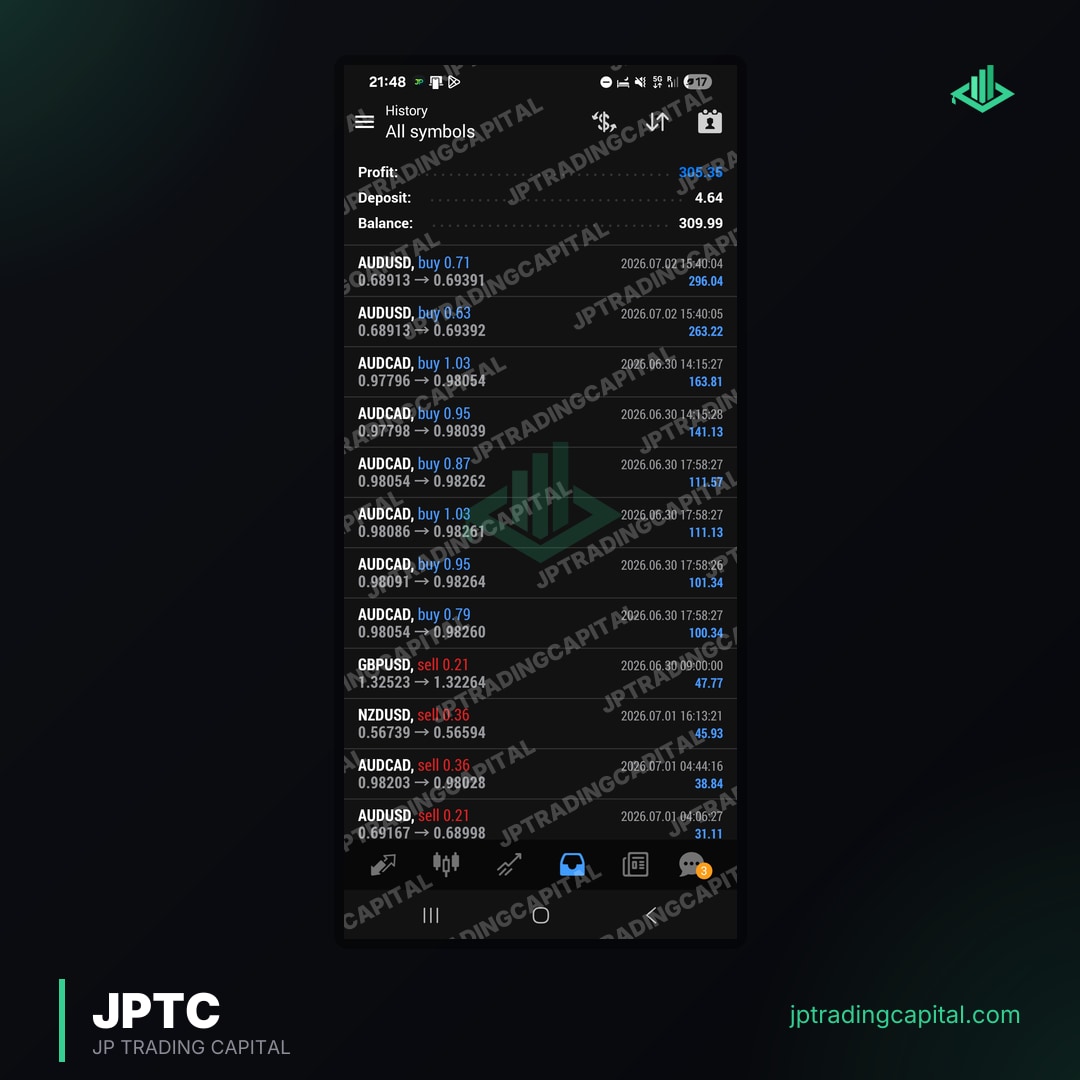
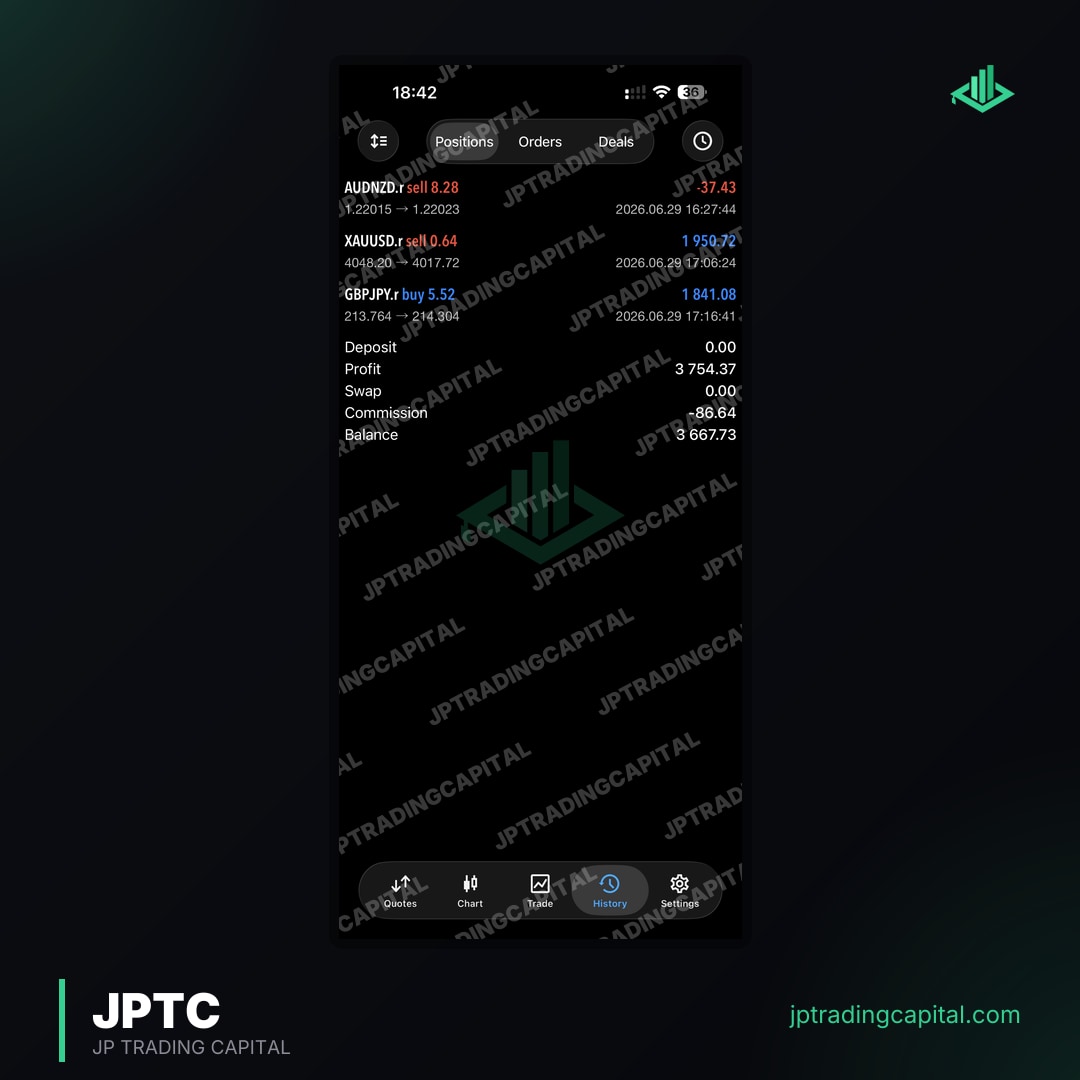
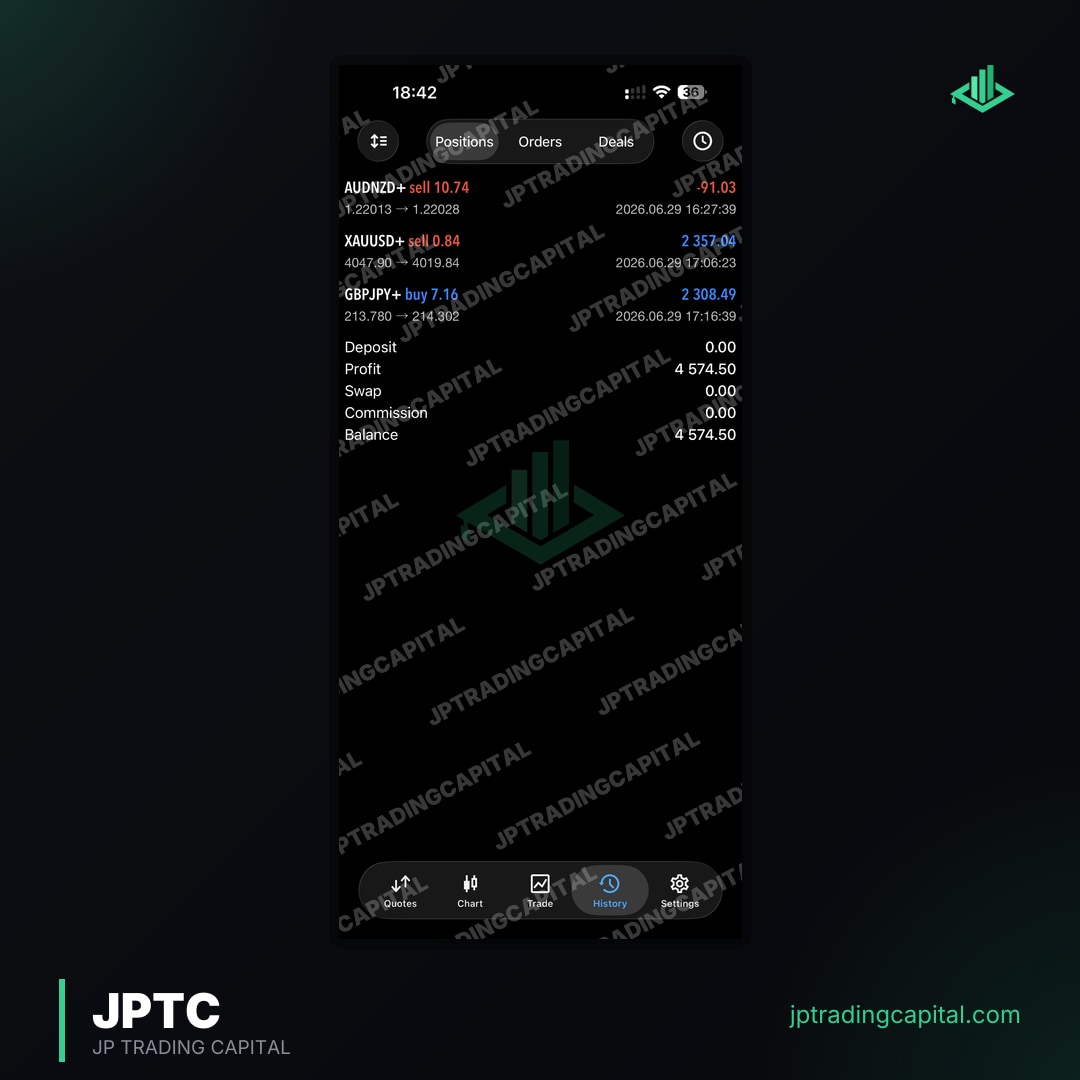
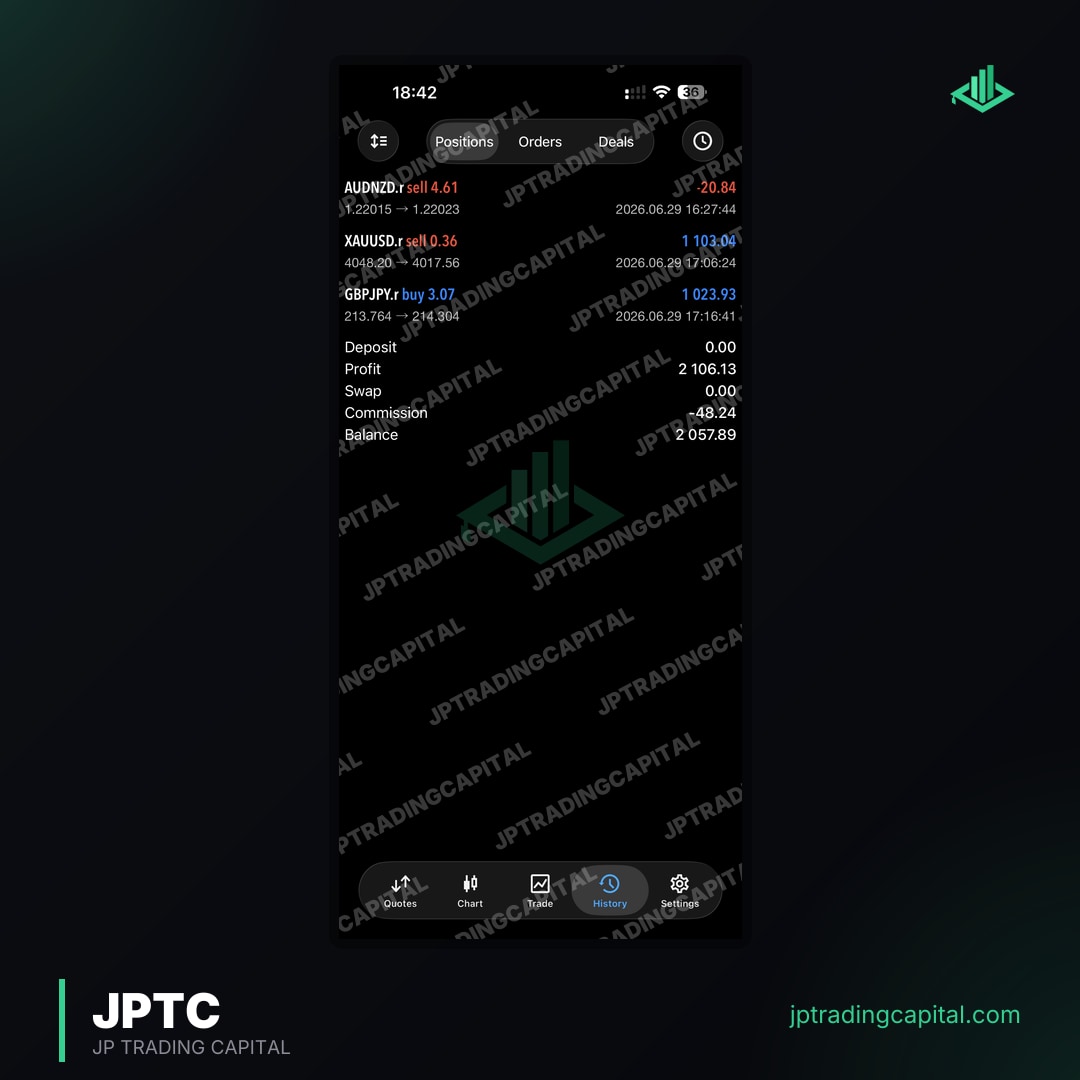
Successfully navigating a swing trading prop firm challenge hinges on a deep understanding and strict adherence to their specific rules, particularly concerning drawdown, consistency, and holding periods. These rules are designed to protect the firm's capital, but for a swing trader, they represent critical parameters that define viable strategies.
Understanding Drawdown Rules: Equity vs. Balance, Absolute vs. Relative
Drawdown rules are the most critical aspect for any prop firm trader, and for swing traders, the nuances are even more pronounced. The JPTradingCapital team consistently advises traders to understand these distinctions:
- Balance Drawdown: This measures drawdown from your initial balance or the highest closed balance. It's generally more forgiving for swing traders because unrealized losses (floating drawdown) don't count until a trade is closed.
- Equity Drawdown: This is a stricter measure, calculating drawdown from your highest equity point (including unrealized profits). If you have a large winning trade that pushes your equity up, then subsequent trades or a pullback in your open position can trigger a drawdown violation even if your closed balance is still positive. This is particularly challenging for swing traders who expect deep pullbacks.
- Absolute Drawdown: Calculated from the initial account balance. For example, a $100,000 account with a 5% absolute drawdown means your equity cannot fall below $95,000, regardless of how high your account may have grown.
- Relative (or Trailing) Drawdown: This drawdown trails your highest achieved equity. If your account reaches $105,000, and the relative drawdown is 5%, your account equity cannot fall below $99,750 (5% of $105,000). This type of drawdown often tightens as your account grows, posing a significant challenge for swing traders who might see large fluctuations in their open positions.
Our experience with prop firm challenges shows that firms like TopStep, for instance, often use different drawdown calculations depending on the program. Always verify the specific methodology. This careful management of drawdown is fundamental to passing prop firm evaluations.
Consistency Rules and News Trading
Consistency rules aim to prevent 'gambling' by requiring traders to demonstrate a steady performance rather than relying on one or two lucky trades. For swing traders, this can be tricky. If a firm requires a minimum number of trades per week or limits the percentage of profit from a single trade (e.g., no more than 30% of total profit from one trade), it might conflict with a strategy that involves fewer, higher-conviction, longer-duration trades. Look for firms with more lenient or no consistency rules if your strategy involves infrequent, large-profit trades.
News trading restrictions are another crucial consideration. Many prop firms prohibit opening new trades or closing existing ones during high-impact news events (e.g., NFP, CPI announcements) or within a specified window around them. Swing traders often position themselves based on fundamental analysis that anticipates market reactions to news. If your strategy involves trading around news, ensure the prop firm's rules permit it, or adjust your approach to avoid violations.
Overnight and Weekend Holding Policies
This is the cornerstone of a swing trading prop firm. Explicit permission for overnight and weekend holding is non-negotiable. Some firms might allow overnight holding but prohibit weekend holding due to the higher risk of market gaps. Always check for any additional fees or margin requirements associated with holding positions over extended periods, as these can impact your profitability and available capital.
Strategies for Successful Swing Trading in Prop Firm Evaluations
Succeeding as a swing trader in a prop firm evaluation requires a disciplined approach, robust risk management, and a strategy tailored to the firm's specific rules. The JPTradingCapital team observes that a combination of thoughtful planning and appropriate tools significantly increases success rates.
Manual Swing Trading Strategies
For manual swing traders, the focus should be on:
- Higher Timeframe Analysis: Base your analysis on daily or weekly charts to identify strong trends and key support/resistance levels. This helps filter out noise and focus on significant moves.
- Defined Entry and Exit Criteria: With longer holding periods, precision in entry and exit is paramount. Use clear technical indicators (e.g., moving averages, RSI, MACD) or price action patterns (e.g., pin bars, engulfing patterns) to confirm trades.
- Conservative Position Sizing: Given the larger potential drawdowns, always size your positions conservatively. Risk no more than 0.5% to 1% of your account balance per trade. This allows you to withstand several losing trades without violating drawdown limits.
- Strategic Stop Loss Placement: Place stop losses at logical technical levels (e.g., below a strong support, above a resistance) that allow the trade room to breathe but still protect your capital if the market moves against you significantly.
- Profit-Taking Strategy: Have a plan for taking profits. This could involve scaling out of positions as price reaches targets or using trailing stops to protect gains.
Automated Swing Trading Strategies with EAs
Automated Expert Advisors (EAs) can be particularly effective for swing trading in a prop firm environment, especially when configured to respect strict rules. EAs offer precision, remove emotion, and can execute strategies consistently, which is vital for passing funded challenges.
The JPTC EA Hub, for instance, is designed with pre-configured, backtested strategies that inherently respect prop-firm rules such as daily drawdown caps, max loss limits, and consistency requirements. These EAs work on MT4 / MT5 across popular prop firms like FTMO, FundedNext, FXify, TopStep, The5ers, and E8 Funding. An EA can:
- Automate Risk Management: Automatically calculate position sizes based on your risk per trade and account balance, ensuring strict adherence to drawdown limits.
- Execute Entries and Exits: Precisely enter and exit trades based on predefined technical conditions, eliminating human error and emotional decisions.
- Manage Open Positions: Implement trailing stops, take-profit levels, and break-even adjustments automatically, even when you're away from your screen.
- Monitor Rules: Continuously monitor account metrics against prop firm rules, such as daily drawdown, and can be programmed to halt trading if limits are approached.
For an example of what a 2-year live algo track record looks like, see JPTradingCapital's published results. This demonstrates the potential of well-designed automated systems.
Leveraging Automated EAs for Prop Firm Swing Trading
Automated Expert Advisors (EAs) offer a significant advantage for swing traders navigating the stringent rules of prop firms, providing consistent execution and disciplined risk management. The core benefit of using an EA for swing trading with a prop firm is its ability to operate within precise parameters without succumbing to human error or emotion, which is often the downfall of manual traders.
When selecting or developing an EA for this purpose, consider these factors:
- Rule Compliance: The EA must be programmed to respect all prop firm rules. This includes daily drawdown, maximum overall drawdown, maximum loss per trade, and even consistency rules if applicable. The JPTC EA Hub, for instance, is specifically built with these constraints in mind, offering automated strategies that stay within permissible boundaries. You can explore more about our EAs and how they function here.
- Strategy Adaptability: A good swing trading EA should be able to adapt to different market conditions or allow for easy parameter adjustments. Strategies that work well in trending markets might struggle in choppy conditions, and vice versa.
- Robust Backtesting: Ensure the EA has been rigorously backtested over long periods and various market cycles to prove its profitability and resilience. Look for verified track records, like those found on our results page, to assess performance.
- Platform Compatibility: Most prop firms use MetaTrader 4 (MT4) or MetaTrader 5 (MT5). Your EA must be compatible with these platforms. MetaTrader 5 offers advanced features that can be beneficial for complex EAs.
The JPTradingCapital team focuses on building EAs that not only identify high-probability swing setups but also integrate sophisticated risk management modules. These modules can automatically adjust lot sizes, manage partial profit-taking, and implement trailing stops, ensuring that even when holding trades for multiple days, the account remains within the prop firm's safety limits. You can see some of our results and how our automated systems perform under live conditions.
Furthermore, EAs can help address the 'consistency' aspect that some prop firms require. By taking a regular, albeit smaller, number of trades with defined risk-reward ratios, an EA can build a consistent profit curve over time, demonstrating the steady performance often sought in evaluations. For those interested in partner opportunities or learning more about the underlying strategies, our affiliate program provides further insights.
Overcoming Psychological Challenges of Long-Term Holds
Holding swing trades for extended periods, especially overnight or over weekends, introduces unique psychological pressures that can be as challenging as managing technical aspects. The JPTradingCapital team recognizes that even experienced traders can struggle with the emotional weight of open positions, particularly under the scrutiny of prop firm rules.
The primary psychological hurdles include:
- Fear of Weekend Gaps: The anxiety that markets will gap significantly against your position over the weekend, leading to substantial losses or drawdown violations.
- Impatience and Over-Management: The temptation to close profitable trades too early or to interfere with a trade that is undergoing a natural pullback, due to fear of losing unrealized gains.
- Drawdown Stress: Watching an open position move into a deep unrealized drawdown, even if it's within the strategy's parameters, can cause immense stress and lead to premature exits or emotional overtrading to compensate.
To mitigate these challenges:
- Trust Your Analysis: Develop a robust swing trading strategy and have confidence in its historical performance. This provides a mental anchor when trades are in drawdown or moving slowly.
- Accept Risk: Understand that drawdowns and losing trades are an inherent part of trading. Define your maximum acceptable loss per trade and stick to it. Once a trade is placed with a stop loss, try to let it play out.
- Disconnect: Once a swing trade is active and your stop loss/take profit levels are set, avoid constantly monitoring the charts. Over-monitoring fuels anxiety. Step away and trust your plan.
- Automate When Possible: This is where EAs shine. By automating entries, exits, and risk management, EAs remove the emotional component from trade management. The system executes based on logic, not fear or greed, allowing you to sleep soundly knowing your positions are managed according to your predefined rules.
- Review and Learn: After each trade, win or lose, objectively review your process. Did you follow your plan? What could be improved? This systematic approach builds resilience and reinforces good habits.
By proactively addressing these psychological factors, swing traders can maintain composure and execute their strategies more effectively, increasing their chances of success with a prop firm.
Which prop firms allow swing trading?
What are the main challenges for swing traders in prop firms?
Can I use an EA for swing trading with a prop firm?
How do drawdown rules impact swing trading?
Is swing trading riskier than day trading for prop firms?
Related Articles
- Best Forex Bot for MT5: Pass Prop Firms in 2026 · Read more →
- Best Free Forex Trading Bots 2026: Evaluate Top 5 EAs · Read more →
- 7 Best Forex Trading Bots 2025: Prop Firm Ready EAs · Read more →
- Forex Trading Bots: Automate Your Strategy · Read more →
- Forex Bot Trading: Master Automated Prop Firm Challenges · Read more →
- Forex Trading Bot: Your Automated Profit Partner · Read more →
- Forex Trading Bot AI: Master Prop Firms & Maximize Profits · Read more →
- Forex Trading Bot for Android: Your Guide · Read more →
The EA built for prop firm rules
Daily drawdown guard, hard max-loss stop, consistency-aware pacing and a news pause, on MT4 and MT5. One-time €797, no monthly fee. If you would rather not run the evaluation yourself, we run it for you.
See the EA Hub