2026 Trading Tax: When Your Profits Become Taxable
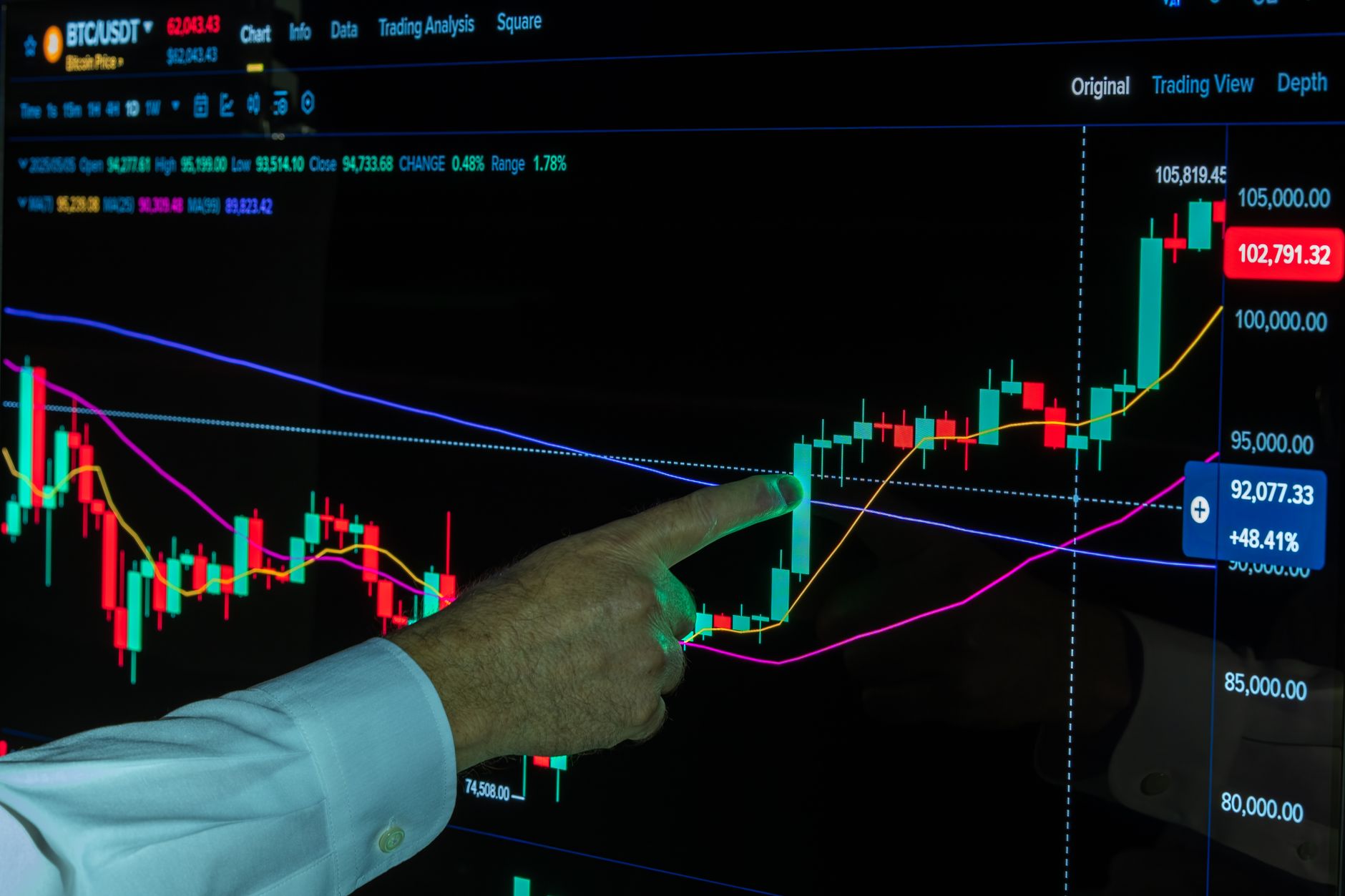
In most jurisdictions, trading profits become taxable from the very first unit of currency (e.g., dollar, euro) of net realized gain, meaning there is often no specific minimum threshold before tax obligations begin. This principle applies to both traditional retail trading and payouts received from prop firms, though the classification of these gains can vary significantly by country and the trader's activity.
- Taxation generally starts from the first net profit realized.
- Prop firm payouts are typically considered taxable income or business revenue.
- Local tax laws dictate specific rates, reporting, and loss offset rules.
- Distinguish between capital gains and professional business income.
When Trading Profits Become Taxable: The "First Profit" Rule
Trading profits generally become taxable from the very first unit of currency of net realized gain in most countries. This means that unlike some other forms of income or investments that might have de minimis thresholds or tax-free allowances, the moment you realize a profit from your trading activities, that gain is subject to your local tax regulations.
This fundamental principle addresses the core question of "trading imposable à partir de combien" by establishing that there isn't a universal monetary floor you must cross before your profits are considered taxable. For instance, if you make a net profit of €100 from a series of trades, that €100 is typically considered taxable income. The specifics of how it's taxed, as capital gains, business income, or another category, depend entirely on your jurisdiction and the nature of your trading activity. Our research shows that many traders, especially those new to the market, often assume there's a significant threshold before they need to consider tax implications. However, this is rarely the case for trading.
It's crucial for every trader, from the casual retail participant to the dedicated prop firm professional, to understand that diligent record-keeping of all trades, profits, and losses is paramount from day one. This documentation forms the basis for accurate tax reporting and ensures compliance with local laws, preventing potential issues down the line.
Understanding Capital Gains vs. Business Income for Traders
The classification of your trading profits as either capital gains or business income significantly impacts your tax obligations and available deductions. This distinction is one of the most critical aspects of tax planning for traders.
Capital Gains: For many retail traders, especially those engaging in less frequent or long-term positions, profits are often classified as capital gains. This typically applies to individuals who trade as a hobby or as a secondary activity, not as their primary source of income. Capital gains often benefit from specific tax rates, which can sometimes be lower than ordinary income tax rates, and may also differentiate between short-term (e.g., holdings under a year) and long-term gains. For example, some jurisdictions might apply a flat rate of 15% for short-term capital gains, while others might integrate them into your standard income tax bracket, albeit with potential deductions or allowances. For a comprehensive overview of capital gains, refer to resources like Investopedia's explanation of Capital Gains.
Business Income: If your trading activities are substantial, regular, and conducted with the intent to generate your primary livelihood, your profits may be classified as business income. This typically applies to professional traders, full-time day traders, or those operating through a structured entity. When classified as business income, you may be able to deduct a wider range of business expenses, such as trading software subscriptions, dedicated office space, internet costs, and educational resources. However, business income is often subject to higher ordinary income tax rates and potentially self-employment taxes. The threshold for being considered a "professional" trader for tax purposes is subjective and varies greatly by country, often depending on factors like time commitment, frequency of trades, and reliance on trading for income.
The JPTradingCapital team emphasizes that understanding this distinction early is vital. If you're using automated trading tools like the JPTC EA Hub, which executes strategies with high frequency, your activity might lean towards a business classification in some tax regimes, even if you're not trading your own funded account directly but managing prop firm capital. It's essential to consult with a qualified tax advisor in your jurisdiction to determine the correct classification for your specific situation.
Prop Firm Payouts: Specific Tax Considerations for Funded Traders
For traders operating with prop firm capital, understanding the tax implications of payouts is a unique and critical aspect of financial planning. Unlike trading your own real account directly with a broker, prop firm payouts introduce an intermediary layer that can affect how your gains are classified and taxed.
When you trade with a prop firm like FTMO, FundedNext, or FXify, you are typically not trading your own capital. Instead, you are often acting as a contractor or a service provider to the prop firm, managing their capital according to specific rules. The "profit split" you receive is essentially a payment for your trading performance and services, not a direct capital gain from your own investment.
Classification of Payouts: In many jurisdictions, these payouts are likely to be treated as business income or professional service fees, rather than capital gains. This means they would be subject to your country's ordinary income tax rates and potentially self-employment taxes if you are an independent contractor. Even if you are a part-time trader managing a prop firm account, the consistent and regular nature of receiving payouts for your performance can push this classification towards business income.
For instance, if you successfully pass an evaluation and consistently receive profit splits from a prop firm, these payments, similar to a freelance income, would typically be added to your total taxable income. The question of "trading imposable à partir de combien" remains relevant, as even small payouts contribute to your overall taxable income from the first dollar or euro received.
Withholding and Reporting: Some prop firms, depending on their jurisdiction and the trader's location, may provide tax documentation (e.g., 1099 forms in the US) or require you to complete specific tax declarations. However, in many cases, especially with internationally operating prop firms, the onus is entirely on the trader to correctly declare and pay taxes on these earnings. It's important to keep meticulous records of all payouts received, including dates, amounts, and the method of payment (e.g., bank transfer, cryptocurrency).
JPTradingCapital's tools, such as the JPTC EA Hub, are designed to help traders achieve consistent performance and pass prop firm evaluations. While our automated strategies focus on respecting drawdown limits and consistency rules, the tax implications of the resulting payouts remain the individual trader's responsibility. We encourage all users to understand their local tax obligations regarding these earnings. For more insights on evaluation processes, you can visit our page on passing prop firm challenges.
Navigating International Tax Laws for Global Traders
For a global audience of traders, particularly those working with international prop firms or trading platforms, navigating the complexities of international tax laws is paramount. Tax regulations are highly jurisdiction-specific, and what applies in one country may be entirely different in another, making the "trading imposable à partir de combien" question a truly global one.
Country of Residence vs. Source of Income: Your primary tax obligation is generally determined by your country of tax residence. This is where you are typically required to declare your worldwide income. However, some countries also tax income based on its source, even if you are not a resident. For example, if you are a French resident, the snippets indicate that in 2026, trading gains might be taxed at 15% on the first €42,500 of benefits and 25% beyond, with gains generally being taxable from the first euro of profit. This is an illustrative example of specific national rules, and similar, yet distinct, regulations exist everywhere.
Double Taxation Agreements (DTAs): Many countries have Double Taxation Agreements in place to prevent individuals from being taxed twice on the same income. These agreements dictate which country has the primary right to tax certain types of income and how tax credits can be applied. If you are a resident of one country and receive payouts from a prop firm based in another, a DTA might come into play.
Reporting Foreign Income: Most countries require their residents to report all foreign-sourced income. This includes profits from trading on international platforms or payouts from prop firms located abroad. Failure to report foreign income can lead to severe penalties. The JPTradingCapital team advises traders to be proactive in understanding their reporting obligations, which might include specific forms for foreign bank accounts or financial assets.
Given the global nature of modern trading, especially with the rise of prop firms that cater to traders worldwide, seeking professional tax advice tailored to your specific country of residence and the countries where your income originates is not just recommended, it's essential. This proactive approach ensures compliance and can help optimize your tax strategy.
Tax Efficiency: Offsetting Trading Losses and Record Keeping
A crucial aspect of managing your tax obligations as a trader is understanding how to offset trading losses against gains, and the necessity of meticulous record-keeping. This can significantly impact your net tax liability.
Offsetting Losses: In many tax systems, realized trading losses can be used to offset realized trading gains, thereby reducing your overall taxable profit. For example, if you realize $10,000 in trading profits but also incur $4,000 in trading losses within the same tax year, your net taxable gain might only be $6,000. Some jurisdictions allow losses to be carried forward to offset gains in future tax years, while others may have limitations on how much loss can be offset or which types of income can be reduced by trading losses. The ability to offset losses is a key difference between trading as a hobby versus a business, with professional traders often having more flexibility.
Wash Sale Rules: Be aware of "wash sale" rules in your jurisdiction, if applicable. These rules typically prevent you from claiming a loss on a security if you buy a substantially identical security within a certain period (e.g., 30 days) before or after the sale. While more common for stock trading, it's a principle to be mindful of for any asset where such rules apply.
Meticulous Record Keeping: The foundation of tax efficiency and compliance is impeccable record-keeping. You must maintain detailed records of every trade, including:
- Date and time of trade entry and exit.
- Asset traded (e.g., EURUSD, Gold futures).
- Entry and exit prices.
- Position size.
- Profits or losses for each trade.
- All fees and commissions paid to brokers or prop firms.
- Records of all deposits and withdrawals from trading accounts.
- Documentation of prop firm payouts.
These records are indispensable for calculating your net profit or loss, substantiating your tax declarations, and responding to any inquiries from tax authorities. Automated trading systems like the JPTC EA Hub generate detailed trade logs that can be invaluable for this purpose. Traders should ensure they can access and store these logs securely for the required tax retention period in their country.
The Role of Automated Trading and EAs in Tax Classification
The rise of automated trading, particularly through Expert Advisors (EAs) like those offered by JPTradingCapital, introduces interesting nuances to the tax classification discussion. While the fundamental "trading imposable à partir de combien" rule still applies, the nature of automated trading can influence whether your activity is viewed as a hobby or a professional business.
Automated trading often involves a high frequency of trades, consistent execution, and a systematic approach, which are characteristics often associated with professional trading activity rather than sporadic hobbyist pursuits. For instance, an EA pre-configured with backtested strategies on MT4 or MT5, as found in the JPTC EA Hub, is designed for continuous market engagement within specific parameters.
Implications for Business Classification: If you are consistently running an EA and generating regular profits, especially across multiple prop firm accounts (e.g., FTMO, FundedNext, TopStep, E8 Funding), tax authorities in some countries might be more inclined to classify your trading as a business activity. This classification, as discussed, can open up more opportunities for deducting business expenses but also subjects your profits to ordinary income tax rates.
Evidence of Professional Intent: Using professional-grade tools like EAs, dedicating specific time to monitoring or optimizing them, and relying on them for a significant portion of your income can serve as evidence of professional intent. This doesn't mean every EA user is automatically a professional trader, but it's a factor to consider when assessing your tax situation. The JPTC EA Hub, which runs on your own MetaTrader terminal with ready-made setfiles, provides a streamlined way to engage in automated trading, but users must still account for the tax implications of their generated profits.
The JPTradingCapital team designs its EAs to help traders achieve consistent performance and adhere to prop firm rules, which is a professional approach to trading. While EAs handle the execution, understanding the tax framework around such systematic trading is part of responsible financial management. We provide robust solutions for traders seeking efficiency and consistency, and you can explore our automated trading solutions on our EA page.
How JPTradingCapital Supports Your Trading Journey
At JPTradingCapital, we are dedicated to empowering prop firm traders with advanced, automated trading tools designed for consistency and compliance with firm rules. While we focus on enhancing your trading performance, we also understand the broader context of your trading journey, including navigating the complexities of taxation.
Our flagship JPTC EA Hub offers Expert Advisors pre-configured with backtested strategies built around critical prop firm rules like daily drawdown caps, max loss limits, and consistency requirements. These tools run on MT4/MT5 and are compatible with leading prop firms such as FTMO, FundedNext, FXify, The5ers, and E8 Funding.
By providing a robust and reliable automated trading solution, JPTradingCapital helps traders pursue consistent profitability. Consistent profits, however, bring tax responsibilities. Our systems generate detailed trade logs that can be crucial for your record-keeping, aiding you in accurately reporting your gains and losses to tax authorities. While we do not offer tax advice, our commitment to providing professional-grade tools indirectly supports your ability to manage your financial obligations responsibly.
We believe that successful trading encompasses not just strategy and execution, but also diligent financial management. By helping you trade more effectively and consistently, we aim to contribute to your overall success as a funded trader. You can learn more about how our tools have helped traders by visiting our results page.
Is there a minimum profit amount before trading becomes taxable?
How are prop firm payouts taxed?
Do I need to declare small trading gains?
Can trading losses offset gains for tax purposes?
Does using an Expert Advisor (EA) change my tax status?
Related Articles
- Real Funded Trading Capital: How to Pass Prop Firm Challenges · Read more →
- Master EA Testing: The 5 Best Apps for Prop Firms in 2026 · Read more →
- Best Crypto Services for Prop Firms: 7 Key Offerings [2026] · Read more →
- 7 Proven Forex Prop Trading Strategies for 2026 · Read more →
- Best Forex Broker Comparison Chart 2026: 7 Key Factors · Read more →
- Prop Trading Tax in 2026: 3 Key Dutch Rules to Maximize Savings · Read more →
- Topstep Bot Trading 2026: Exact Rules for Automated EAs · Read more →
- Maven Trading EA Policy 2026: Why Automated Trading Is Banned · Read more →
- The5ers EA Rules: 3 Keys to Pass Challenges in 2026 · Read more →
- Fund Your Trading: 5 Alternatives to Prop Firms in 2026 · Read more →
Futures Challenge Preparation
Software, reviewed setfiles, a written risk plan and community access built around common evaluation rules. No software can guarantee a pass.
Get Started