Exact Broker FTMO Uses: OANDA & Liquidity Providers [2026]
![Exact Broker FTMO Uses: OANDA & Liquidity Providers [2026]](https://images.pexels.com/photos/5831352/pexels-photo-5831352.jpeg?auto=compress&cs=tinysrgb&dpr=2&h=650&w=940)
FTMO itself does not operate as a traditional broker; instead, it provides access to its proprietary trading platforms and data feeds, which are powered by various liquidity providers and, notably, a strategic partnership with OANDA, particularly for its U.S. operations. This means traders execute trades through FTMO's technology, which routes orders to their underlying liquidity infrastructure.
- FTMO is a prop firm, not a broker, offering challenges and funded accounts.
- OANDA is a key partner, especially for FTMO US operations via JV Prop Corporation.
- Trades are executed through MetaTrader 4, MetaTrader 5, or cTrader platforms.
- Liquidity providers underpin FTMO's data feed and trade execution.
- The firm's technical solution connects traders to market prices and order routing.
Understanding FTMO's Brokerage Model: Not a Broker, But a Partner
When asking which broker does FTMO use, it's crucial to first understand that FTMO itself is not a brokerage firm. Unlike traditional brokers that accept client deposits and facilitate direct market access, FTMO is a proprietary trading firm. Its core business model involves evaluating traders through a rigorous challenge process and then funding successful traders with real capital. The actual execution of trades and the provision of market data are handled through a sophisticated technical solution that leverages partnerships with established financial entities.
This distinction is vital for traders. FTMO does not hold your capital in the same way a broker would; instead, it provides you with access to its trading infrastructure. This infrastructure is designed to simulate real market conditions during the evaluation phases and execute trades in live markets once a trader is funded. The underlying technology connects to various liquidity providers, ensuring that price feeds are robust and execution is efficient. This setup allows FTMO to focus on talent identification and risk management, leaving the complex world of brokerage and direct market access to its specialized partners.
The Role of Trading Platforms: MT4, MT5, and cTrader
FTMO offers its clients a choice of industry-standard trading platforms, including MetaTrader 4, MetaTrader 5, and cTrader. These platforms are the primary interface through which traders interact with the market, place orders, and manage their positions. However, it's important to differentiate these platforms from the "broker" itself.
- MetaTrader 4 (MT4): Widely popular, especially among retail Forex traders and for expert advisors (EAs). Its extensive customization options and vast community support make it a go-to for many.
- MetaTrader 5 (MT5): A newer version offering more asset classes (like stocks and futures), additional timeframes, and advanced analytical tools. It's increasingly adopted by prop firms for its enhanced capabilities.
- cTrader: Known for its intuitive interface, advanced order types, and transparency, cTrader appeals to traders seeking a more modern and user-friendly experience with deep market liquidity.
While you interact with these platforms, they are merely the gateways. The actual routing of your trades and the pricing you see are determined by FTMO's backend infrastructure and its relationships with liquidity providers. For traders using automated strategies, like those developed by JPTradingCapital, understanding the platform's reliability and execution speed is paramount. Our JPTC EA Hub is specifically designed to work seamlessly across MT4 and MT5, respecting prop-firm rules and optimizing for these environments.
The OANDA Connection: A Strategic Partnership for FTMO US
A significant piece of the puzzle regarding which broker does FTMO use involves its strategic partnership with OANDA, particularly for its operations in the United States. The FTMO OANDA collaboration highlights a specific arrangement where FTMO's business model for U.S. clients is operated through this partnership. JV Prop Corporation, a U.S.-registered FTMO Group company, facilitates this model.
This partnership is crucial for several reasons:
- Regulatory Compliance: Operating in the U.S. financial market requires strict adherence to local regulations. Partnering with a regulated entity like OANDA allows FTMO to offer its services to U.S. residents while complying with the necessary legal frameworks.
- Established Infrastructure: OANDA is a well-established and reputable broker known for its robust trading infrastructure and liquidity. This partnership provides FTMO with reliable access to market pricing and execution capabilities for its U.S. traders.
- Geographic Specificity: It's important to note that this direct partnership with OANDA is primarily highlighted for FTMO US. While FTMO serves a global audience, the specific nature of its brokerage relationships can vary by region due to regulatory requirements and market dynamics.
While some sources, like propfirmmatch.com, have reported on FTMO's acquisition of OANDA Global Corporation, official FTMO communications and the ftmo.oanda.com domain itself emphasize a partnership. Regardless of the exact corporate structure, the relationship signifies a deep integration and reliance on OANDA's brokerage capabilities for a segment of FTMO's client base, particularly in a highly regulated market.
Beyond OANDA: The Unseen Role of Liquidity Providers

While OANDA plays a prominent role, especially for U.S. operations, the broader answer to which broker does FTMO use involves a network of institutional liquidity providers. These are the entities that supply the actual market depth and pricing that FTMO's platforms display and execute against. Prop firms, by nature, require access to deep liquidity to ensure efficient execution for their funded traders, especially those trading larger positions.
Liquidity providers (LPs) are typically large financial institutions, investment banks, or specialized market makers. They offer competitive bid/ask prices, allowing for tight spreads and minimal slippage. FTMO's "technical solution" acts as an aggregator, connecting to multiple LPs to source the best available prices and ensure robust execution. This setup is designed to provide traders with a seamless experience, mirroring what they would expect from a top-tier institutional broker.
Impact on Trading Performance and EAs
The quality of FTMO's liquidity providers directly impacts a trader's performance, particularly for those employing automated strategies. Factors like execution speed, slippage, and spread consistency are critical. For example:
- Slippage: In fast-moving markets, the price at which an order is executed can differ from the requested price. High-quality liquidity reduces negative slippage.
- Spreads: The difference between the bid and ask price. Tighter spreads mean lower trading costs.
- Requotes: While less common with ECN/STP models, requotes can occur if liquidity is thin, hindering execution.
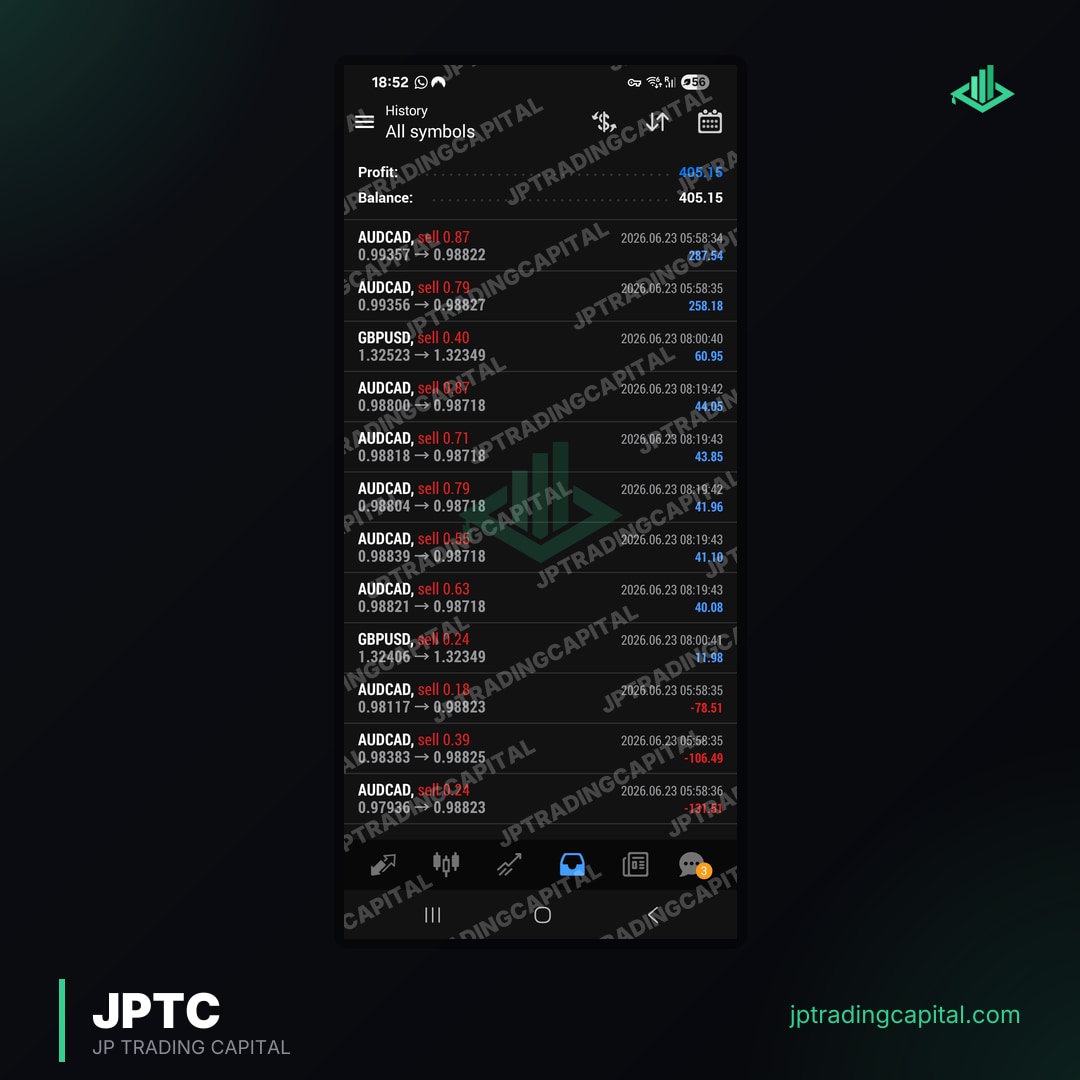
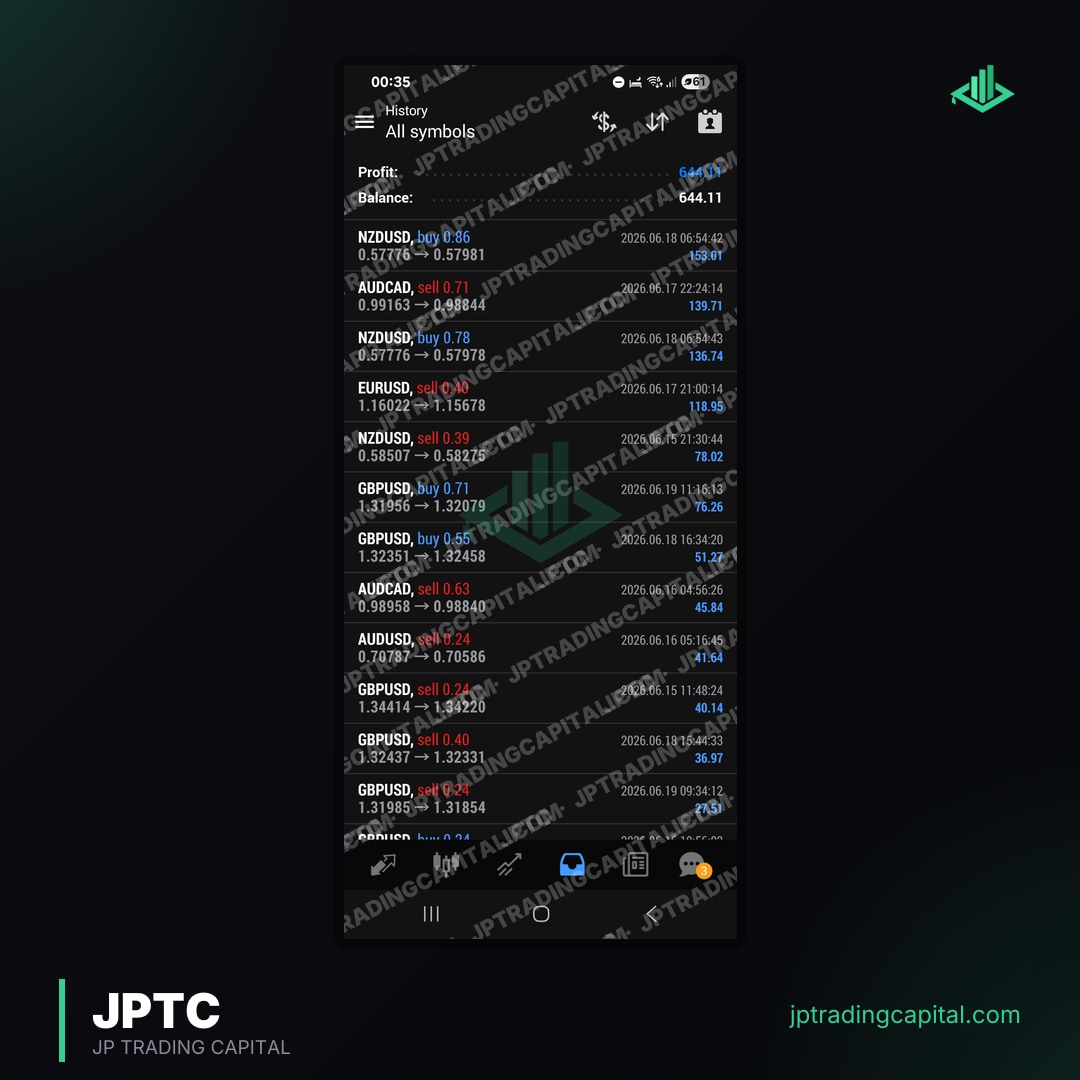
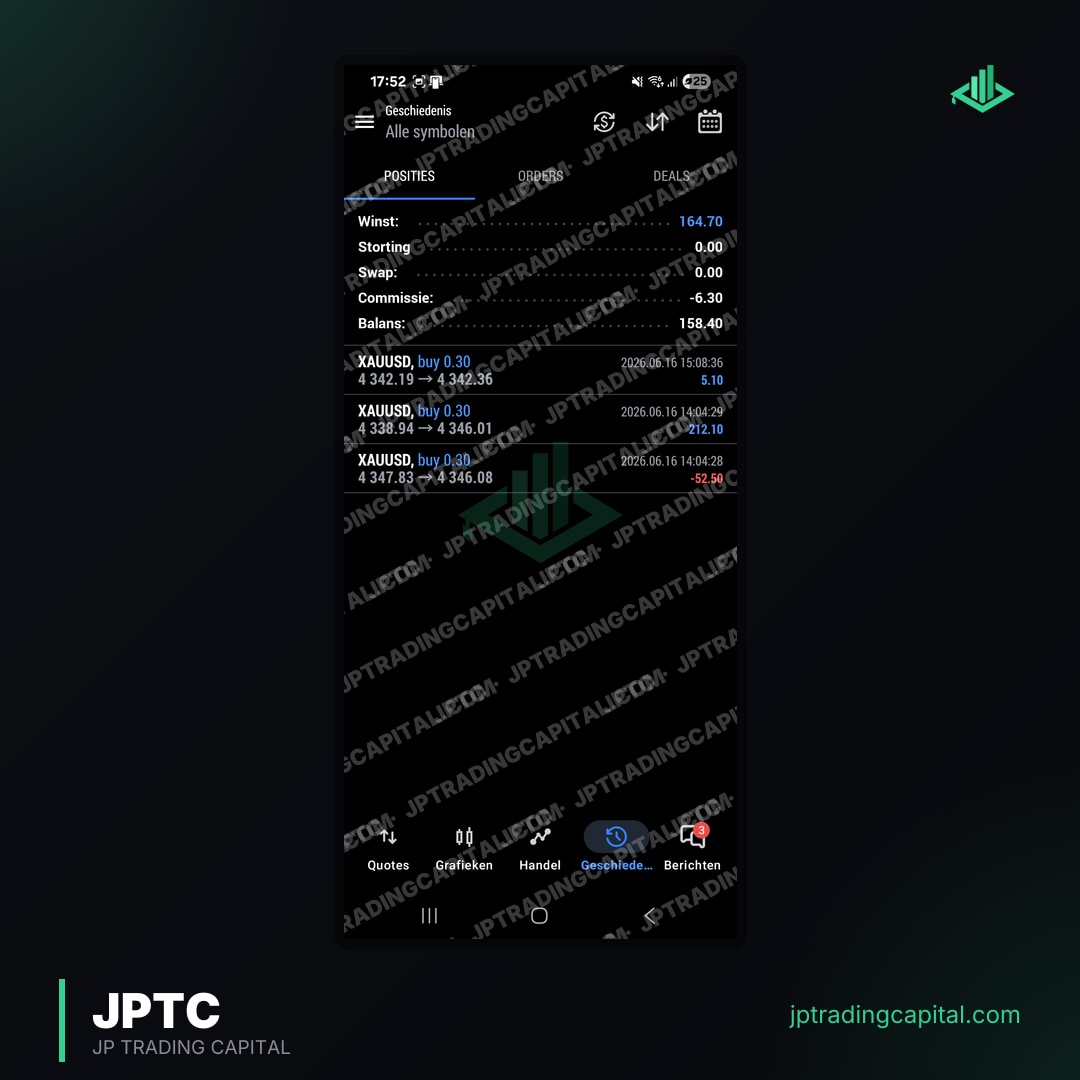
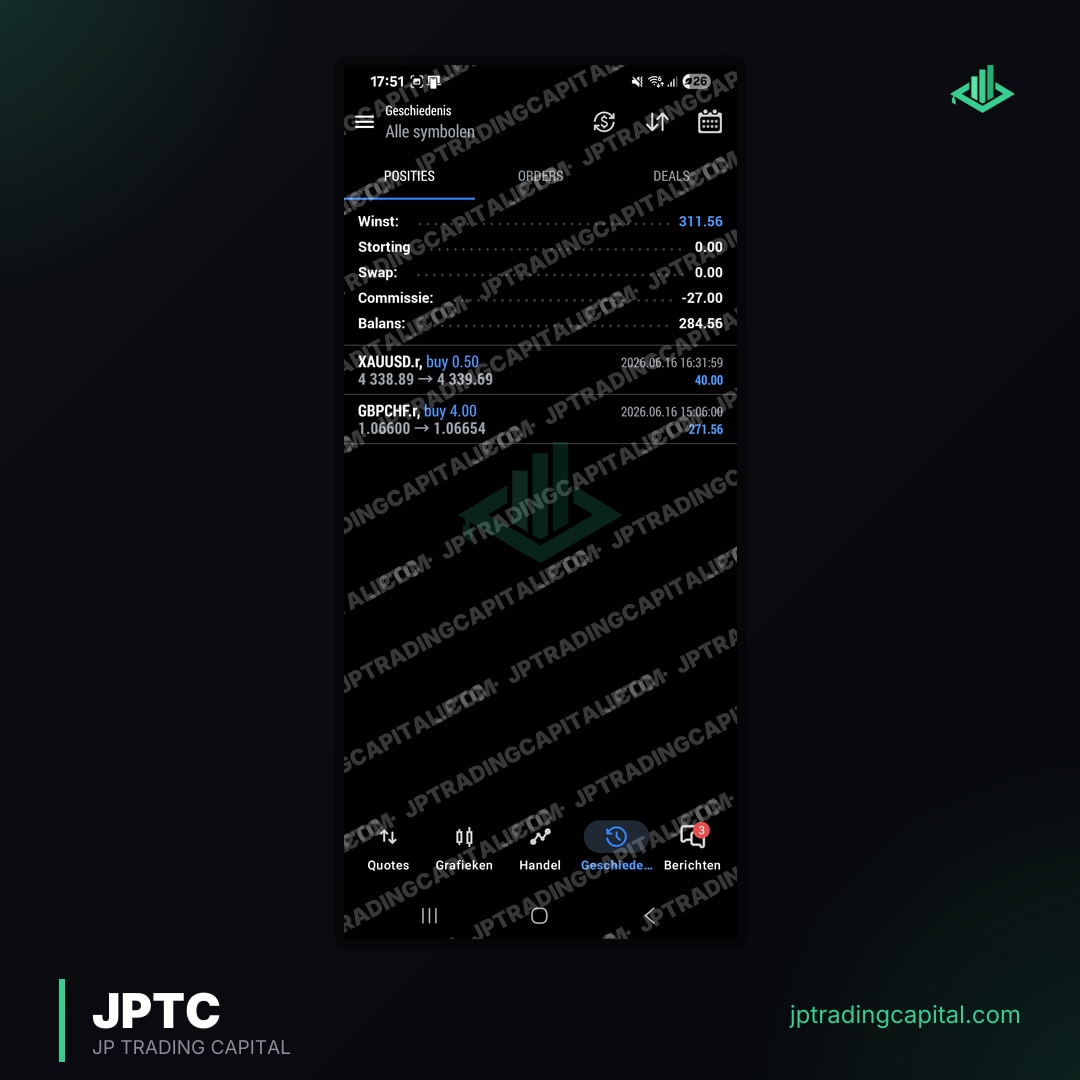
Our team at JPTradingCapital understands these nuances intimately. When developing tools like the JPTC EA Hub, we rigorously backtest strategies against various market conditions to ensure they perform optimally, accounting for typical spreads and potential slippage from prop firm environments. An EA's success on a prop firm like FTMO is not just about the strategy itself, but also about how well it adapts to the underlying execution environment provided by the chosen liquidity setup. For an example of what a 2-year live algo track record looks like, see JPTradingCapital's published results, which demonstrates consistent performance despite varying market conditions.
This focus on robust execution is why JPTradingCapital emphasizes strategies that respect FTMO's official rules page and other prop firm guidelines, ensuring that even with minor execution variances, traders can stay within drawdown limits and achieve their profit targets. You can learn more about our methodologies for passing prop firm challenges.
Geographic & Regulatory Considerations: Why 'Which Broker' Isn't Simple
The question of which broker does FTMO use is further complicated by geographical and regulatory differences. As highlighted by the OANDA partnership for the U.S., prop firms often need to adapt their operational structure to comply with local financial regulations.
Outside the U.S., FTMO's global operations likely rely on a broader network of liquidity providers and technological solutions that may not involve a direct, publicly declared partnership with a single broker like OANDA. This allows FTMO to maintain flexibility and offer its services across various jurisdictions, each with its own set of rules and market participants.
For traders, this means that while the front-end experience on MetaTrader or cTrader might feel consistent, the backend execution and the specific entities facilitating the trades can vary. This underlying infrastructure is critical for performance, especially for high-frequency trading or strategies sensitive to micro-movements. Understanding this complexity can help traders set realistic expectations for execution quality and adapt their strategies accordingly.
Implications for Prop Firm Traders and EA Developers
For prop firm traders aiming to pass evaluations and manage funded accounts, understanding FTMO's brokerage model is more than just curiosity. It provides insight into the trading conditions they will face.
- Execution Quality: The choice of liquidity providers directly influences spreads, slippage, and overall execution quality, which can impact profitability, especially for scalpers or high-frequency traders.
- Platform Reliability: While MT4/MT5/cTrader are robust, their performance is tied to the data feed and execution backend. Knowing that FTMO partners with reliable entities like OANDA (for US) and institutional LPs can instill confidence.
- EA Compatibility: For EA developers and users, knowing the underlying brokerage environment helps in optimizing strategies. EAs need to be resilient to varying market conditions and execution nuances. Our verified results show how well-configured EAs can navigate these environments successfully.
JPTradingCapital is committed to providing tools that give traders an edge in these complex environments. Our expertise lies in creating Expert Advisors that are pre-configured with strategies respecting stringent prop-firm rules, ensuring that traders can focus on strategy rather than worrying about underlying brokerage mechanics. For those interested in exploring partnership opportunities, our affiliate program offers a chance to collaborate with a leader in automated trading solutions.
FAQ
Is FTMO a broker?
Which trading platforms does FTMO offer?
Does FTMO use OANDA?
How does FTMO provide market liquidity?
Does the choice of broker/LP affect my trading with FTMO?
Related Articles
- Apex Trader Funding vs TopStep: Which Futures Prop Firm Is Best in 2026? · Read more →
- How to Choose the Right Prop Firm in 2026: Complete Selection Guide · Read more →
- Best Prop Firm EA MT4 in 2026: 7 Keys to Pass Challenges · Read more →
- Discord Trading Communities: Why Serious Traders Use Them · Read more →
- Can a Trading Bot Pass Gold EA Prop Firm Challenges? · Read more →
- Best MT4 Expert Advisor for Prop Firms: 7 Key Strategies (2026) · Read more →
- MT4 vs MT5 for Prop Firm Trading: Which Platform to Choose? · Read more →
- Best MT5 Expert Advisor in 2026: Pass Prop Firms Fast · Read more →
The EA built for prop firm rules
Daily drawdown guard, hard max-loss stop, consistency-aware pacing and a news pause, on MT4 and MT5. One-time €797, no monthly fee. If you would rather not run the evaluation yourself, we run it for you.
See the EA Hub