Best Straight to Funded Prop Firm: 2026 Guide
Material update: Site-wide prohibited-phrase cleanup applied on 2026-08-23; editorial review status was not changed.
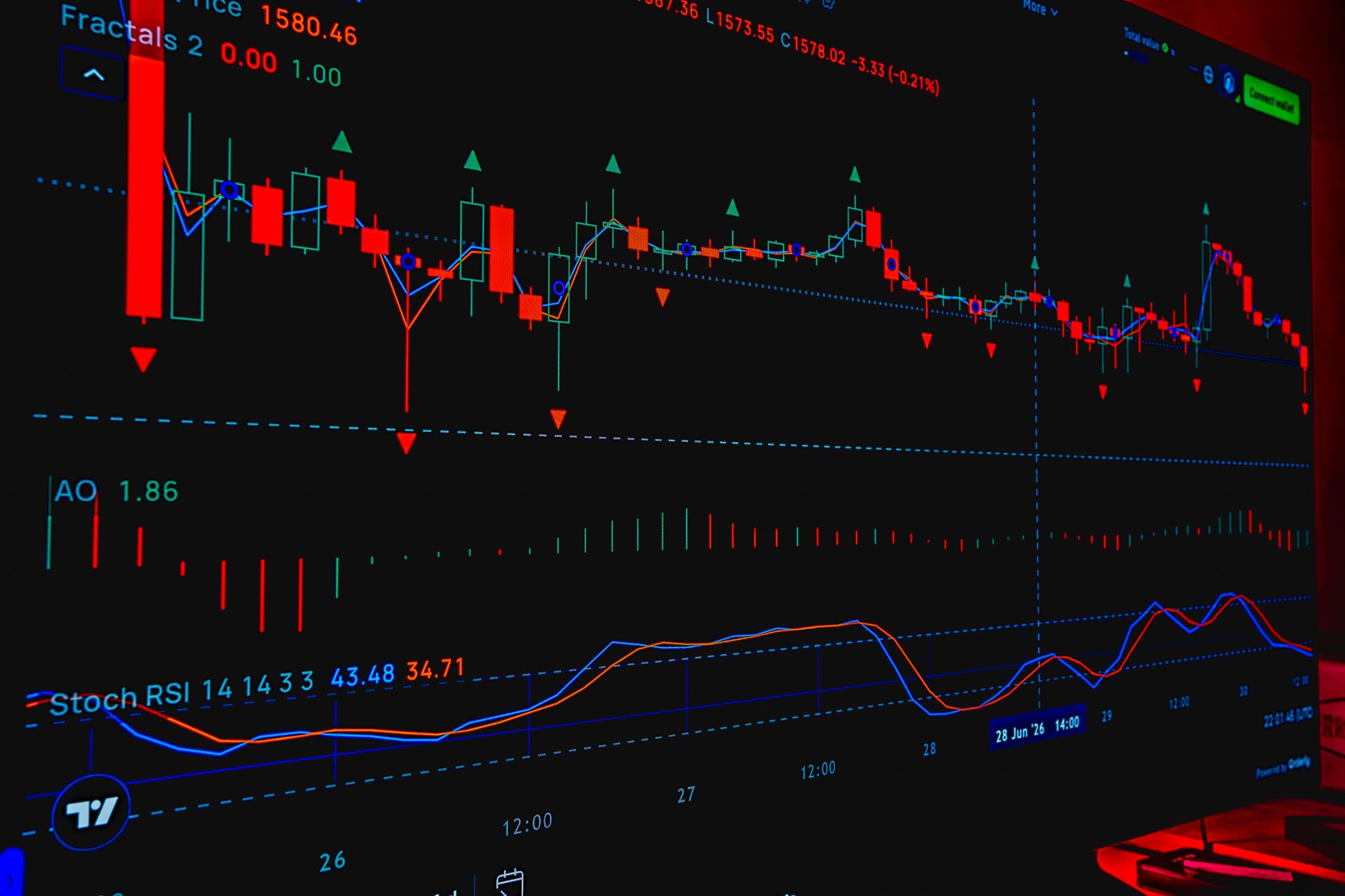
The best straight to funded prop firm offers a direct path to funded trading capital, bypassing traditional multi-stage evaluations, but success hinges on choosing a firm with transparent rules and fair profit splits. These firms provide immediate access to capital, often after a brief verification process, aiming to align their success with yours.
For the wider picture, see how funded trading accounts work, including the two routes in and the rules that end most of them.
- Direct funding without lengthy evaluation phases.
- Focus on consistent trading performance post-funding.
- Access to capital from reputable prop trading firms.
- Crucial to vet rules and profit share before committing.
- JPTradingCapital's tools help traders navigate these firms.
What is a 'Straight to Funded' Prop Firm?
A 'straight to funded' prop firm, often referred to as a direct funded account provider, is a trading entity that offers traders capital without requiring them to pass a multi-stage evaluation challenge. Unlike traditional prop firms that first assess a trader's skills through a simulated trading period (often called a challenge or evaluation), these firms provide a live or simulated funded account more rapidly. This model appeals to traders who are confident in their abilities and wish to start trading with real capital sooner. The process typically involves a verification phase, which might be a short trading period on a demo account, or sometimes an initial deposit or fee that acts as a form of risk mitigation for the firm. The core idea is to get traders into a position where they can generate profits with the firm's capital as quickly as possible.
The Appeal of Direct Funding
The primary allure of a straight to funded prop firm is speed and efficiency. Traders who have a proven track record or possess a high degree of confidence in their trading strategies can bypass the often time-consuming and sometimes frustrating evaluation stages. This can be particularly attractive in fast-moving markets where opportunities might be fleeting. For instance, a trader might have a robust automated strategy that consistently performs well but struggles with the specific daily or maximum drawdown rules of a traditional evaluation. A direct funded model might offer more flexibility in this regard, allowing them to deploy their strategy with less immediate risk of failing an evaluation.
Understanding the Verification Process
While 'straight to funded' implies no lengthy evaluation, there's almost always a form of vetting. This could range from submitting a trading history from a live account (verified through platforms like our results page) to a short, simplified trading period. Some firms might require a small initial fee or deposit, which is often refundable upon reaching certain profit targets or can be considered a stake in the trading account. It's essential to understand exactly what the firm requires during this initial phase, as it dictates the speed at which you can become truly funded.
Key Factors When Choosing a Straight to Funded Prop Firm
Selecting the right 'best straight to funded prop firm' requires a deep dive into several critical components beyond just the promise of immediate capital. These firms operate with varying business models, and understanding their specifics is paramount to long-term success and avoiding potential pitfalls.
Profit Split and Payout Structure
The profit split is how the generated profits are divided between the trader and the prop firm. For direct funded accounts, this split is a crucial negotiation point. While many firms offer attractive splits, such as 80/20 or 90/10 in favor of the trader, it's vital to understand how and when these payouts occur. Some firms might have minimum profit targets that need to be met before a payout can be requested, or specific payout schedules (e.g., weekly, bi-weekly, monthly). Clarity on these terms prevents misunderstandings and ensures you receive your share of the profits promptly. For example, a firm might advertise a 90% profit split, but if the payout threshold is very high, it might take considerable time to see any returns.
Drawdown Limits and Trading Rules
Even without a traditional evaluation, direct funded accounts come with strict rules designed to protect the firm's capital. These typically include daily and maximum drawdown limits. A daily drawdown limit is the maximum amount you can lose in a single trading day, while a maximum drawdown limit is the total equity reduction allowed from the account's starting balance. For instance, a firm might impose a 5% maximum daily loss and a 10% overall maximum loss. Traders must be acutely aware of these limits, as breaching them, even on a direct funded account, can lead to account suspension or termination. Adhering to these rules is non-negotiable for sustained trading. Understanding how these rules apply in practice is where many traders find difficulty, making tools that help manage risk crucial. For example, the JPTC EA Hub is designed to respect these prop firm rules, including drawdown caps.
Platform and Trading Instruments
The prop firm will dictate the trading platforms and instruments you can trade. Most firms utilize platforms like MetaTrader 4 or MetaTrader 5. Ensure the platform is one you are comfortable with. Similarly, understand the range of available trading instruments. Some firms might focus solely on forex, while others offer indices, commodities, or cryptocurrencies. If you specialize in a particular market, like XAUUSD, verify that it's available and that there are no specific restrictions on trading it, especially during news events.
Additional Fees and Hidden Costs
Be vigilant about any additional fees beyond the initial verification cost or deposit. Some firms might charge for data feeds, platform access, or account management. While many reputable firms are transparent, a lack of clarity regarding fees can be a red flag. Always read the terms and conditions carefully, and if anything is unclear, ask for explicit clarification before committing any funds or personal information.
Prop Firm Match vs. Direct Funding




Platforms like Prop Firm Match serve as valuable comparison tools, aggregating information on various prop trading firms, including their rules, profit splits, and reviews. They help traders assess the landscape and identify potential partners. However, when specifically looking for a 'best straight to funded prop firm', the emphasis shifts slightly. While comparison sites are excellent for an overview, the direct funding model often requires a more granular look at the firm's specific operational procedures and how they deviate from or streamline the traditional evaluation process. Prop Firm Match can be a starting point to identify firms that *claim* to offer direct funding, but the subsequent due diligence must be thorough.
The 'Fast Track or Fool's Gold' Dilemma
The concept of 'instant funding' or 'fast track' trading accounts, as highlighted by some discussions, can indeed be a double-edged sword. The promise of quick capital is enticing, but it often comes with stringent, sometimes less obvious, rules and payout limitations designed to favor the firm. For example, a firm might offer instant funding but have extremely tight profit targets or very restrictive trading periods. The key is to differentiate between a genuine opportunity and a model that is overly biased towards the firm's profitability rather than the trader's. A truly beneficial direct funding model should feel like a partnership, where the firm succeeds when you succeed.
Navigating Strict Rules and Payout Limits
To avoid the 'fool's gold' scenario, traders must meticulously examine the rules. This includes understanding the nuances of daily drawdown versus maximum drawdown, acceptable trading hours, and any restrictions on news trading. Payout limits, whether weekly, monthly, or tied to specific profit milestones, also need careful consideration. For instance, if a firm limits payouts to a certain percentage of the account balance per month, it could significantly slow down your earning potential. JPTradingCapital aims to simplify this by providing tools that help traders adhere to these rules consistently, thereby increasing their chances of long-term success with any prop firm, including those offering direct funding.
JPTradingCapital's Role in Direct Funding Success
For traders pursuing direct funded accounts, managing risk and consistently adhering to prop firm rules is paramount. This is where automated solutions can play a significant role. JPTradingCapital develops advanced trading tools, including our flagship JPTC EA Hub. This EA is pre-configured with strategies designed to respect critical prop firm rules, such as daily drawdown caps and maximum loss limits, while also focusing on consistency. It operates across popular platforms like MT4 and MT5 and is compatible with leading prop firms such as FTMO, FundedNext, FXify, TopStep, The5ers, and E8 Funding. By automating adherence to these rules, traders can focus on their strategy's core logic and market analysis, rather than constantly monitoring drawdown metrics. This can be particularly beneficial when transitioning to a direct funded account, where maintaining consistency is key to retaining access to capital.
Empowering Traders with Tested Strategies
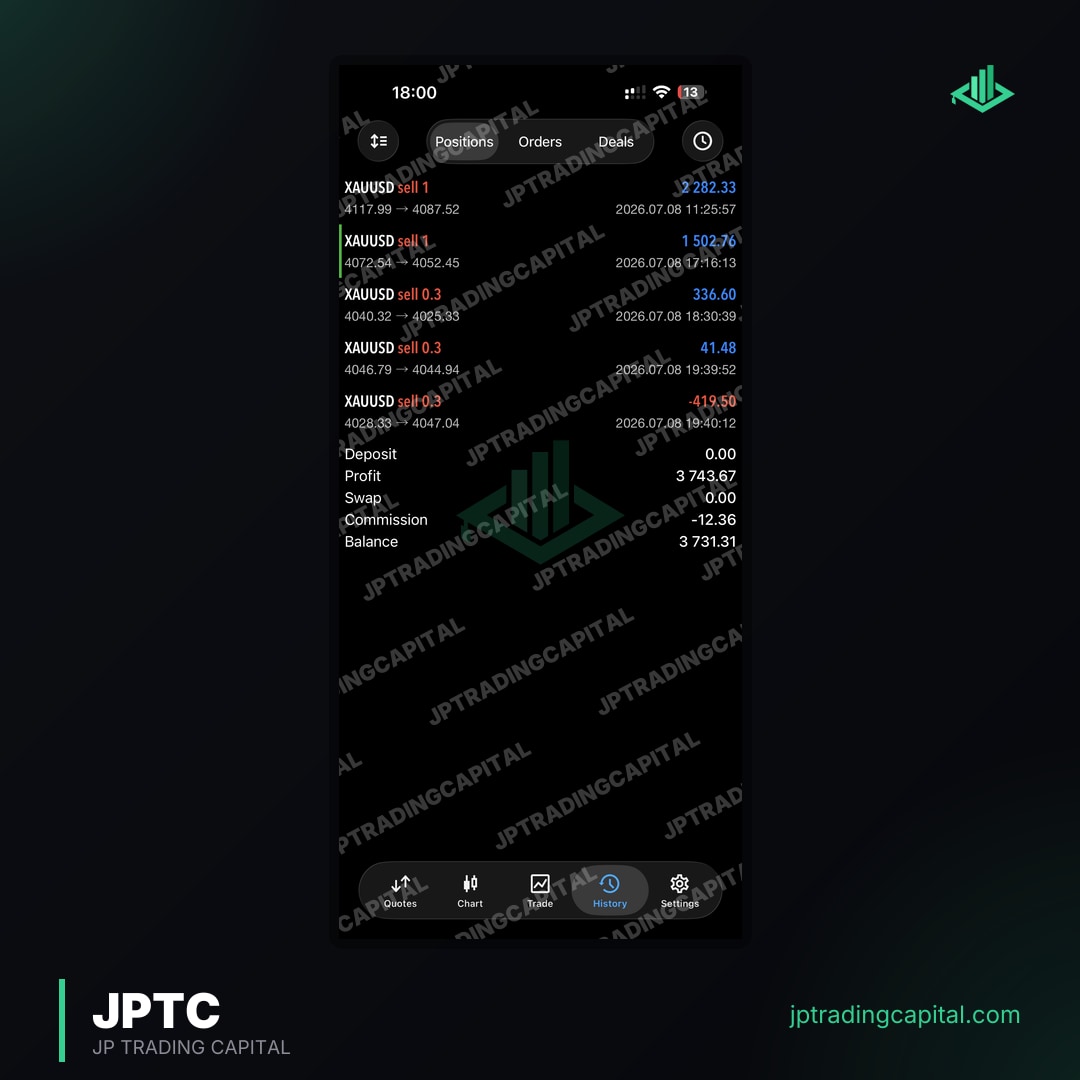
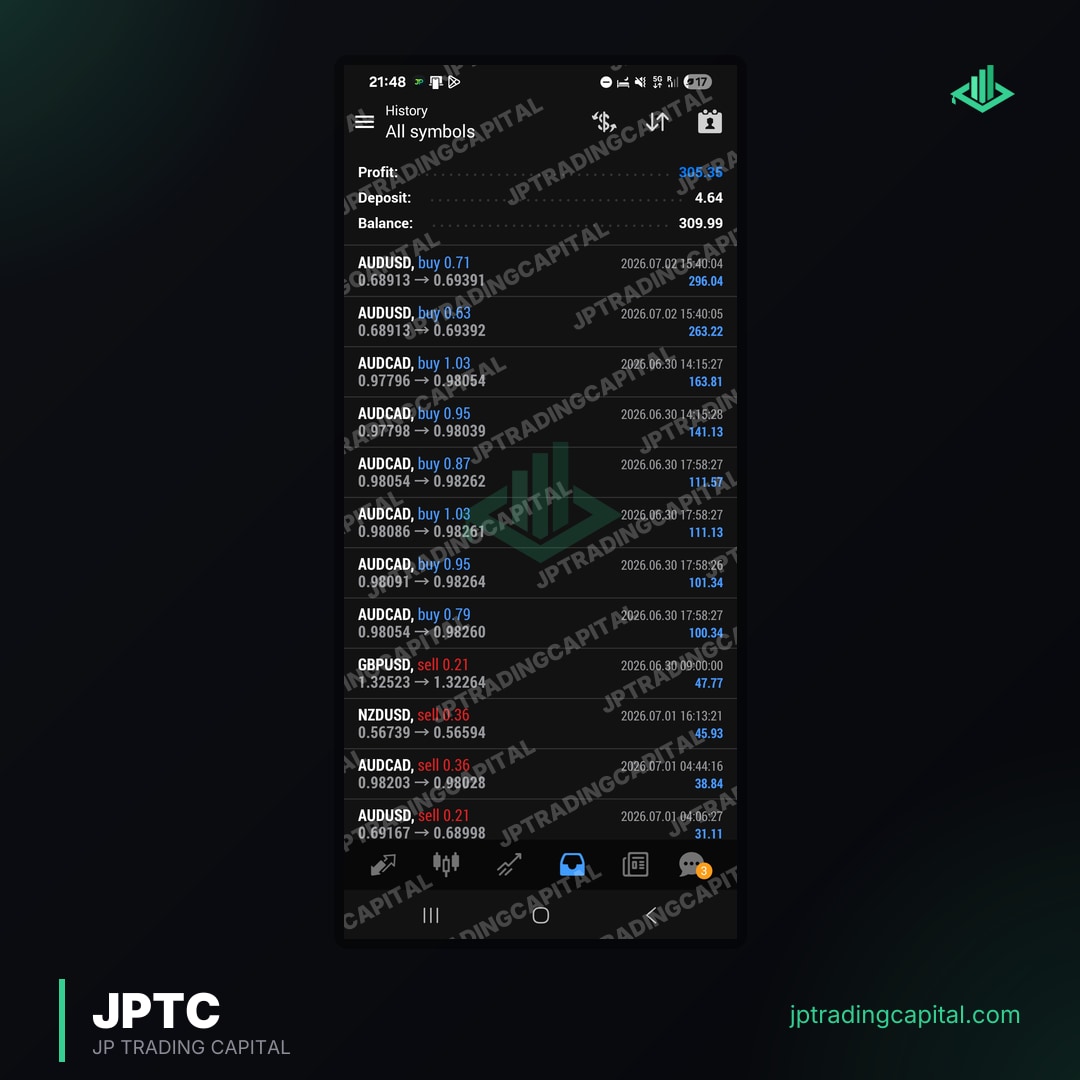
Our tools are built on the principle of providing traders with a competitive edge by automating risk management and strategy execution. For an example of what a consistent, long-term automated trading track record looks like, see JPTradingCapital's published results, demonstrating over two years of live trading data. This provides a verifiable benchmark of performance and risk management that traders can aspire to or integrate into their own trading approach. You can learn more about our automated solutions on our EA page.
Missed Angles: Beyond the Comparison Sites
While most content focuses on comparing firms, there are crucial aspects often overlooked by both traders and competitors when evaluating the 'best straight to funded prop firm' options.
1. The Importance of Firm Liquidity and Capital Reserves
A critical, yet rarely discussed, factor is the prop firm's own financial stability and liquidity. A firm's ability to consistently pay out profits depends on its own capital reserves and access to liquidity. If a firm is undercapitalized or experiences a liquidity crunch, payouts can be delayed or even halted. Traders should look for firms that are transparent about their funding sources and have a solid reputation for financial reliability. While direct information on a firm's reserves is hard to obtain, their longevity, the number of traders they support, and their payment history can serve as indirect indicators.
2. Long-Term Partnership Potential vs. Transactional Funding
Many traders approach prop firms as a transactional service, get funded, make money, get paid. However, the most successful traders view their relationship with a prop firm as a long-term partnership. The best firms foster this by providing ongoing support, educational resources, and opportunities for account growth. When evaluating a 'best straight to funded prop firm', consider their long-term vision for traders. Do they offer scaling plans? Are they invested in your growth beyond the initial funding? A firm that acts as a true partner, offering mentorship or advanced tools, can be far more valuable than one that simply hands over capital.
3. The Role of Technology and Infrastructure
Beyond just providing a trading platform, the technological infrastructure of a prop firm can significantly impact a trader's success. This includes the speed and reliability of their servers, the execution speed of trades, and the robustness of their risk management systems. For traders using automated strategies, a prop firm with low latency and stable connections is crucial. Poor technology can lead to slippage, missed trades, or even account breaches, negating the benefits of direct funding. Investigating the firm's technological capabilities, or choosing firms known for their advanced tech stack like FXIFY, can make a substantial difference.
Frequently Asked Questions (FAQ)
What's the main difference between a straight to funded prop firm and a traditional evaluation prop firm?
Are 'straight to funded' accounts riskier for traders?
Can I use Expert Advisors (EAs) with straight to funded prop firms?
How do I ensure a prop firm is legitimate?
Related Articles
- Best Future Prop Firm: Complete 2026 Comparison for Traders & EA Developers · Read more →
- Best Futures Trading Indicators for ES, NQ & Micro Contracts · Read more →
- Best Futures Trading Prop Firms 2026: 5 Top Choices for Traders · Read more →
- Prop Firm Trading Minimum Account Size: What's the Cheapest Way to Get Funded in 2026? · Read more →
- FundedNext: Complete Guide to Prop Trading Challenges, Rules & Passing Strategies · Read more →
- Best FundedNext Discount Codes 2026: Up to 47% Off · Read more →
- Best FundedNext Forex Strategy: 3 Angles Competitors Miss [2026] · Read more →
- FundedNext practice account 2026: Exact Rules & Benefits for Traders · Read more →
The EA built for prop firm rules
Daily drawdown guard, hard max-loss stop, consistency-aware pacing and a news pause, on MT4 and MT5. One-time €797, no monthly fee. If you would rather not run the evaluation yourself, we run it for you.
See the EA Hub