FundedNext Rules 2026: The 7 That Decide Whether You Get Paid
Material update: Site-wide prohibited-phrase cleanup applied on 2026-08-23; editorial review status was not changed.
FundedNext's rules are a comprehensive framework designed to cultivate disciplined, successful traders, encompassing strict guidelines on risk management, profit targets, and trading behavior.
- Daily and Maximum Drawdown limits protect both the firm's capital and the trader's journey.
- Profit Targets establish clear performance benchmarks for evaluation phases.
- The 1% Risk Limit Rule, introduced around April 2026, emphasizes disciplined per-trade risk.
- Consistency Rules prevent erratic trading and encourage steady performance.
- Prohibited strategies are clearly defined to ensure fair and genuine skill-based trading.
Understanding FundedNext's Core Trading Rules
FundedNext's core trading rules form the bedrock of their evaluation and funding programs, ensuring that traders operate within defined risk parameters and demonstrate consistent profitability.
Daily Drawdown Limit: Your Safety Net
The daily drawdown limit is a critical risk management rule, restricting the maximum loss your account can incur within a single trading day, typically based on your starting balance or equity at the beginning of the day. This rule is designed to prevent excessive losses and encourage prudent risk management, halting trading once the limit is hit to protect capital. For example, if your account has a $100,000 starting balance and a 5% daily drawdown, your account equity cannot drop more than $5,000 below your starting balance for that day. Our research at JPTradingCapital shows that adherence to this limit is a primary factor in long-term prop firm success, as it forces traders to manage risk actively and avoid impulsive decisions.
Maximum Overall Drawdown: Preserving Capital
The maximum overall drawdown limit represents the absolute lowest point your account equity can reach from its initial balance or highest achieved balance during the evaluation or funded stage. Unlike the daily drawdown, this is a cumulative limit that applies throughout the entire trading period, serving as the ultimate safeguard against significant capital depletion. For instance, a $100,000 account with a 10% maximum drawdown means your account equity must never fall below $90,000. Understanding the distinction between daily and overall drawdown is crucial, as violating either will result in a challenge failure or account termination. The official FundedNext website provides specific percentages for each account type and challenge model.
Profit Target Requirements: The Path to Funding
Profit targets are the specific percentage gains traders must achieve in their account to pass an evaluation phase and progress towards a funded account. These targets are set to assess a trader's ability to generate consistent profits under real market conditions while adhering to all other rules. For example, a Phase 1 target might be 8% and Phase 2 might be 5%. Meeting these targets requires not just skill in identifying opportunities, but also disciplined execution and effective risk management, ensuring that gains are made sustainably rather than through excessive risk-taking. Traders often find that focusing on consistent, smaller gains, rather than chasing large, infrequent profits, is a more reliable strategy for meeting these targets.
Minimum Trading Days: Demonstrating Consistency
The minimum trading days rule requires traders to place trades on a certain number of separate days within the evaluation period, ensuring that performance isn't based on just a few lucky trades. This policy is designed to gauge a trader's ability to perform consistently over time and adapt to various market conditions, rather than relying on short-term volatility. While the exact number of minimum trading days can vary, it typically ranges from 5 to 10 days per phase. This rule encourages traders to engage with the market regularly and develop a robust trading routine, which is a hallmark of professional trading.
Navigating FundedNext's Consistency and Risk Management
Beyond the fundamental drawdown and profit goals, FundedNext emphasizes consistency and strict risk management, crucial elements for sustainable trading success.
The Consistency Rule Explained: Smooth Performance Over Spikes
The FundedNext consistency rule aims to ensure that a trader's profits are generated through a steady, repeatable strategy rather than a few outlier trades or risky gambles. While specific interpretations can vary, it generally means that your trading activity (number of trades, lot size, profit per trade) should be relatively consistent across the trading period. For instance, if one day you make 50% of your total profit, and other days are significantly lower, this might trigger a consistency violation. The rule encourages traders to avoid "gambling" for a large profit target hit and instead focus on a systematic approach. Our JPTC EA Hub is specifically designed with strategies that promote consistent performance, helping traders naturally adhere to this rule by distributing risk and profit generation evenly over time, which is essential for passing prop firm challenges.
The 1% Risk Limit Rule: Precision in Every Trade
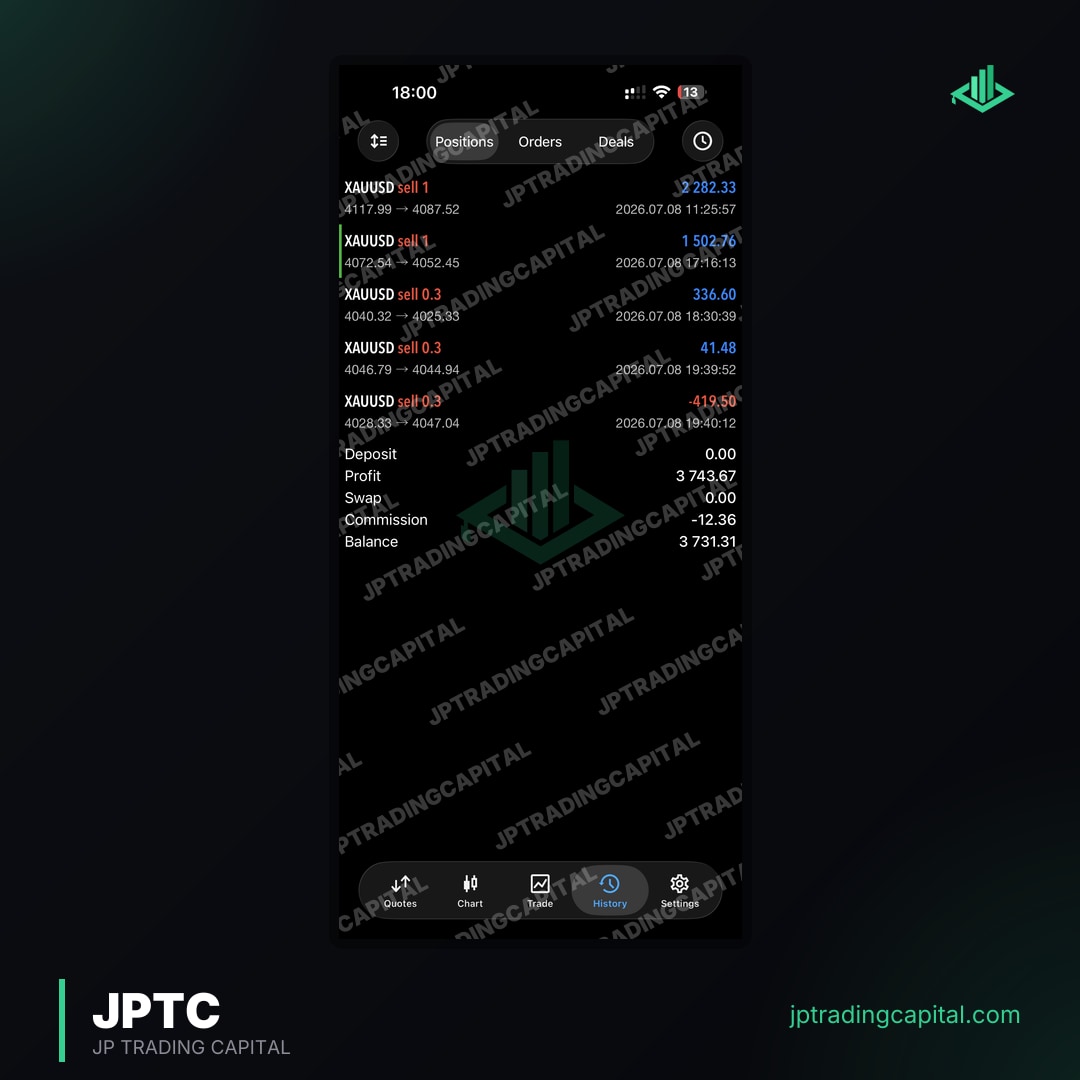
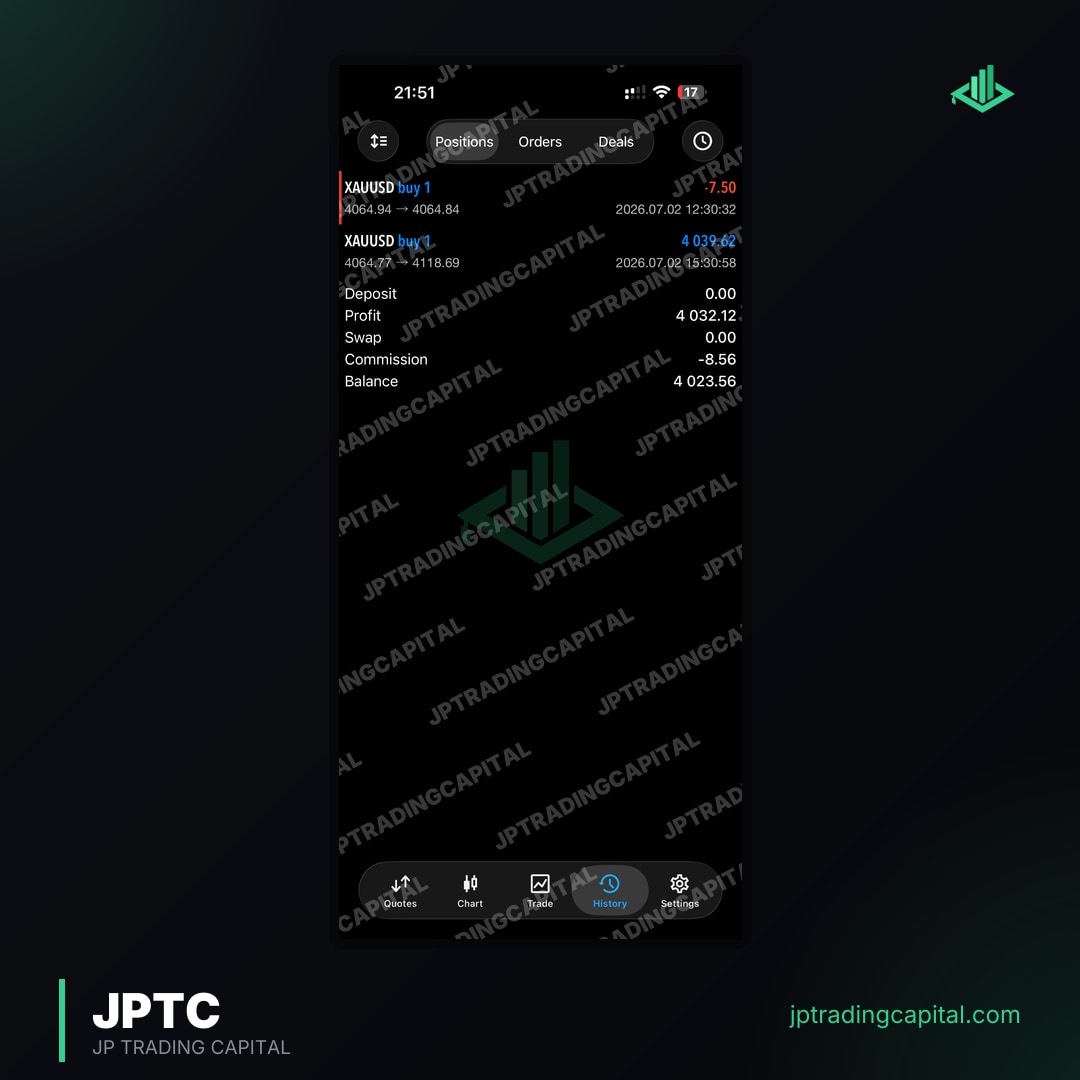
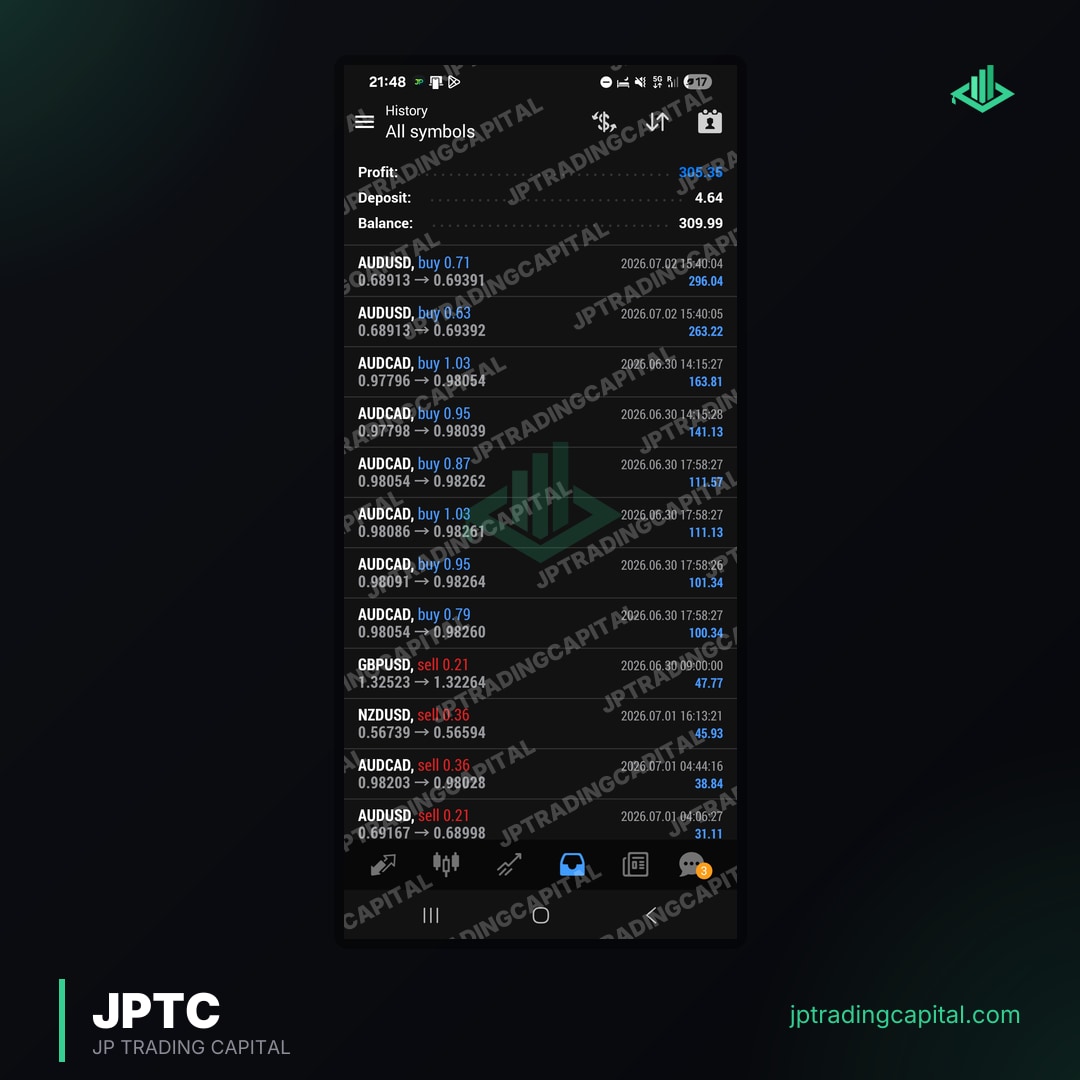
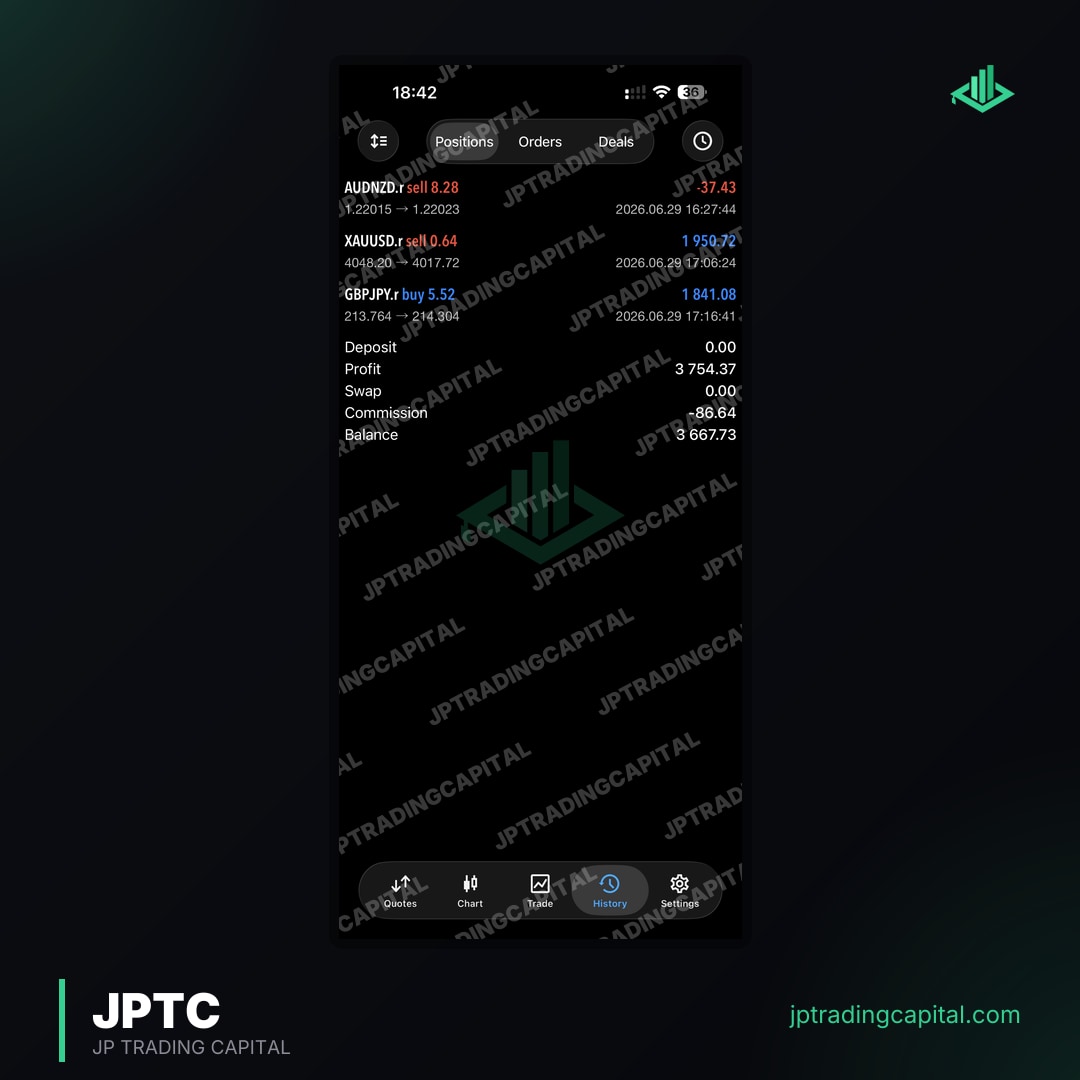
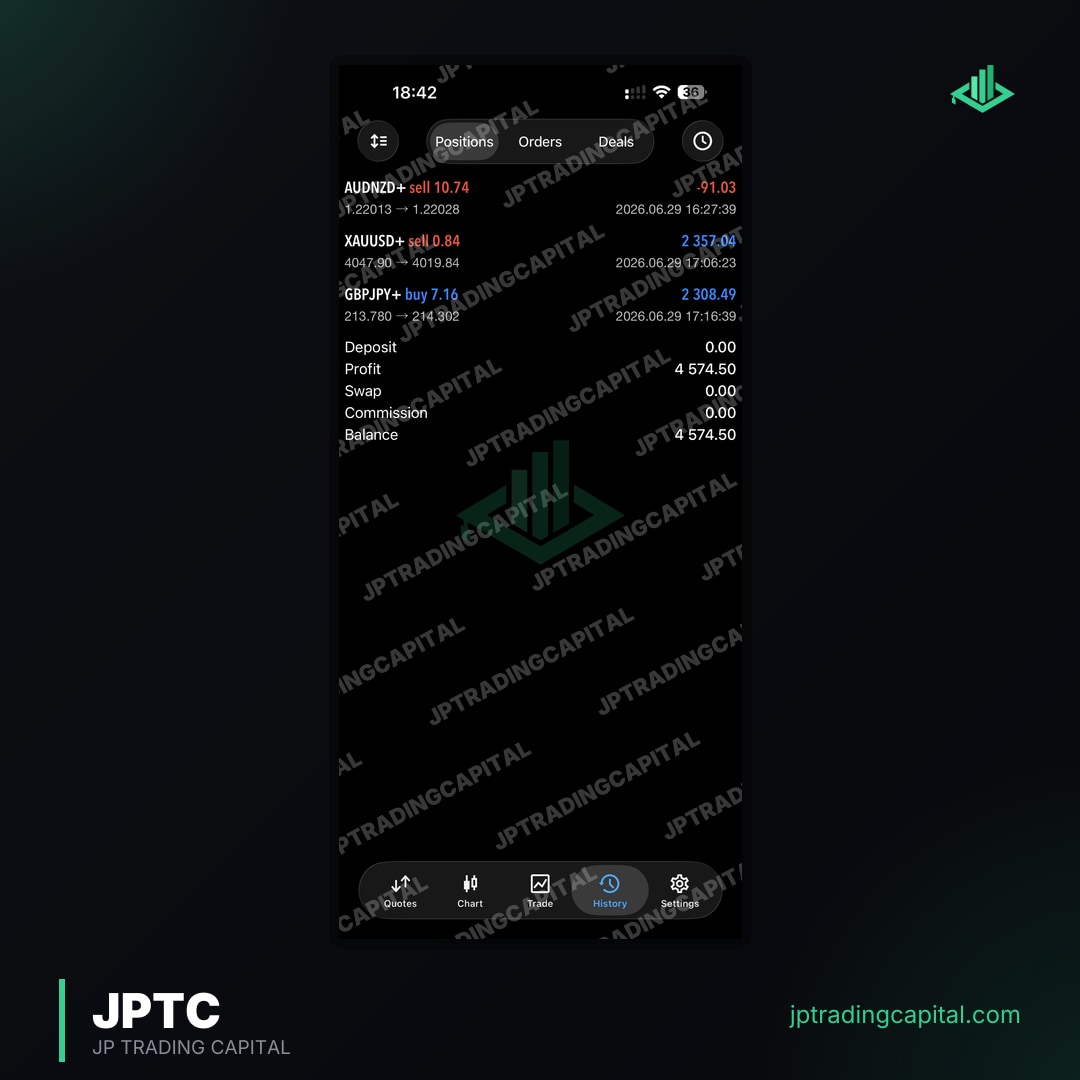
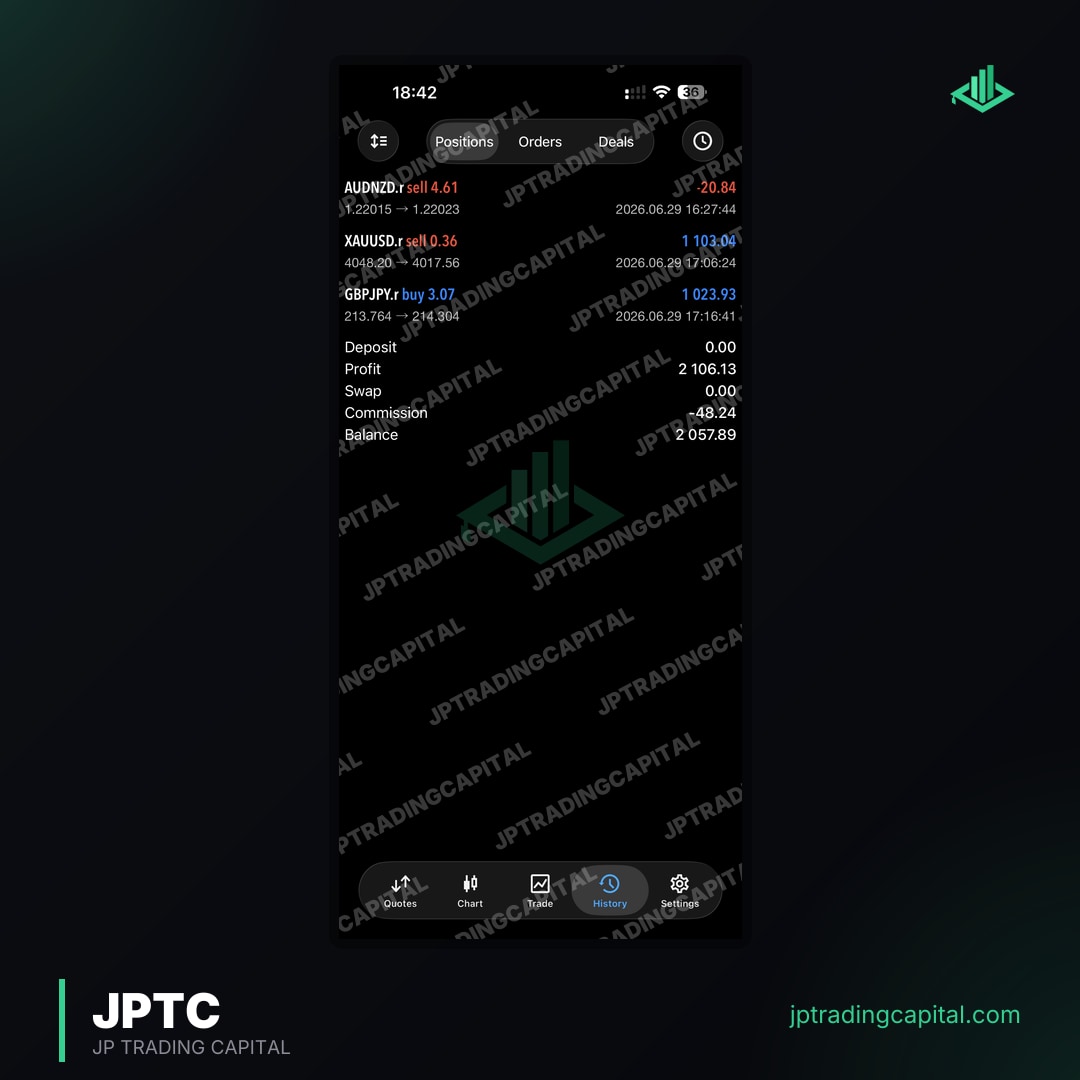
The 1% Risk Limit Rule, highlighted by FundedNext around April 2026, is a key component of their advanced risk management framework, mandating that traders limit their exposure to approximately 1% of their account balance per individual trade. This rule is a direct reflection of professional risk management principles, designed to prevent any single trade from having an outsized negative impact on the account. It forces traders to calculate their position sizes carefully and use fixed stop-losses, aligning with the "Basic Prop Firm Rules Every Trader Should Know" that recommend limiting exposure to 1-2% per trade. Embracing this rule helps cultivate a disciplined mindset, where capital preservation is prioritized alongside profit generation. For an example of how disciplined risk management translates into sustained profitability, see JPTradingCapital's published results, which demonstrates over two years of live algo track record.
Mandatory Stop-Losses and Exposure Limits: Non-Negotiable Protection
FundedNext, like many leading prop firms, often mandates the use of stop-losses on all open trades and imposes limits on overall exposure. A mandatory stop-loss ensures that your potential loss on any given trade is predefined and limited, preventing runaway losses in volatile markets. Exposure limits, on the other hand, restrict the total value of all open positions at any given time, preventing overleveraging. These measures collectively reinforce sound risk management, protecting both the trader and the firm's capital. Traders using automated strategies must ensure their Expert Advisors (EAs) are programmed to place stop-losses automatically and manage overall exposure, a feature integral to the JPTC EA Hub.
Prohibited Strategies and Account Management
To foster a level playing field and ensure genuine skill assessment, FundedNext explicitly prohibits certain trading strategies and outlines clear terms for account management.
Restricted Trading Strategies: Ensuring Fair Play
FundedNext's terms of service clearly outline restricted and prohibited trading strategies, designed to prevent traders from exploiting market inefficiencies or platform vulnerabilities rather than demonstrating genuine trading skill. These typically include:
- High-Frequency Trading (HFT): Automated strategies that execute a massive number of trades at extremely high speeds, often relying on latency advantages.
- Arbitrage Strategies: Exploiting tiny price discrepancies between different brokers or exchanges.
- Reverse Arbitrage: A specific form of arbitrage that seeks to profit from delayed price feeds.
- Hedging Across Multiple Accounts: Opening opposing positions on the same instrument across different FundedNext accounts, or with other prop firms, to guarantee a profit on one side.
- Copy Trading from Others: Replicating trades from another trader without demonstrating independent strategy. While copy trading *your own* trades across *your own* FundedNext accounts might be permissible under specific conditions, copying signals from external providers or other individuals is usually forbidden to ensure individual skill is assessed.
- Martingale Strategies: Doubling down on losing trades, which can lead to exponential losses.
The intent behind these restrictions is to ensure traders demonstrate consistent profitability through skill and strategy, not through unfair technological advantages or manipulation. Our JPTC EA Hub is developed with strategies that comply with these restrictions, focusing on robust, rule-abiding trading logic.
News Trading and Weekend Holding Policies: Navigating Volatility
FundedNext often has specific policies regarding news trading and holding positions over weekends, designed to mitigate exposure to extreme market volatility. While some prop firms prohibit trading during high-impact news events entirely, others might allow it with increased risk awareness. Similarly, holding positions over the weekend, when markets are closed and can gap significantly on Monday morning, is often restricted or discouraged. Always review the latest FundedNext Terms of Service to understand their exact stance on these activities, as policies can evolve. JPTradingCapital advises traders to align their strategies with these policies, or use EAs that can automatically close positions before prohibited periods.
Understanding FundedNext's Terms of Service: Your Trading Contract
The FundedNext Terms of Service (ToS) is the comprehensive legal agreement outlining all rules, policies, and trader responsibilities. It's not just a formality; it's your contract with the firm. Reviewing it thoroughly is paramount to avoid unintentional violations that could lead to account suspension or termination. The ToS covers everything from account usage and prohibited activities to dispute resolution and intellectual property. The JPTradingCapital team emphasizes that a deep understanding of this document is as crucial as understanding market dynamics. Ignorance of a rule is never an excuse for its violation.
Beyond the Letter: The Philosophy Behind FundedNext Rules
While the explicit rules are concrete, understanding the underlying philosophy behind them can significantly enhance a trader's approach and likelihood of success.
Cultivating Discipline and Professionalism
FundedNext's rules are not merely arbitrary restrictions; they are a curriculum in disciplined trading. Each rule, from daily drawdown to consistency, is designed to instill habits essential for long-term success in the volatile world of prop trading. They push traders to think critically about risk, manage emotions, and develop a systematic approach. By adhering to these rules, traders are not just passing an evaluation; they are internalizing the principles of professional money management. This focus on discipline is a core reason why firms like FundedNext can confidently entrust capital to successful traders. As Investopedia notes, disciplined risk management is a cornerstone of trading success.
The "Spirit" of the Rule: Intentional vs. Accidental Violations
While all rule violations carry consequences, understanding the "spirit" behind a rule can help traders avoid both intentional and accidental breaches. For instance, the consistency rule isn't meant to punish a single great trade, but rather to prevent strategies that rely on extreme, unsustainable risk for one-off wins. Similarly, prohibited strategies are targeted at behaviors that exploit the system rather than demonstrate genuine trading acumen. By focusing on developing a robust, ethical, and sustainable trading strategy, traders naturally align with the spirit of FundedNext's rules, minimizing the risk of unexpected violations. This holistic understanding of the FundedNext rule framework fosters a more resilient and adaptable trading approach.
Automating Compliance: EAs and FundedNext Rules
For many traders, particularly those managing multiple accounts or seeking efficiency, Expert Advisors (EAs) offer a powerful solution for navigating prop firm rules, provided they are designed correctly.
How EAs Can Navigate Drawdown Limits
Expert Advisors are invaluable tools for automatically adhering to strict drawdown limits. A well-programmed EA can continuously monitor account equity and automatically close positions or halt trading if the daily or maximum drawdown limit is approached. This algorithmic precision removes human error and emotional decision-making, which can often lead to violations. For example, the JPTC EA Hub is pre-configured with robust risk management parameters that actively track drawdowns, ensuring trades are managed within FundedNext's boundaries. This automation provides a layer of security, allowing traders to focus on strategy development rather than constant manual monitoring.
Ensuring Consistency with Automated Strategies
The consistency rule can be particularly challenging for manual traders, but EAs can be engineered to promote steady performance. An EA can be designed to distribute trades evenly throughout the trading period, use consistent lot sizing based on defined risk, and avoid erratic profit spikes. By executing trades based on predefined logic, EAs inherently foster a more consistent trading pattern, making it easier to meet FundedNext's consistency criteria. This systematic approach reduces the likelihood of violations stemming from emotional trading or inconsistent sizing. Traders looking for proven methodologies can review our verified results showcasing consistent performance.
JPTC EA Hub: Designed for Prop Firm Success
At JPTradingCapital, we understand the nuances of prop firm rules. Our flagship product, the JPTC EA Hub, is an automated EA specifically pre-configured with backtested strategies that respect the stringent rules of prop firms like FundedNext. It incorporates features like dynamic daily drawdown caps, maximum loss limits, and consistency algorithms to help traders confidently navigate evaluations. By automating these critical compliance aspects, the JPTC EA Hub allows traders to focus on strategy and market analysis, knowing that the foundational rules are being diligently managed. This is particularly beneficial for those aiming to pass prop firm challenges efficiently.
Staying Ahead: Adapting to Rule Changes and Scaling
The prop firm landscape is dynamic, requiring traders to stay informed and adapt their strategies.
The Account Scaling Plan: Growing Your Capital
Once you've successfully passed the evaluation and maintained profitability on a funded account, FundedNext offers an account scaling plan. This plan allows traders to increase their capital allocation by consistently meeting profit targets while adhering to all rules. The scaling plan is a testament to your proven ability to manage risk and generate profits. It rewards disciplined performance with greater trading opportunities and potentially higher profit splits. Understanding the criteria for scaling is an important long-term goal for any funded trader.
Communicating Rule Updates and Adaptability
Prop firms periodically update their rules and terms of service to adapt to market conditions, regulatory changes, or evolving business models. FundedNext communicates these updates, often through their help center or direct email notifications. It is the trader's responsibility to stay informed about any changes to the FundedNext rule set. For EA users, this means potentially updating their automated strategies to align with new parameters. JPTradingCapital encourages all traders to regularly check the official FundedNext communication channels to ensure their trading practices remain compliant. Staying adaptable is key to sustained success in the prop firm world, and for those who introduce others to the platform, our affiliate program can offer additional benefits.
Frequently Asked Questions About FundedNext Rules
What happens if I break a FundedNext rule?
Can I trade during news events on FundedNext?
How does the consistency rule impact my trading style?
Are Expert Advisors (EAs) allowed on FundedNext?
What is the 1% Risk Limit Rule?
Related Articles
- Best Future Prop Firm: Complete 2026 Comparison for Traders & EA Developers · Read more →
- Best Futures Trading Indicators for ES, NQ & Micro Contracts · Read more →
- Best Futures Trading Prop Firms 2026: 5 Top Choices for Traders · Read more →
- Prop Firm Trading Minimum Account Size: What's the Cheapest Way to Get Funded in 2026? · Read more →
- FundedNext: Complete Guide to Prop Trading Challenges, Rules & Passing Strategies · Read more →
- Best FundedNext Discount Codes 2026: Up to 47% Off · Read more →
- Best FundedNext Forex Strategy: 3 Angles Competitors Miss [2026] · Read more →
- FundedNext practice account 2026: Exact Rules & Benefits for Traders · Read more →
The EA built for prop firm rules
Daily drawdown guard, hard max-loss stop, consistency-aware pacing and a news pause, on MT4 and MT5. One-time €797, no monthly fee. If you would rather not run the evaluation yourself, we run it for you.
See the EA Hub