Prop Firm EA MQL5: Pass Challenges & Trade Funded Accounts

An Expert Advisor (EA) designed for proprietary trading firms and found on the MQL5 marketplace is an automated trading program specifically engineered to pass prop firm evaluations and trade successfully on funded accounts. These EAs integrate strategies with built-in risk management to adhere to stringent rules like daily drawdown, maximum loss limits, and consistency requirements, often across MT4 or MT5 platforms.
- MQL5 hosts a wide array of EAs tailored for various prop firm challenges.
- EAs are programmed to respect specific prop firm rules, crucial for passing.
- Strategies range from multi-currency to high-frequency and specific asset classes.
- Thorough verification of an EA's performance is essential before deployment.
What is a Prop Firm EA on MQL5?
Proprietary trading firms offer capital to traders who can prove their profitability and risk management skills through a rigorous evaluation process. Successfully navigating these evaluations often requires disciplined execution, which is where a specialized prop firm EA MQL5 solution becomes invaluable. These Expert Advisors are automated trading systems developed using MQL4 or MQL5 programming languages, designed to run on MetaTrader 4 (MT4) or MetaTrader 5 (MT5) platforms, respectively.
The MQL5 marketplace serves as a global hub where developers offer their EAs for sale, rent, or even free. For prop firm traders, this marketplace is a primary resource to find automated tools that promise to streamline the challenge-passing process. However, discerning a truly effective EA from less reliable options requires careful consideration, especially given the unique demands of prop firm rules.
The Role of Expert Advisors in Prop Firm Trading
Expert Advisors remove the emotional element from trading, executing predefined strategies with precision and consistency. For prop firm evaluations, this is a significant advantage. The objective is not just to make profit, but to do so within strict parameters. A well-designed prop firm EA MQL5 can:
- Ensure Discipline: Execute trades exactly according to the strategy, without human error or emotional interference.
- Manage Risk Automatically: Incorporate programmed stop-losses, take-profits, and position sizing to adhere to drawdown limits.
- Operate 24/5: Monitor markets and execute trades around the clock, capturing opportunities that human traders might miss.
- Adhere to Rules: Be specifically coded to avoid breaching critical prop firm rules, such as maximum daily loss or overall drawdown.
Navigating the MQL5 Marketplace for Prop Firm EAs
The MQL5 marketplace offers a vast selection of Expert Advisors. When searching for a prop firm EA MQL5, traders should pay close attention to several factors:
- Description and Features: Understand the EA's intended strategy, asset classes, timeframes, and any specific prop firm rules it claims to respect.
- Backtest Results: While backtests can be optimized, they provide a baseline understanding of historical performance. Look for tests over significant periods and various market conditions.
- Live Signals/Monitoring: Many developers provide links to live trading accounts (often on our results page) showing the EA's real-time performance. This is crucial for verifying claims.
- Reviews and Community Feedback: Insights from other traders who have used the EA can be very valuable.
- Developer Support: Good support can be critical for setup, troubleshooting, and understanding updates.
Engineering EAs for Prop Firm Rules: The Core Challenge
One of the primary differentiators for a successful prop firm EA MQL5 is its ability to inherently respect and navigate the specific rules set by proprietary trading firms. Our research shows that many EAs fail not due to lack of profitability, but due to breaching critical risk parameters.
Daily Drawdown and Maximum Loss Limits
Prop firms universally impose daily drawdown and maximum overall loss limits. For example, FTMO's official rules page specifies a maximum daily loss of 5% and an overall maximum loss of 10% of the initial account balance. An effective prop firm EA must have sophisticated internal logic to monitor these limits in real-time. This often involves:
- Dynamic Stop-Loss Adjustments: Automatically tightening stop-losses or closing trades as the daily loss limit approaches.
- Equity Monitoring: Continuously tracking floating profits and losses against the initial balance and highest equity point.
- Trade Disablement: Temporarily stopping trading for the day if the daily loss limit is hit, to prevent further breaches.
- Position Sizing Algorithms: Adjusting lot sizes based on available equity and distance to drawdown limits, rather than fixed lots.
Consistency Rules and Trading Style Adherence
Some prop firms implement 'consistency rules' to ensure traders aren't just getting lucky with one large trade. These rules might focus on the number of trading days, minimum trades per week, or the distribution of profit across trading days. While less common with all firms, an EA designed for these specific environments might:
- Distribute Trades: Aim for a consistent number of trades or profit targets across multiple days.
- Avoid High-Risk, High-Reward Trades: Prioritize smaller, more frequent gains over single large wins that could skew consistency metrics.
News Trading and Holding Trades Over Weekends
Many prop firms restrict trading during major news events or prohibit holding trades over weekends. A robust prop firm EA MQL5 should incorporate mechanisms to handle these restrictions:
- News Filter Integration: Automatically pause trading a specified time before and after high-impact news releases.
- Weekend Closure Logic: Close all open positions before the market closes on Friday, preventing exposure to weekend gaps.
The JPTradingCapital team understands these challenges intimately. Our JPTC EA Hub is specifically engineered with these prop firm rules in mind, featuring pre-configured strategies that respect daily drawdown caps, max loss limits, and consistency requirements across various prop firms like FTMO, FundedNext, FXify, and others, working seamlessly on both MT4 and MT5.
Strategies and Systems: What Kind of EAs Work?
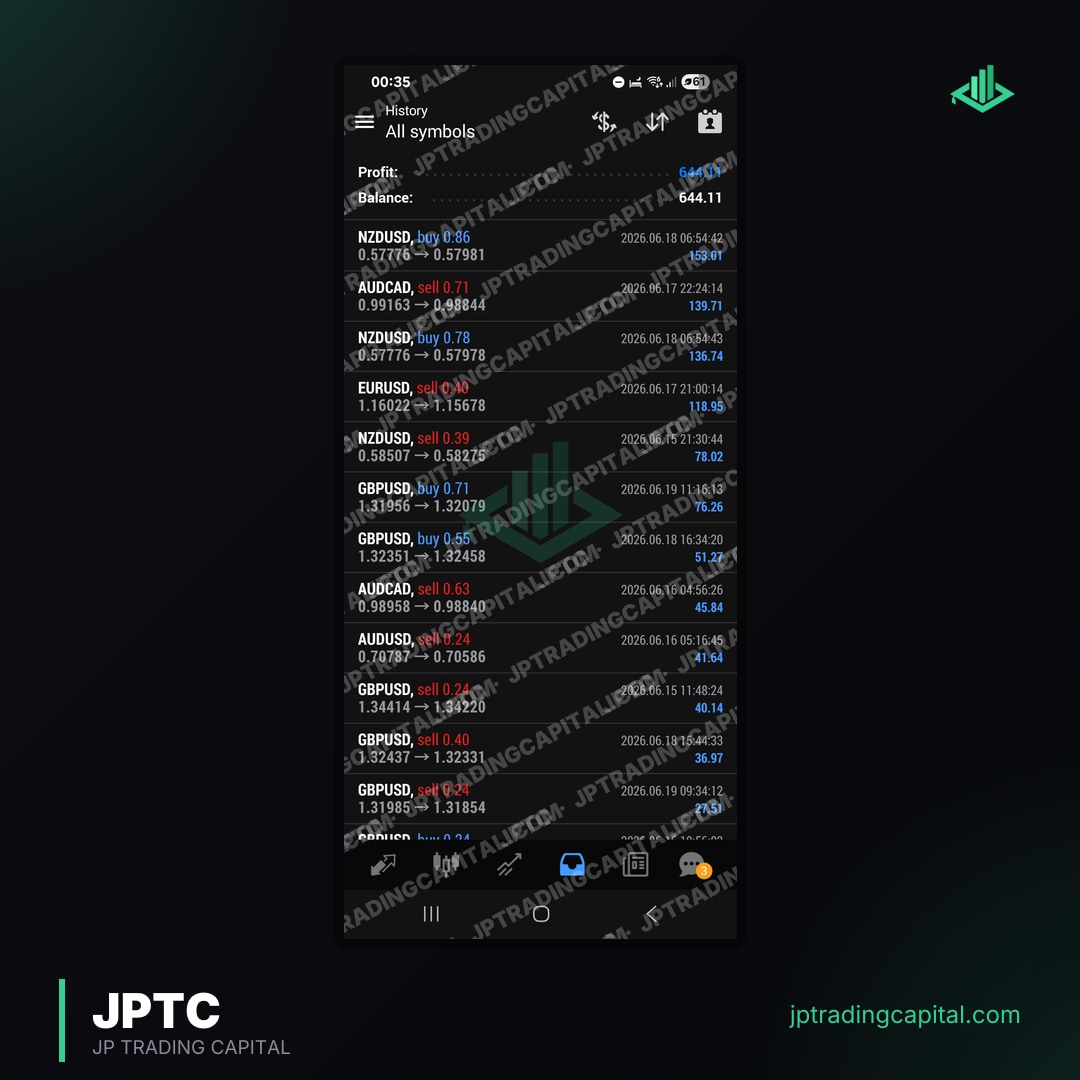




The MQL5 marketplace showcases a diverse array of strategies implemented in EAs. While specific strategy details are often proprietary, they generally fall into categories like trend-following, mean-reversion, breakout, or scalping. The key for prop firm success is not just the strategy itself, but its resilience and adaptability.
Multi-Strategy Approaches (Gold, HFT, Specific Pairs)
Competitors highlight EAs like 'Prop Firm Gold EA' or 'HFT Prop Firm EA'. This indicates a market preference for specialized EAs:
- Asset-Specific EAs: Some EAs are optimized for specific assets like Gold (XAUUSD) or particular currency pairs (e.g., GBPUSD), leveraging their unique volatility and price action characteristics.
- High-Frequency Trading (HFT) EAs: These EAs execute a large number of trades with very short holding periods, aiming for small profits per trade. They require extremely low latency and specific broker conditions, and may not be permitted by all prop firms.
- Multi-Strategy Systems: These EAs combine several distinct trading logics or indicators. For instance, an EA might use a trend-following strategy during specific market hours and switch to a range-bound strategy during others, or employ different strategies on different currency pairs. This diversification can help smooth out equity curves and reduce reliance on a single market condition.
Risk Management and Position Sizing within EAs
Beyond simply adhering to prop firm rules, an effective prop firm EA MQL5 integrates robust internal risk management. This involves:
- Dynamic Position Sizing: The EA calculates lot sizes based on a percentage of account equity, ensuring that risk per trade scales appropriately with the account balance. For example, risking 1% of a $100,000 account means a different lot size than 1% of a $50,000 account, assuming the same stop-loss distance.
- Optimal Stop-Loss and Take-Profit Placement: The EA should use intelligent algorithms to place stop-losses and take-profits, often based on volatility, support/resistance levels, or risk-to-reward ratios.
- Trade Management: Features like breakeven stops, trailing stops, or partial profit-taking can help protect capital once a trade moves into profit.
Beyond Passing: Sustainable Trading with Prop Firm EAs
Passing a prop firm evaluation is merely the first step. The ultimate goal is to generate consistent profits in a funded account. This requires an EA that is not just capable of meeting evaluation criteria but is also robust enough for long-term, real-money trading.
The Importance of Verified Track Records (our results page)
In the world of automated trading, claims of profitability are common, but verifiable proof is essential. When considering a prop firm EA MQL5, always prioritize those that offer publicly verifiable track records, ideally through platforms like our results page. our results page provides independent verification of trading results, including:
- Drawdown Statistics: Shows the maximum historical drawdown, crucial for understanding risk.
- Profitability Metrics: Displays monthly gains, total profit, and profit factors.
- Trade History: Provides a detailed log of all trades, allowing for deep analysis.
- Verification: Crucially, our results page verifies trading privileges and investor passwords, ensuring the data is authentic.
For an example of what a 2-year live algo track record looks like, see JPTradingCapital's published results. This transparency is paramount for building trust and making informed decisions about an EA's potential for sustainable performance.
Adapting EAs to Funded Account Realities
Once an evaluation is passed, traders move to a funded account. While the rules are often similar, the psychological impact of trading real capital, even if it's not directly your own, can be different. A well-designed EA helps maintain objectivity. Furthermore, some prop firms may have slightly different parameters or liquidity conditions on their live funded accounts compared to demo challenge accounts. An adaptive EA, or one that has been robustly tested across various broker conditions, is therefore more likely to succeed. The JPTradingCapital team focuses on building tools that perform consistently from challenge to funded status.
Choosing and Implementing a Prop Firm EA from MQL5
The process of selecting and deploying a prop firm EA MQL5 requires a methodical approach to maximize your chances of success.
Due Diligence: What to Look For
Beyond the general points mentioned earlier, specifically for prop firms, consider:
- Prop Firm Specificity: Does the EA explicitly state compatibility with major prop firms like FTMO, FundedNext, or The5ers?
- Drawdown Management: How does the EA handle daily and maximum drawdown? Is it a hard-coded limit, or does it adjust risk dynamically?
- Consistency Features: If the target prop firm has consistency rules, does the EA have built-in logic to comply?
- Broker Compatibility: Ensure the EA performs well with the specific broker used by your chosen prop firm.
- Support and Updates: Automated trading environments evolve. Regular updates and responsive support are crucial.
Backtesting, Optimization, and Forward Testing
While developers provide backtests, it's highly recommended to perform your own. Use high-quality historical data (99% modeling quality) within MT4/MT5. Optimization involves fine-tuning EA parameters for specific currency pairs or market conditions. However, over-optimization (curve fitting) can lead to poor real-world performance. A balanced approach is key.
Forward testing on a demo account is an indispensable step. Before deploying any prop firm EA MQL5 to a live challenge, run it on a demo account with conditions as close as possible to the prop firm's live environment for several weeks. This allows you to observe its performance in real-time market conditions without financial risk.
Setup and Monitoring Your EA
Once you've chosen and tested an EA, proper setup is critical. This includes:
- VPS (Virtual Private Server): Running your EA on a VPS ensures 24/7 operation with minimal latency and uninterrupted internet connection.
- Correct Settings: Apply the recommended settings provided by the EA developer. Incorrect settings can lead to unexpected results or rule breaches.
- Regular Monitoring: Even automated systems require monitoring. Keep an eye on your account's equity, open trades, and ensure the EA is functioning as expected. Be prepared to intervene if market conditions drastically change or unexpected issues arise.
Common Pitfalls and How to Avoid Them
Even with the best prop firm EA MQL5, traders can encounter challenges:
- Unrealistic Expectations: No EA guarantees instant riches. Automated trading requires patience, realistic profit targets, and understanding that drawdowns are part of the process.
- Ignoring Prop Firm Rules: Always double-check the specific rules of your chosen prop firm. Even a well-coded EA might not cover every niche rule of every firm.
- Lack of Due Diligence: Purchasing an EA without thoroughly reviewing its verified performance, community feedback, and developer support is a recipe for disappointment.
- Over-Optimization/Curve Fitting: An EA that performs perfectly on historical data but fails in live trading is likely over-optimized. Look for robustness across different market conditions.
- Neglecting Monitoring: 'Set and forget' can be dangerous. EAs need occasional checks, especially during volatile market periods or after software updates.
For traders looking to partner with a reliable platform for their prop firm journey, consider exploring the JPTradingCapital affiliate program, which offers opportunities for collaboration and access to our robust trading tools.
Can a prop firm EA guarantee passing an evaluation?
Are all EAs on MQL5 suitable for prop firms?
What are the most critical prop firm rules an EA must respect?
How can I verify the performance of a prop firm EA from MQL5?
Do I need a VPS to run a prop firm EA?
Related Articles
- Apex Trader Funding vs TopStep: Which Futures Prop Firm Is Best in 2026? · Read more →
- How to Choose the Right Prop Firm in 2026: Complete Selection Guide · Read more →
- Discord Trading Communities: Why Serious Traders Use Them · Read more →
- Can a Trading Bot Pass Gold EA Prop Firm Challenges? · Read more →
- Mastering MT4 EA Source Code: A Prop Firm Edge · Read more →
- MT4 vs MT5 for Prop Firm Trading: Which Platform to Choose? · Read more →
- Prop Firm EA Ltd: Automated Trading for Funding Success · Read more →
- Passing Prop Firm Challenges with MT5 EAs: A Comprehensive Guide · Read more →
Forex & Gold Signals, No Monthly Fee
Entry, stop loss and targets on every trade we take. It costs you nothing: open an account through one of our partner brokers and they cover it for you. You place every trade on your own account.
Join the signals channel