Sinal de Trading: How to Execute Forex and Gold Signals
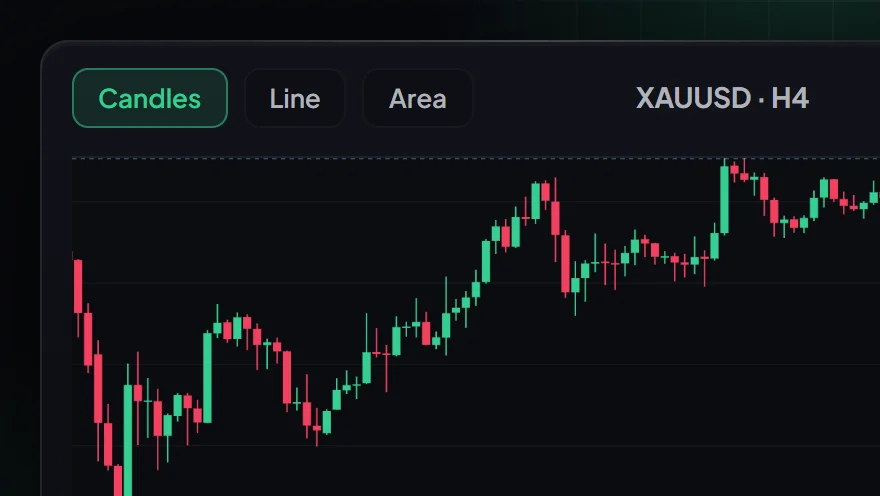
When traders evaluate a sinal de trading, they are looking for clear, actionable market calls that provide defined entry prices, stop-loss protection, and target levels. A reliable alert eliminates ambiguity by delivering precise parameters before price moves, allowing a trader to calculate position sizing and total risk exposure immediately.
To turn trade alerts into consistent execution on a real account, three core factors decide the outcome:
- Defined risk parameters: An exact stop loss and take-profit targets that allow fixed percentage risk calculations per position.
- Execution speed and slippage: The technical method used to place orders, whether entering manually or using supported automatic copying on your own broker account.
- Account compatibility: Aligning trade frequency and risk per trade with the specific balance parameters of your broker account or prop-firm evaluation.
What Defines an Actionable Sinal de Trading?
In financial markets, a signal is an alert indicating a potential trade setup across currency pairs or commodities such as gold (XAUUSD). However, there is a vast difference between vague market commentary and an actionable signal built for professional trade execution.
According to order execution principles documented by Investopedia, disciplined market entries require predefined exit orders to protect invested capital against adverse market swings. An actionable trade signal must always include four core elements:
- Asset and Direction: The specific instrument (such as EURUSD or XAUUSD) and the trade direction (Buy or Sell).
- Entry Price or Condition: An exact price for a market execution order, or a trigger level for a pending order (Buy Limit, Sell Limit, Buy Stop, or Sell Stop).
- Stop Loss (SL): The invalidation level where the trade idea is mathematically wrong. Without a defined stop loss, an alert is not a trading signal; it is an unmanaged gamble.
- Take-Profit Targets (TP): Specific price milestones (such as TP1, TP2, and TP3) where partial profits are secured and risk can be reduced by moving the stop loss to breakeven.
When a signal provider sends an incomplete alert, such as simply telling traders to buy gold without specifying an invalidation level, traders are forced to guess their exit. Guessing leads to hesitation, and hesitation leads to uncontrolled drawdowns.
Manual Execution vs Supported Automatic Trade Copying
Once an alert is issued, traders must decide how that trade will actually reach their broker terminal. In 2026, traders primarily choose between two operational models: manual entry and supported automated copying.
The Realities of Manual Execution
Manual execution requires a trader to receive an alert via a messaging channel, open their trading platform, calculate their position size, enter the ticket parameters, and click confirm. While this gives the trader full discretionary oversight on every order, it introduces several points of human friction:
- Execution Latency: In fast-moving instruments like XAUUSD or during the London and New York session opens, a thirty-second delay in seeing a notification can mean entering fifteen pips away from the intended price.
- Emotional Hesitation: After two consecutive losses, traders often hesitate to take the third signal, which frequently happens to be the winning trade that would have recovered the drawdown.
- Calculation Errors: Under time pressure, manual lot size calculations can lead to misplaced decimal points, turning a standard 1% risk position into an account-threatening 10% exposure.
Supported Automatic Copying on Your Own Broker Account
To eliminate manual entry delays, JPTradingCapital provides forex and gold calls with supported automatic copying directly to the customer's own broker account under agreed risk settings and permissions. Traders who prefer manual oversight can also execute the calls themselves.
With automated copying, trade tickets replicate to your terminal instantly when the signal is generated. However, automated copying is not magic. Execution outcomes still depend on broker spreads, execution speed, and liquidity. A control request does not guarantee an identical fill price under slippage conditions. Responsible traders establish agreed risk multipliers before activating replication to ensure their account balance is never over-leveraged.
Position Sizing and Risk Management: The Math Behind Survival
The most common reason traders fail while following trade alerts is improper position sizing. Beginners often trade fixed lot sizes, such as opening 0.50 lots on every trade regardless of the stop-loss distance. This approach guarantees erratic equity swings.
Professional risk management dictates that your risk per trade should remain constant as a fixed percentage of account equity, typically between 0.5% and 1.5% per trade.
Worked Example: Calculating Lot Size on a $10,000 Real Account
Consider an account with a $10,000 balance where the trader commits to a strict 1% risk per trade ($100 maximum risk).
- Setup A (EURUSD): The signal provides an entry at 1.0850 with a stop loss at 1.0825. The stop distance is 25 pips. At $10 per pip on a standard lot (1.00 lot), each pip is worth $10. To risk exactly $100, the formula is: $100 / (25 pips * $10) = 0.40 lots.
- Setup B (XAUUSD / Gold): The signal provides an entry at $2,650.00 with a stop loss at $2,642.00. The stop distance is $8.00 (800 pips / 80 points). On gold, an $8 move on a standard 1.00 lot equals $800. To risk exactly $100, the formula is: $100 / $800 = 0.12 lots (or 0.13 lots rounded).
Notice the dramatic difference: Setup A requires 0.40 lots while Setup B permits only 0.12 lots to maintain the exact same $100 dollar risk. If a trader used a flat 0.40 lots on both trades, the gold trade would have exposed them to over $320 in risk (over 3% of the account balance), completely violating their risk model.
Signals vs Prop-Firm Rules: Where Signals Fit and Where EAs Excel
A growing number of traders attempt to use trade calls to pass proprietary trading firm evaluations. However, prop-firm rules impose strict operational constraints that signal services are not inherently designed to handle.
For instance, standard evaluation rules at firms like FTMO require traders to navigate rigid drawdown limits. On FTMO 2-Step evaluation models, traders face a 5% daily loss limit and a 10% maximum static loss limit, as detailed in the FTMO trading objectives. If three trade signals are open simultaneously and market volatility causes a temporary floating drawdown exceeding 5%, the evaluation account is breached immediately, even if the trades eventually hit take-profit.
Furthermore, many prop firms monitor IP addresses and tick-level trade clustering. When hundreds of traders copy identical trades at the exact same millisecond, risk engines may flag the accounts for copy-trading rule violations.
For traders focused specifically on passing prop-firm evaluations or trading MT4/MT5 funded accounts, automated Expert Advisors engineered specifically for prop rules provide a more structured framework. See the JPTC EA Hub → for Expert Advisor software that runs on the customer's own MT4 or MT5 terminal (on a reliable PC or VPS), featuring configurable setfiles built around strict prop-firm loss parameters. For traders who want end-to-end evaluation support, JPTradingCapital also offers a prop-firm challenge passing service that operates under current program terms, though no one can promise a challenge pass or guarantee results.
Trading Your Own Capital: Live Algo vs Trade Signals
When trading your own capital on your own broker account, you are free from arbitrary prop-firm profit targets and time pressures. The objective shifts entirely to steady capital growth and drawdown protection.
Traders with their own broker accounts typically evaluate two main paths with JPTradingCapital:
- Forex and Gold Signals: For traders who want active trade ideas with complete control over execution. Signals include entry, stop loss, and targets, with supported automated copying to the customer's own broker account under agreed settings. Eligible VIP access is covered through an account at a partner broker, meaning there is no monthly VIP fee.
- The JPTC Live Algo: A fully managed algorithmic setup hosted by JPTC on its own infrastructure and connected directly to the customer's own broker account. Because JPTC hosts the algorithm, there is nothing to install and no VPS required. A minimum account balance applies. It is designed specifically to grow personal broker accounts and is not offered for prop-firm challenges, evaluations, or funded accounts. A 14-day money-back policy applies if the Algo is not connected and running on your account as shown, though trading results are not guaranteed.
To evaluate performance claims transparently, JPTradingCapital publishes monthly figures taken directly from its broker statement on the company results page. These published statements provide documented operational history, though they represent company-published broker statements rather than an independent third-party audit.
Decision Framework: How to Choose Your Trading Setup
Before committing capital or copying trades to any real account, follow this practical checklist to protect your capital and ensure platform compatibility:
- Define Your Account Type: If you are trading a prop-firm evaluation, prioritize automated tools with built-in daily drawdown hard stops (like the EA Hub) rather than generic trade alerts. If trading your own broker account, determine whether you prefer hands-off automation (the hosted Live Algo) or active trade signals.
- Check Execution Permissions: Ensure your broker account permits trade replication and offers competitive raw spreads on currency pairs and gold.
- Lock in Your Position Risk: Set your copy multiplier or manual lot size so that no single setup risks more than 1% of your total balance.
- Establish a Daily Loss Limit: Decide in advance the maximum dollar loss you will tolerate in a 24-hour period before pausing trading until the next session.
- Monitor Slippage: Compare your actual fill prices against the alert entry price over the first twenty trades to confirm that your execution speed remains competitive.
Can you use trading signals on a prop-firm challenge?
What is the difference between JPTC signals, the EA Hub, and the Live Algo?
How do you get VIP access to forex and gold signals?
Are trading results and challenge passes guaranteed?
Related Articles
- Algo Trading Hosting: VPS Setup or Managed Execution · Read more →
- Trading Strategy Software for Real Accounts and Prop Firms · Read more →
- Accessing Instant Forex Funding: Your Options · Read more →
- Forex Signals: Choosing for Prop Firm or Own Account · Read more →
- Algo Capital: Your Path to Automated Trading Success · Read more →
- Prop Evaluation Rule Sheet: Check EA Permission · Read more →
- Signal Providers and Followers: Evidence and Copying Risk · Read more →
- Best EA New York: Prop Firm Trading Solutions · Read more →
- Prop Instant Trading: Costs, Risk Rules, and Trade-Offs · Read more →
- Mechanical Trading Software: Rules, Setup and Risk · Read more →
Forex & Gold Signals, No Monthly Fee
Every trade we take, posted the moment we take it: entry, stop loss and targets. A partner broker covers the cost, so there is no subscription. You place every trade on your own account.
Join the signals channel